15 Clever Pantry Organization Ideas
Does opening your pantry feel like a game of food Jenga? You reach for one spice, and three cans come tumbling down. You’re not alone. A disorganized pantry leads to wasted food, duplicate purchases, and daily frustration. The good news? You don’t need a massive budget or a renovation to fix it. With a few smart systems and creative storage tricks, you can turn even the smallest pantry into a functional, beautiful space. Whether you love a minimalist look or crave cozy farmhouse vibes, these 15 clever pantry organization ideas will save you time, money, and stress. Let’s dive in.
1: Clear Containers for Dry Goods

Ditch the half-empty bags of flour, rice, and pasta. Transfer everything into airtight clear containers. This simple swap instantly creates visual calm and keeps food fresher longer. You can see exactly what you have and when you’re running low. Glass or BPA-free plastic jars work beautifully. Match the containers for a cohesive, store-like display.
Tips
- Label each container with contents and expiry date using a label maker or chalk marker.
- Choose square or rectangular containers to maximize shelf space.
- Buy in bulk and decant at home to save money and reduce plastic waste.
2: Lazy Susans for Corners

Corner shelves are notorious for hiding food until it expires. A lazy Susan rotates to bring everything within reach. Use one for oils, vinegars, and sauces. Another works perfectly for spice jars or baking supplies. You’ll stop losing food in the back and start using what you already own. Metal or acrylic turntables fit most budgets.
Tips
- Measure your shelf depth before buying to ensure a proper fit.
- Group similar items together on one lazy Susan (breakfast spreads, cooking oils, etc.).
- Use non-slip liners underneath to prevent sliding.
3: Over-the-Door Shoe Organizers

Repurpose a clear vinyl shoe organizer for pantry magic. Hang it on the inside of your pantry door. Each pocket holds spice packets, snack bars, baby food pouches, or seasoning mixes. This vertical storage solution costs under $20 but frees up an entire shelf. Choose an organizer with reinforced stitching for heavier items like canned goods.
Tips
- Cut each pocket’s bottom seam for large boxes or bags to slide through.
- Assign rows by category (breakfast, baking, snacks).
- Label each pocket with washi tape for quick identification.
4: Tension Rods for Baking Sheets
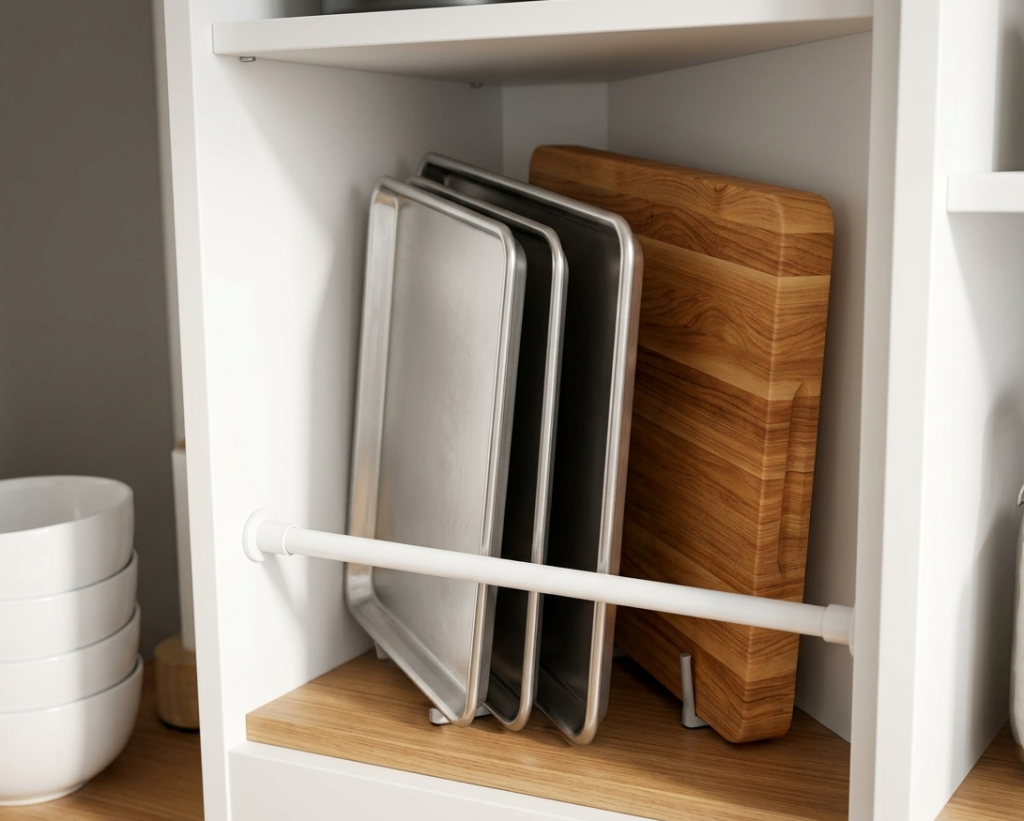
Baking sheets, cutting boards, and cooling racks are awkward to store flat. Install a tension rod vertically inside a cabinet or on a shelf. Slide your flat items between the rod and the cabinet wall. They stay upright and easy to grab. Use two tension rods for taller stacks or narrower shelves. This trick works wonders in rental kitchens too.
Tips
- Place the rod a few inches from the back wall so items lean slightly.
- Store similar widths together (all half-sheets, then all quarter-sheets).
- Add a second rod for muffin tins or pizza pans.
5: Labeled Baskets for Bulk Items

Open shelving looks messy fast. Wicker or metal baskets hide clutter while keeping items accessible. Use one basket for potatoes and onions, another for bread, and a third for snack bags. Label each basket clearly so everyone in the household knows where things belong. Baskets also make it easy to grab an entire category and carry it to the counter.
Tips
- Choose baskets without lids for easy one-handed access.
- Use clip-on labels or hang tags for a charming look.
- Nest smaller baskets inside larger ones for double-layer storage.
6: Stackable Can Racks

Canned goods create a jumbled mess when stacked horizontally. Use tiered can racks to slope them downward. You’ll always see the oldest cans first. These racks come in wire, plastic, or bamboo. For deep shelves, double up with two racks front-to-back. Rotate stock easily by adding new cans from the top and taking old ones from the front bottom.
Tips
- Check that rack depth matches your shelf (standard is 11–13 inches).
- Group similar cans together (beans, tomatoes, fruits, broths).
- For DIY option, cut a piece of wood or foam core at an angle.
7: Magnetic Spice Strips

Stop digging through a cluttered spice drawer. Mount magnetic spice tins on a metal strip attached to your pantry wall or door. You’ll see every spice at a glance. This method saves drawer space and adds a professional kitchen feel. Use small round tins with clear lids and uniform labels. Buy empty magnetic tins separately and transfer your spices.
Tips
- Mount the strip at eye level for easiest reading.
- Arrange spices alphabetically or by cuisine (Italian, Mexican, Asian).
- Test magnet strength before buying some are too weak.
8: Pull-Out Drawers for Deep Shelves

Deep shelves are black holes for food. Convert them into pull-out drawers using DIY kits or ready-made slide-out shelves. You’ll access the back without climbing inside the pantry. Use drawers for heavy items like canned goods, jars, and bottles. For a budget fix, place slim plastic bins on existing shelves and pull them forward like a drawer.
Tips
- Measure interior width carefully subtract 1/2 inch for hardware.
- Use full extension slides for 100% access to the back.
- Label the front of each drawer with its contents.
9: Tiered Shelf Risers

Create stadium seating for your canned goods, jarred sauces, and spice bottles. Acrylic or metal risers lift back-row items so you see everything. This simple addition doubles usable space on each shelf. Use narrow risers for spices and wide risers for cans. Clear acrylic risers disappear visually, making shelves look less crowded.
Tips
- Measure shelf height to ensure riser fits below the next shelf.
- Use risers only for items you use weekly keep backups elsewhere.
- Link multiple risers together for a continuous stepped look.
10: Hanging Mug Racks for Small Packets
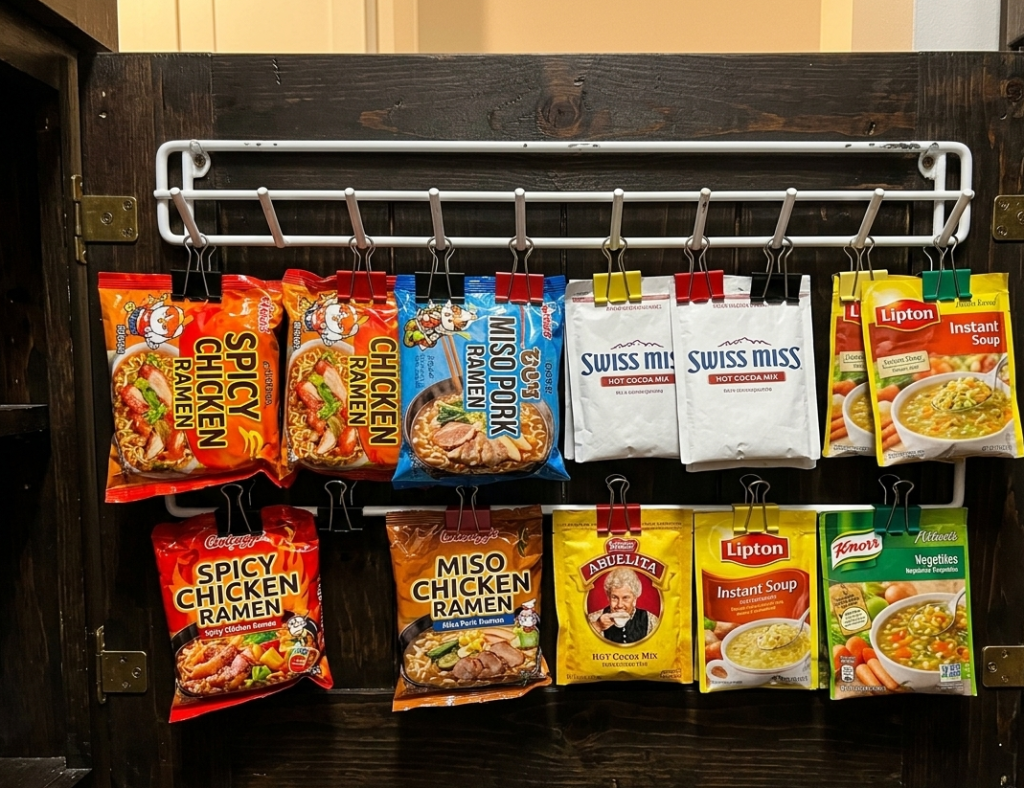
Ramen noodles, gravy mixes, hot cocoa packets these small packets get lost in bins. Hang a wire mug rack on the inside of your pantry door. Use binder clips to attach packets to the rack’s hooks or bars. Each packet hangs like a mini file folder. You’ll find flavors instantly without dumping a basket.
Tips
- Sort packets by type on different rows (savory, sweet, drinks).
- Replace binder clips with mini clothespins for a cuter look.
- Reserve the bottom row for tea bags or coffee filters.
11: Pegboard Wall System

A pegboard turns your pantry wall into customizable storage heaven. Hang wire baskets for onions and garlic. Mount small shelves for spice jars. Use hooks for measuring cups and cooking utensils. Paint the pegboard to match your kitchen. This system changes as your needs change rearrange hooks and shelves in minutes.
Tips
- Use pegboard spacers to keep it 1 inch off the wall for hook clearance.
- Outline tool shapes on the board so everything returns to its spot.
- Add small bins for packets or snack bars at the bottom.
12: Fridge Bin Duplicates

Buying the same snacks and drinks in bulk? Use shallow fridge bins on your pantry shelves. Each bin holds one type of item: yogurt tubes, cheese sticks, juice boxes. When you finish a bin, you know exactly what to restock. Bins also prevent packages from sliding around. Choose clear bins so you see contents from a distance.
Tips
- Use different bin colors for different family members’ snacks.
- Slide bins forward as they empty to keep shelf looking full.
- Wash bins monthly to catch crumbs and spills.
13: Wire Baskets for Produce

Potatoes, onions, garlic, and apples need airflow to stay fresh. Solid bins trap moisture and cause rot. Switch to open wire baskets slotted into a pull-out drawer or sitting on a low shelf. Air circulates freely, and you see when something is spoiling. Line baskets with paper towels to absorb excess moisture.
Tips
- Never store potatoes and onions together both spoil faster.
- Place wire baskets near the floor (cooler air keeps produce fresher).
- Use smaller baskets to separate different produce types.
14: Adhesive Wall Clips for Foil and Wrap

Boxes of aluminum foil, plastic wrap, and parchment paper slide everywhere. Attach adhesive wall clips to the inside of your pantry door or cabinet side. Slide each box into its own clip. Now you grab the right box without disturbing the others. This trick also works for food storage bag boxes.
Tips
- Use industrial-strength adhesive clips for heavier boxes.
- Place clips at varying heights to fit different box sizes.
- Add a clip for a roll of paper towels near your prep area.
15: Weekly Meal Prep Bins

Designate one bin or basket as your “this week’s meals” zone. Each grocery trip, place all ingredients for upcoming dinners into this bin. When it’s time to cook, grab the whole bin. No more searching for that one spice or forgotten vegetable. Use a brightly colored bin that stands out from your other storage.
Tips
- Place the meal bin at eye level for daily visibility.
- Include shelf-stable items plus a written note for refrigerated items.
- Swap bins seasonally (soup ingredients in winter, salad fixings in summer).
Conclusion
You don’t need a giant pantry or a huge budget to feel organized. Start with just one of these 15 clever pantry organization ideas. Clear a single shelf. Add one lazy Susan. Hang one shoe organizer. Small changes add up fast. Your future self will thank you every time you cook dinner without hunting for ingredients. Which idea will you try first? Share your pantry transformation photos in the comments below.
FAQs
How do I organize a small pantry with no shelves?
Use over-the-door organizers, stackable plastic bins, and tension rods. Add wire baskets directly on the floor for heavy items. Install adhesive wall shelves for lightweight packages. A pegboard on the back wall also creates instant storage without permanent shelving.
What’s the best way to organize spices in a deep pantry?
Magnetic spice strips on the door or side wall are ideal. For shelves, use tiered acrylic risers so you see every label. Group spices alphabetically or by cuisine. Avoid keeping spices in the original store packaging transfer to uniform tins or jars.
How often should I clean and reorganize my pantry?
Do a full clean-out every three months. Check expiration dates and wipe down all shelves. Reassess your organization system seasonally. Do a quick monthly tidy to return misplaced items to their correct zones. This prevents the slow creep of clutter.