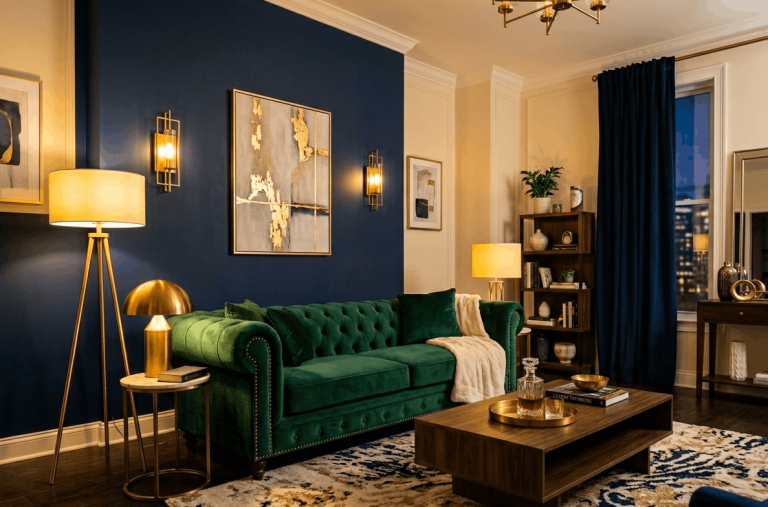
15 Modern Living Room Ideas
Does your living room feel stuck in the past cluttered, dark, or just plain boring? You’re not alone. Many homeowners struggle to balance style, comfort, and function in the heart of their home. The good news? A modern update doesn’t require a full renovation. With the right design choices, you can create a space that feels fresh, inviting, and uniquely yours.
In this guide, you’ll find 15 modern living room ideas that blend current trends with timeless appeal. Whether you love sleek minimalism, warm organic textures, or bold artistic statements, there’s something here for you.
.
1: Neutral Tone Layering

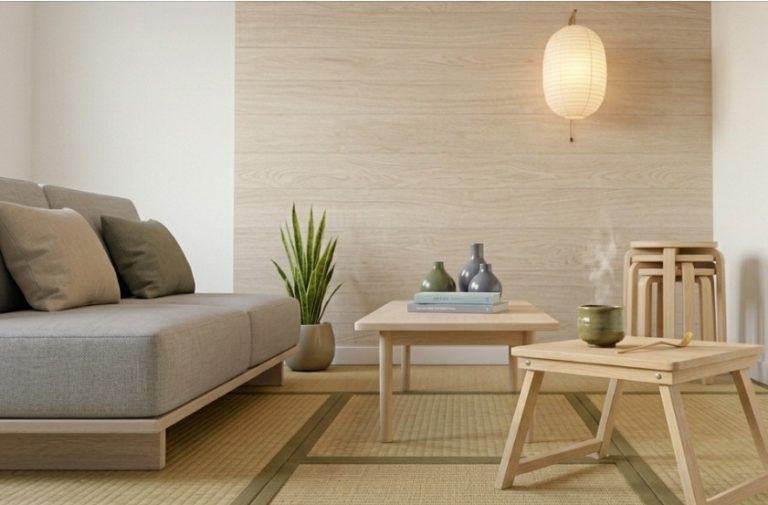
Start with a base of warm whites, beiges, and greiges. Layer different textures a chunky knit throw, a linen sofa, a jute rug to add depth without introducing bright colors. This approach keeps the room feeling airy, calm, and endlessly sophisticated. Add one or two sculptural objects in matte black or raw wood for contrast.
Tips
- Use at least three different textures per seating area.
- Stick to warm undertones to avoid a cold, sterile look.
- Incorporate natural materials like stone, wood, and cotton.
2: Curved Silhouettes

Swap sharp edges for rounded sofas, circular coffee tables, and arched mirrors. Curved furniture feels softer and more inviting, breaking the rigid lines of traditional modern design. Pair a crescent-shaped velvet sofa with a round marble side table. The result is a living room that feels both contemporary and welcoming.
Tips
- Choose one hero curved piece (sofa or armchair) as the focal point.
- Balance curves with one linear element, like a rectangular shelf.
- Use a round rug to echo the curved shapes.
3: Biophilic Design

Bring the outdoors in. Large potted plants, a living wall, or even a small indoor tree instantly refresh any living room. Use natural wood, stone, and water-resistant fabrics. Open up window treatments to maximize natural light. This style reduces stress and makes your space feel alive and connected to nature.
Tips
- Choose low-maintenance plants like monsteras, snake plants, or fiddle-leaf figs.
- Use organic-shaped planters in terracotta or ceramic.
- Add a water feature or nature-inspired art.
4: Statement Lighting

Make your ceiling the centerpiece. A sculptural chandelier, oversized pendant, or linear LED fixture adds drama and function. Choose lighting that doubles as art think Sputnik chandeliers, woven rattan pendants, or geometric metal rings. Dimmer switches let you shift from bright task lighting to cozy evening glow.
Tips
- Hang pendants 30–36 inches above the coffee table.
- Use warm bulbs (2700K–3000K) for a cozy feel.
- Combine ambient, task, and accent lighting.
5: Monochromatic Drama

Pick one color charcoal, navy, or olive and use it everywhere. Walls, sofa, rug, and accessories all in varying shades of the same hue. This creates a bold, cohesive look that feels intentional and luxurious. Break the monotony with different textures: velvet, leather, metal, and wood.
Tips
- Use three shades of your color (light, medium, dark).
- Add metallic accents (brass, copper) for contrast.
- Keep artwork abstract and tonal.
6: Minimalist Gallery Wall

Instead of cluttering every wall, curate a single, well spaced gallery wall. Use 5–7 large-scale prints or original art with simple frames (black, white, or natural wood). Leave plenty of empty wall space around it. This balances personality with modern restraint.
Tips
- Keep frames matching or within the same color family.
- Hang art at eye level (57–60 inches to center).
- Leave at least 2–3 inches between frames.
7: Mixed Metals

Don’t commit to just one finish. Combine brass, black steel, chrome, and copper throughout the room. A brass coffee table, black floor lamp, and chrome side table work beautifully together. The key is balance spread metals evenly and repeat each finish at least twice.
Tips
- Choose one dominant metal (60%) and two accent metals (40% total).
- Use metal in lighting, hardware, and furniture legs.
- Warm metals (brass, copper) pair well with cool metals (chrome, nickel).
8: Open Concept Zoning

In an open floor plan, define the living area without walls. Use a large rug to anchor the seating zone. Position a sofa with its back to the dining area. Add a low bookshelf or a console table as a visual divider. This keeps flow while giving each zone purpose.
Tips
- The rug should be large enough for all front furniture legs.
- Use pendant lights to visually separate zones.
- Keep ceiling heights and flooring consistent for unity.
9: Textured Wall Finishes

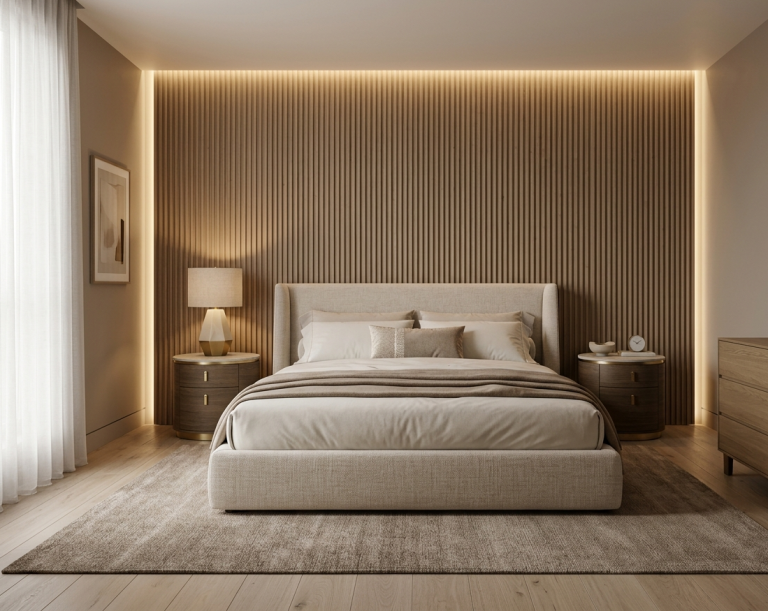
Paint is flat. Instead, try limewash, microcement, or Venetian plaster. These finishes add subtle movement and depth. A single accent wall behind the sofa or TV becomes a quiet focal point. The organic, uneven texture feels warm and handcrafted.
Tips
- Limewash works best on porous surfaces like drywall or brick.
- Microcement is durable and water-resistant.
- Test samples on a small area first—lighting changes the effect.
10: Modular Seating

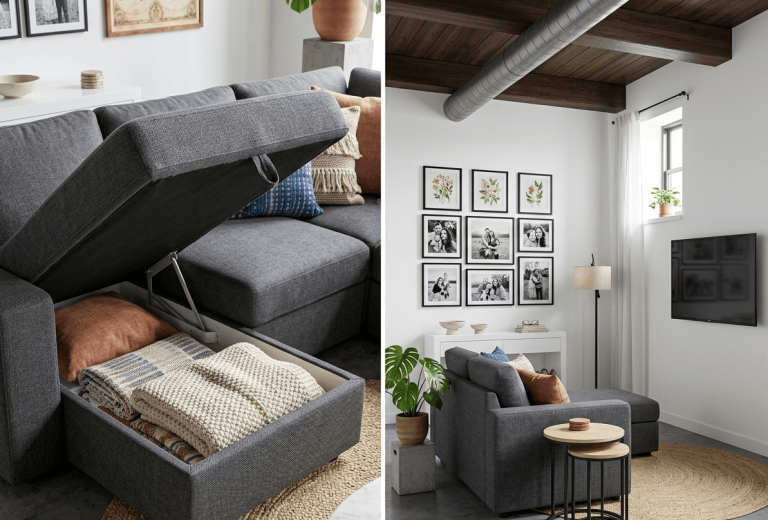
Forget the traditional three-seater. Modular sectionals let you rearrange pieces as needed great for movie nights, parties, or daily lounging. Choose a neutral fabric and add colorful pillows. Some systems even include storage ottomans or chaise extensions.
Tips
- Measure your room before buying (include walkways).
- Look for slipcovers that are washable.
- Start with 3–4 pieces; you can always add later.
11: High-Contrast Black and White

Bold and timeless. Use crisp white walls, a black leather sofa, and a white shag rug. Add a black coffee table and white artwork. The contrast feels sharp and graphic. Soften with one natural element a wooden bowl or a green plant to prevent harshness.
Tips
- Use matte finishes to reduce glare.
- Add a gray element (pillow, throw) for transition.
- Keep accessories minimal; let contrast speak.
12: Vintage Modern Mix

Don’t buy everything new. Pair a mid-century modern credenza with a contemporary abstract painting. Add a vintage Persian rug under a sleek glass coffee table. This layered approach feels collected over time, not staged. The mix of old and new adds soul.
Tips
- Limit vintage to 2–3 key pieces per room.
- Keep the color palette cohesive across eras.
- Reupholster vintage chairs in modern fabrics.
13: Floating Furniture

Pull furniture away from the walls. A sofa floating in the center of the room creates an intimate conversation zone. Behind it, you can add a console table or a desk. This layout works especially well in large or awkwardly shaped rooms.
Tips
- Leave at least 36 inches of walking space behind floating furniture.
- Use a large rug to anchor the floating zone.
- Place a tall plant or screen behind the sofa for back support.
14: Smart Storage Wall

Replace a traditional TV stand with a full wall storage system. Floor toceiling cabinets, open shelves, and a recessed TV keep everything tidy. Use closed cabinets for clutter, open shelves for display. The unified look feels architectural and custom.
Tips
- Include a mix of closed and open storage (70/30 ratio).
- Paint shelves the same color as walls for a seamless look.
- Hide electronics inside ventilated cabinets.
15: Warm Industrial

Exposed brick, concrete, and black metal get cozy with warm wood, leather, and soft textiles. A leather sofa, a reclaimed wood coffee table, and wool blankets soften the industrial edges. Add warm Edison bulb lighting to complete the look. It’s urban but livable.
Tips
- Use rugs to warm up concrete floors.
- Mix black metal with warm oak or walnut.
- Add at least three soft textiles (pillows, throws, rug).
Conclusion
Modern living rooms come in many flavors from minimalist and monochromatic to warm industrial and biophilic. The best choice reflects your lifestyle and personality. Start with one idea that excites you, then layer in others over time. Remember: small changes, like swapping lighting or adding a textured wall, can have a huge impact.
Which of these 15 modern living room ideas will you try first? Let me know in the comments below, and don’t forget to pin your favorite image prompt for later.
FAQs
What is the best color for a modern living room?
Neutral tones like warm white, beige, and greige are the most versatile bases for modern living rooms. They allow you to change accent colors easily. For bolder looks, deep navy, charcoal, or olive green work beautifully when used monochromatically.
How do I make a small living room look modern?
Use floating furniture to keep floor space visible. Choose a light neutral palette, add a large mirror to reflect light, and pick multi-functional pieces like storage ottomans. Avoid heavy drapes; use sheer curtains or blinds instead.
What’s the difference between modern and contemporary design?
Modern design refers to a specific early-to-mid-20th-century style (think clean lines, minimal ornament). Contemporary design means “of the moment” and changes every decade. Today’s contemporary includes curves, mixed metals, and biophilic elements.