19 Small Living Room Ideas
Does your small living room feel more like a cramped closet than a cozy retreat? You’re not alone. Millions of homeowners struggle with tight square footage, awkward layouts, and the constant battle between style and function. The good news? You don’t need a massive renovation or a mansion sized budget to create a stunning space. With the right small living room ideas, you can turn even the tiniest nook into a warm, welcoming, and highly functional area. From multipurpose furniture to optical illusions that double your perceived space, this guide covers 19 genius solutions. Let’s dive in and reinvent your compact living room starting today.
1: Use Light Colors on Walls and Floors

Light shades like soft white, pale beige, or light gray reflect natural light better than dark tones. This simple swap instantly makes your small living room feel airy, open, and twice its actual size. Paint your ceilings white to draw the eye upward, and choose light wood or pale laminate flooring for continuity.
Tips
- Use the same light color on walls, trim, and ceiling to blur edges.
- Add a single dark accent piece (like a black lamp) for contrast without shrinking the room.
- Glossy or semi-gloss paint reflects even more light than matte.
2: Install Floating Shelves Instead of Bookshelves

Floor-to-ceiling bookcases eat up precious floor space. Floating shelves keep your walls functional while leaving the ground free for movement. Stagger them vertically to draw the eye up, creating the illusion of higher ceilings. Use them for books, small plants, or decorative objects.
Tips
- Mount shelves at different heights for visual interest.
- Avoid overcrowding leave 30% empty space on each shelf.
- Choose white or clear acrylic shelves to make them “disappear” into the wall.
3: Buy a Sofa with Hidden Storage

A standard sofa uses volume only for sitting. A storage sofa turns that dead space into a treasure chest. Lift the chaise or the entire seat to stash blankets, board games, or off-season clothes. This is one of the most practical small living room ideas for families and pet owners alike.
Tips
- Look for sofas with hydraulic lifts for easy opening.
- Use fabric bins inside to separate items.
- Measure your doorway first—storage sofas are often bulkier.
4: Use a Round Coffee Table

Sharp corners on rectangular tables block traffic flow in tight spaces. A round coffee table softens the room and lets people move around it naturally. It also takes up less visual weight, making your small living room feel less cluttered. Plus, no bruised shins!
Tips
- Choose a pedestal base instead of four legs for more foot room.
- Glass tops keep the table visually transparent.
- Nest two small round tables for flexible surface space.
5: Hang Curtains High and Wide

Mount your curtain rod just below the ceiling, not above the window frame. Extend the rod 6–12 inches past each side of the window. This trick makes windows look larger and ceilings taller. Floor-length curtains also create vertical lines that stretch the room visually.
Tips
- Use lightweight fabric so curtains don’t feel heavy.
- Choose rods that match your wall color to blend in.
- Avoid valances or heavy drapes—they shorten the wall.
6: Add a Large Mirror Opposite a Window
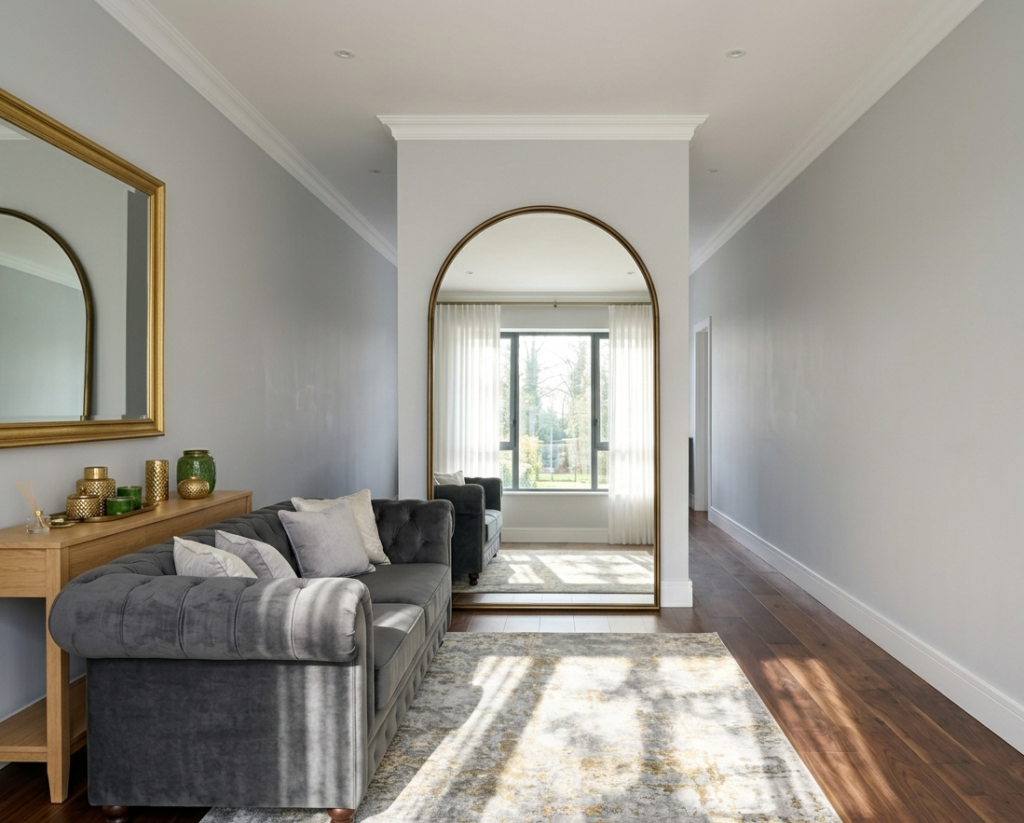
Mirrors are magic for small living room ideas. A single large mirror (or a grid of smaller ones) placed directly across from a window will bounce natural light throughout the entire room. It doubles the view and creates the illusion of another room beyond the glass.
Tips
- Lean a floor mirror against the wall for an effortless look.
- Avoid heavy ornate frames—thin metal or no frame is best.
- Clean mirrors weekly to keep reflection crisp.
7: Choose Multifunctional Nesting Tables
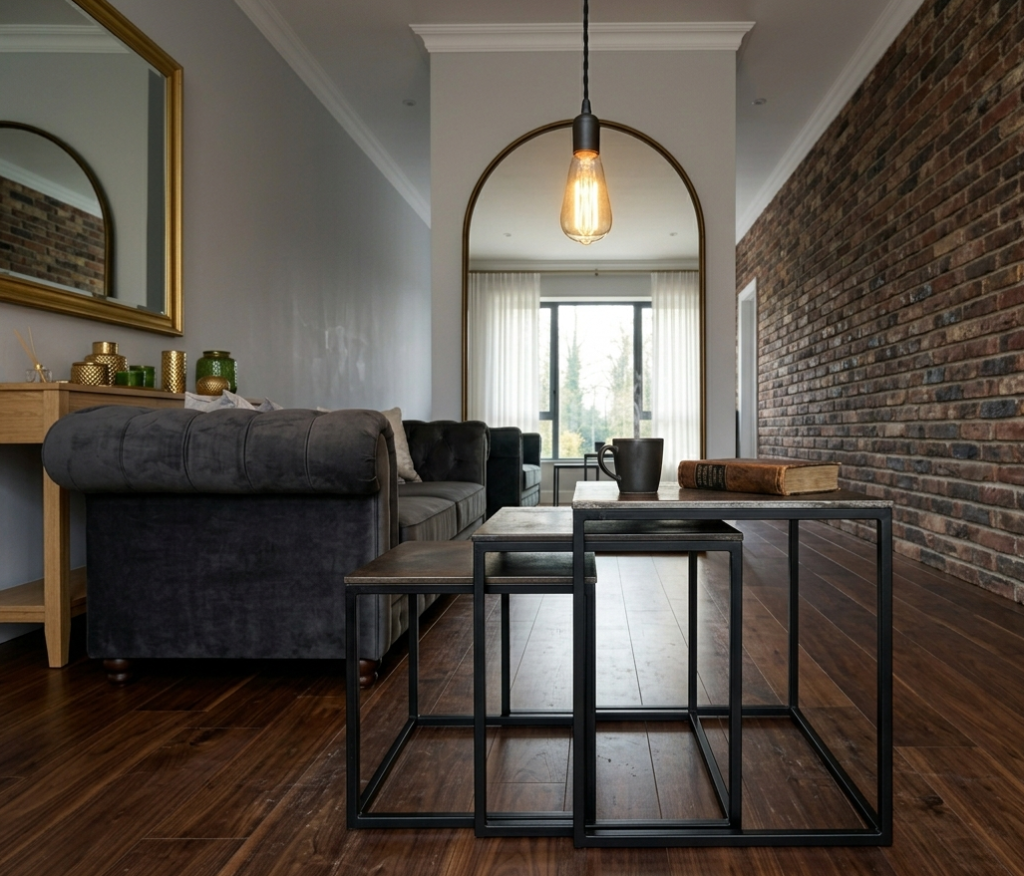
Instead of one large coffee table, use two or three small nesting tables. Pull one out for drinks and tuck the other away when you need floor space. They work as side tables, laptop desks, or even impromptu dining surfaces. Store them stacked in a corner when guests leave.
Tips
- Pick tables with different heights for a sculptural look.
- Metal or acrylic legs keep the visual footprint light.
- Use the smallest table as a plant stand near the window.
8: Mount Your TV on the Wall

A TV on a stand consumes valuable floor space and creates a bulky focal point. Wall-mounting frees up the floor for storage or movement. It also lets you swivel the screen toward different seating areas. Keep cords hidden inside the wall or in a cord cover painted to match.
Tips
- Mount at eye level when seated (about 42 inches from floor).
- Leave 4–6 inches of space around the TV for ventilation.
- Use a slim wall console underneath for just the cable box and remote.
9: Use a Bench Instead of a Full Armchair

Armchairs are wide and deep. A backless bench can seat two people in the same footprint as one chair. Tuck it under a window or against a wall. Add cushions for comfort and use the space underneath for baskets of toys or magazines.
Tips
- Choose a bench with a lift-up seat for hidden storage.
- Keep bench depth under 18 inches to avoid blocking pathways.
- Pair with a small side table for drinks.
10: Paint an Accent Wall to Create Depth

Contrary to old advice, dark accent walls can actually make a small living room feel larger if done right. Paint the farthest wall a deep color like navy, forest green, or charcoal. It visually recedes, making the room seem longer. Keep the other three walls light.
Tips
- Use matte paint on the accent wall to absorb light and push it back.
- Avoid accent walls on both short ends only paint one.
- Hang a mirror on the dark wall to reflect light into the deep color.
11: Replace Doors with Curtains

Swinging doors eat up floor space and create visual barriers. Swap closet, hallway, or even entry doors with soft floor-length curtains. They slide open silently, take zero floor space, and add softness to your small living room. Use a tension rod for easy installation.
Tips
- Choose thick velvet for bedrooms or light linen for living areas.
- Hang curtains 1 inch above the floor to avoid dust.
- Use two panels that meet in the middle for full coverage.
12: Use Vertical Stripes on One Wall

Stripes aren’t just for fashion. Paint or use wallpaper with thin vertical stripes on a single wall. The lines trick your brain into seeing more height. Keep stripes subtle alternating shades of the same color (like white and off-white) work better than high-contrast bold stripes.
Tips
- Use painter’s tape for perfect straight lines.
- Stripes that fade from dark at the bottom to light at the top exaggerate height.
- Avoid horizontal stripes they widen, not lengthen.
13: Add a Wall-Mounted Desk

Working from home in a small living room? A wall-mounted drop-leaf desk folds flat when not in use. It gives you a workspace without sacrificing your relaxation area. Mount it near an outlet and add a small stool that slides underneath.
Tips
- Install a floating shelf above for pens and a lamp.
- Choose a desk that matches your wall color to minimize visual clutter.
- Use adhesive cable clips to keep cords off the floor.
14: Choose Leggy Furniture

Sofas, chairs, and cabinets that sit directly on the floor look heavy and block sightlines. Furniture with exposed legs (at least 4–6 inches tall) lets you see the floor underneath, which creates a sense of more space. It also makes cleaning easier.
Tips
- Look for tapered or hairpin legs for a modern look.
- Match leg finishes (all black or all brass) for cohesion.
- Leave 6 inches between furniture pieces for visual breathing room.
15: Use Stackable or Foldable Stools

Permanent seating for six is wasteful in a small living room. Instead, keep two stackable stools or foldable chairs in a closet. Pull them out when guests arrive. Look for designs that look like real furniture, not plastic event chairs.
Tips
- Wooden folding director’s chairs are stylish and sturdy.
- Stackable metal stools with padded seats save vertical space.
- Hang foldable chairs on wall hooks as art when not in use.
16: Install Corner Shelving
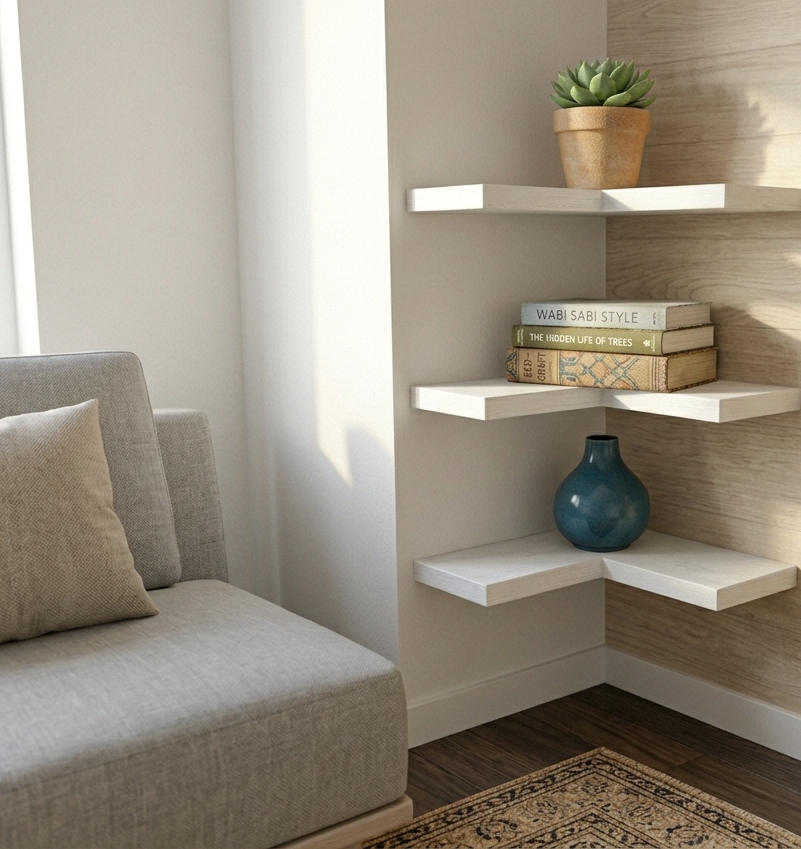
Corners are usually dead zones. Install floating corner shelves or a corner ladder to turn wasted space into storage or display. Use the top shelf for a trailing plant, middle for books, and bottom for a small speaker or catch-all tray.
Tips
- Use triangular corner shelves for a custom fit.
- Leave the lowest shelf empty to avoid a cluttered look.
- Paint shelves the same color as the wall to make them disappear.
17: Use a Sofa Table Behind the Sofa
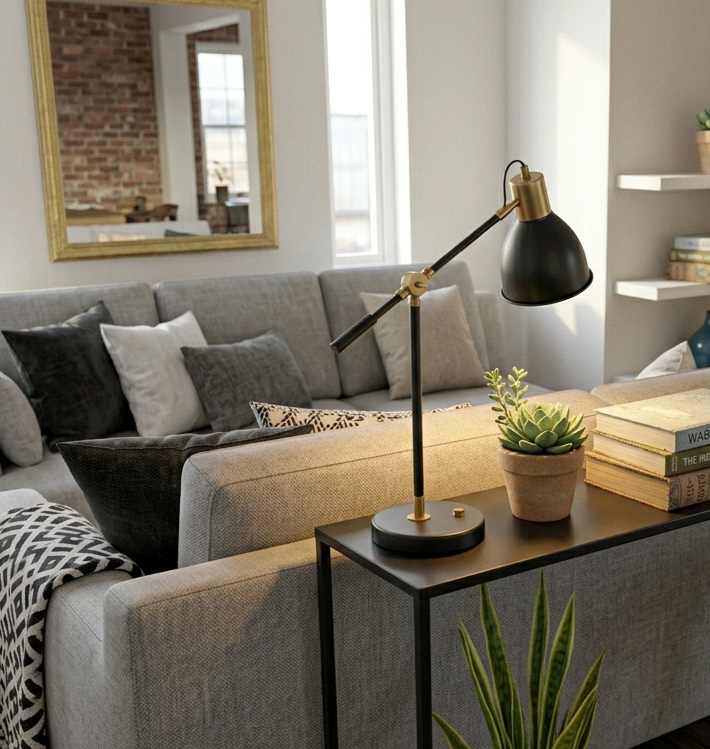
If your sofa floats in the room (not against a wall), put a slim sofa table behind it. It adds surface space for lamps, drinks, or decor without taking extra floor space. Plus, it prevents people from walking directly behind seated guests.
Tips
- The table should be 2–4 inches shorter than sofa height.
- Use it to hide power strips and charging cables.
- Add bar stools on the back side for extra seating.
18: Choose a Glass Top Coffee Table

A glass coffee table takes up the same footprint as a wooden one but feels almost invisible. You see the rug underneath, which maintains the flow of the floor. Tempered glass is durable and easy to clean. Pair with a lower shelf in wood or metal for magazines.
Tips
- Use a round glass table to further reduce visual weight.
- Clean fingerprints daily with a microfiber cloth.
- Avoid placing heavy objects near the edges.
19: Use a Large Area Rug to Define Zones

In a small living room that doubles as a dining or work area, use a large area rug to visually “claim” the living zone. Choose a rug big enough that the front legs of all seating fit on it. This anchors the space and prevents the room from feeling like a chaotic multipurpose closet.
Tips
- Light-colored rugs expand the feel; dark rugs shrink it.
- Round rugs work well for conversation areas.
- Vacuum regularly dirty rugs make any room feel smaller.
Conclusion
Small living rooms don’t have to feel small. With these 19 clever ideas from floating shelves and storage sofas to strategic mirrors and leggy furniture you can maximize every square inch without sacrificing style. Start with one or two changes that fit your budget and space. You’ll be surprised how quickly your compact living area transforms into a functional, beautiful retreat. Which idea will you try first? Let us know in the comments below.
FAQs
What is the best color for a small living room?
Light neutrals like soft white, pale beige, light gray, and cream are best because they reflect natural light and make walls feel further away. If you want color, use muted pastels or keep bold shades on a single accent wall only.
How can I make my small living room look expensive on a budget?
Focus on three things: lighting (add a dimmer and a statement lamp), textiles (a large wool rug and velvet cushions), and symmetry (matching lamps or art on both sides of the sofa). These cost little but add huge perceived value.
Should I avoid large furniture in a small living room?
No. One appropriately sized large sofa often works better than several small chairs, which create visual clutter. The key is leaving 18–24 inches of walking space around each large piece and choosing leggy, light-colored designs.