Small Workspace Organization: 13 Brilliant Ideas
Working from home is here to stay, but not everyone has a spare room for a sprawling desk setup. If you’re squeezing a home office into a corner of your bedroom, living room, or even a closet, you already know the challenge: clutter creeps in, cables tangle, and focus suffers. The good news? Small workspace organization isn’t about cramming more in it’s about working smarter with what you have. In this guide, you’ll find 13 brilliant, design-forward ideas that transform any tiny nook into a productive, calm, and stylish home office. No renovation required. Let’s dive in.
1: Vertical Wall Desk with Fold-Down Surface
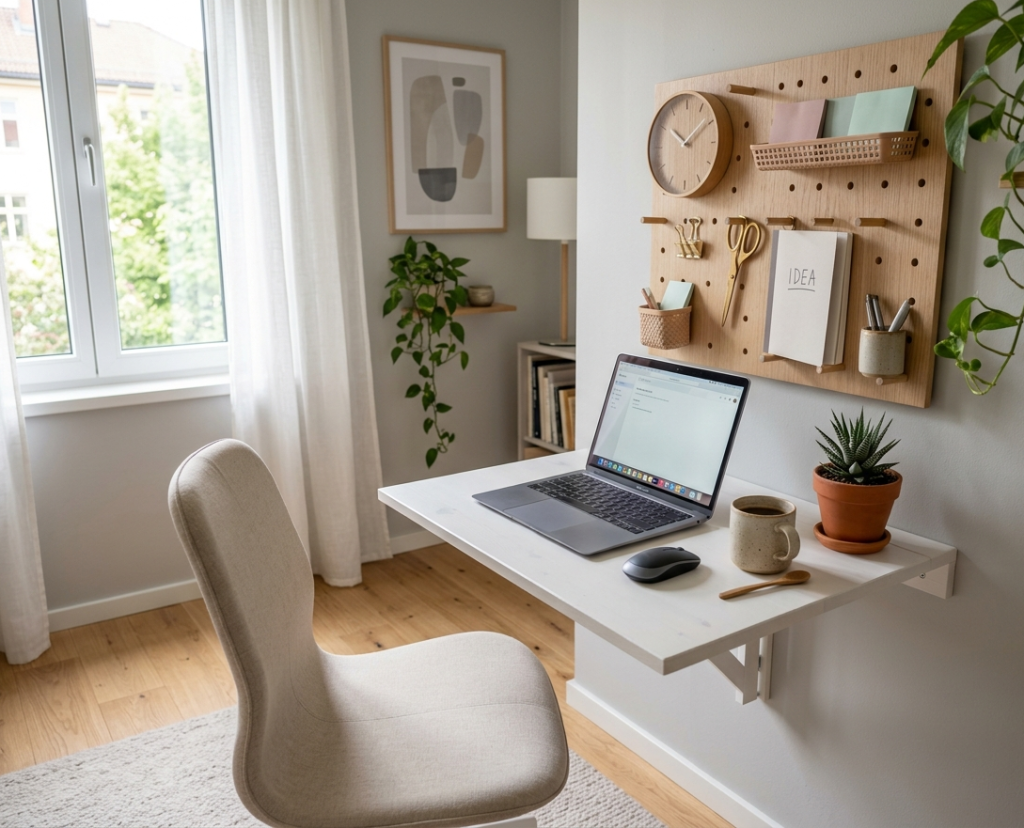
When floor space is non-existent, go vertical. A wall-mounted fold-down desk gives you a full workstation that disappears when you’re off the clock. Mount it in a hallway, kitchen corner, or beside a bookcase. During work hours, you get a sturdy surface for your laptop and notebook. After hours, fold it up and reclaim your floor space. Pair it with a compact stool or wall-mounted chair.
Tips
- Install a pegboard above the desk for pens, sticky notes, and small supplies.
- Choose a desk with a built-in magnetic strip to hold metal accessories.
- Add a bright LED strip under the shelf for task lighting without taking up room.
2: Under-Shelf Floating Drawers
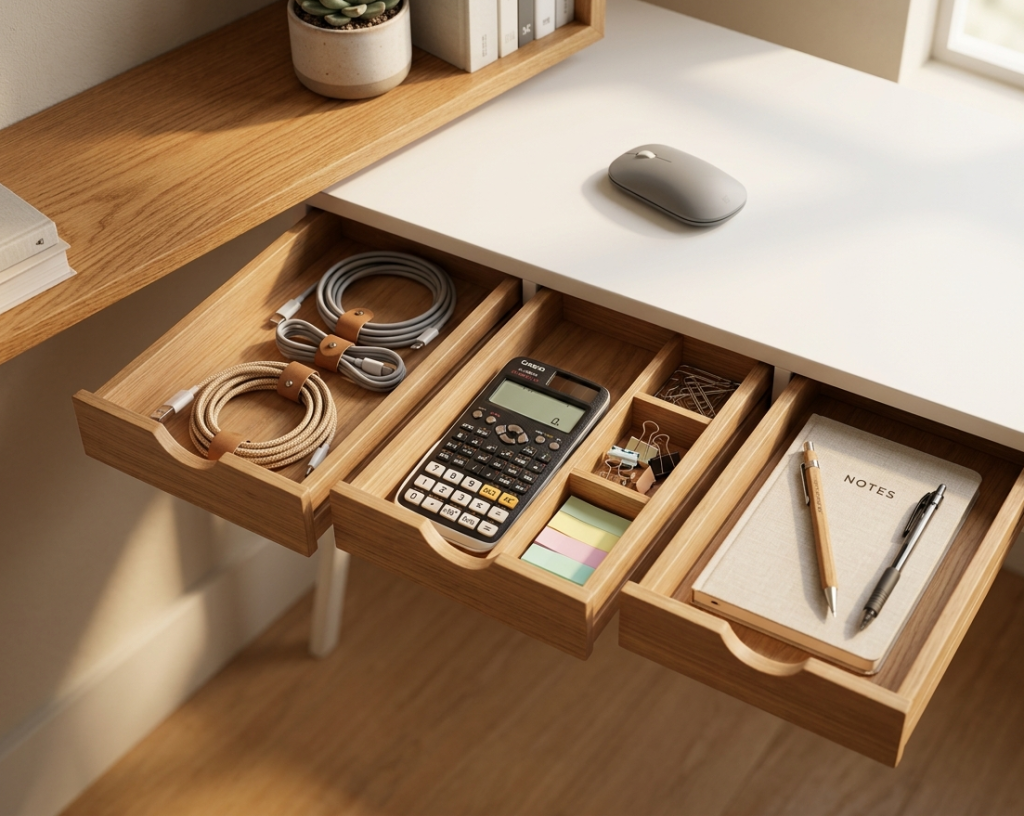
Most people only use the top of their desk or shelves. The space underneath is gold. Install shallow floating drawers under your existing shelves or desktop. These slim pull-out trays are perfect for storing sticky notes, cables, chargers, and thumb drives. Because they slide out horizontally, they don’t block legroom. Use them for items you reach for daily but don’t want cluttering your main work surface.
Tips
- Label each drawer with a small matte label for instant recognition.
- Use drawer dividers made from cardboard or acrylic to separate small items.
- Install them only on shelves at least ¾ inch thick for stability.
3: Magnetic Wall Panel System
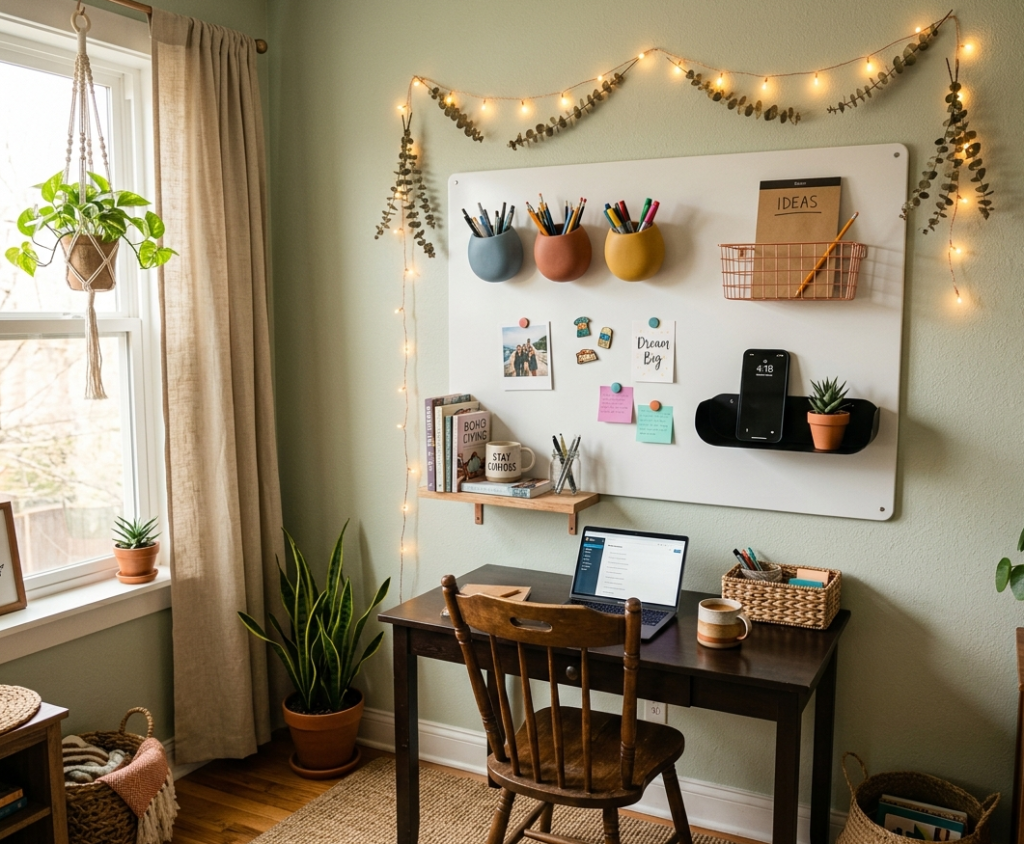
Stop drilling holes. A magnetic wall panel (like a metal sheet or specialized office panel) turns any blank wall into an ever-changing organization hub. Use strong neodymium magnets to attach metal cups for pens, hooks for headphones, clips for sticky notes, and even small shelves for your phone. You can rearrange everything in seconds. It’s ideal for renters or anyone who likes to change their layout often.
Tips
- Buy a whiteboard magnetic panel to double as a brainstorming space.
- Use magnetic cable clips to route charging cords neatly down the wall.
- Add a magnetic spice rack (yes, from the kitchen aisle) for small books.
4: Corner L-Shaped Floating Desk
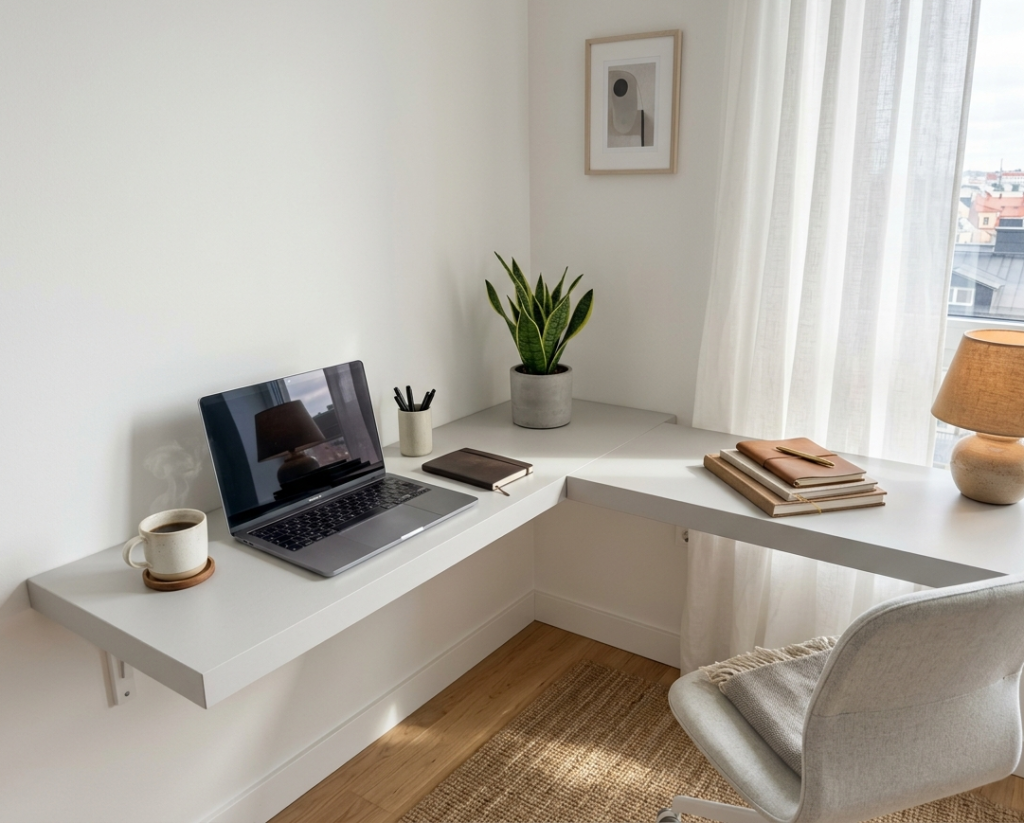
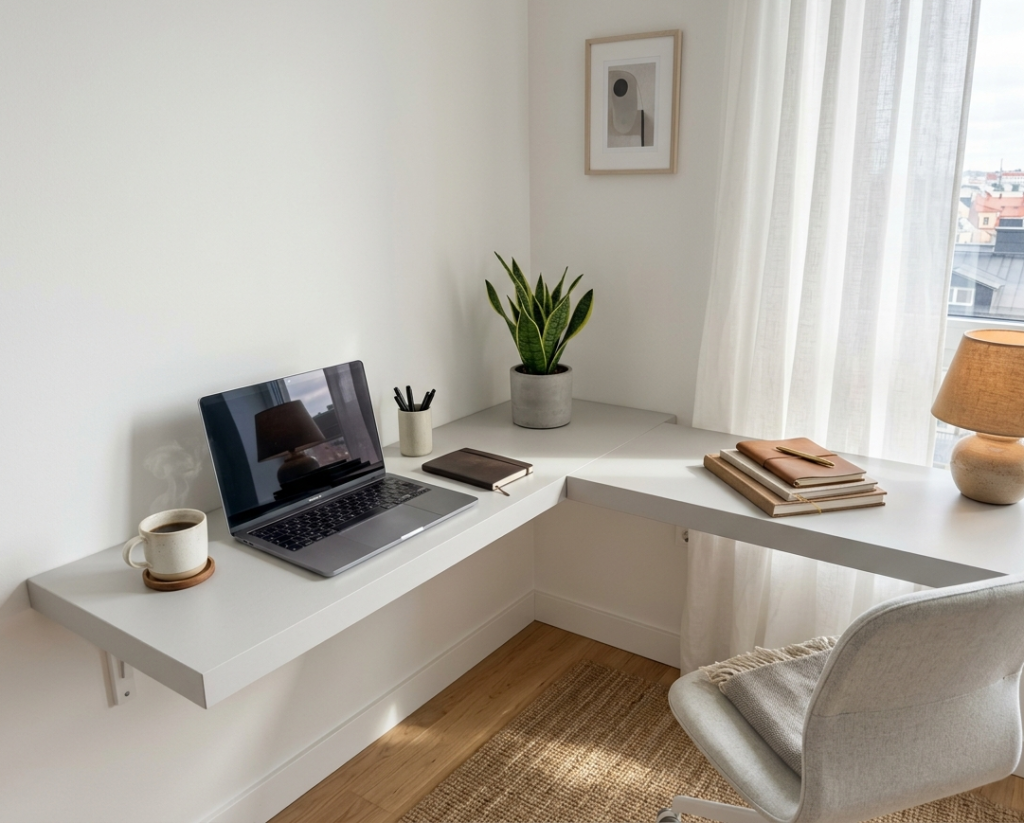
Corners are the most underused real estate in tiny offices. Install two floating desk surfaces meeting at a 90-degree angle. This L-shape gives you separate zones: one side for your laptop, the other for paperwork or a second monitor. Because it’s mounted to the wall, there are no legs in the way. Your chair can swivel between both sides easily. Paint the desks the same color as the wall to make them visually disappear.
Tips
- Use a cable management tray underneath to hide power strips and cords.
- Place your most-used items in the corner where both surfaces meet.
- Add a small corner shelf above for a plant or framed photo.
5: Rolling Under-Desk Storage
The gap between your legs and the floor is prime real estate. A low-profile rolling cart on casters slides right under your desk when you’re working. Use it for office supplies, files, or even a small printer. When you need extra surface space for a project, roll it out to the side and use the top as a temporary table. Choose a cart with locking wheels so it stays put when you don’t want it moving.
Tips
- Look for a cart that is at least 2 inches shorter than your desk’s underside height.
- Use small bins inside the cart for pens, tape, and sticky notes.
- Match the cart color to your desk for a seamless look.
6: Pegboard Cable Management Station
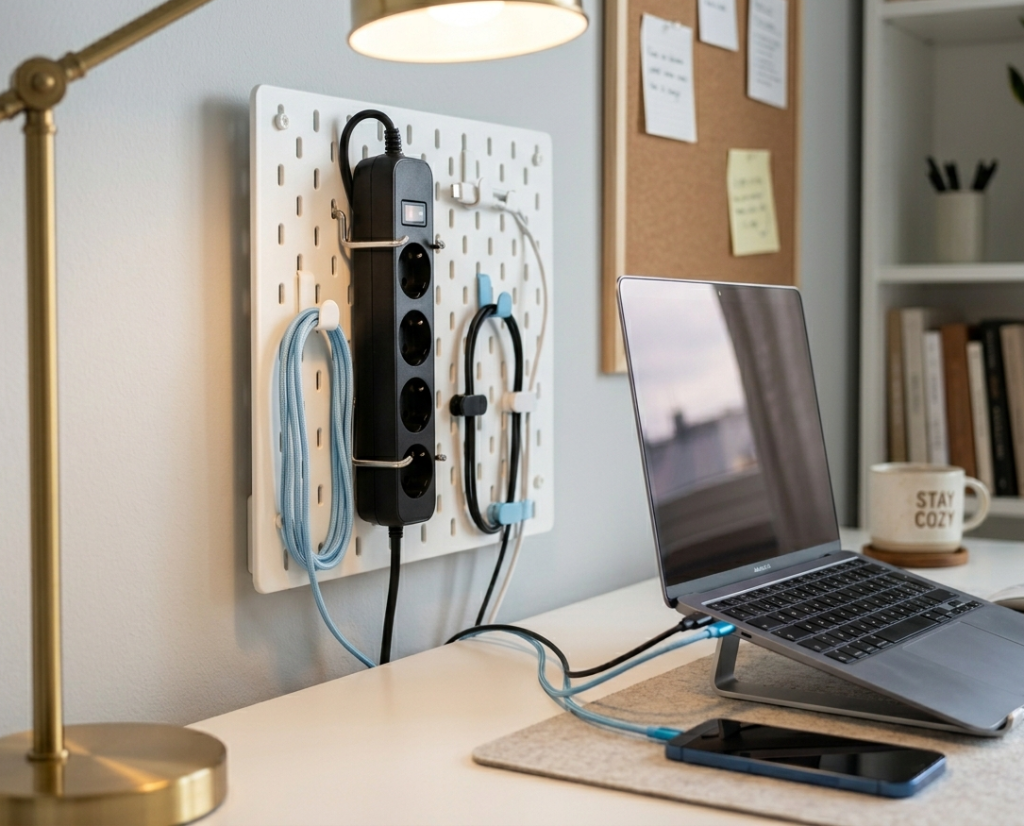
Tangled cables make any small space feel chaotic. Install a small pegboard on the side of your desk or on the wall near your power outlet. Use pegboard hooks to hang a power strip vertically, then route each cable (phone, laptop, tablet, monitor) up and over to your devices. Use zip ties and adhesive cable clips on the back of the pegboard to hide excess length. It turns ugly wires into a neat, accessible vertical system.
Tips
- Paint the pegboard the same color as your wall to make cables blend in.
- Use different hook shapes for thick vs. thin cables.
- Leave one empty hook for temporarily hanging headphones.
7: Window-Sill Desk Extension
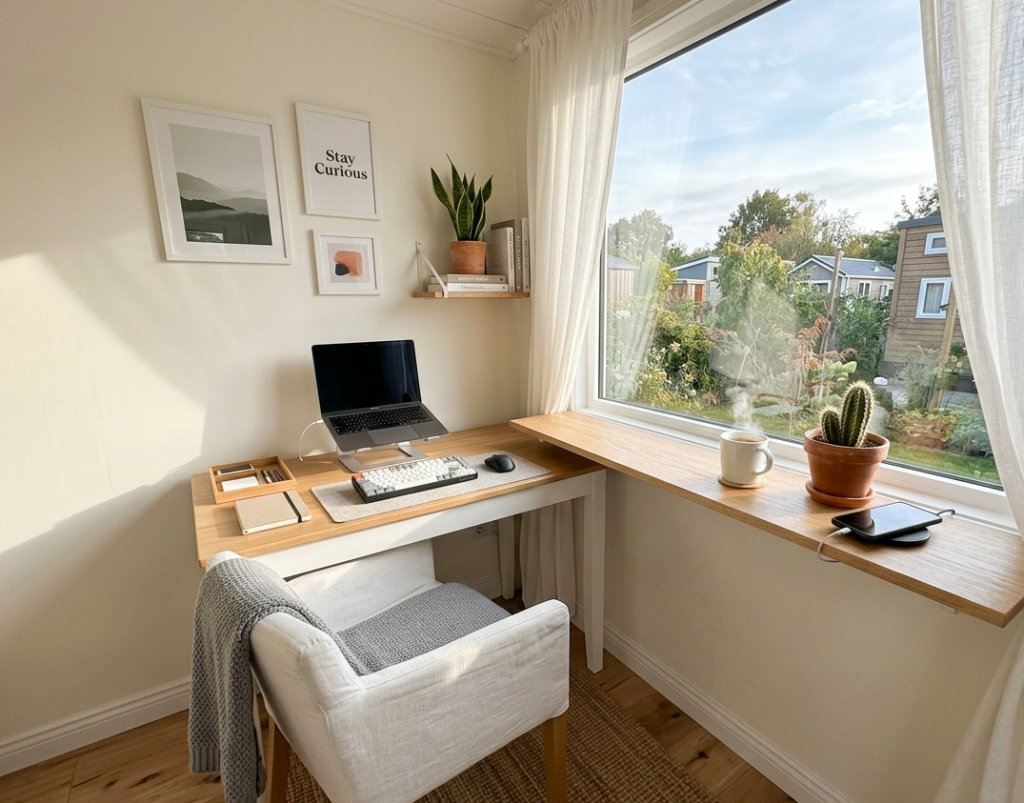
If your desk sits in front of a window, you’re losing space. Install a shallow wooden shelf that sits on your existing desk and extends over the windowsill (without blocking the window). This extra 6–8 inches of depth gives you room for a coffee mug, a small plant, or a phone stand. Make sure the extension is removable or hinged so you can still open the window fully when needed.
Tips
- Add a small non-slip mat under the extension to prevent scratching.
- Use the extension only for lightweight items (under 5 pounds).
- Paint it the same color as your window trim for a built-in look.
8: Hanging File Holders on Cabinet Doors
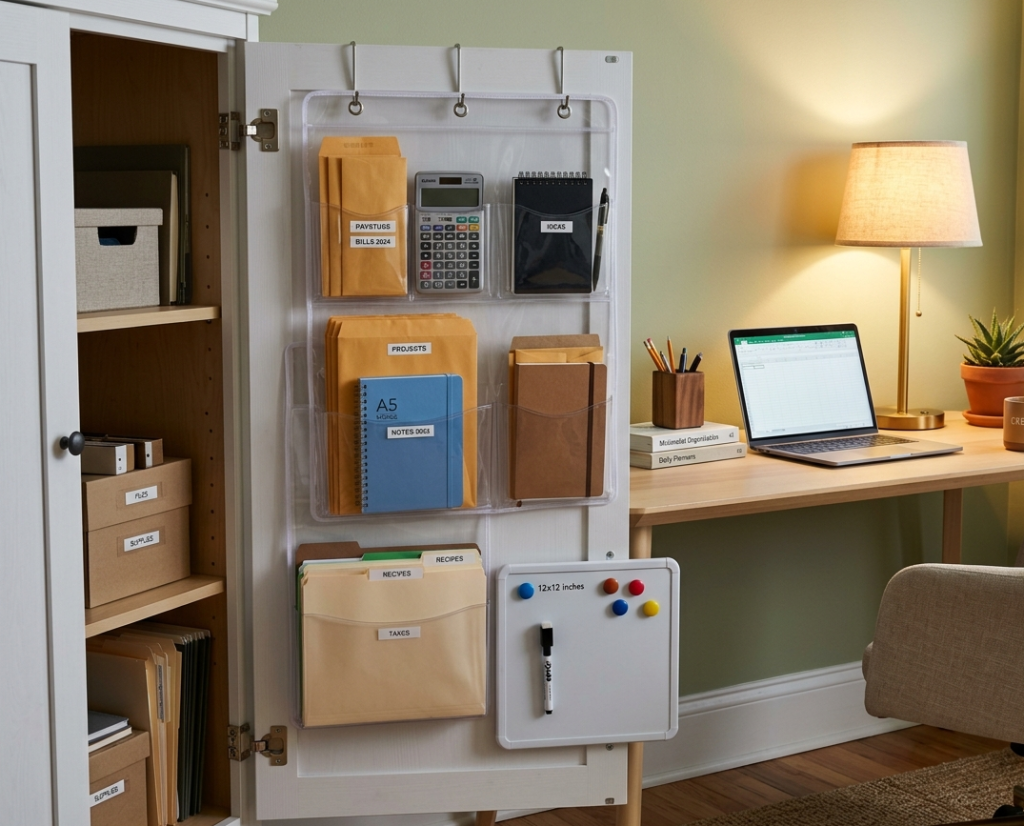
Got a small cabinet or wardrobe near your desk? Don’t ignore the inside of the door. Mount over-the-door wire file holders or adhesive pocket organizers. These hold letter-sized documents, envelopes, notebooks, and even a small tablet. When the door is closed, everything is hidden. When you need a file, just open the door and grab it. This is a lifesaver for tiny offices with zero drawer space.
Tips
- Use clear plastic pockets so you can see contents at a glance.
- Install a small magnetic notepad on the door for quick reminders.
- Label each pocket by category: “Bills,” “Projects,” “Receipts.”
9: Stackable Acrylic Desk Organizers
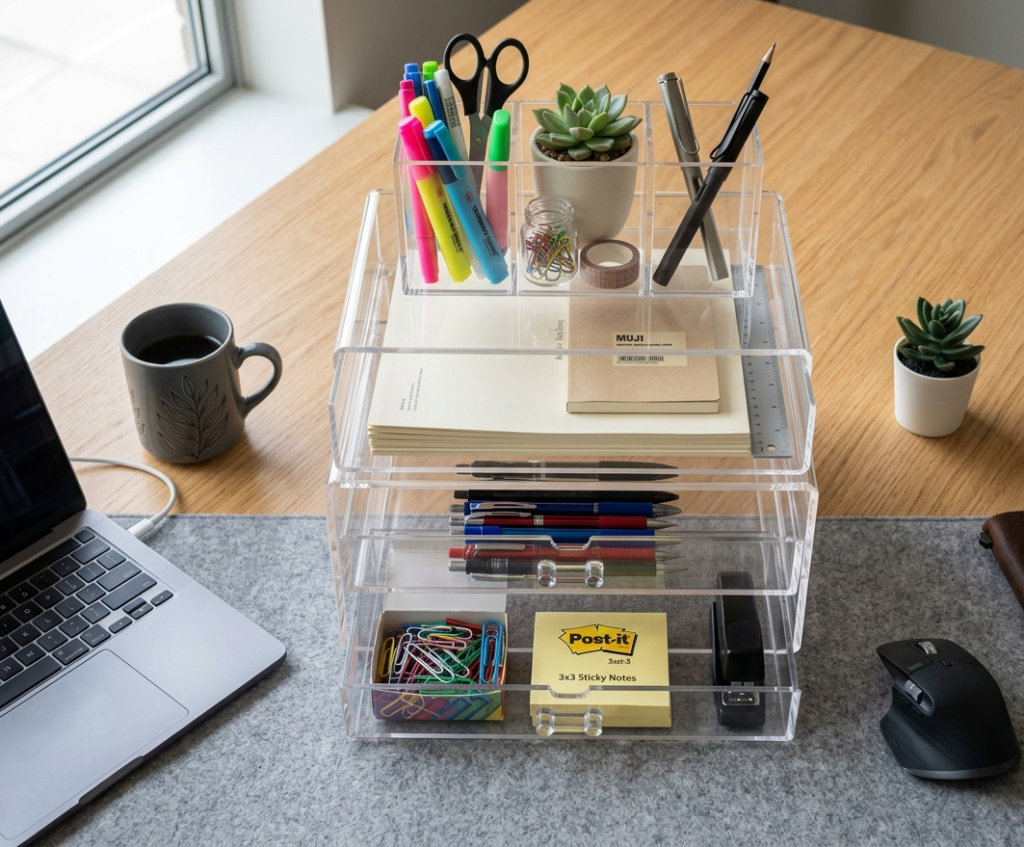
Paper stacks turn into clutter towers. Replace them with stackable acrylic organizers. These clear, modular units let you see everything at once. Stack a small drawer unit on top of a letter tray, then add a pen holder on the side. Because they’re transparent, they don’t visually crowd your desk. They also come in various heights, so you can build a custom “skyscraper” that fits your exact space.
Tips
- Put heavy items (stapler, tape dispenser) in bottom drawers for stability.
- Wipe acrylic with a microfiber cloth weekly to keep it crystal clear.
- Mix drawer units with open-front bins for different item sizes.
10: Wall-Mounted Scissor Arm Lamp with USB
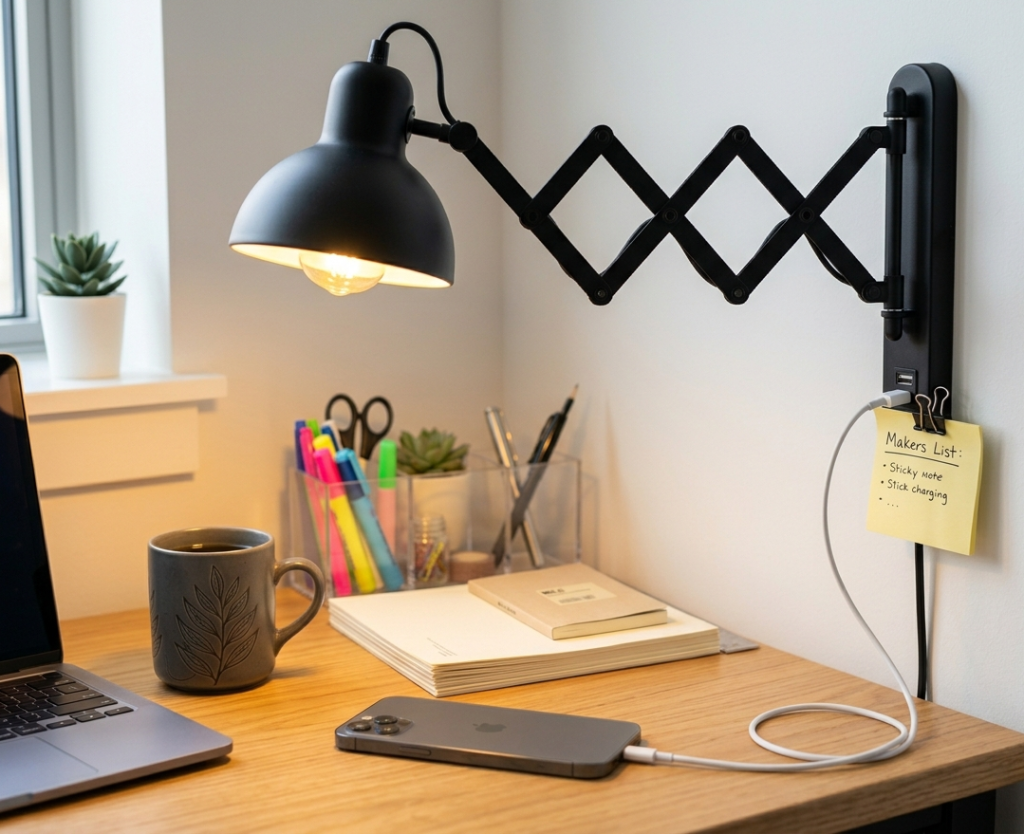
Floor lamps take up precious square footage. Desk lamps eat up surface space. The solution: a wall-mounted scissor arm lamp that folds flat against the wall when not in use. Extend it over your desk for focused task lighting. Choose one with a built-in USB port on the base so you can charge your phone without an extra adapter. Some models even have a small clip for holding notes or a pen.
Tips
- Mount the lamp arm at eye level to avoid shadows on your work.
- Choose a lamp with adjustable color temperature (warm to cool white).
- Use the arm to hold a small plant hanger for greenery.
11: Slim Magnetic Spice Racks for Supplies
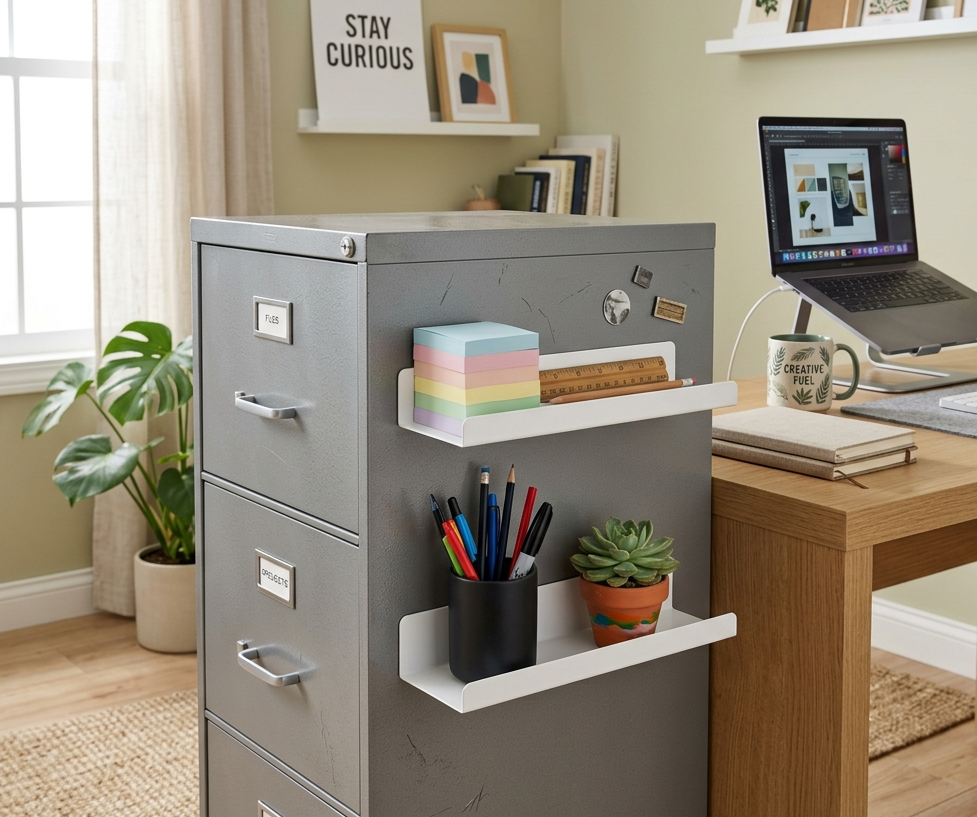
Here’s an unexpected hero: magnetic spice racks. These narrow metal shelves (meant for refrigerators or range hoods) stick to any metal surface or you can mount them with adhesive strips. They’re perfect for holding small notebooks, sticky note pads, a ruler, or even a thin tablet. Install one on the side of your filing cabinet, on the front of your desk drawer, or beside your monitor.
Tips
- Use two racks side by side for longer items like a letter opener.
- Place one near your desk edge to hold your water bottle.
- Line the bottom with a thin rubber mat to prevent rattling.
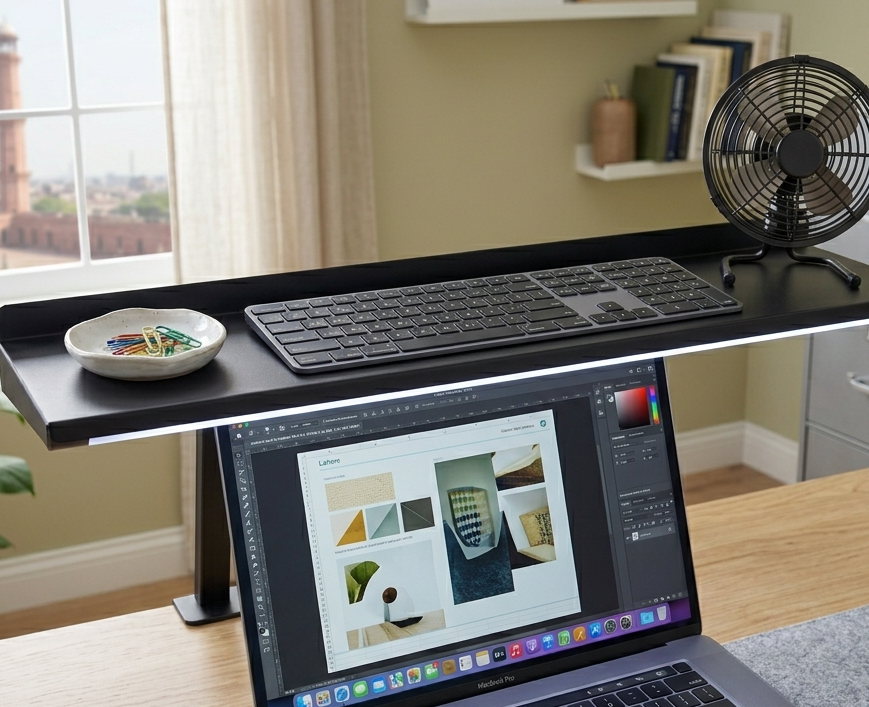
12: Over-the-Monitor Shelf
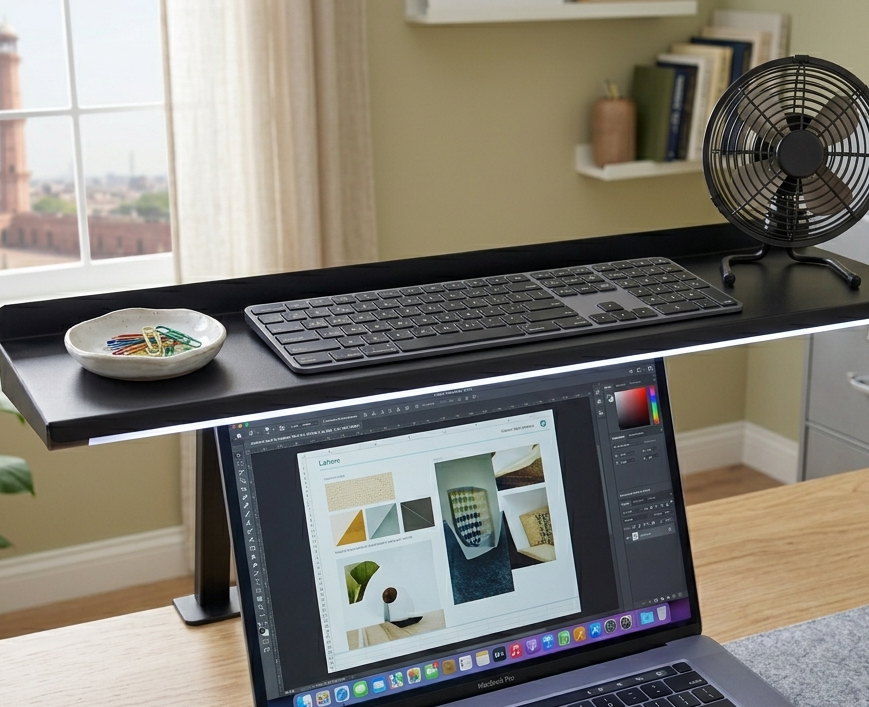
Your computer monitor sits in the middle of your desk, eating up valuable surface space. Fight back with an over-the-monitor shelf. This small platform clamps onto the back of your desk or sits on top of your monitor stand (if yours is tall enough). Use it to store a wireless keyboard when not in use, a stack of index cards, or a small desk lamp. It effectively doubles your usable depth.
Tips
- Choose a shelf with a lip so items don’t slide off.
- Use it to hold a secondary webcam at eye level for video calls.
- Look for a ventilated shelf if your monitor gets hot.
13: Foldable Wall-Mounted Side Table
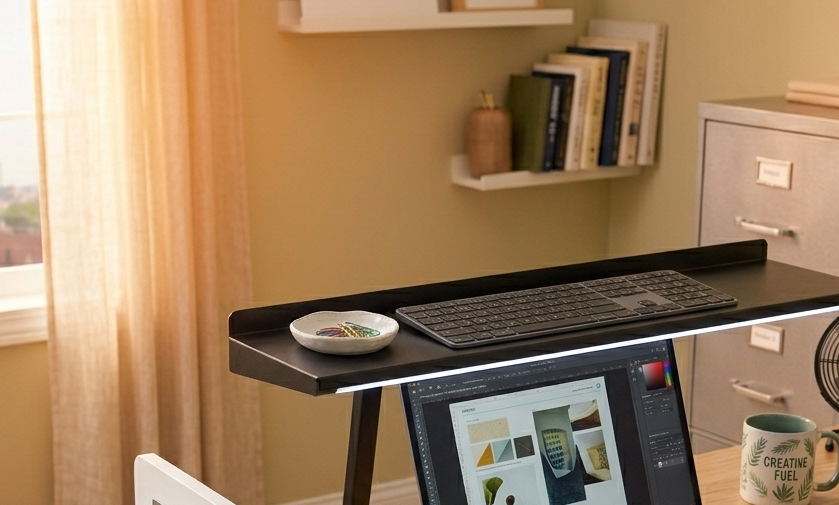
Sometimes you need a temporary second surface for a coffee mug, a reference book, or your lunch. A foldable wall-mounted side table (also called a “murphy table”) is the answer. Mount it on the wall beside your main desk. When you need it, flip it down. When you’re done, flip it up flat against the wall. It takes up zero floor space. Look for one with a small lip to prevent items from rolling off.
Tips
- Install it at the same height as your main desk for a continuous feel.
- Use it only for lightweight items (under 10 pounds).
- Add a small adhesive hook on the wall to hang it in the folded position.
Conclusion
You don’t need a sprawling home office to be productive. With these 13 small workspace organization ideas, any corner, closet, or cramped nook can become a clean, calm, and efficient work zone. Start with just one or two ideas that fit your space and budget. Your focus (and your sanity) will thank you. Which idea will you try first? Let me know in the comments below.
FAQs
Can I organize a tiny home office without drilling holes in the wall?
Absolutely. Use adhesive magnetic panels, over-the-door organizers, rolling carts, and stackable acrylic units. Command strips are also great for lightweight shelves and pegboards.
What’s the best color for small office organization?
Light colors like white, light gray, beige, or pastels make a small space feel larger. Use clear or acrylic organizers to reduce visual clutter. Add small pops of color with accessories like pen cups or sticky notes.
How do I hide computer cables in a tiny office?
Use a vertical pegboard with hooks to route cables up and away from the floor. Alternatively, bundle cables with Velcro ties and stick adhesive cable clips under your desk or along the back edge. A power strip mounted under the desk also works wonders.