13 Genius Small Apartment Decorating Hacks That Actually Work
Does your small apartment feel more like a closet than a cozy home? You’re not alone. Millions struggle with cramped layouts, zero storage, and furniture that just doesn’t fit. But here’s the truth: you don’t need a moving truck or a demolition crew. You need smart strategies.
The right decorating hacks can transform a tight studio or a tiny one-bedroom into a functional, beautiful sanctuary. Think multipurpose furniture, vertical magic, and optical illusions that make ceilings feel higher. In this guide, I’m sharing 13 genius small apartment decorating hacks that actually work no renovation required. Whether you rent or own, these ideas are practical, affordable, and stylish. Let’s make your small space feel huge.
1: Float Your Furniture Away From Walls
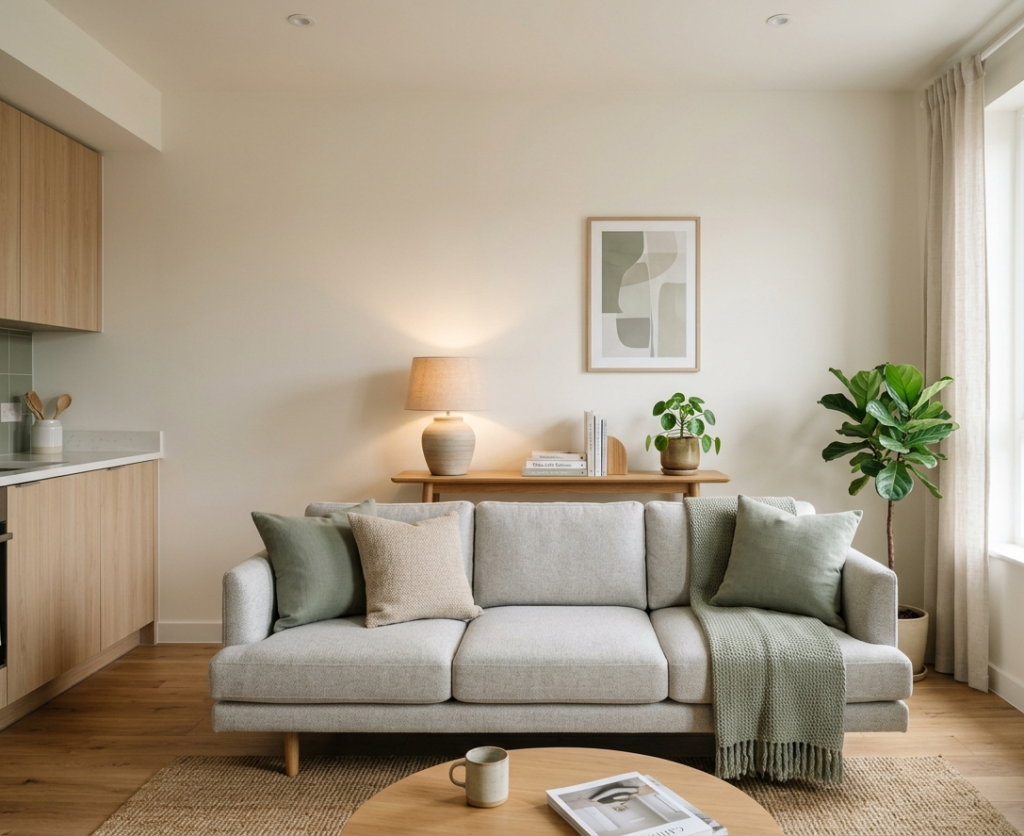
Pushing all your furniture against the wall feels intuitive in a small apartment, but it actually makes rooms look smaller. When you float pieces pulling the sofa even a foot inward you create walking paths and visual breathing room. This trick tricks the eye into seeing distinct zones (living, dining, working) without walls. In a studio, floating a sofa to face an open bookshelf defines a “living room” behind your bed area. The negative space behind furniture also becomes usable for narrow console tables or storage baskets.
Tips
- Leave at least 30 inches of walking space behind floated furniture.
- Use a slim sofa table behind a couch for lamps and decor.
- Anchor floated arrangements with an area rug to define the zone.
2: Install Floor-to-Ceiling Curtains

Low-hanging curtains chop up your walls and make ceilings feel squat. The hack? Mount your curtain rod just a few inches below the ceiling and let drapes puddle slightly on the floor. This vertical line draws the eye upward, creating an illusion of height and grandeur even in a 700-square-foot apartment. Use lightweight linen or cotton to avoid heaviness. Bonus: floor-length curtains also hide ugly radiators, AC units, or clutter behind the sofa. Choose a color close to your wall tone for a seamless look, or go bold to make the ceiling feel like it’s soaring.
Tips
- Rods should extend 6–12 inches beyond window frames to maximize light.
- Pick double rods for sheers (privacy) and blackouts (sleep).
- Wash curtains regularly; dust loves long drapes.
3: Use Mirrors as False Windows

Mirrors are the oldest small-space trick for a reason they double light and depth instantly. But don’t just lean any mirror anywhere. Place a large mirror directly across from a window to reflect the outdoor view like a second window. In a windowless hallway or bathroom, hang a mirrored cabinet or a full-length mirror on a wall perpendicular to the light source. For maximum effect, choose arched or round mirrors they soften sharp corners and feel like portals. Pro tip: avoid facing mirrors directly at each other (that infinite tunnel effect is dizzying, not chic).
Tips
- Lean a tall mirror behind a dining table to double the room.
- Use mirrored closet doors to make a narrow bedroom feel wider.
- Clean mirrors with vinegar water; streaks kill the illusion.
4: Turn a Bookshelf Into a Room Divider

In studio apartments, you need separation without walls. An open-back bookshelf (often called a etagere) acts as a perfect room divider. Place it perpendicular to a wall, with the “front” facing your living area and the “back” facing your sleeping nook. You gain storage on both sides: books and plants facing the couch, folded linens and a small lamp facing the bed. The open slats let light and air pass through, unlike bulky room dividers. For stability, anchor the shelf to the ceiling or floor with L-brackets (rental-friendly version: use furniture anti-tip straps).
Tips
- Fill shelves 70% full to avoid a cluttered look.
- Use identical baskets on the sleeping side for hidden storage.
- Keep heavier items on bottom shelves for safety.
5: Hang Pegboards on Empty Walls

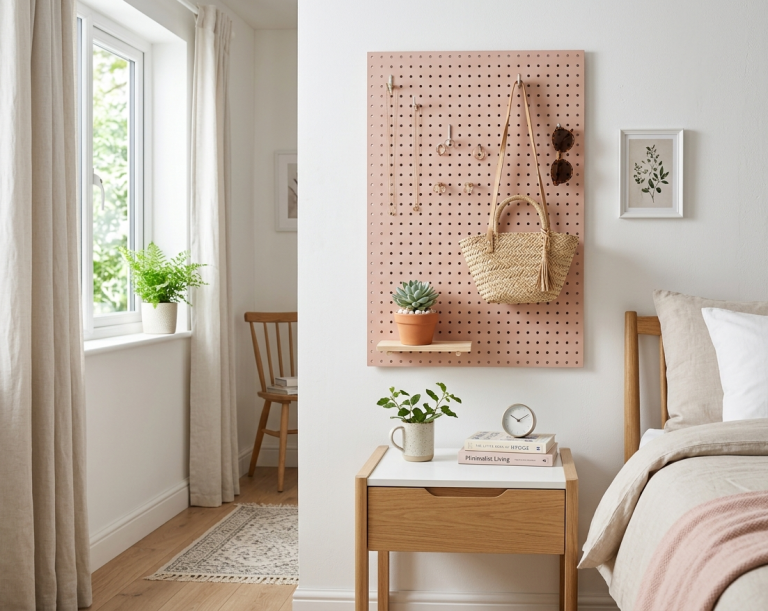
Tiny kitchens and entryways suffer from “dead wall syndrome” that useless space between a door frame and a counter. Enter the pegboard. A painted pegboard turns any narrow wall into customizable vertical storage. In the kitchen, hang pots, utensils, and even small spice jars. By the door, hold keys, masks, leashes, and a small mirror. In a home office, store scissors, rulers, and headphones. The beauty is flexibility: move hooks as your needs change. For a polished look, buy acrylic pegs and a wood-framed pegboard instead of the basic hardware store version.
Tips
- Drill pilot holes into studs or use heavy-duty drywall anchors.
- Spray-paint pegboards to match your wall color for a seamless look.
- Add small shelves to pegboards for phones or notepads.
6: Choose a Glass Coffee Table
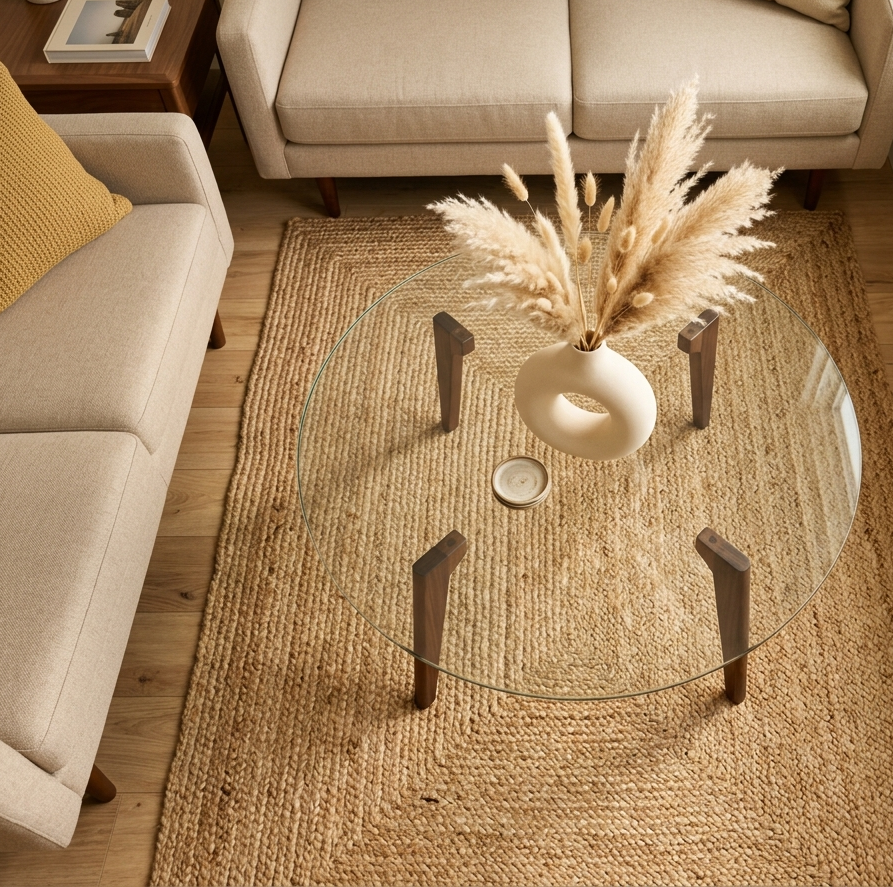
Solid coffee tables especially dark wood or upholstered ottomans visually clog a small living room. A clear glass or acrylic coffee table disappears, making the floor space look continuous and larger. Your eye sees the rug and flooring underneath instead of a bulky block. Bonus: you can still store a tray, books, or a small plant on top without sacrificing that airy feel. For safety, opt for tempered glass with rounded corners. Pair with a slim metal or wood base to add warmth without weight.
Tips
- Keep glass spotless with a microfiber cloth (smudges ruin the illusion).
- Place a single decorative object on top, not a cluttered collection.
- Avoid glass shelves underneath; they collect visible dust.
7: Add Vertical Stripes With Wallpaper

Horizontal stripes widen a room; vertical stripes raise a ceiling. For small apartments with standard 8-foot ceilings, install vertical stripe wallpaper on one accent wall preferably the one behind your sofa or bed. The lines pull the eye up, making the wall feel taller. You don’t need loud contrast. Try tone-on-tone stripes (matte and satin finish in the same color) or subtle navy and light blue. Removable peel-and-stick wallpaper is renter-friendly. Avoid wide stripes (over 6 inches), which flatten the effect. Narrow, repeated stripes (2–4 inches) work best.
Tips
- Apply wallpaper only to the wall farthest from the entry door.
- Match vertical stripes with floor-to-ceiling curtains for double height.
- Use a laser level to ensure stripes are perfectly vertical.
8: Use Stackable or Nesting Tables

Side tables and occasional tables are essential but greedy with floor space. Nesting tables (two or three that slide under each other) give you surfaces only when you need them. Keep them nested for a single small footprint, then pull one out for a guest’s coffee or a laptop workspace. Stackable stools work the same way use one as a plant stand, and three as extra seating. Look for materials like metal, acrylic, or light wood to keep visual weight low. After guests leave, slide them away in seconds.
Tips
- Nest tables beside a sofa or armchair for daily use.
- Choose sets with slightly different heights for versatility.
- Add felt pads to prevent scratching when nested.
9: Mount Floating Nightstands
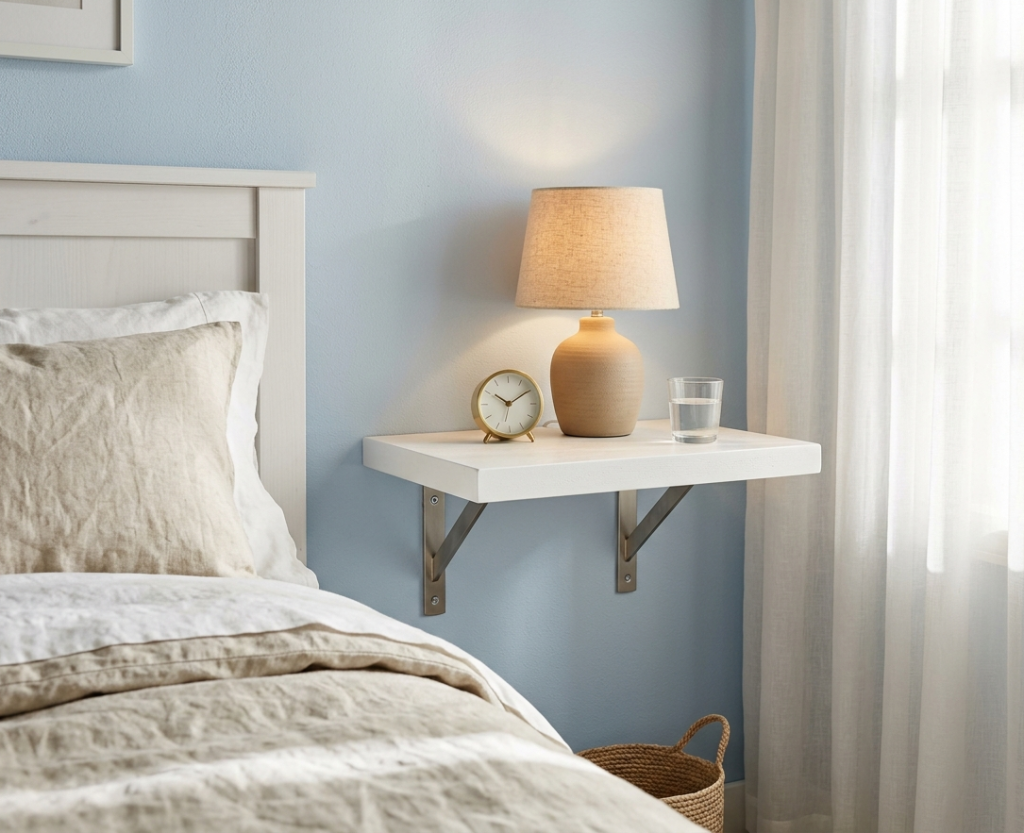
Traditional nightstands with legs take up precious floor space and make a small bedroom feel crowded. Floating shelves or wall-mounted nightstands free up that square footage, making the floor visible and the room feel larger. Mount them at mattress height so your phone, glasses, and a small lamp are within reach. Look for styles with a small lip or drawer to prevent items from sliding off. For a budget hack, install two deep floating shelves one at nightstand height, one above for books and decor. No dust bunnies underneath either!
Tips
- Anchor into studs; floating shelves must hold at least 15 pounds.
- Leave 2 inches between the shelf and the mattress for bedding tuck.
- Add a wall-mounted reading light above to save surface space.
10: Hang Baskets on Walls
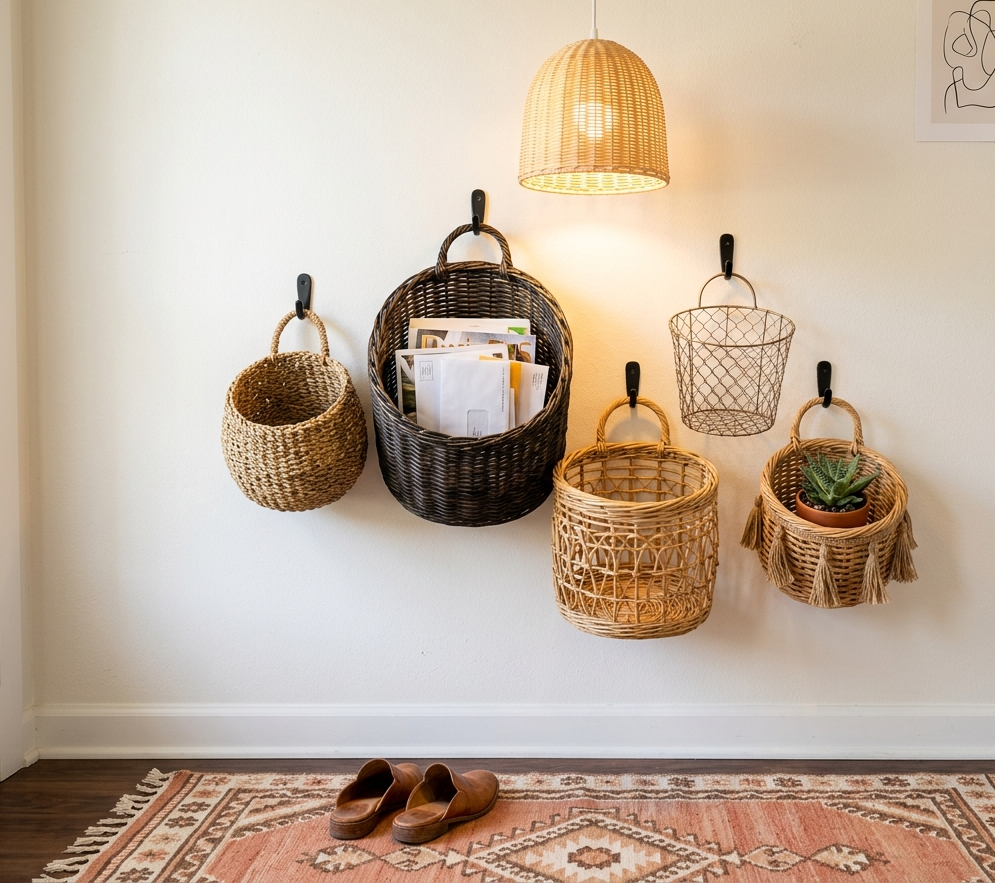
Storage is a constant battle in small apartments. Instead of letting baskets eat up floor space, hang them on walls as both art and storage. Woven wicker, seagrass, or wire baskets mounted in a cluster create a textured gallery wall. Use them to store mail, remote controls, scarves, or dog leashes. In the bathroom, hang small metal baskets for toiletries. In the kitchen, hold root vegetables or dish towels. The key is mixing sizes and depths for visual interest. Use two small nails per basket or adhesive hooks for lightweight ones.
Tips
- Spray-paint wire baskets to match your wall for a hidden look.
- Line baskets with fabric to prevent small items from falling through.
- Hang at varying heights and offsets (not a perfect grid).
11: Place a Bench at the Foot of the Bed

A narrow bench at the foot of a bed solves multiple small-bedroom problems. It gives you a place to sit while putting on shoes, a landing zone for extra pillows or a folded throw blanket, and hidden storage if you choose a lift-top bench. More importantly, it visually anchors the bed and creates a clear “end” to the sleeping zone. In a studio, this bench becomes the divider between your sleeping area and living area. Stick to benches with exposed legs (not skirted) so you still see floor underneath. Keep the width slightly narrower than your mattress.
Tips
- Use a storage bench for off-season clothes or extra linens.
- Top the bench with a tray for keys and a small plant.
- Avoid placing it in a doorway path; leave 24 inches clearance.
12: Install Under-Shelf Baskets

Most people ignore the air between their shelves. Clip-on wire baskets turn that dead space into instant storage. Attach them underneath any standard shelf pantry, bathroom vanity, or desk. Use them for coffee mugs (hang from mug hooks inside the basket), spices, makeup brushes, or office supplies. The baskets hang completely out of the way but keep items visible and accessible. Look for rust-resistant steel for bathrooms or kitchens. For a cleaner look, spray-paint them white or black to match your shelving unit.
Tips
- Measure shelf thickness before buying (most fit 0.5–1 inch).
- Don’t overload; 5–10 pounds max per basket.
- Use two baskets side-by-side under a long shelf for double storage.
13: Paint Your Trim Darker Than Walls
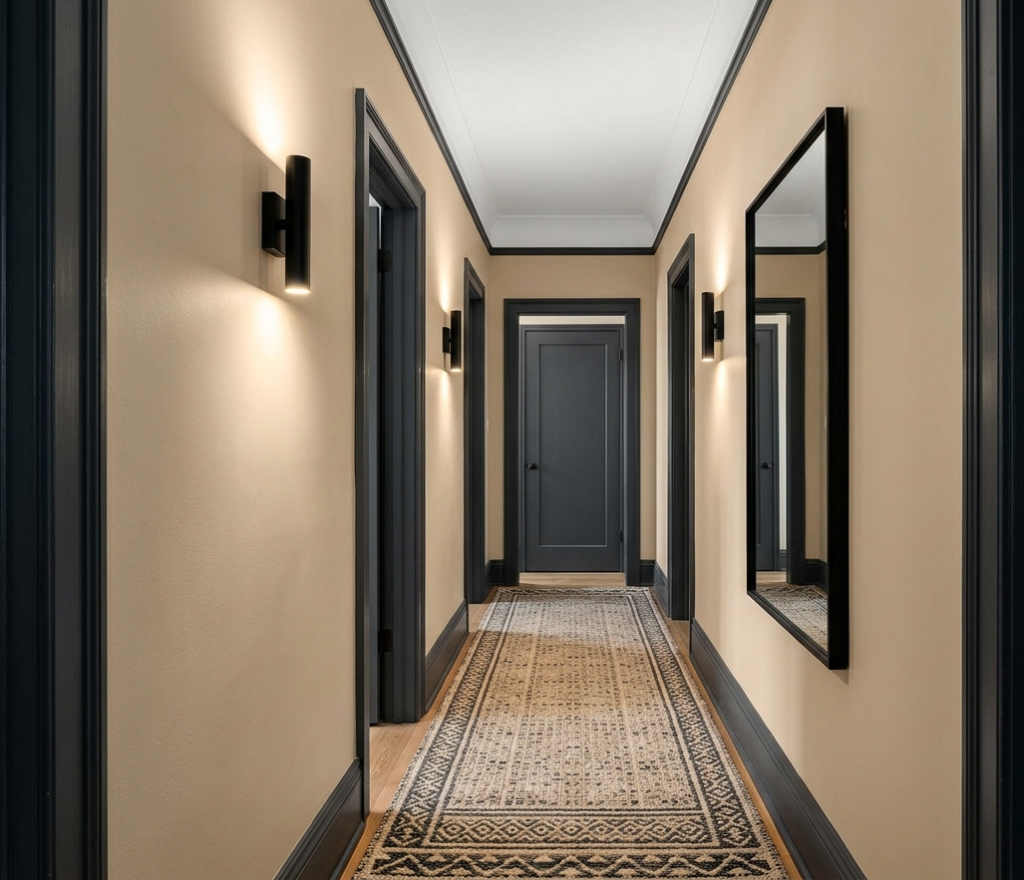
Conventional wisdom says white trim makes rooms feel bigger. But in very small apartments (under 500 square feet), dark trim charcoal, navy, or deep forest green actually pushes walls outward visually. Here’s why: dark recedes, so your eye skips over the trim and focuses on the lighter wall color as the “main” space. The contrast makes walls seem farther apart. Try painting baseboards, door casings, and window frames a dark shade that complements your wall color. Keep ceilings white for height. This trick works especially well in narrow hallways and tiny bathrooms.
Tips
- Use semi-gloss for trim; it reflects light and is easy to clean.
- Test with painter’s tape first tape dark paper to trim to preview.
- Get landlord permission or use removable peel-and-stick trim film.
Conclusion
Small apartments don’t have to feel small. With these 13 genius decorating hacks, you can reclaim every inch, add style, and actually enjoy your space. From floating furniture to dark trim, each idea is rental-friendly, budget-conscious, and proven to work. Start with one hack this weekend maybe the floating nightstands or the glass coffee table and feel the difference immediately. Which hack will you try first? Drop a comment below or pin this guide for your next apartment refresh.
FAQs
Do small apartment hacks work in rentals without damaging walls?
Yes, absolutely. Most hacks in this list are renter-friendly: peel-and-stick wallpaper, floating shelves with minimal holes (easily spackled), and clip-on under-shelf baskets. For mirrors and pegboards, use command strips or tension rods. Always check your lease, but small nail holes are typically considered normal wear and tear.
What’s the single best hack for a studio apartment?
Floating furniture and using a bookshelf as a room divider. Studios need zones. A low bookshelf perpendicular to a wall separates “sleeping” from “living” without blocking light. Add a rug on each side, and your brain registers two rooms instead of one big box.