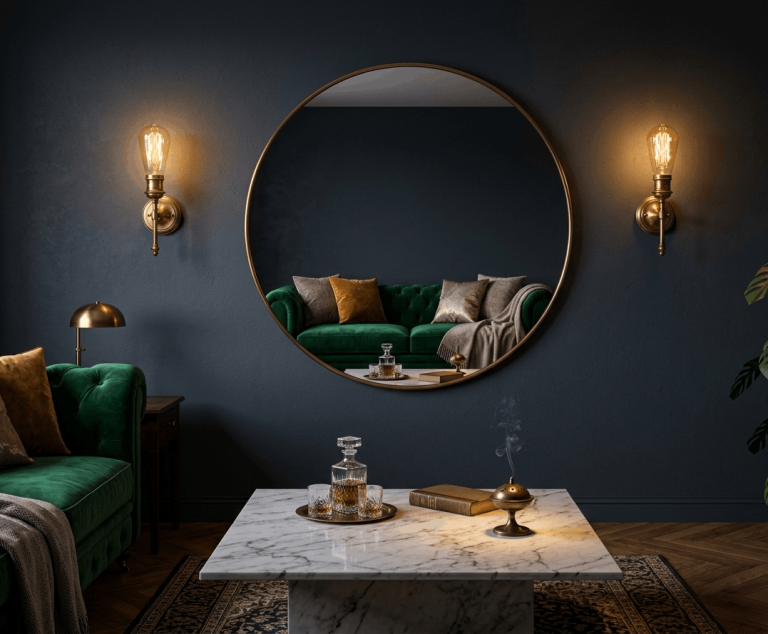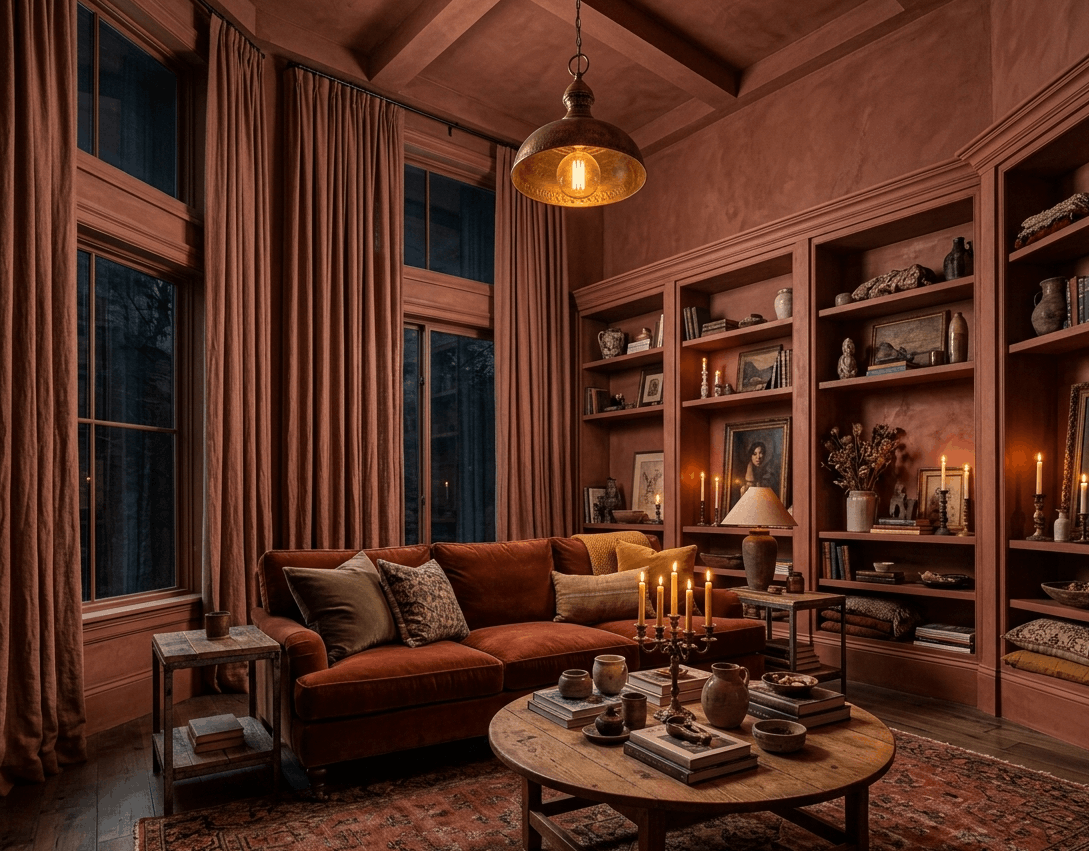
14 Living Room In-House Ideas
Does your living room feel more like a forgotten storage space than the heart of your home? You’re not alone. Many of us stare at the same four walls, unsure how to blend comfort, style, and function without a full renovation. The good news? You don’t need a massive budget or a designer on speed dial. With the right in-house living room ideas, you can turn any dull space into a warm, welcoming hub for family and friends. In this guide, we’ll walk you through 15 creative, actionable concepts from smart zoning tricks to bold color drenching. Let’s get started.
1: Zoned Open-Plan Living
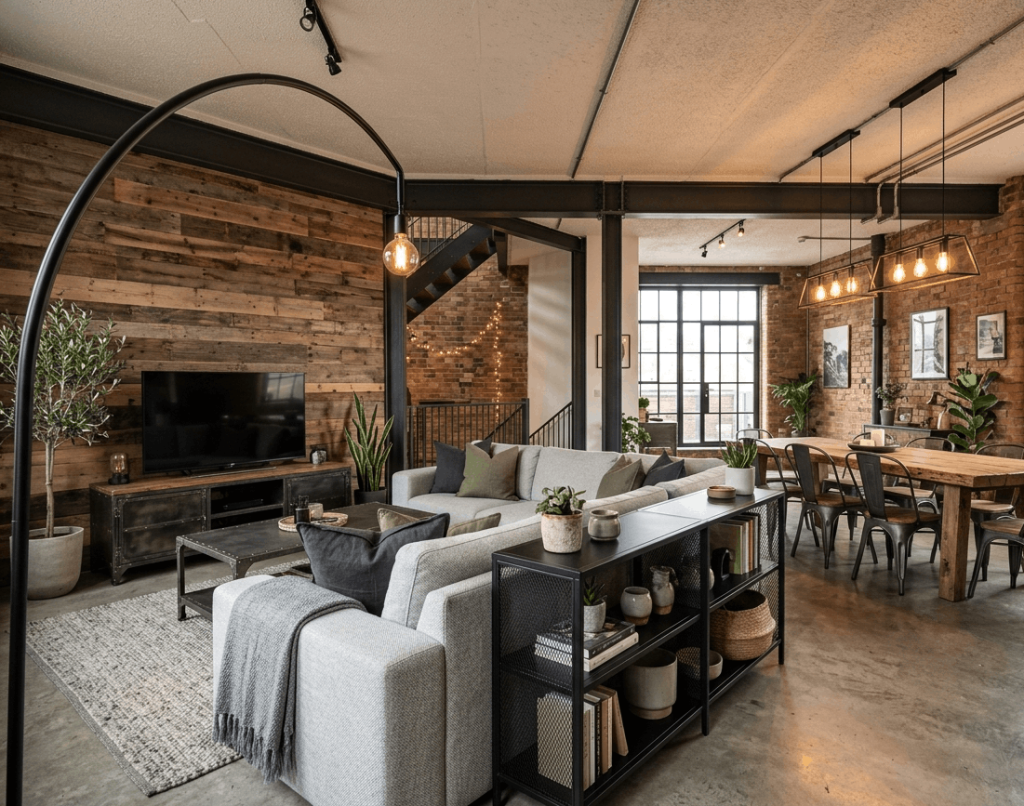
Open-plan layouts can feel chaotic if every area blends into the next. Zoning creates distinct “rooms” within one large space using furniture, rugs, or half-walls. For example, float your sofa to face away from the dining table, or use a low bookshelf as a visual divider. This keeps conversation areas intimate while maintaining an airy flow. Zoning also helps define work-from-home corners or play zones without losing the social vibe.
Tips
- Use a large area rug under the seating group to anchor the zone.
- Align pendant lights or track lighting above each functional area.
- Leave a clear walkway between zones for natural traffic flow.
2: Color Drenching for Drama
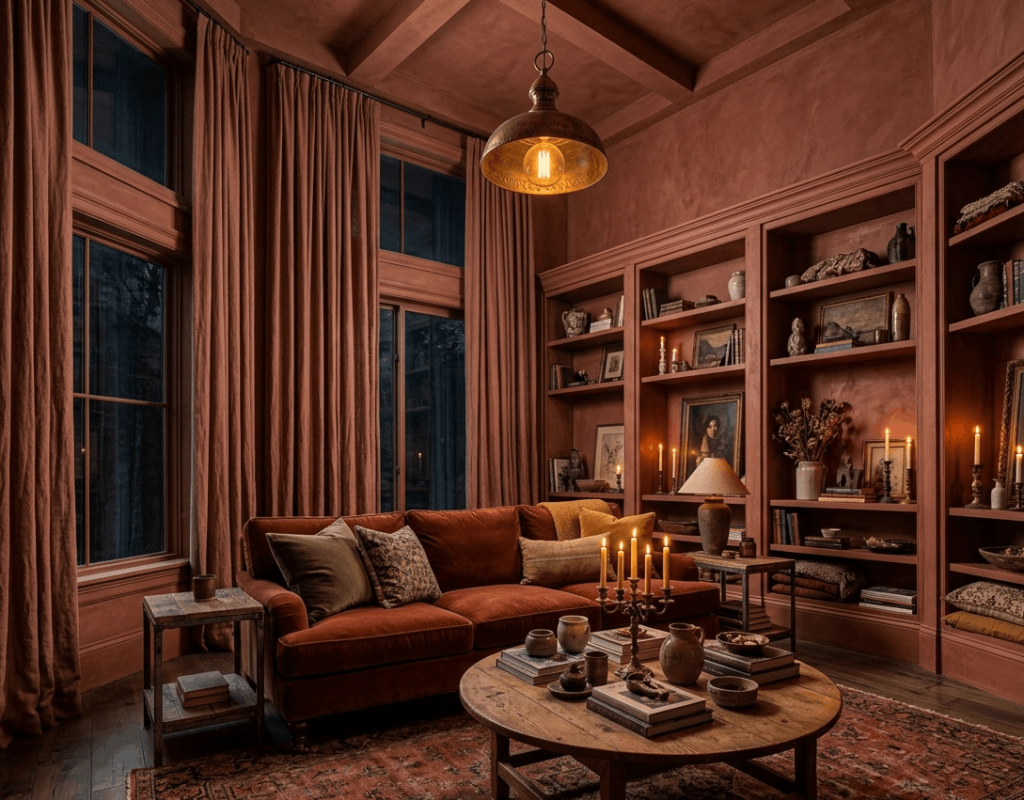
Instead of accent walls, try color drenching: paint the walls, ceiling, trim, and even radiators the same hue. This bold living room idea creates a cocooning, dramatic effect that makes ceilings feel higher and corners disappear. Deep teal, terracotta, or charcoal work beautifully. Break the monotony with different textures velvet sofa, linen curtains, jute rug rather than contrasting colors. The result is sophisticated, unexpected, and deeply restful.
Tips
- Choose a mid-tone color so it doesn’t feel too dark or too bright.
- Add one metallic or glass element (lamp, mirror) to reflect light.
- Use matte paint on walls and satin on trim for subtle contrast.
3: Biophilic Living Room
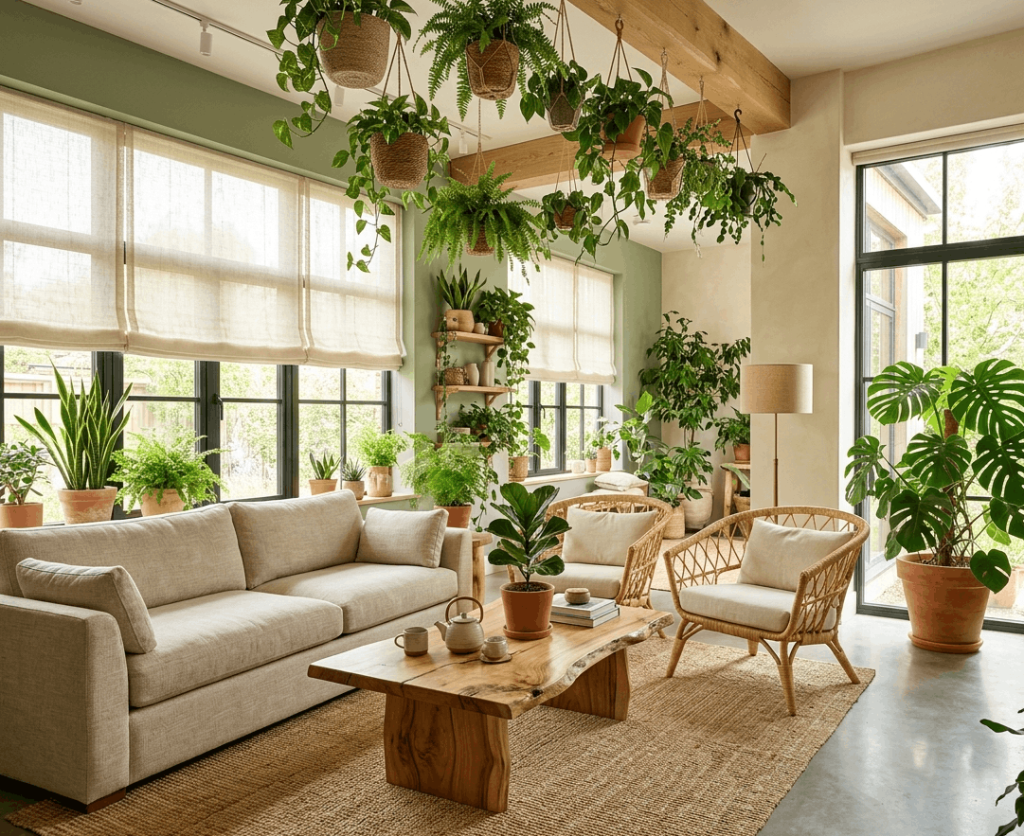
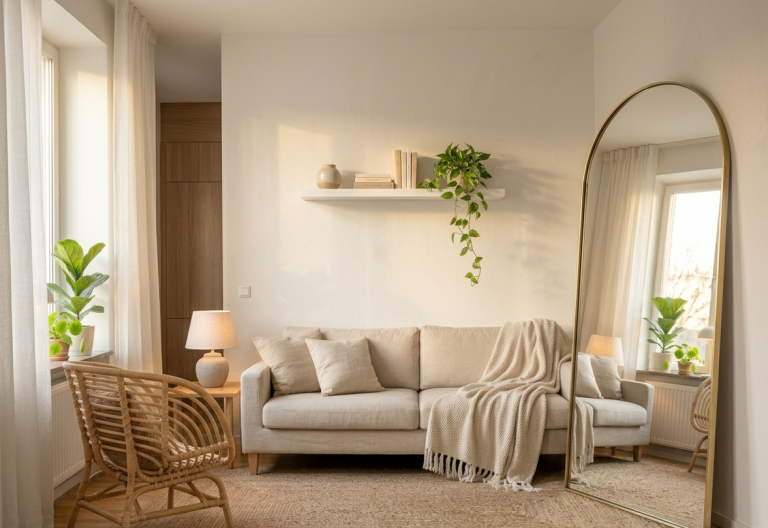
Bring the outdoors in with a biophilic design. This goes beyond one potted plant think layered greenery, natural materials, and organic shapes. Place a large fiddle-leaf fig near the window, hang trailing pothos from ceiling hooks, and use a stone or wooden coffee table. Biophilic spaces lower stress and improve air quality. Even in apartments with little light, low-maintenance snake plants or ZZ plants thrive. The key is clustering plants at different heights for that lush, greenhouse feel.
Tips
- Mix leaf shapes: broad (monstera), long (spider plant), and small (string of pearls).
- Use rattan, bamboo, or unfinished wood furniture.
- Add a water feature like a small tabletop fountain for sound.
4: Curved Furniture & Soft Edges
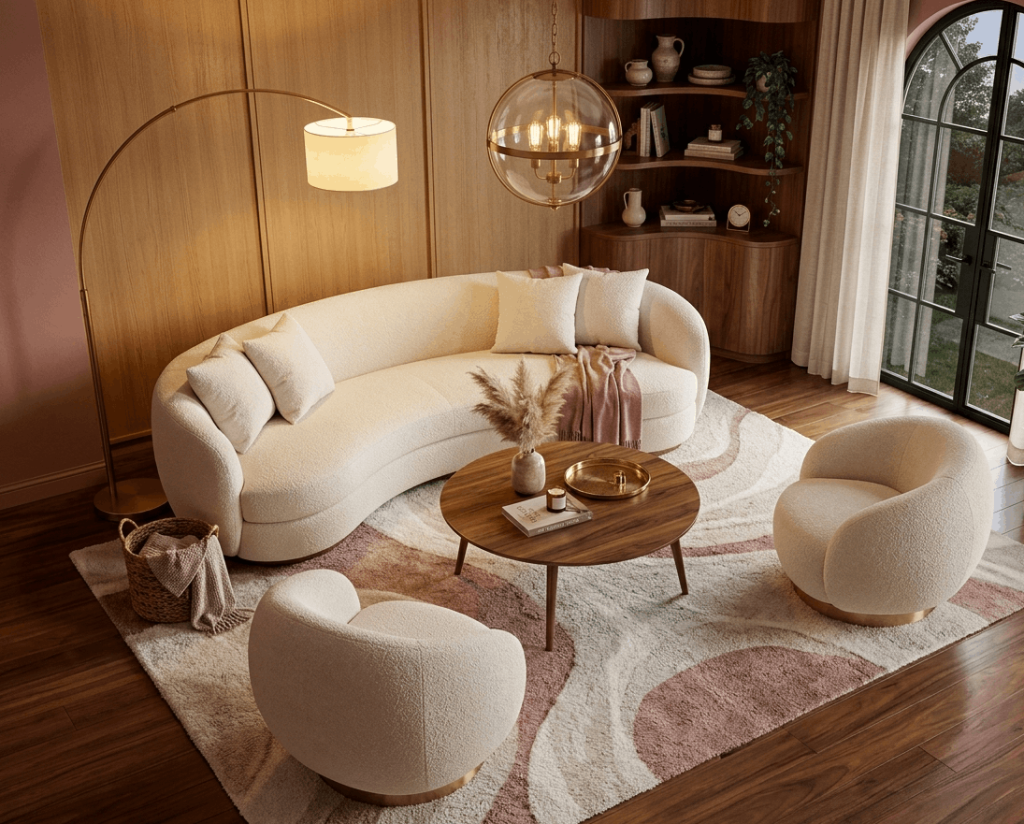
Sharp corners and boxy sofas can feel rigid. Swap in curved furniture a kidney-shaped coffee table, a round swivel chair, or a crescent-shaped sofa to make your living room feel more inviting and conversational. Curves also soften the visual noise in small spaces. If buying new pieces isn’t an option, add a large circular mirror or an arched floor lamp. The brain reads curves as safer and more relaxing, which is exactly what a living room should be.
Tips
- Pair curved sofas with a round, nested coffee table.
- Use an oval wool rug under the seating group.
- Replace sharp wall art with a circular canvas or sunburst mirror.
5: Double-Duty Fireplace Wall
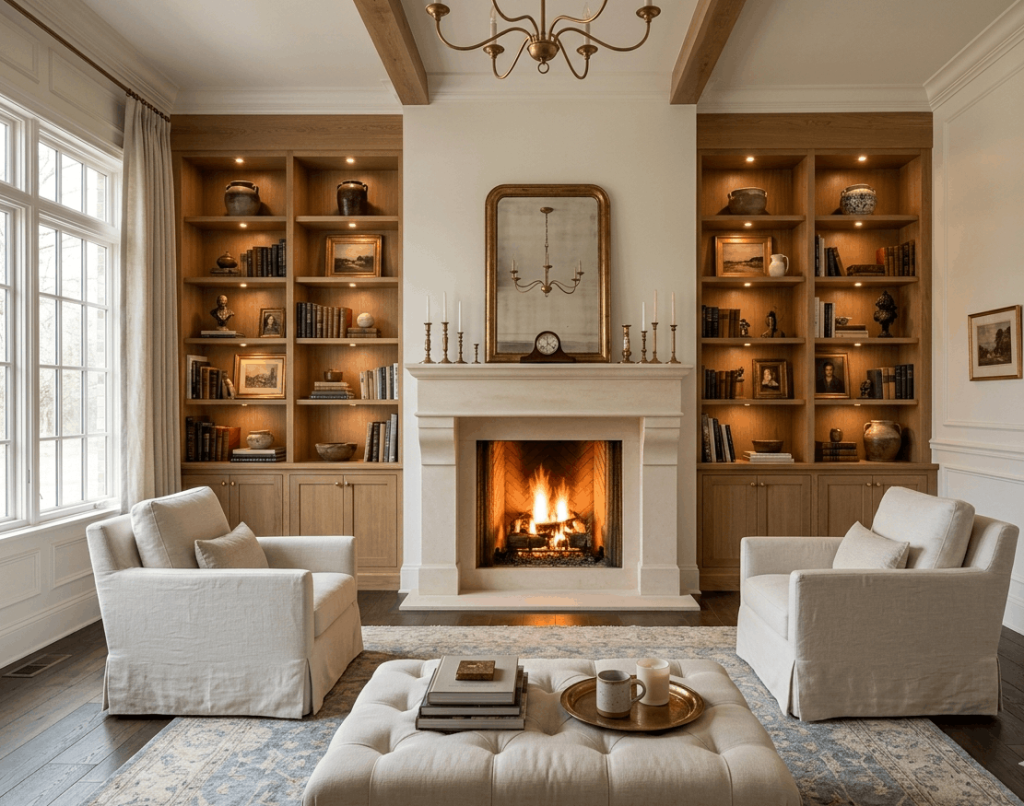
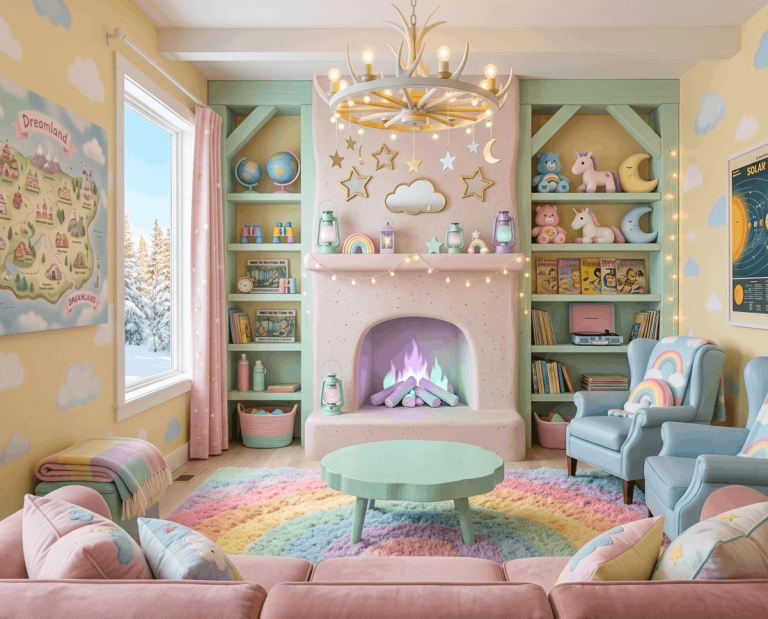
If you’re lucky enough to have a fireplace, make it the undisputed hero. Build out the wall with built-in shelving on both sides, a large mirror or art above the mantel, and a cozy seating arrangement directly facing it. Even non-working fireplaces can hold candles, a log stack, or a decorative screen. This anchors the entire room and provides storage. For a modern twist, paint the brick or tile in a high-heat matte black or soft white.
Tips
- Install dimmable sconces inside the built-in shelves.
- Use a marble or concrete hearth for a clean look.
- Stack birch logs in a metal basket for texture.
6: Converted Bay Window Nook
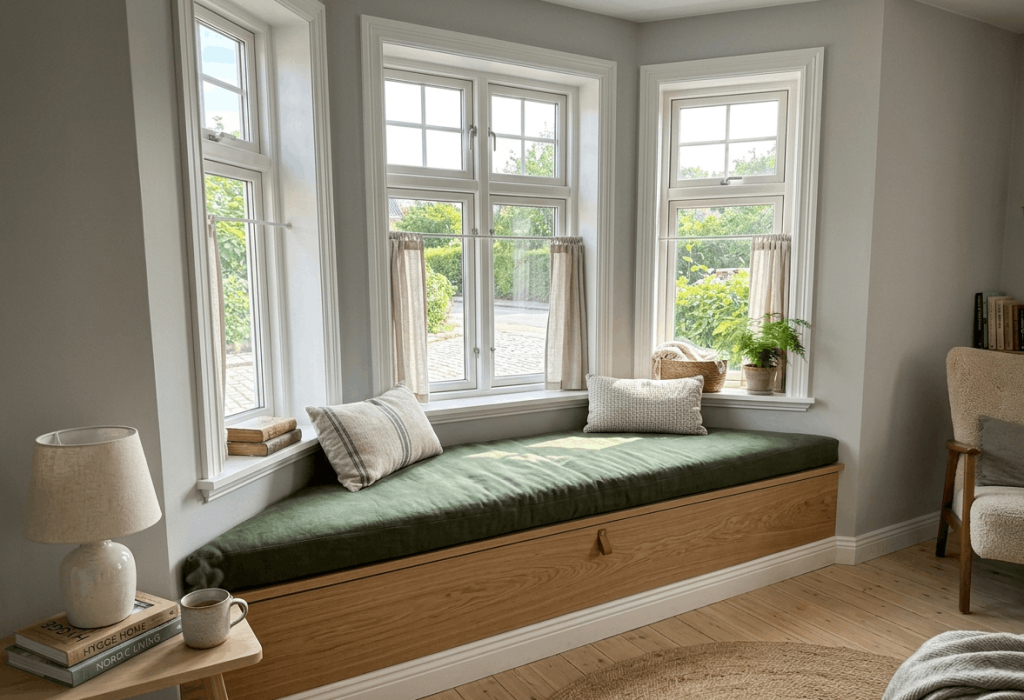
Bay windows often go underused. Transform that bump-out into a destination. Build a low, custom bench with hidden storage, add a plush cushion, and pile on throw pillows. Or place a small round table with two chairs for morning coffee. This living room idea adds valuable seating without eating floor space. Use Roman shades inside the window frame to keep the cozy vibe while controlling light.
Tips
- Choose a cushion fabric that’s fade-resistant and easy to clean.
- Add a swing-arm wall lamp for reading.
- Keep the view clear don’t block the window with tall plants.
7: Modular Sectional for Flexibility
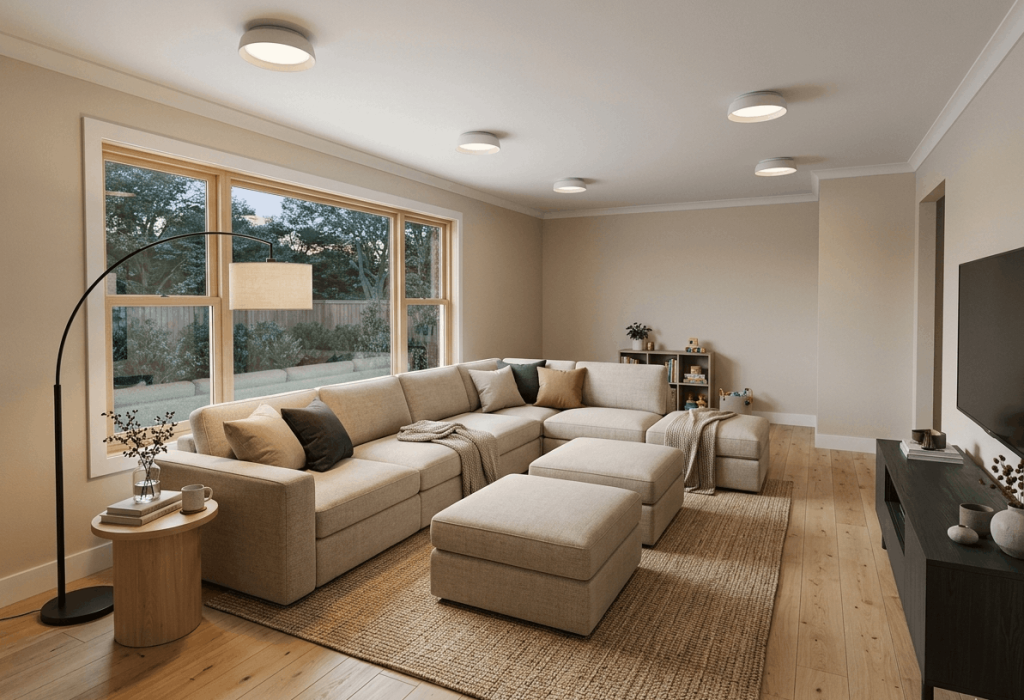
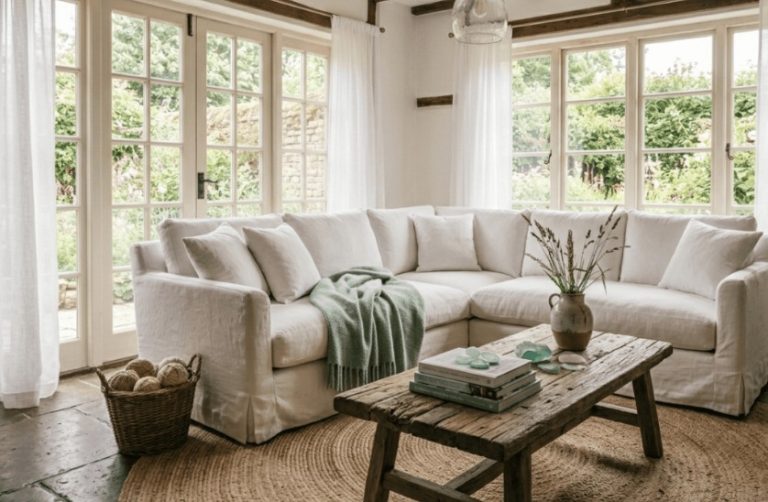
A massive, fixed sofa locks your layout. Instead, choose a modular sectional with pieces you can rearrange armless chairs, corner wedges, ottomans, and chaise extensions. Hosting movie night? Make a giant U-shape. Need floor space for yoga? Break it into two loveseats. This works brilliantly for renters or families whose needs change. Look for pieces with storage under the seats or reversible chaise options. It’s the ultimate living room hack for small or awkward spaces.
Tips
- Start with 3–4 core pieces; you can always add more later.
- Use the ottomans as coffee tables with a large tray.
- Choose performance fabric if you have kids or pets.
8: Statement Ceiling Treatment
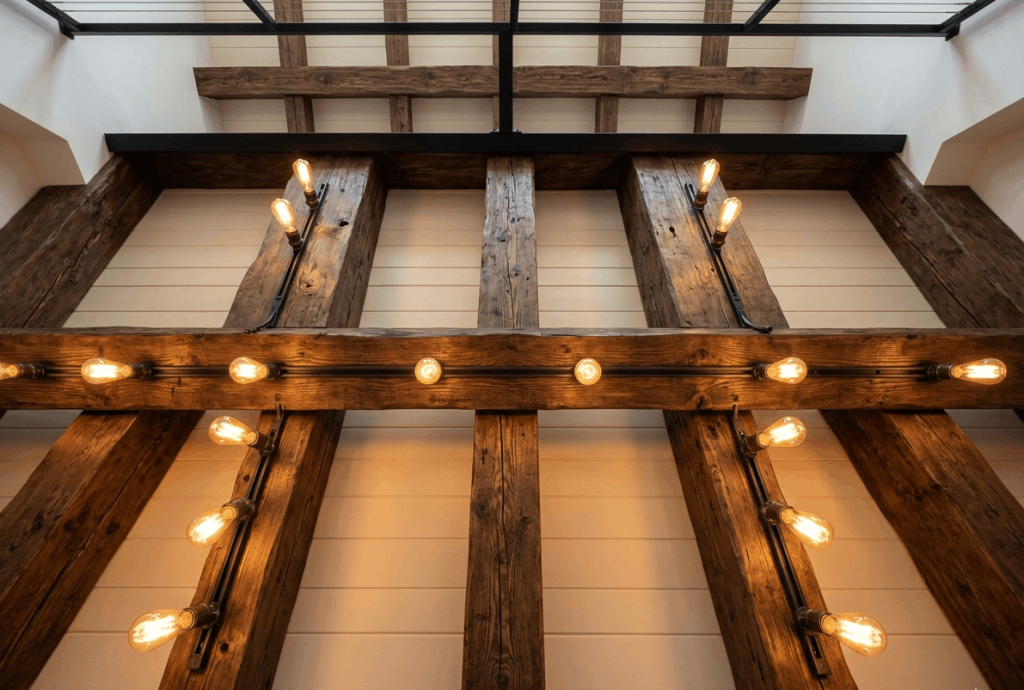
Don’t ignore your fifth wall. Paint the ceiling a soft blush, wallpaper it with a subtle pattern, or add wood beams (faux or real). A darker ceiling than the walls makes a large room feel intimate; a glossy white ceiling bounces light around a dark room. For drama, try tin-look ceiling tiles or a stretched fabric system. Guests will look up immediately, and you’ll wonder why you didn’t do it sooner.
Tips
- Extend the ceiling color 2 inches down the wall for a wrapped effect.
- Use peel-and-stick wallpaper for a renter-friendly option.
- Add a flush-mount chandelier or semi-flush light to highlight the treatment.
9: Hidden Tech & Cord-Free Surfaces
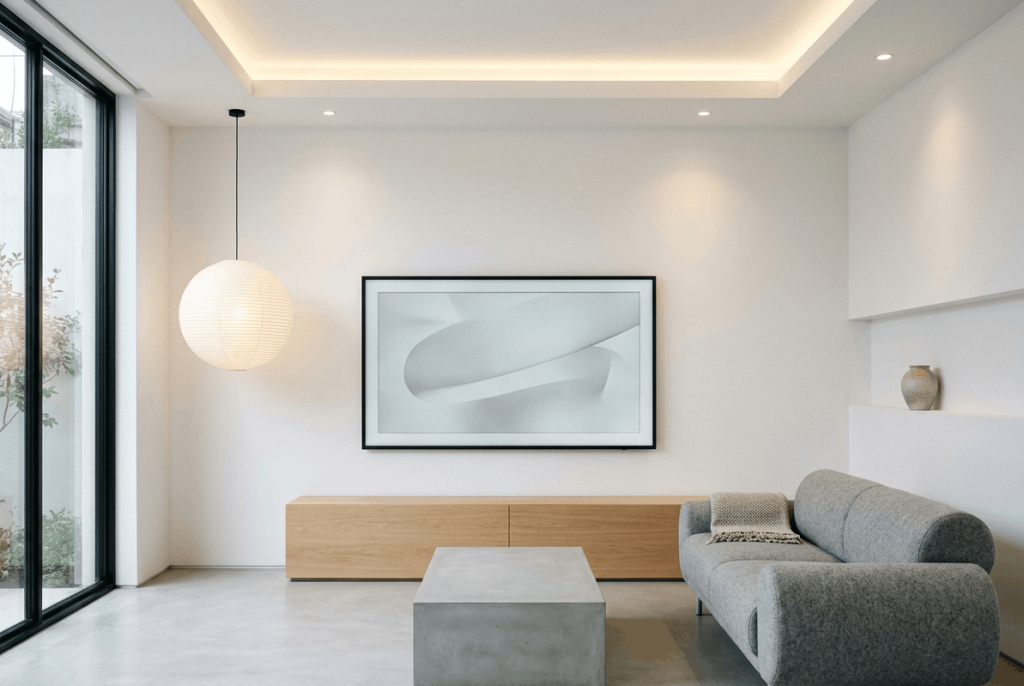
Clutter isn’t just physical it’s visual. Eliminate visible cords, routers, and cable boxes. Run cords through adhesive raceways painted to match your wall, or hide them inside a media console with a fabric back panel. Use a soundbar instead of surround speakers. For the ultimate clean look, mount your TV flush and store gaming consoles in a ventilated cabinet. Your living room will feel twice as large and infinitely calmer.
Tips
- Use a cord cover kit that sticks to baseboards.
- Choose a coffee table with a hidden power strip inside.
- Drill a small hole behind the TV stand to drop cords through.
10: Layered Lighting Zones
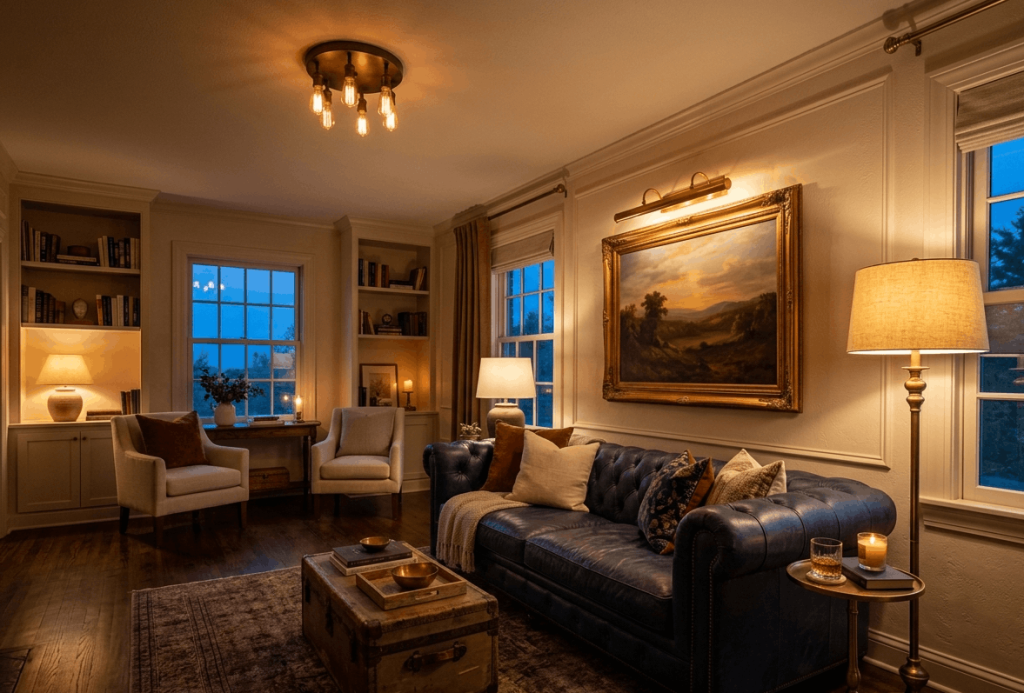
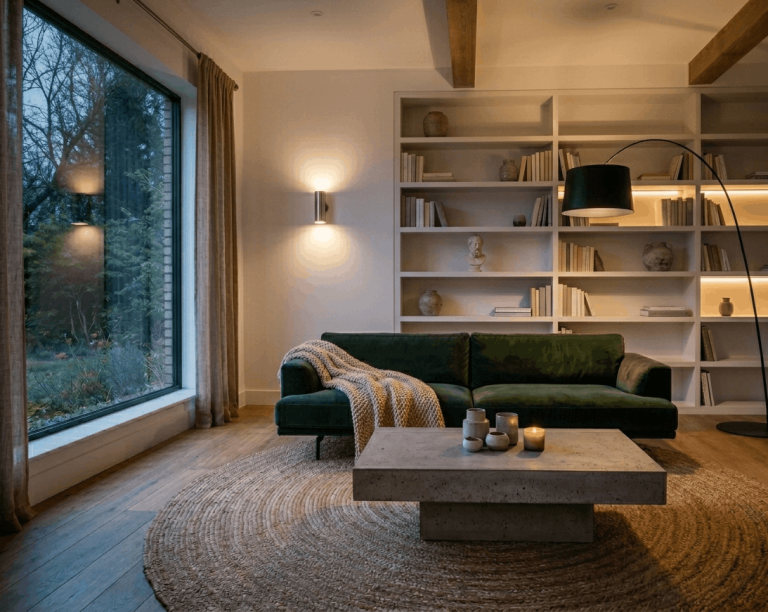
One overhead light makes a room flat. Create three layers: ambient (overhead dimmable), task (reading lamps, pendant above a desk), and accent (picture lights, toe-kick LEDs, uplights behind plants). This living room idea lets you shift from bright cleaning mode to soft movie night with a few switches. No rewiring? Use smart bulbs and plug-in sconces. Aim for at least five light sources in an average living room.
Tips
- Place task lights on either side of a sofa for symmetry.
- Use warm bulbs (2700K) for living areas, not cool white.
- Put accent lights on a separate dimmer or smart plug.
11: Indoor-Outdoor Flow Room
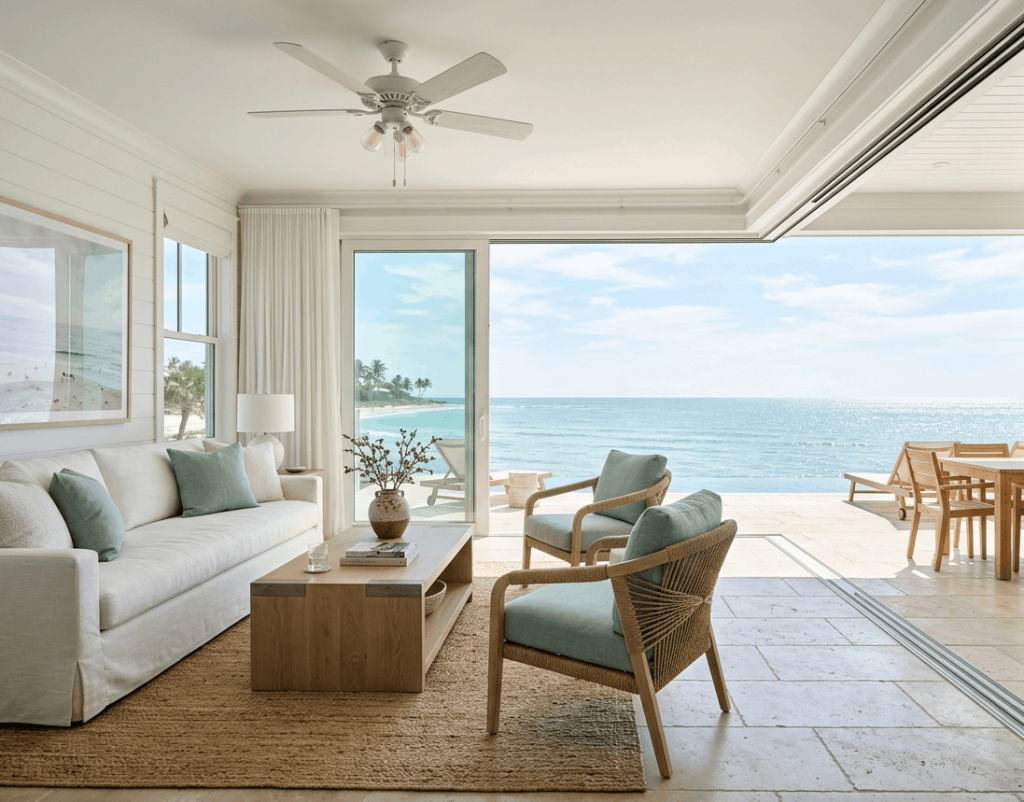
Blur the boundary between inside and out. Use the same flooring material (or similar tone) from your living room to patio. Choose sliding or bi-fold glass doors that stack completely open. Repeat colors, textures, and plants on both sides. Outdoor furniture that looks indoor-ready teak, powder-coated metal, all-weather wicker helps the transition. Even without a patio, position your sofa to face the largest window and mimic outside colors indoors.
Tips
- Use a large indoor/outdoor rug that extends visually outside.
- Install a sliding screen door to keep bugs out while doors are open.
- Add a small herb planter on the interior windowsill.
12: Vintage & New Mix
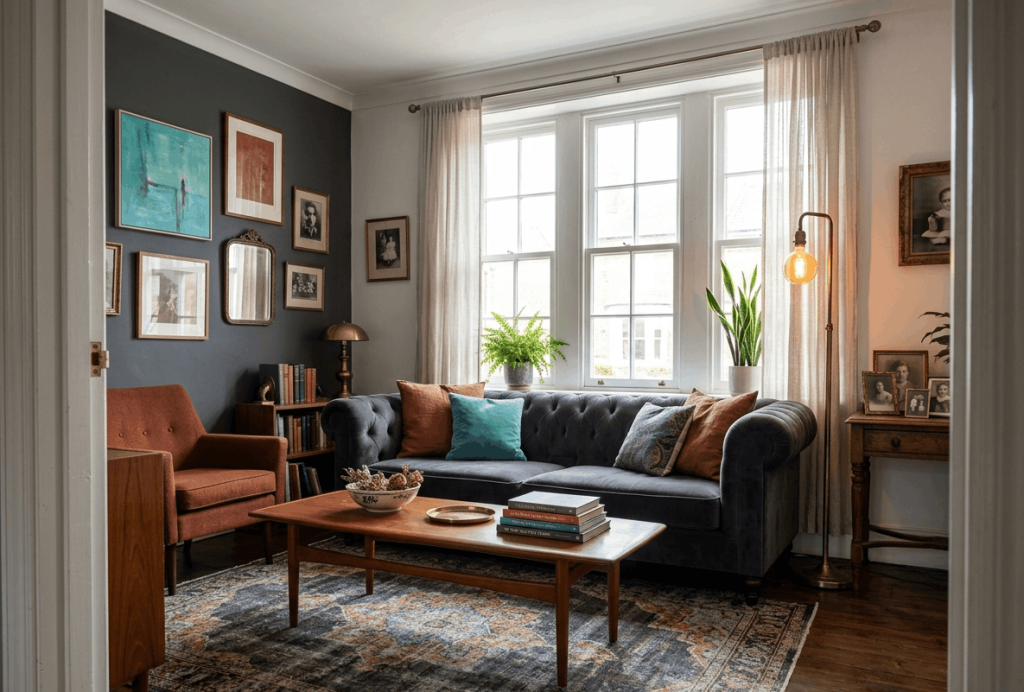
A room full of brand-new showroom furniture feels cold. Mix in one or two vintage pieces a worn leather armchair, a mid-century credenza, an oriental rug with patina. The contrast adds soul and stories. Don’t worry about “matching.” A sleek modern sofa next to an ornate wooden trunk works beautifully. Thrift stores, estate sales, and Facebook Marketplace are goldmines. Even one antique lamp can elevate an entire room.
Tips
- Reupholster a vintage chair in a modern fabric.
- Mix metals: vintage brass with new matte black.
- Keep large vintage pieces on one side of the room for balance.
13: Bookshelf as Art Display
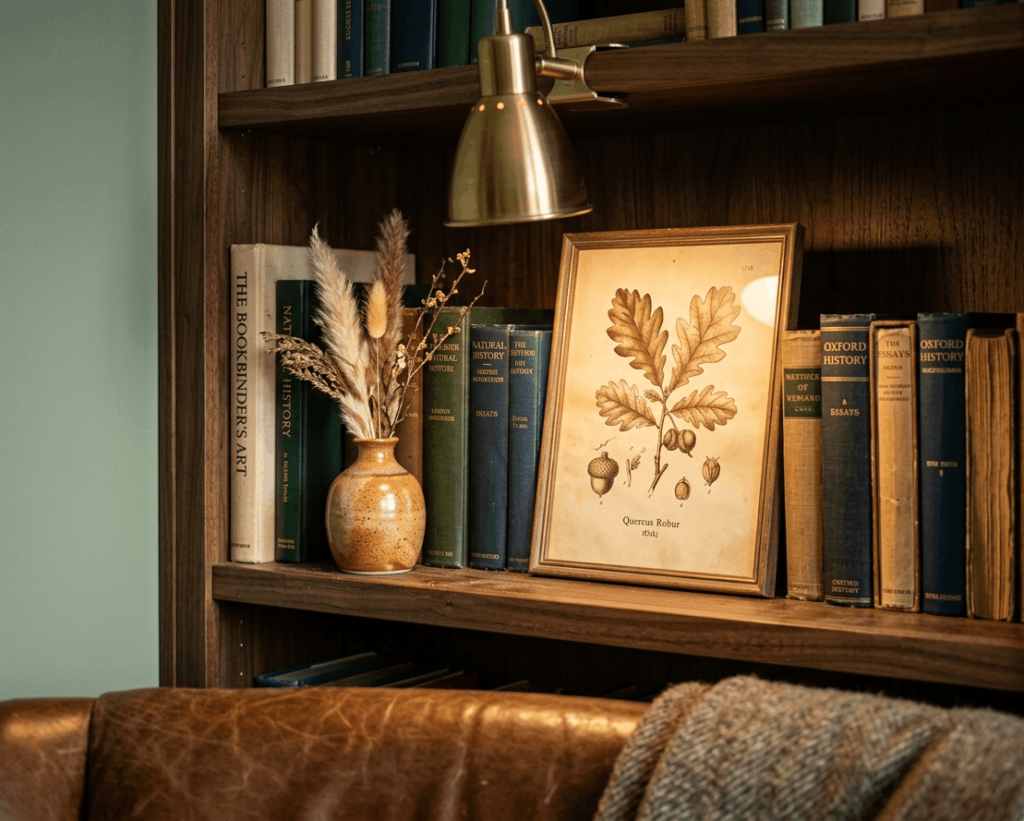
Stop organizing books by color or hiding them away. Turn your bookshelf into a rotating art gallery. Face some books cover-out, lean small prints or postcards between bookends, and place a tiny sculpture or vase every few shelves. Leave empty space (negative space) so the eye can rest. This living room idea costs almost nothing and changes as you do. It also makes you actually want to read those books.
Tips
- Remove 30% of your books to create breathing room.
- Layer a small mirror behind a sculpture for depth.
- Use bookends that are also art—marble, brass animal shapes.
14: Converted Corner Bar or Drink Station
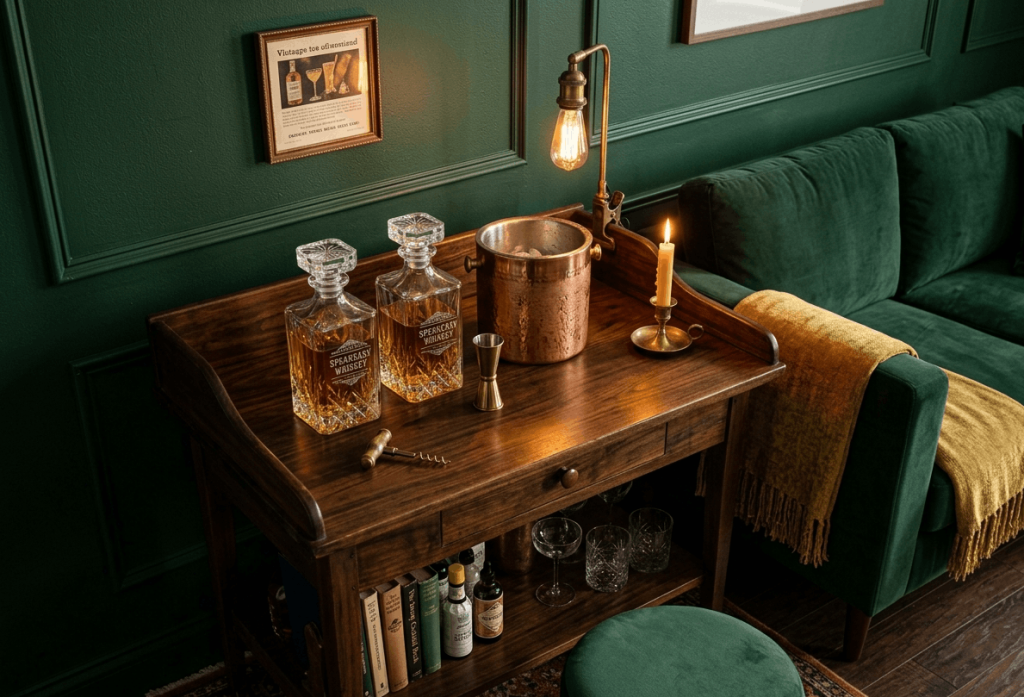
Claim an unused corner for a home bar or coffee station. A simple floating shelf at counter height, a small vintage cart, or a repurposed sideboard works perfectly. Stock it with your top three spirits, glassware, a small ice bucket, and a low-light lamp. For a coffee version: a sleek machine, mugs on hooks, and a canister of beans. This keeps kitchen counters clear and makes entertaining effortless.
Tips
- Add a small tray to catch drips and corral bottles.
- Hang a small round mirror above to check your reflection.
- Use a plug-in LED strip under the shelf for ambiance.
Conclusion
Your living room should feel like a relief, not a project. Whether you try color drenching, add a bay window nook, or simply hide those ugly cords, small changes create massive shifts in comfort and style. Pick one or two ideas that excite you don’t do all fifteen at once. Then stand back and enjoy a space that actually works for how you live. Which idea will you try first? Let me know in the comments below.
FAQs
What is the cheapest way to update a living room?
Rearrange your furniture for better flow, then add a fresh coat of paint to one wall or the ceiling. Swap out throw pillows and light bulbs (warm LEDs). Declutter visible cords and surfaces. All cost under $50.
How do I make a small living room feel larger?
Use a large light-colored rug, mount curtains high and wide, choose furniture with exposed legs, and add mirrors opposite windows. Avoid dark paint on all walls try one accent wall or a light ceiling color.
Can I mix different interior design styles in one living room?
Absolutely. The key is a unifying element, such as a consistent color palette, similar wood tones, or repeating a texture (velvet, linen, metal). Keep the ratio roughly 70% dominant style and 30% contrasting pieces.