12 Small Apartment Living Room Ideas
Living in a small apartment often feels like a puzzle. You want a stylish, inviting living room, but square footage is tight, and every piece of furniture seems too big. The result? Clutter, cramped walkways, and a space that doesn’t feel like you. But here’s the truth: small doesn’t have to mean sacrificing style or comfort. With the right strategies think vertical storage, light colors, and multi-purpose pieces you can create a living room that feels open, airy, and beautifully yours. In this guide, you’ll discover 12 genius small apartment living room ideas that solve space problems while adding serious design flair. Ready to love your tiny living room? Let’s dive in.
1: Use a Light Neutral Color Palette
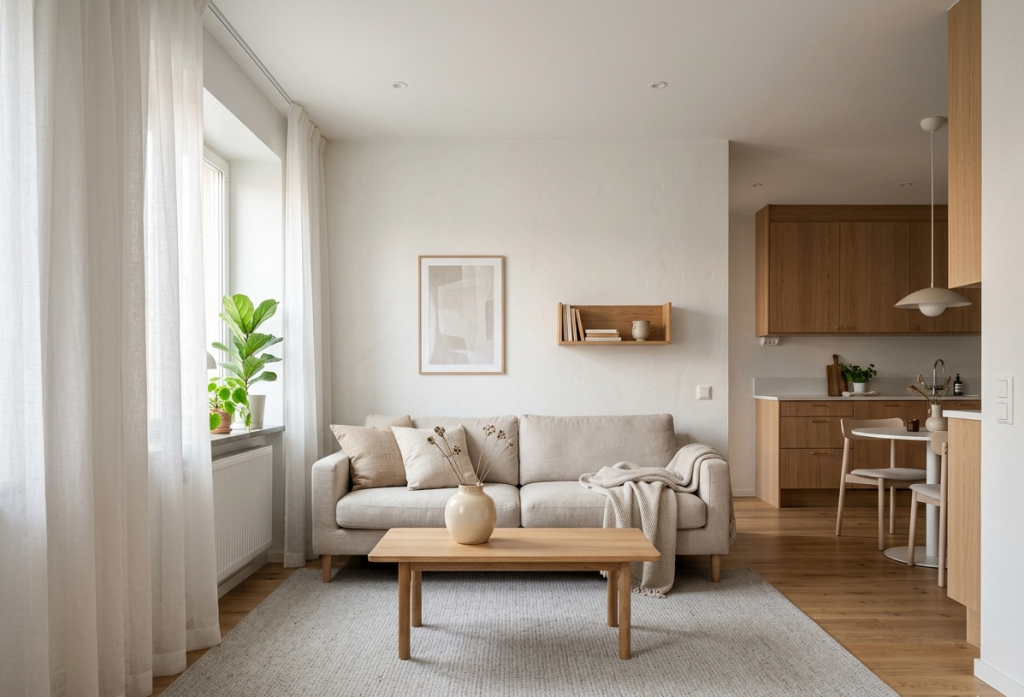
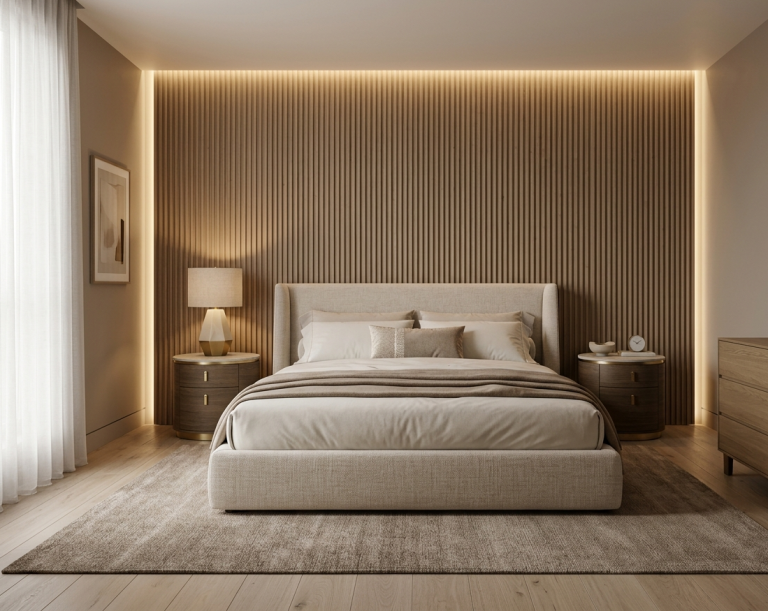
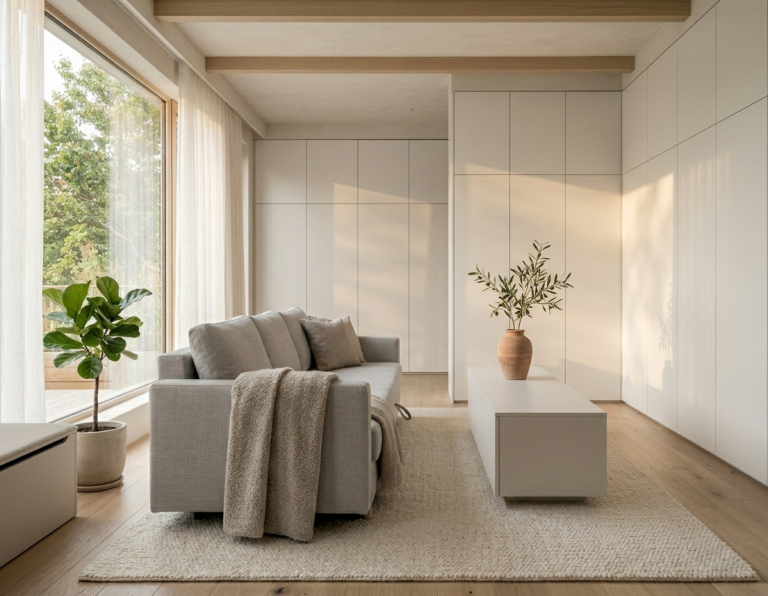
Light, neutral colors are a small space’s best friend. Shades like soft white, beige, pale gray, and cream reflect natural light, making your living room feel larger and more open. Dark walls tend to absorb light and visually close in a room, which is the last thing you want in a compact apartment. Stick with a monochromatic or tonal scheme varying shades of one neutral to create a seamless, unbroken look. This trick tricks the eye into seeing more space. Plus, neutrals provide a calm, serene backdrop that lets your furniture and decor shine without visual chaos.
Tips
- Paint your ceiling a shade lighter than your walls to add perceived height.
- Use glossy or semi-gloss finishes on trim to bounce light around.
- Add texture with a jute rug or linen throw to prevent the room from feeling flat.
2: Invest in a Storage Ottoman
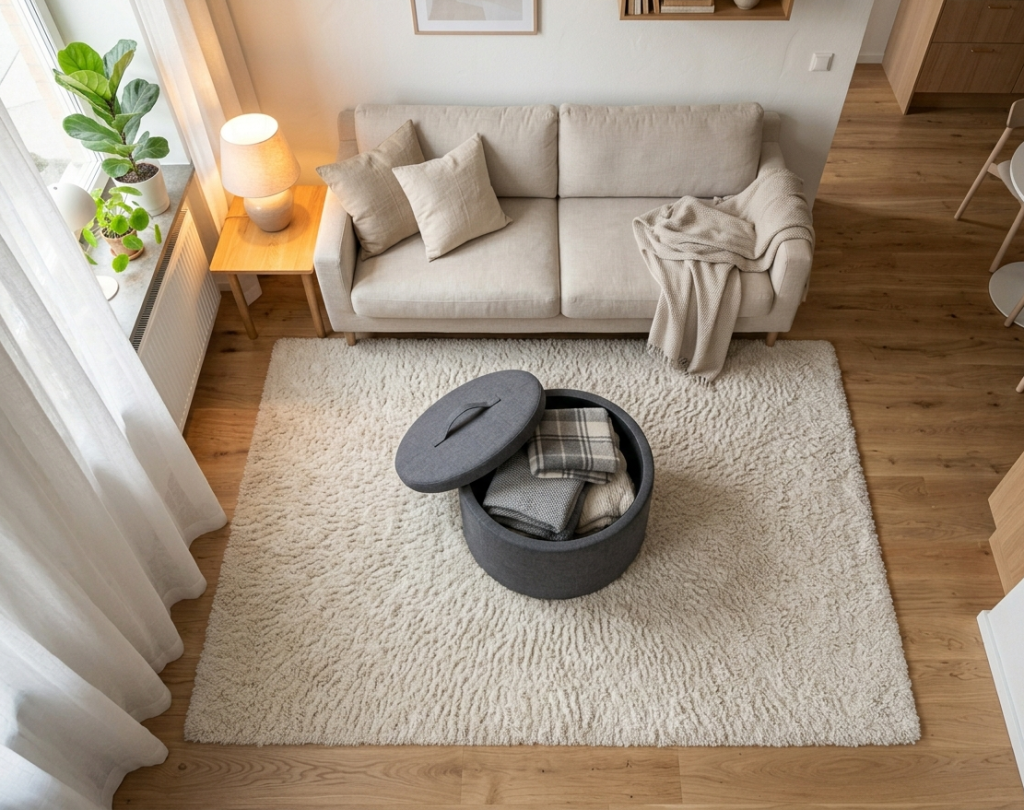
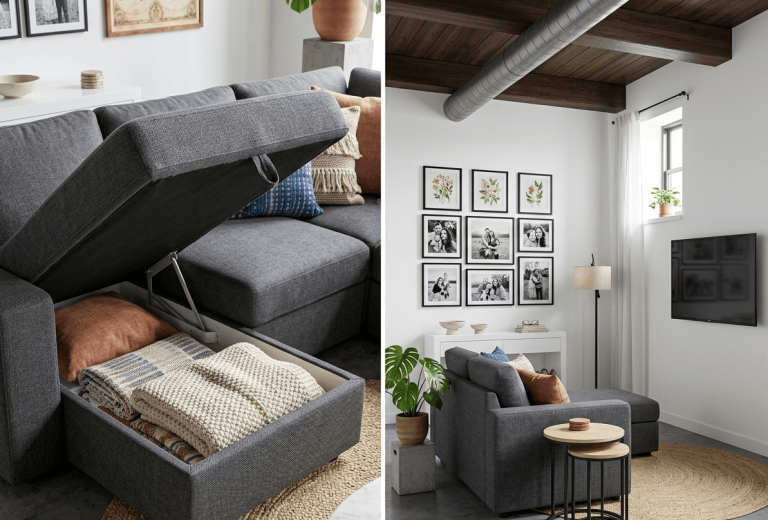
When floor space is precious, every piece of furniture should work double duty. A storage ottoman is a perfect example. It serves as a footrest, extra seating for guests, and most importantly a hidden storage bin for blankets, remote controls, magazines, or board games. Choose a tufted or upholstered style in a light fabric to keep the room feeling soft and cohesive. Place it in front of your sofa or beside an armchair. Some ottomans even come with a reversible top that turns into a serving tray. That’s smart small-space living.
Tips
- Pick an ottoman with casters for easy moving during movie nights or cleaning.
- Match the ottoman color to your sofa for a unified look.
- Use it as a coffee table by adding a large wooden or acrylic tray on top.
3: Hang Floating Shelves for Vertical Storage
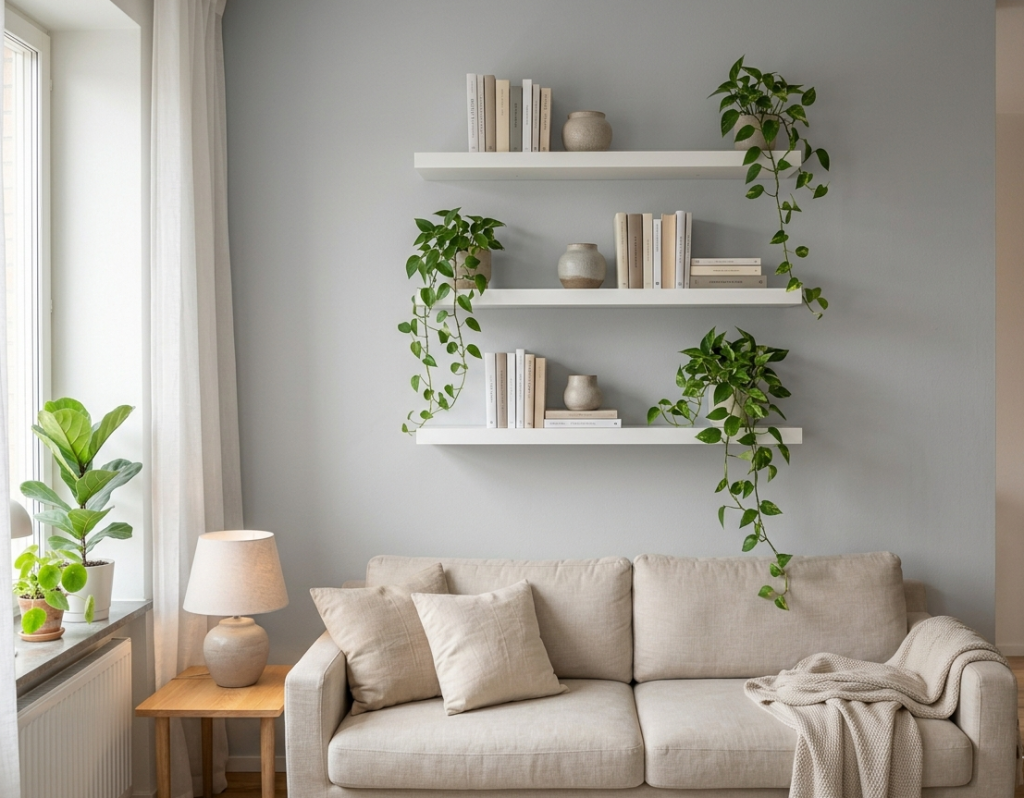
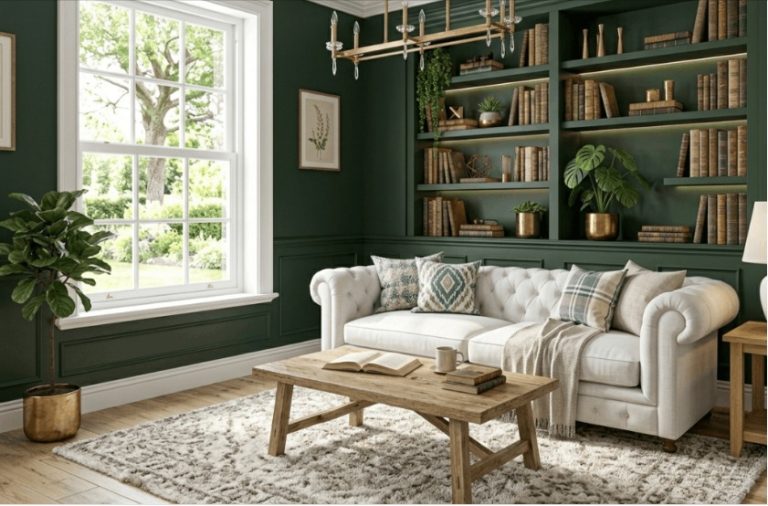
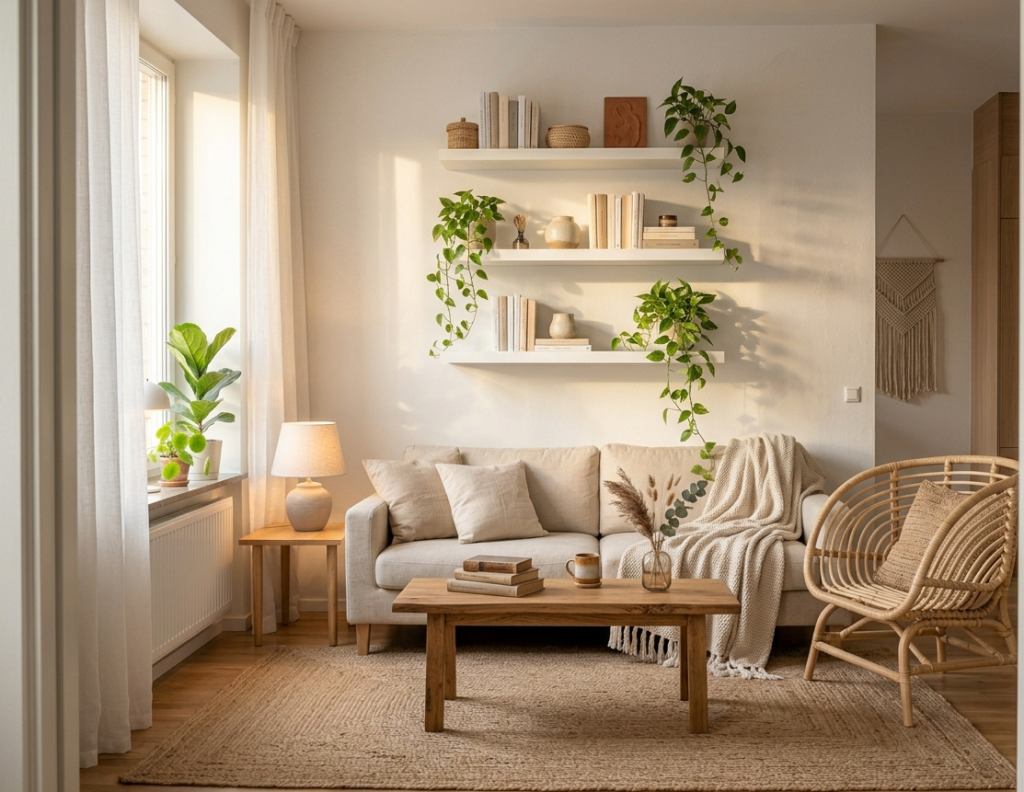
When you run out of floor space, go up. Floating shelves are a game changer for small apartment living rooms. They provide storage and display area without taking up an inch of precious floor space. Install them above your sofa, around a window, or on an empty accent wall. Use them for books, small plants, framed photos, or decorative objects. The key is to avoid overcrowding leave some breathing room between items. Floating shelves also draw the eye upward, making your ceiling feel taller and the whole room more expansive.
Tips
- Space shelves 12–16 inches apart for a balanced look.
- Mix shelf lengths (like a long one paired with a short one) for visual interest.
- Add LED strip lights under each shelf to create a warm, floating glow.
4: Choose a Loveseat Instead of a Full Sofa
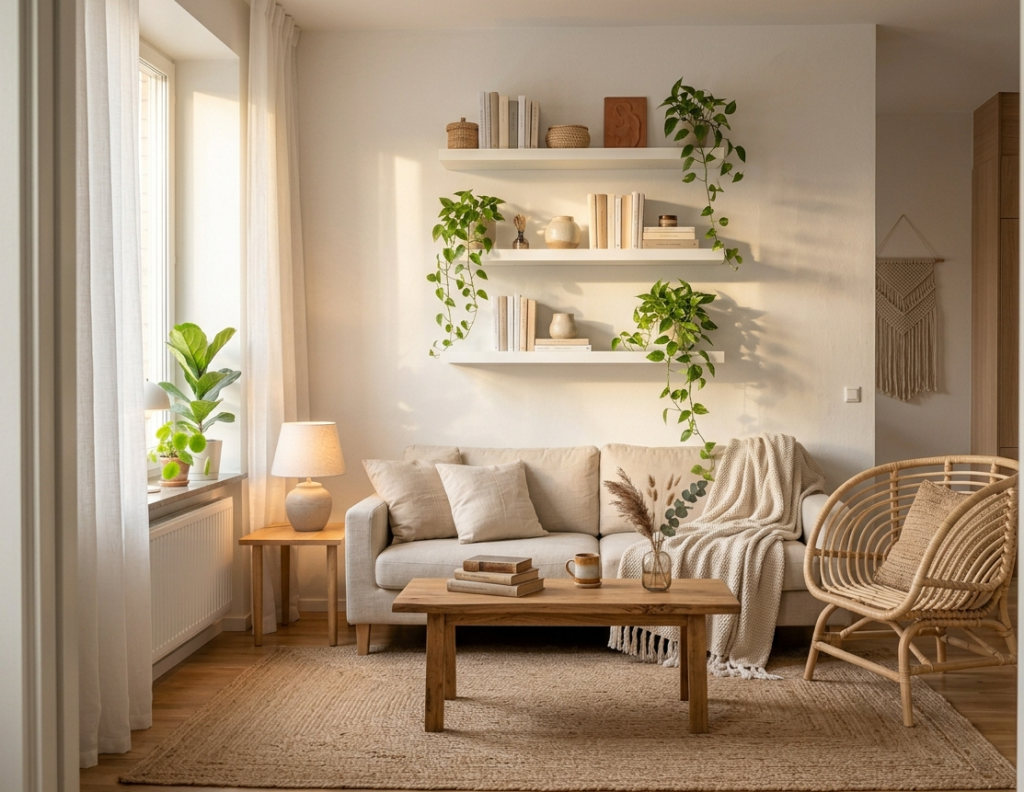
In a tiny living room, a massive three-seater sofa eats up space and blocks flow. Instead, opt for a compact loveseat (around 52–60 inches wide). It comfortably seats two people and leaves room for a slim chair or floor cushions. Pair it with a narrow console table behind it (if the room allows) to add surface space without losing seating. Loveseats also come in apartment-friendly depths look for shallow seats (around 30 inches deep) to keep your walkway clear. You’ll get the same cozy lounging experience without the bulk.
Tips
- Choose a loveseat with exposed legs to create visual airiness underneath.
- Avoid oversized rolled arms; go for sleek, straight lines.
- Place a small round table at one end for drinks and decor.
5: Use a Large Mirror to Double the Space
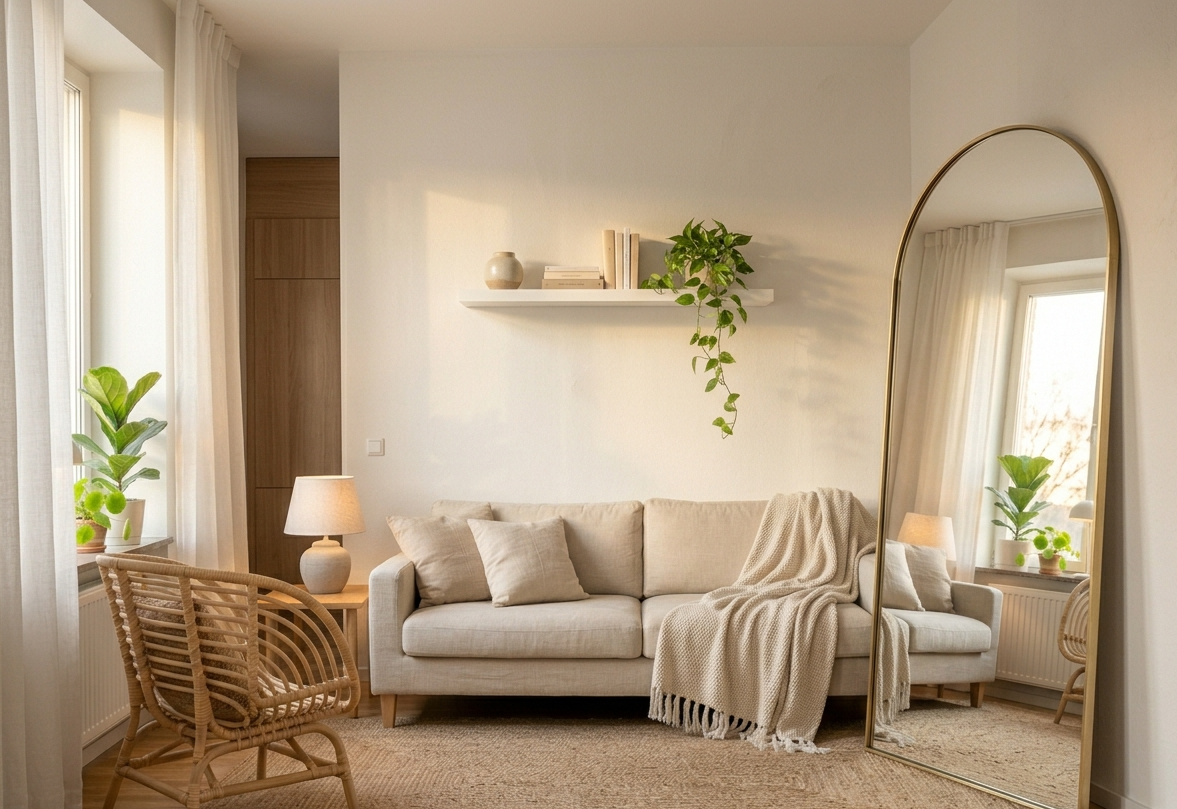
Mirrors are the oldest trick in the small-space playbook and for good reason. A single large mirror instantly makes a room feel twice as big by reflecting light and creating an illusion of depth. Place a floor mirror against a wall or hang a wide rectangular mirror opposite a window. The reflection of the outdoors or a bright wall visually extends the room. Avoid placing a mirror directly facing a cluttered area (it will reflect the mess). For maximum impact, choose a frameless or thin-framed mirror in a simple shape.
Tips
- Lean a tall arched mirror in a corner for an elegant, casual look.
- Use mirrored furniture (like a console table) for subtle reflection.
- Clean your mirror regularly smudges break the illusion.
6: Pick a Glass or Acrylic Coffee Table
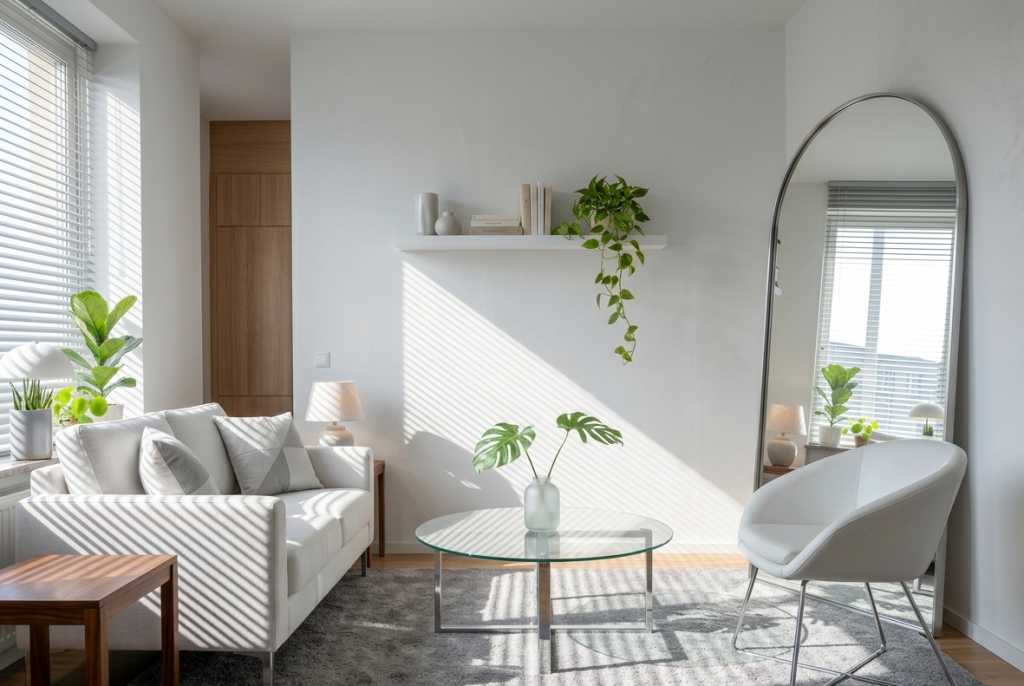
Bulk matters. A heavy, dark wood coffee table can visually clog a small living room. Swap it for a glass or acrylic (clear plastic) coffee table. Because you can see through it, the table takes up less visual space. Your rug, flooring, and legs of other furniture remain visible, which maintains an open, airy feel. Round or oval shapes work especially well because they soften edges and improve traffic flow. Just be mindful of fingerprints on glass a quick wipe keeps it sparkling.
Tips
- Pair a glass table with a colorful rug underneath for a pop of personality.
- Use coasters to prevent water rings on glass.
- Avoid stacking heavy books on acrylic it can scratch over time.
7: Create Zones with a Rug
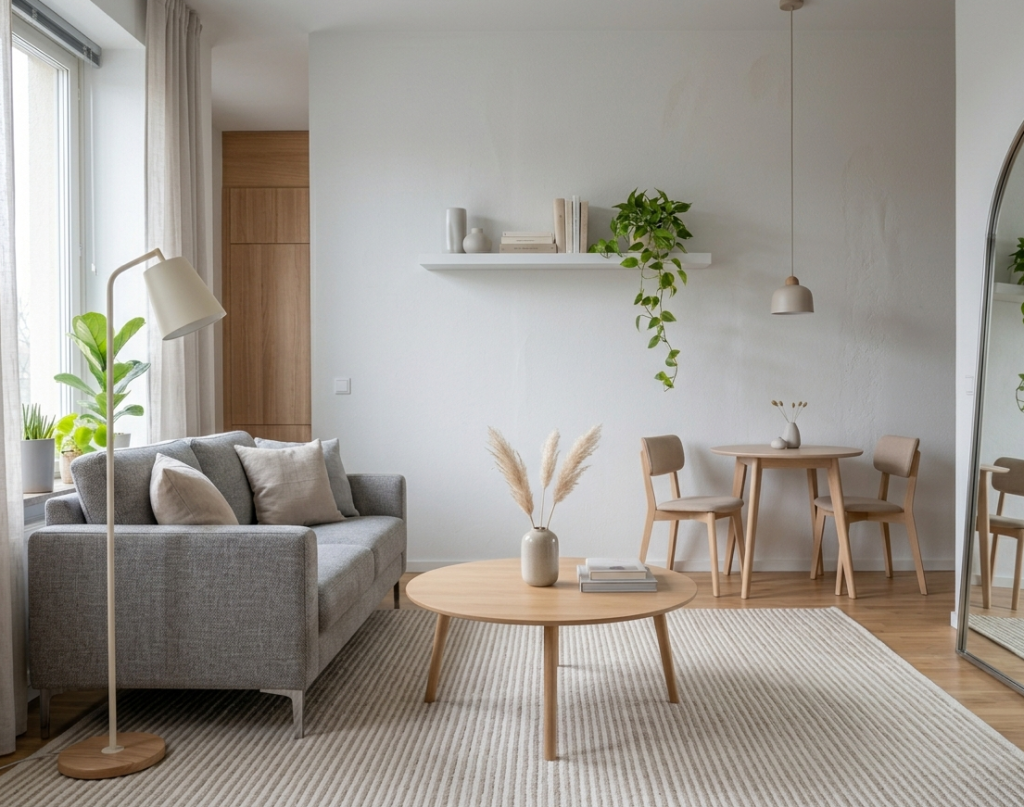
In a studio or open-plan apartment, your living room might share space with a dining area or home office. The solution? Define each zone with a distinct rug. A large area rug under your seating area instantly marks it as “the living room.” Choose a rug that extends just beyond your loveseat and coffee table this anchors the furniture and makes the zone feel intentional. For small rooms, stick with light-colored, low-pile rugs (they don’t trap dirt or visually shrink the floor). Avoid multiple small rugs; one larger rug unifies better.
Tips
- Leave at least 6 inches of bare floor between the rug and wall.
- Use a round rug to soften a square room.
- Washable rugs are lifesavers in small, high traffic apartments.
8: Mount Your TV on the Wall
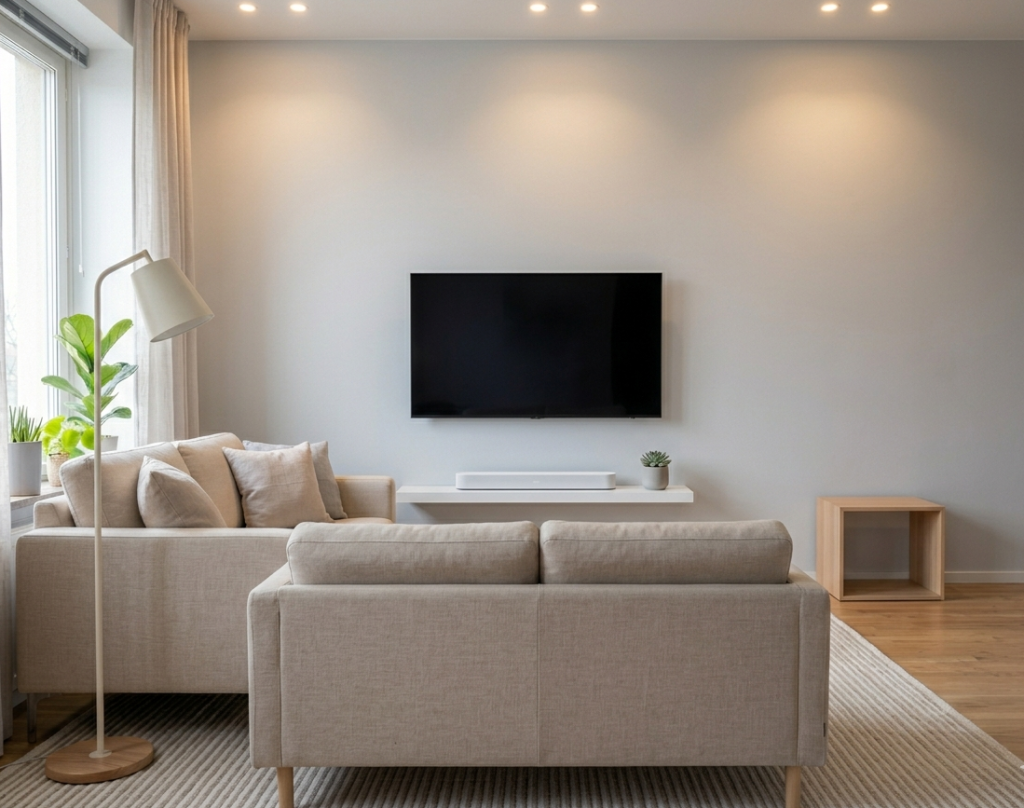
A TV on a stand or entertainment center eats up precious floor space and creates visual clutter. Mounting your TV directly on the wall frees up that footprint for something useful like a narrow console table, a plant, or simply open floor space. It also allows you to adjust the height for comfortable viewing. Keep the TV at eye level when you’re seated (about 42 inches from floor to center). Hide cords inside a cable raceway or behind the wall for a clean, seamless look.
Tips
- Use a full-motion mount to tilt the TV toward different seating areas.
- Paint the wall behind the TV a dark color to make the screen blend in.
- Add a slim floating shelf below the TV for a streaming device and a small plant.
9: Use Curtains Hung High and Wide
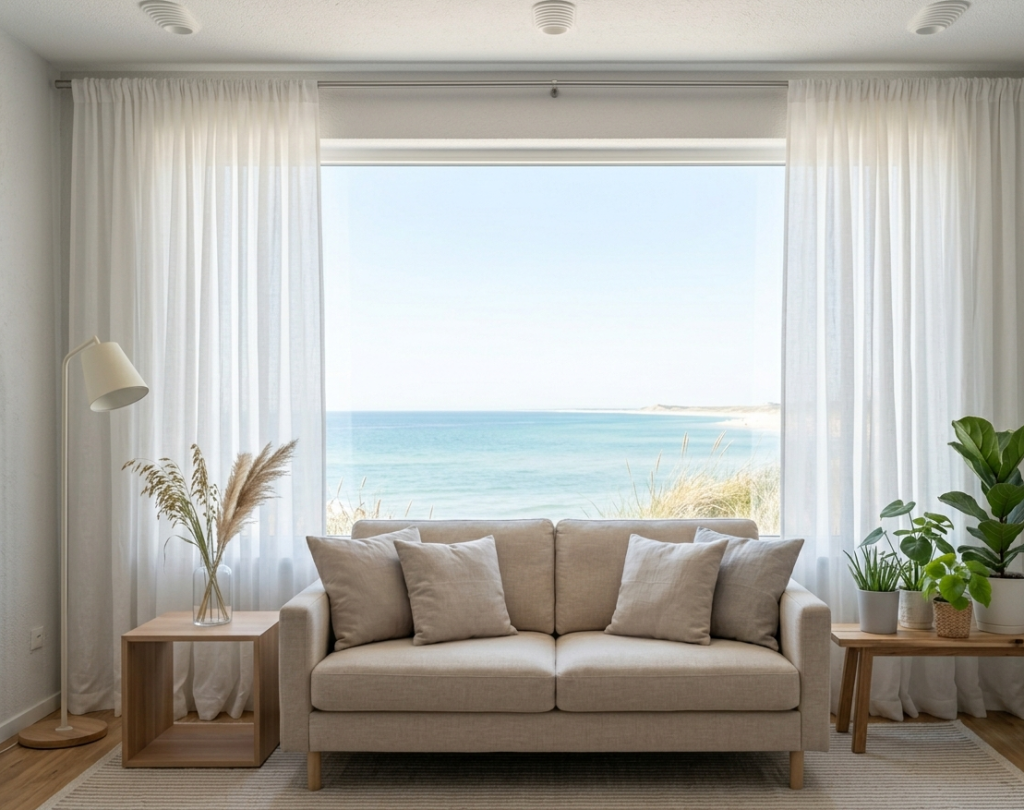
Short curtains that stop at the window frame make ceilings feel lower. Instead, hang curtain rods just below the ceiling (2–4 inches down) and extend the rod 6–12 inches wider than the window on each side. Then use floor-length curtains. This trick makes your windows look larger and your ceilings taller. Choose light, sheer, or linen fabrics in pale colors to keep the room airy. Avoid heavy drapes or dark colors they absorb light and visually close in the space.
Tips
- Use a single long rod for two windows side by side to create one large visual span.
- Ring clips make opening and closing curtains effortless.
- Wash curtains regularly to keep them dust free and bright.
10: Add a Foldable or Nesting Table
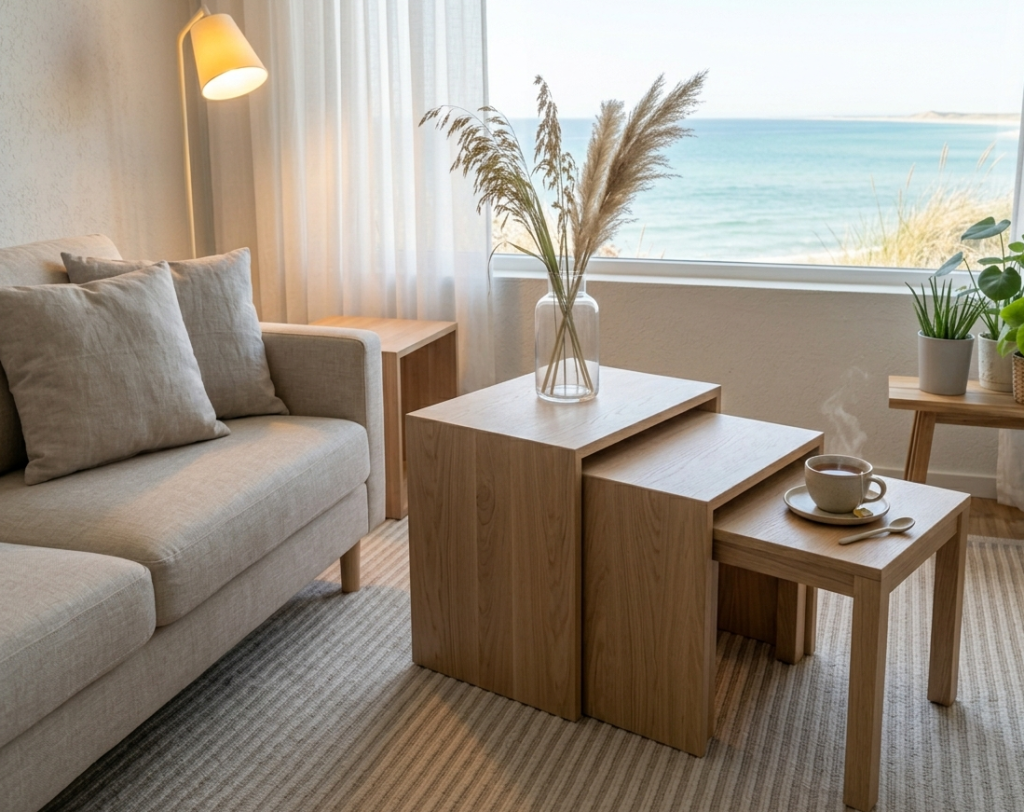
Coffee tables are great, but they take up permanent space. A foldable or nesting table gives you flexibility. Nesting tables (two or three small tables that slide under each other) can be separated when you need extra surfaces for drinks, snacks, or a laptop. Then tuck them away when you want floor space for yoga or entertaining. Foldable wall mounted drop leaf tables are another genius option they flip down when needed and fold flat against the wall when not.
Tips
- Look for nesting tables with a mix of heights for visual variety.
- Place a small tray on the top table to corral coasters and remotes.
- Use the smallest nesting table as a plant stand when not in use.
11: Install Corner Shelving or a Corner Desk
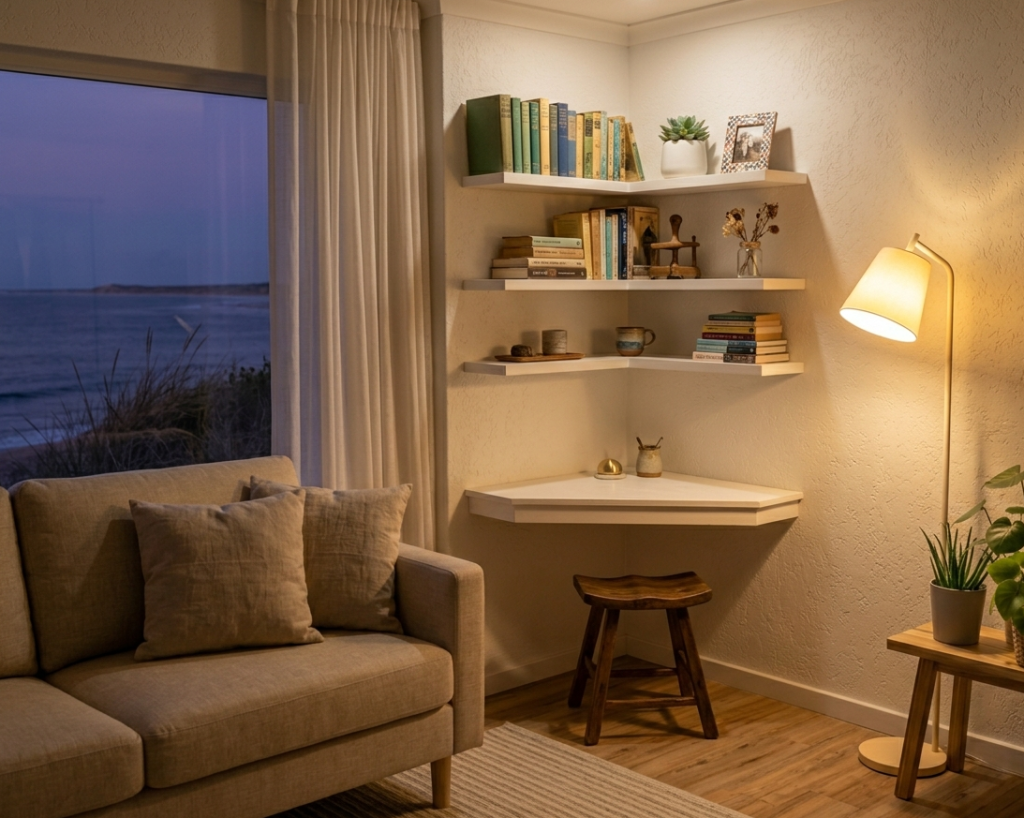
Corners are notoriously underused in small apartments. Turn that dead space into a feature with corner shelving or a compact corner desk. Floating corner shelves (triangular or curved) hold books, plants, or decorative objects without sticking out into the room. A small corner desk with a slim profile gives you a work-from-home station that doesn’t dominate the living area. The key is to keep the corner visually light open shelving or a desk with exposed legs works better than a bulky cabinet.
Tips
- Use corner shelves at different heights to follow the wall’s angle.
- Add a small desk lamp to make the corner feel intentional.
- Paint the corner shelves the same color as the wall for a built-in look.
12: Use a Room Divider (But Keep It Open)
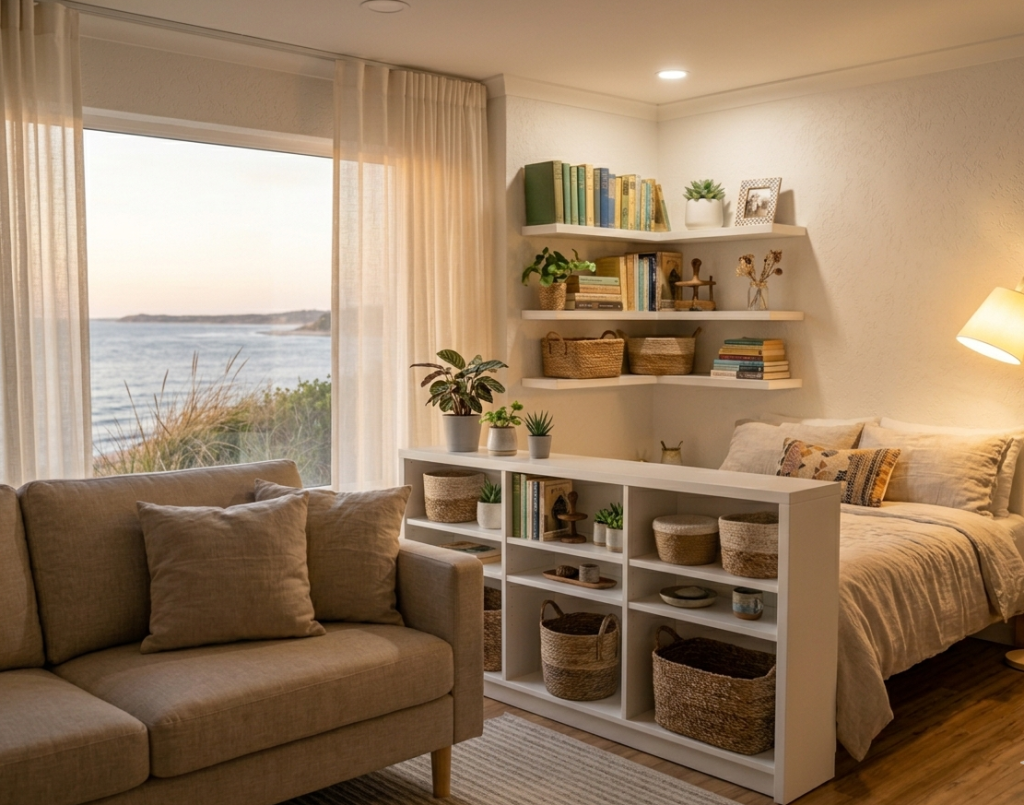
Sometimes a small living room feels chaotic because it flows into a kitchen or bedroom without separation. But a solid wall divider would close in the space. Instead, use an open room divider: a low bookcase, a ladder style shelf, or a curtain on a ceiling track. These options define zones without blocking light or sightlines. A low bookcase (30–36 inches tall) placed behind your sofa creates a visual barrier while still allowing you to see across the room. Bonus: it adds storage on both sides.
Tips
- Use a sheer curtain on a track for a soft, flexible divider.
- Place a plant on top of a low bookcase to add life without height.
- Keep the divider’s color light white, beige, or natural wood.
Conclusion
Your small apartment living room has more potential than you think. By choosing light colors, multi-functional furniture, vertical storage, and smart optical tricks like mirrors and high curtains, you can create a space that feels open, stylish, and truly livable. Start with just one or two of these ideas maybe a storage ottoman or floating shelves and build from there. Which small living room idea will you try first? Let me know in the comments below, and don’t forget to pin this guide for later!
FAQs
What is the best color for a small living room?
The best colors for a small living room are light neutrals like soft white, pale gray, beige, cream, and light taupe. These shades reflect natural light, making the room feel larger and more open. If you want a subtle pop of color, try a pale blush, very light blue, or sage green just keep the saturation low.
How can I make my small living room look bigger without renovation?
You can make a small living room look bigger without any construction by: 1) hanging curtains high and wide, 2) using a large mirror opposite a window, 3) choosing furniture with exposed legs, 4) sticking to a light color palette, and 5) reducing clutter with smart storage like floating shelves or ottomans.
What size rug should I use in a small living room?
For a small living room, choose a rug that is large enough to fit under the front legs of your sofa and any accent chairs. A 5’x7’ or 6’x9’ rug often works well. Avoid rugs that are too small they make the room feel choppy. The rug should extend at least 6 inches beyond your coffee table on all sides.