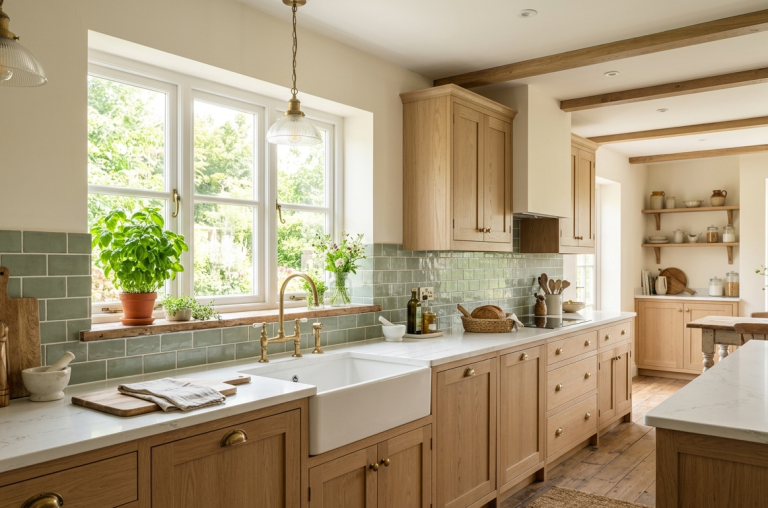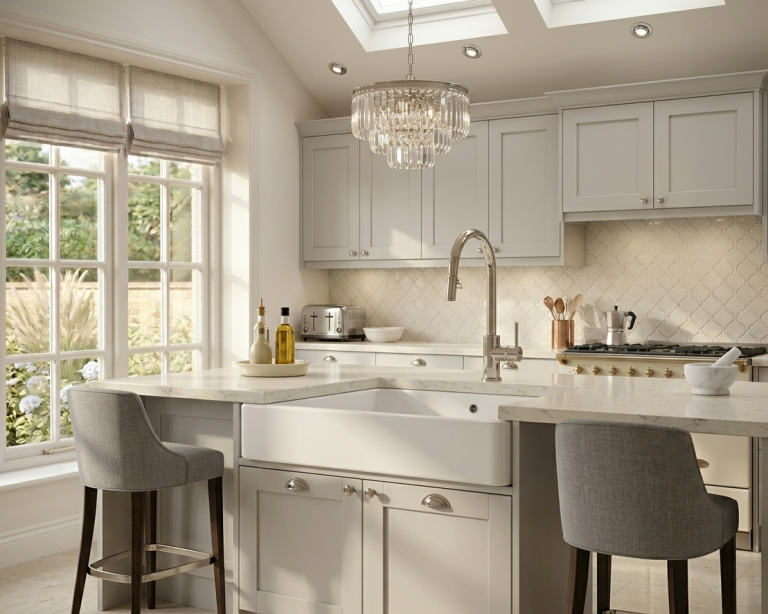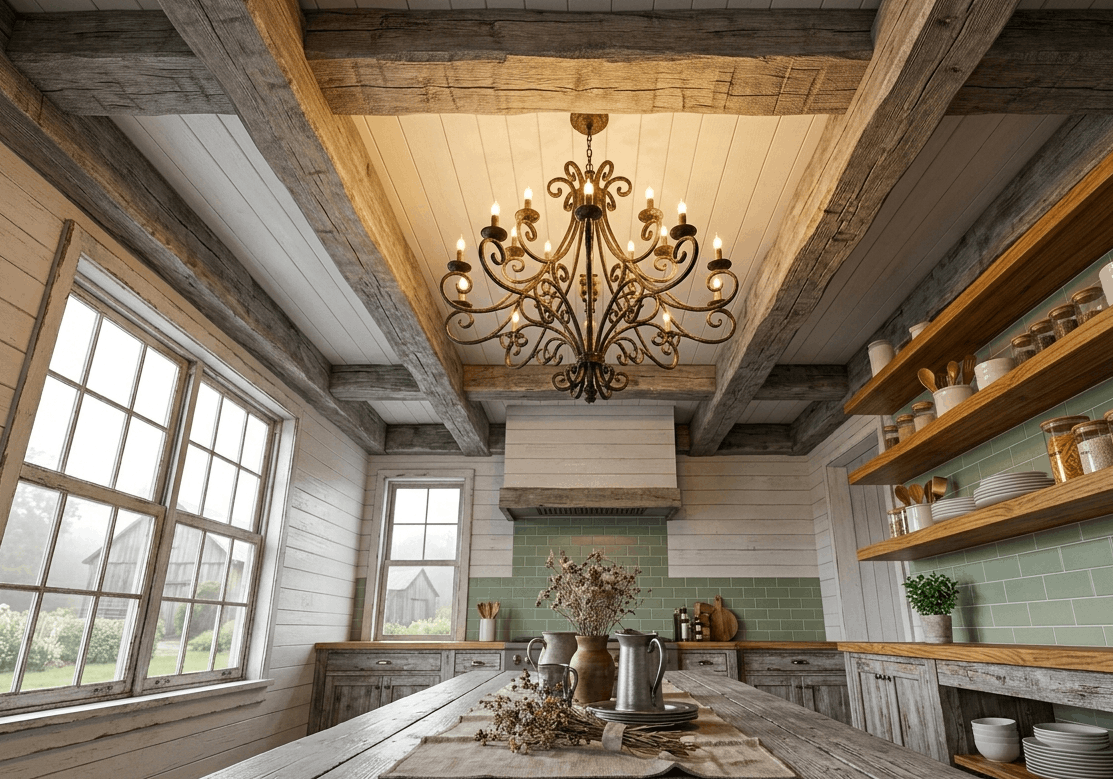
17 Wood Kitchen Design Ideas
Do you dream of a kitchen that feels both warm and stylish? Many homes struggle with cold, sterile spaces that lack personality. The solution lies in nature’s most versatile material: wood. Incorporating wood into your kitchen design adds texture, depth, and an inviting atmosphere that never goes out of style. Whether you prefer sleek modern cabinets or reclaimed barnwood accents, wood offers endless possibilities. In this guide, we explore 17 creative wood kitchen design ideas to inspire your next renovation. You’ll find practical tips, stunning visuals, and AI image prompts to help you envision your dream space. Let’s transform your kitchen into the heart of your home.
1: Classic White Oak Cabinets
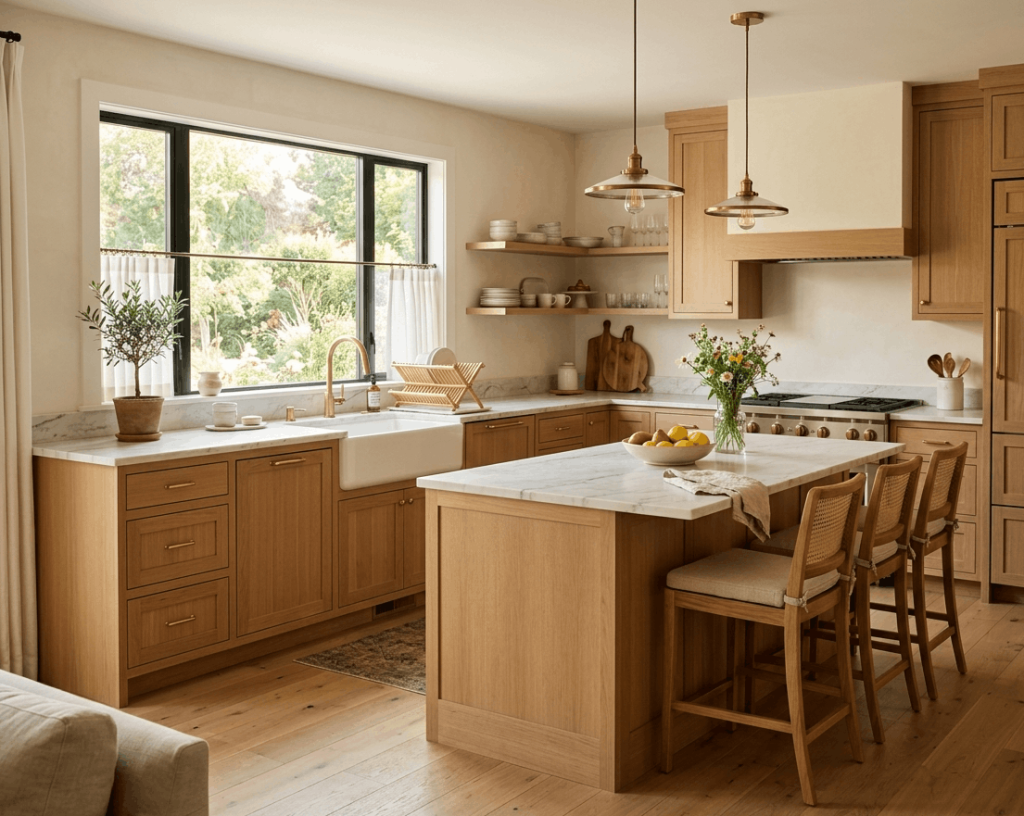
White oak cabinets bring a timeless, airy feel to any kitchen. Their subtle grain pattern and light, neutral tone pair beautifully with marble countertops or black hardware. Unlike darker woods, white oak reflects natural light, making small kitchens appear larger. This style works especially well in modern farmhouse or Scandinavian interiors. Use flat-panel doors for a minimalist look or shaker-style for extra character. The durability of white oak also means it resists dents and moisture better than softer woods.
Tips
- Pair with brass or matte black handles for contrast.
- Use a clear matte finish to keep the wood’s natural texture.
- Combine with open shelving in the same wood for continuity.
2: Reclaimed Barnwood Accent Wall
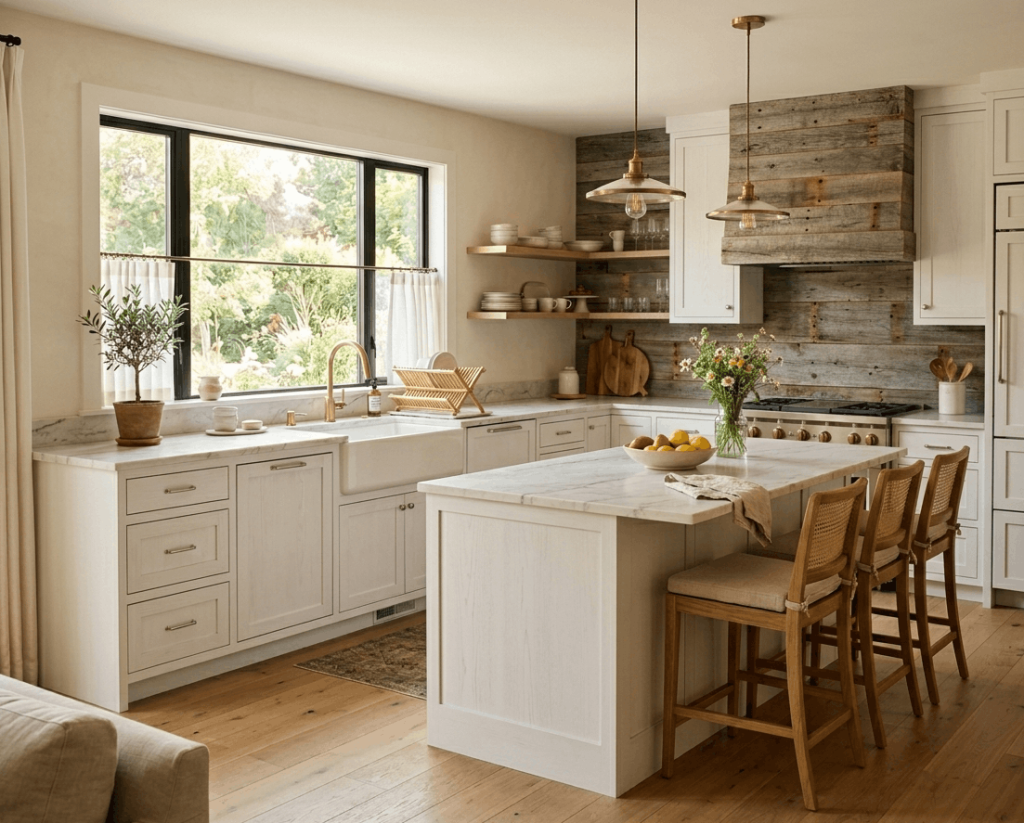
Bring rustic charm into your kitchen with a reclaimed barnwood accent wall. This idea works perfectly behind an open shelf, stove hood, or breakfast nook. Each piece of weathered wood tells a story with nail holes, cracks, and gray-silver hues. It contrasts beautifully with smooth stainless steel appliances or white cabinets. Not only is this look eco-friendly, but it also adds instant warmth without a full renovation. For a cohesive design, repeat the wood texture on floating shelves or a butcher block island.
Tips
- Seal barnwood to prevent splinters and pests.
- Keep other walls light (white or light gray) to avoid heaviness.
- Use LED strip lights above to highlight the wood’s texture.
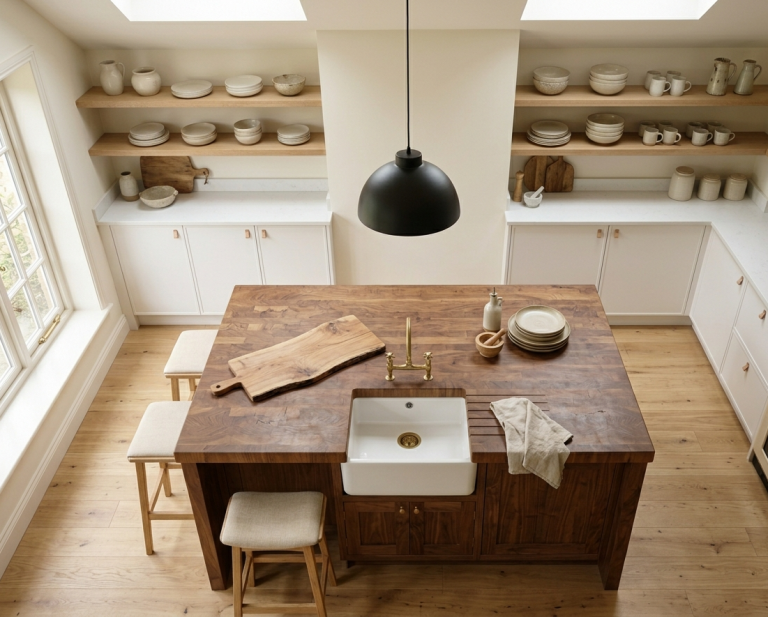
3: Walnut Butcher Block Countertops
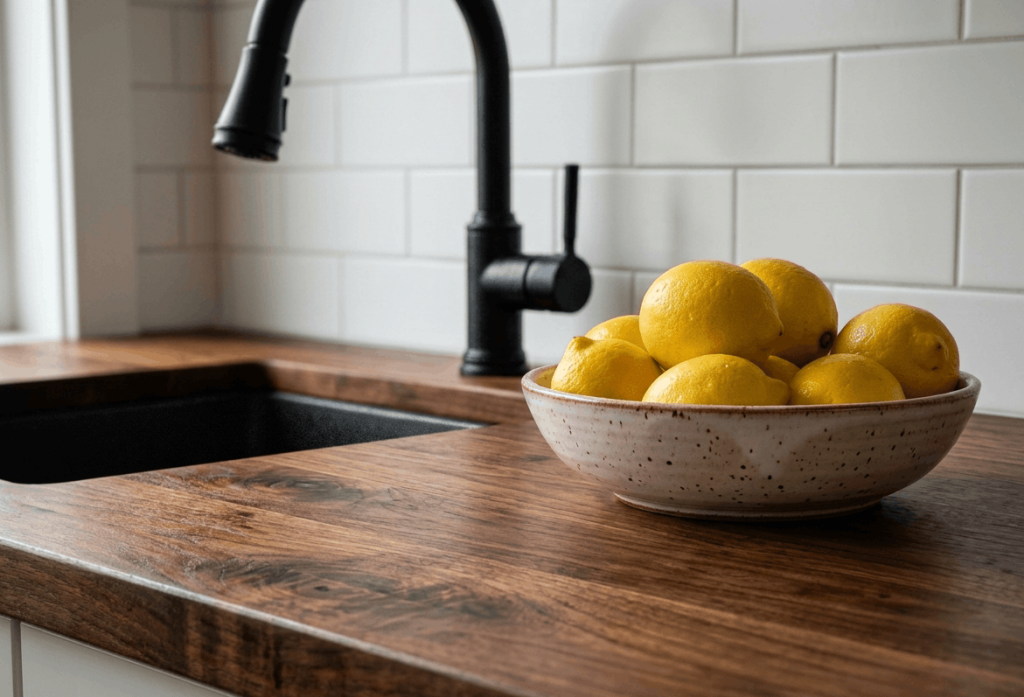
Walnut butcher block countertops offer a rich, chocolatey brown that deepens any kitchen’s elegance. Unlike stone, wood is softer underfoot and warmer to the touch, making daily cooking more pleasant. The dramatic grain pattern of walnut hides scratches well, and you can sand out stains easily. For best results, seal with food-safe mineral oil every few months. Pair these countertops with white subway tile backsplash and matte black fixtures for a balanced, high-contrast look.
Tips
- Avoid placing hot pans directly on the wood.
- Use a cutting board to preserve the finish.
- Re-oil every 3–4 months to prevent drying.
4: Two-Tone Wood and Navy Cabinets
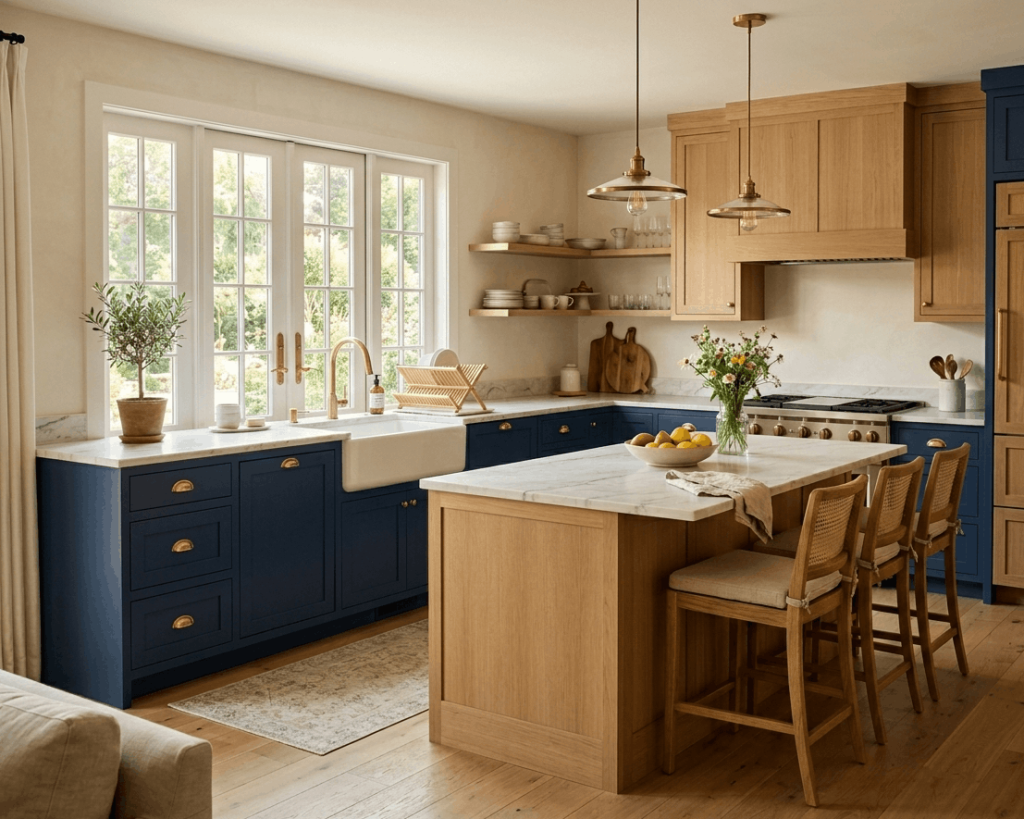
Two-tone kitchens are trending, and pairing wood with navy blue creates a stunning, sophisticated balance. Use wood (like oak or teak) on upper cabinets or the island, and navy blue on lower cabinets. This technique grounds the space while keeping it airy. The warm orange undertones of wood pop against cool navy. Add brass hardware and a light gray backsplash to tie both colors together. This design works well in transitional or coastal-style homes.
Tips
- Keep the wood tone medium (not too dark or light).
- Use the navy on perimeter cabinets, wood on the island.
- Add a white or marble countertop to reflect light.
5: Scandinavian Light Plywood
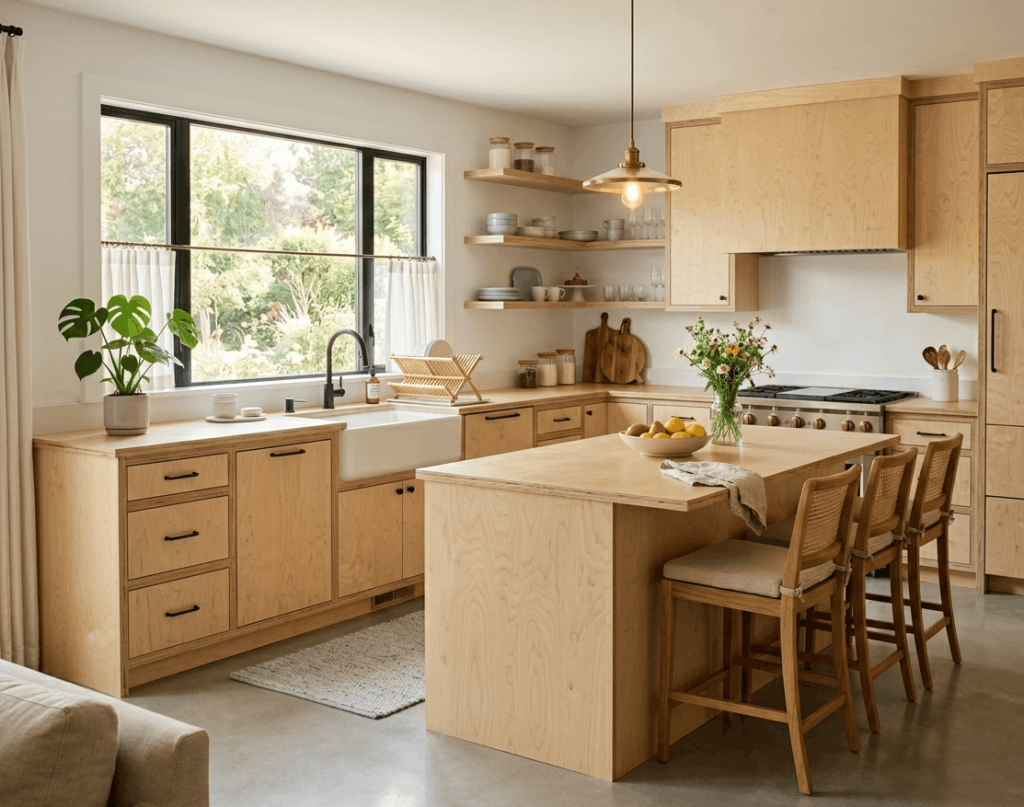
Scandinavian design loves light plywood for its clean lines and budget-friendly appeal. Birch or poplar plywood, with its subtle layered edges, gives a modern yet cozy look. Use it on cabinet fronts, open shelving, and even ceiling beams. The pale, almost blonde color maximizes light in small kitchens. Pair with white walls, concrete floors, and green plants for a fresh, minimalist vibe. Exposed plywood edges add a touch of industrial charm.
Tips
- Seal plywood with a clear lacquer to prevent stains.
- Use edge banding for a polished look if desired.
- Combine with leather pulls for a soft texture contrast.
6: Dark Stained Cherry Wood
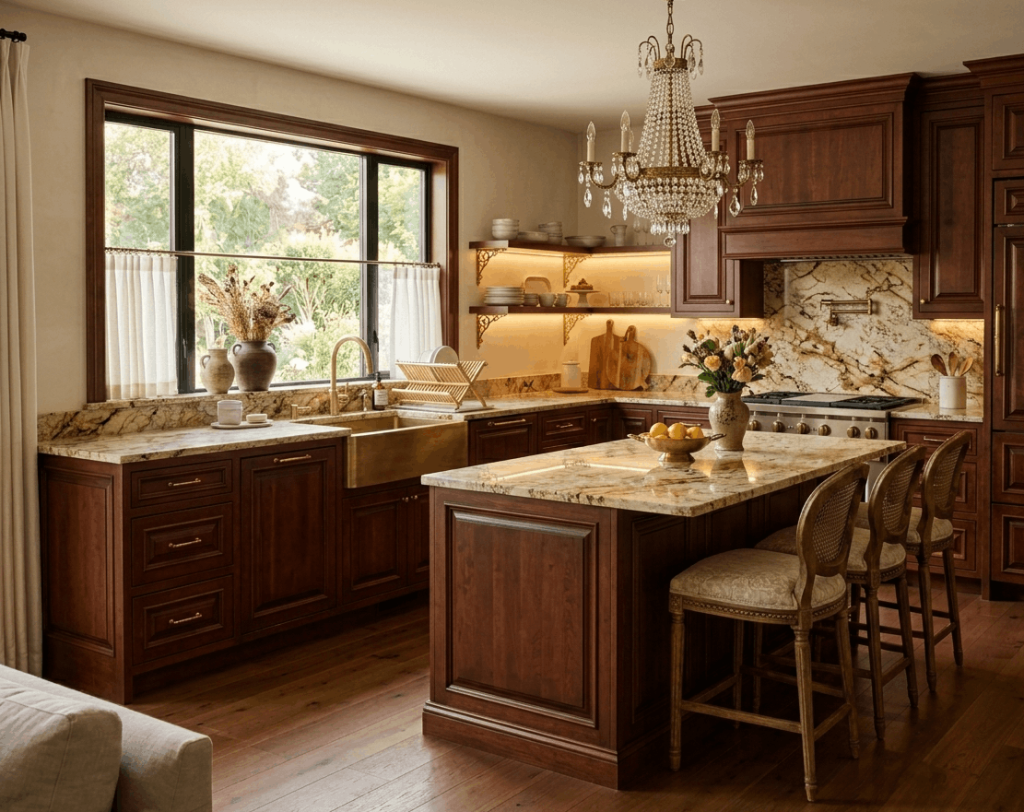
For a luxurious, traditional kitchen, dark stained cherry wood is unbeatable. Its deep reddish-brown hue adds drama and warmth, especially in large, open-plan spaces. Cherry wood naturally darkens with age, gaining a richer patina over time. Use it on raised-panel cabinets, a range hood, or a massive island. Balance the darkness with light granite countertops, under-cabinet lighting, and cream walls. This style evokes old-world libraries and formal dining rooms.
Tips
- Avoid direct sunlight to prevent uneven fading.
- Use glass-front cabinets to break up the darkness.
- Polish with beeswax to enhance the natural luster.
7: Bamboo Cabinet Doors
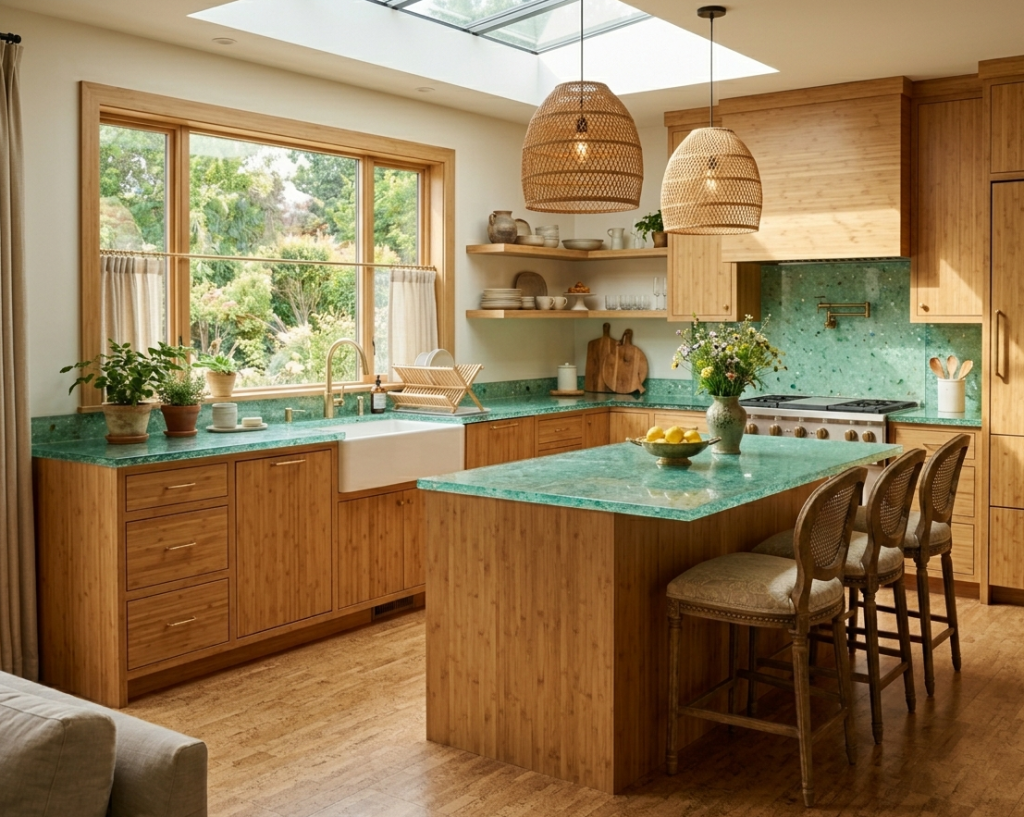
Bamboo is an eco-friendly alternative to traditional hardwoods, growing back in just three to five years. Its light, grassy color and distinctive knuckle-like nodes add organic texture to modern kitchens. Bamboo is also harder than oak, resisting moisture and warping. Use it on flat-slab cabinet doors for a Zen or tropical vibe. Pair with cork flooring, recycled glass countertops, and woven rattan pendant lights for a fully sustainable design.
Tips
- Look for FSC-certified bamboo for ethical sourcing.
- Use a water-based polyurethane sealant for durability.
- Combine with black or white hardware for contrast.
8: Teak Open Shelving
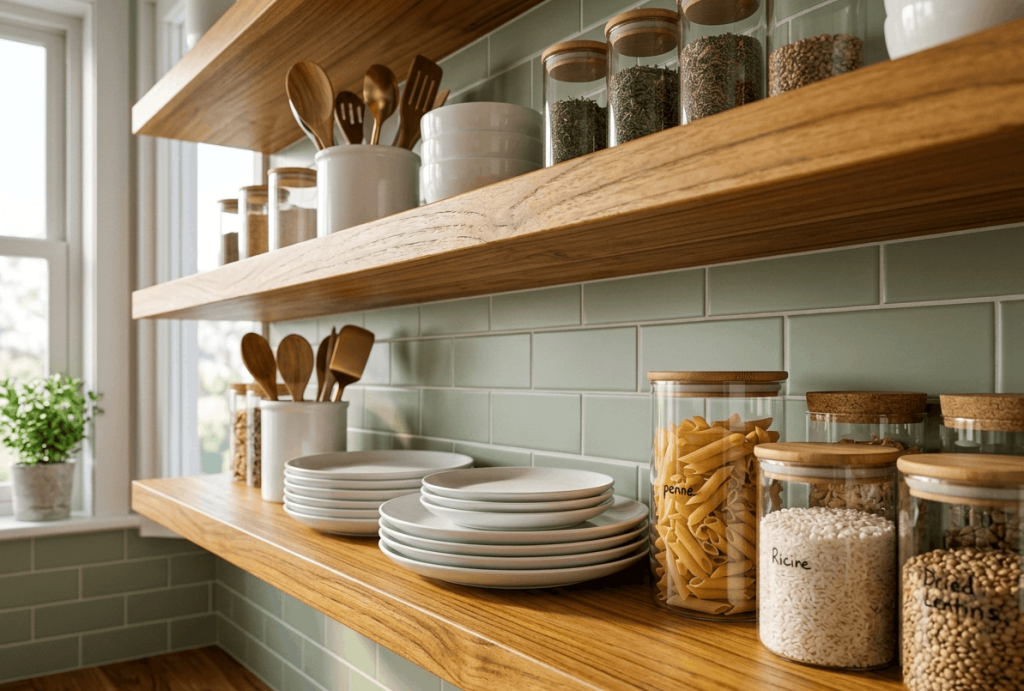
Teak wood is famous for its water resistance and golden-brown colour, making it perfect for open shelving near sinks or cooktops. Replace upper cabinets with 1.5-inch thick teak shelves to display ceramics, cookbooks, and glass jars. The natural oils in teak prevent rotting and warping. Its warm hue complements both white kitchens and dark green accent walls. Keep styling minimal too many items will clutter the look.
Tips
- Anchor shelves into wall studs for heavy items.
- Wipe teak with a damp cloth; no oil needed for years.
- Leave 18 inches of space between shelves for tall items.
9: Rustic Pine Ceiling Beams
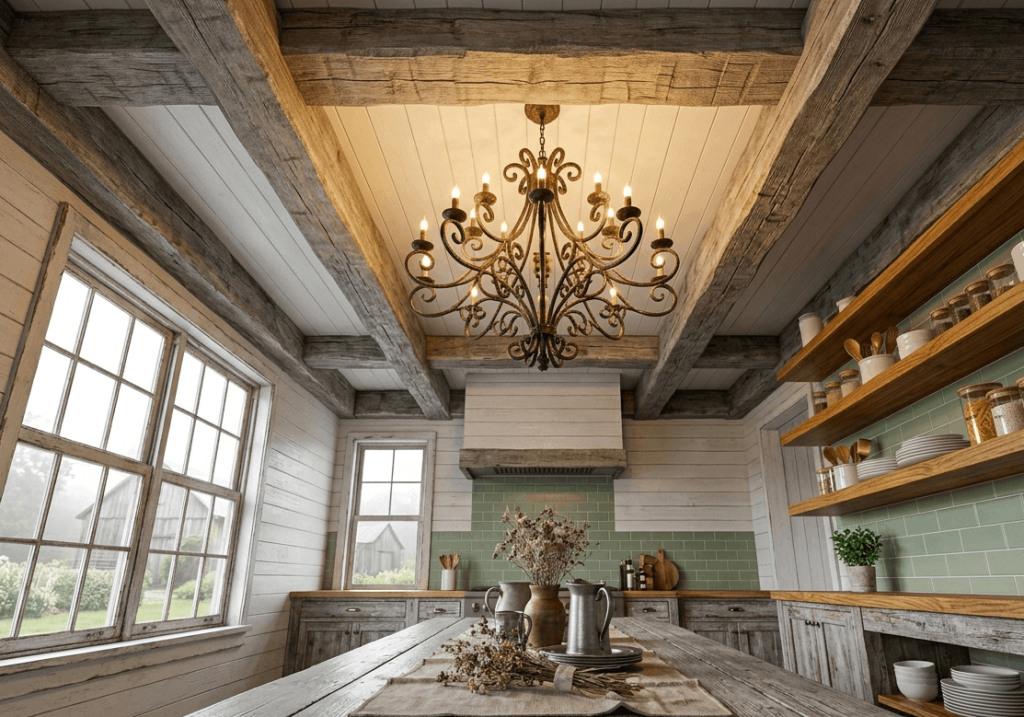
Don’t forget the ceiling! Exposed rustic pine beams add instant farmhouse charm and visual height. Even if your home lacks original beams, faux hollow beams made from pine are lightweight and easy to install. Distress the wood with a wire brush and apply a gray wash for an aged look. Pair with white shiplap ceilings, wrought iron chandeliers, and a large wooden dining table. This idea works best in kitchens with ceilings at least 9 feet high.
Tips
- Use false beams if real ones are cost-prohibitive.
- Run beams parallel to the longest wall for balance.
- Leave beams raw or use a matte clear coat.
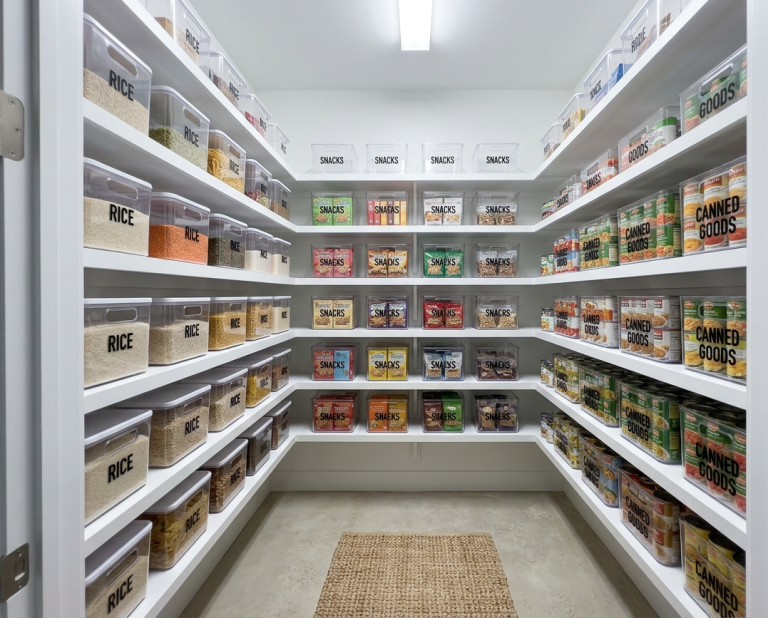
10: Ash Wood Floor-to-Ceiling Pantry

A floor-to-ceiling pantry made of ash wood maximizes storage and adds a dramatic architectural element. Ash has a light, creamy color with bold grain similar to oak but is more affordable. Use it on sliding barn doors or hinged cabinet fronts. Inside, add pull-out racks and adjustable shelves. The continuous wood surface creates a warm, uniform look. Position it against a dark accent wall for a stunning contrast.
Tips
- Install soft-close hinges to protect the wood.
- Use frosted glass inserts on a few doors to break up the wood.
- Match the ash pantry to your kitchen island for cohesion.
11: Reclaimed Pallet Wood Backsplash
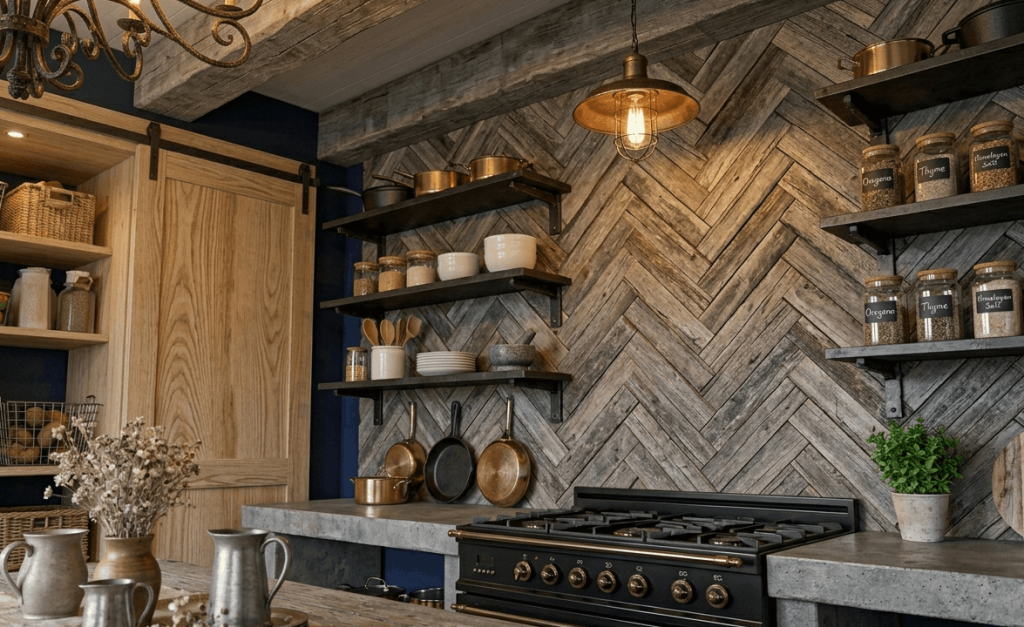
For a budget-friendly, eco-chic look, install a reclaimed pallet wood backsplash. Pallet wood is often free or cheap, and its rough texture adds industrial farmhouse character. Cut the planks into strips and arrange them in a herringbone or horizontal pattern. Seal with a thick polyurethane to protect against grease and moisture. This backsplash works best behind a freestanding range or a coffee bar. Combine with concrete countertops and black metal shelves.
Tips
- Only use heat-treated pallets.
- Sand thoroughly to avoid splinters.
- Apply three coats of water-resistant sealant.
12: Mahogany Kitchen Island
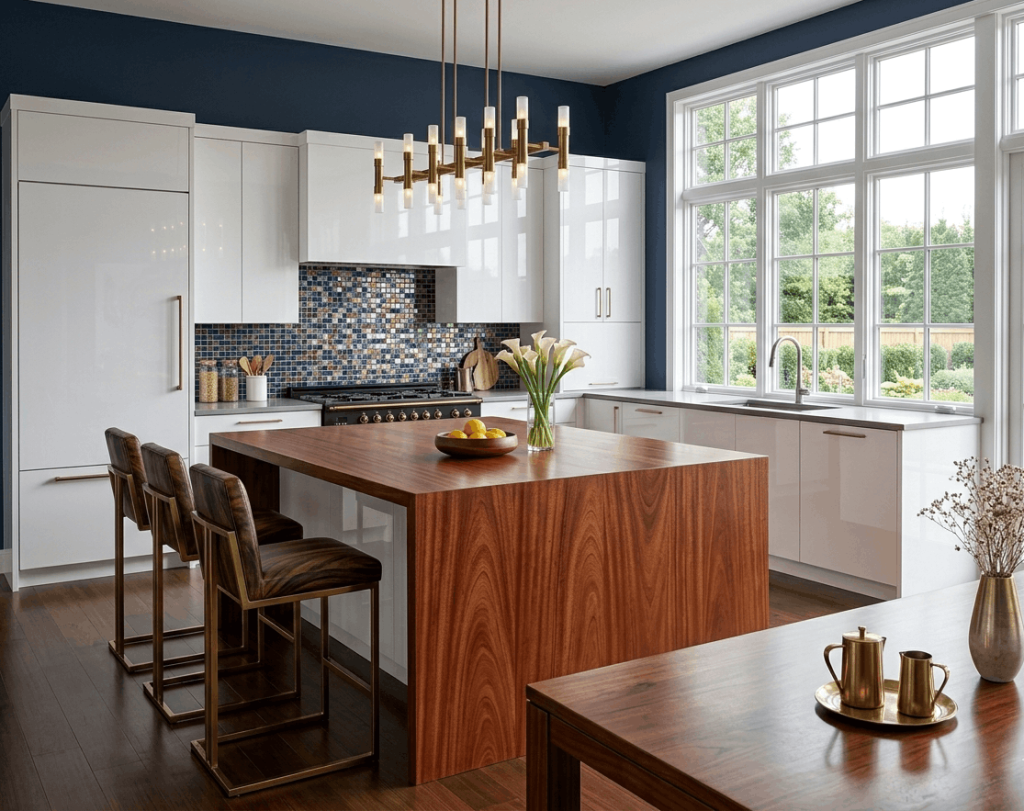
Make your island the star with rich, reddish-brown mahogany. This hardwood is dense, durable, and naturally resistant to rot. A mahogany island with a waterfall edge (where the wood continues down the sides) looks luxurious in contemporary kitchens. Pair with white perimeter cabinets and a glass tile backsplash. Because mahogany darkens significantly over time, choose a lighter stain initially. Use a cutting board on top to preserve the surface.
Tips
- Apply UV-protecting sealant to slow darkening.
- Use legs or a solid base? Solid base offers more storage.
- Add bar seating in leather or velvet for contrast.
13: Vertical Grain Fir Accents
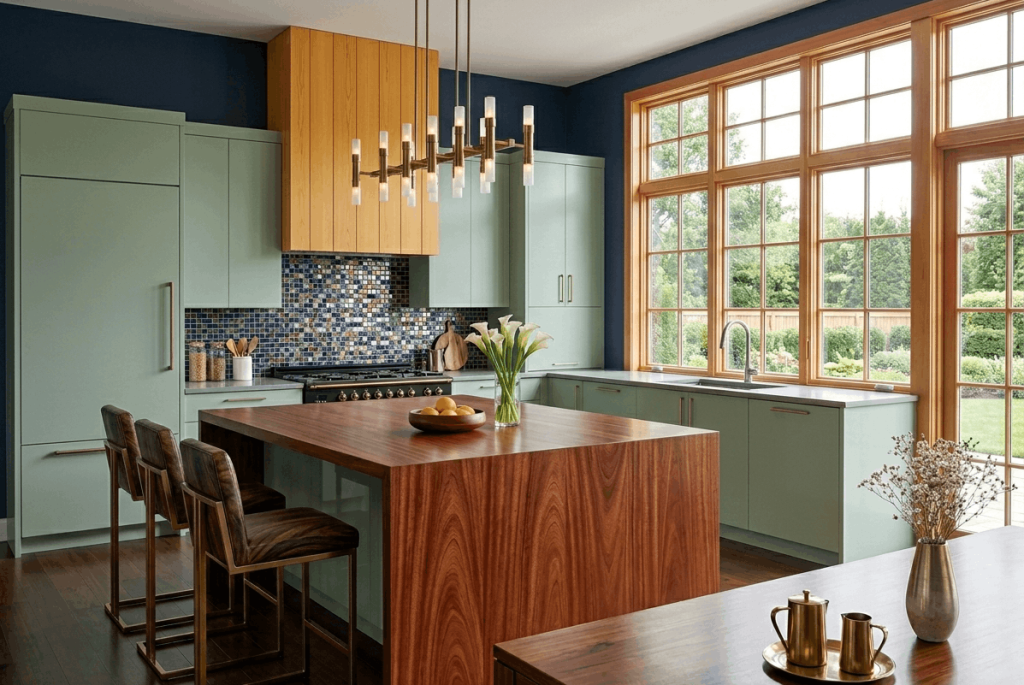
Douglas fir with vertical grain lines creates a clean, linear look perfect for mid-century modern or craftsman kitchens. Use it on range hood covers, floating shelves, or window frames. The soft yellow-orange hue adds warmth without overpowering. Fir is softer than oak, so reserve it for low-touch areas. Pair with sage green cabinets and unlacquered brass hardware. The vertical lines also make ceilings feel higher.
Tips
- Seal fir with a hard wax oil for durability.
- Use vertical grain on only one focal point.
- Combine with horizontal subway tile for contrast.
14: Walnut Veneer Paneling
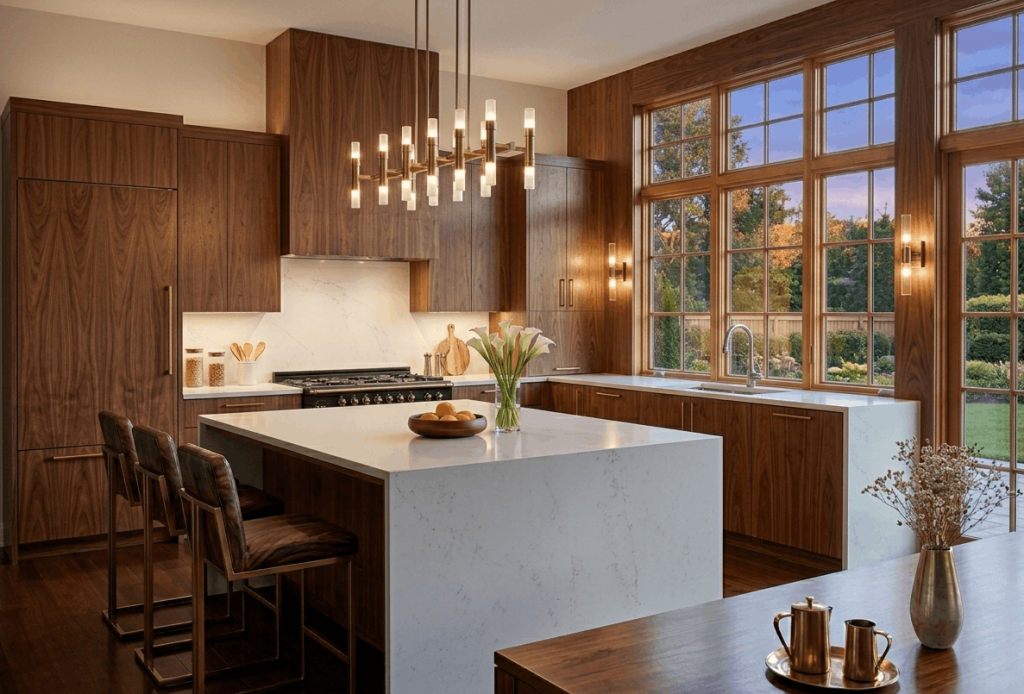
Walnut veneer paneling offers the luxurious look of solid walnut at a fraction of the cost. Apply it to entire walls, refrigerator surrounds, or breakfast nooks. Because veneer uses a thin layer of real wood over plywood, it’s more stable and less prone to warping. Choose a book-matched pattern where the grain mirrors like an open book. Pair with white quartz countertops and brass lighting. This sleek look is perfect for contemporary or Art Deco kitchens.
Tips
- Hire a pro for seamless veneer installation.
- Avoid excessive moisture near the veneer.
- Clean with a dry microfiber cloth only.
15: Live Edge Wood Floating Shelves

Live edge shelves where the natural bark contour is preserved add organic, artistic flair. Use a single slab of walnut, maple, or sycamore as a floating shelf. The irregular edge contrasts beautifully with straight cabinet lines. Install them above a sink or coffee station. Because each slab is unique, your kitchen becomes one of a kind. Seal with a clear epoxy resin to protect against kitchen grease. Keep decor minimal to let the wood shine.
Tips
- Buy kiln-dried slabs to prevent cracking.
- Use heavy-duty hidden brackets rated for 50+ pounds.
- Leave the natural bark on for a rustic look or remove for cleaner lines.
16: Gray Washed Wood Flooring
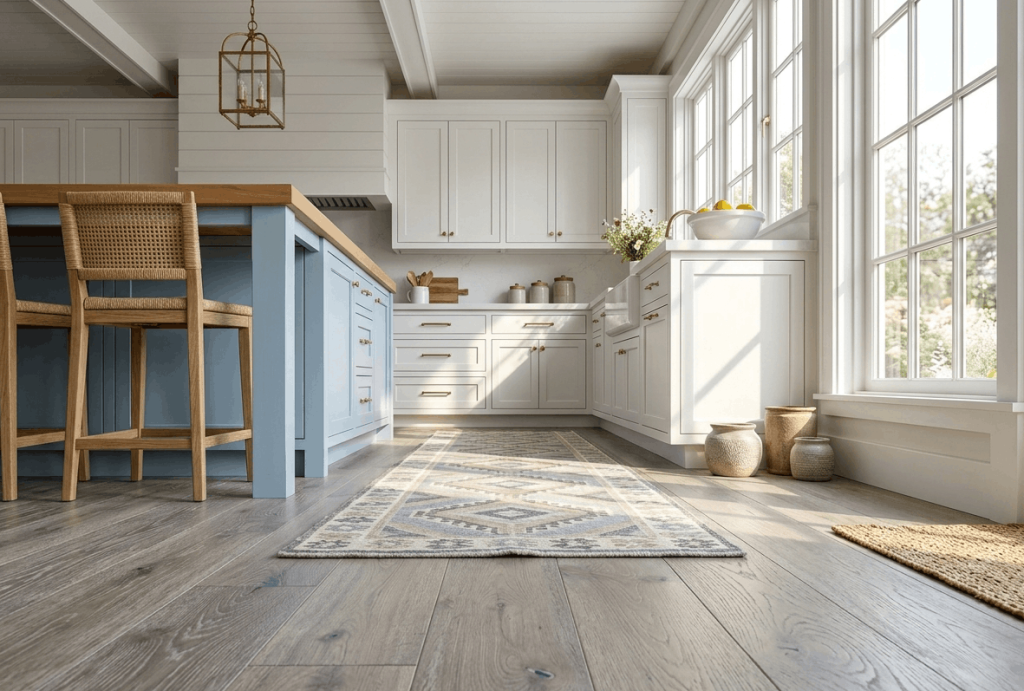
Wood flooring isn’t just for living rooms; it’s stunning in kitchens too. Gray washed wood (like oak or hickory) gives a soft, driftwood appearance that hides crumbs and pet hair. The pale gray tone keeps the space bright and works with any cabinet color white, blue, or even black. Choose engineered wood for better moisture resistance. Add a wool runner in a geometric pattern for warmth underfoot. This flooring style is especially popular in coastal and modern farmhouse kitchens.
Tips
- Use an extra-thick wear layer for durability.
- Clean with a wood-specific mop, never steam.
- Add felt pads under all furniture legs.
17: Cork Accent Wall

Cork is technically a bark, but it brings all the warmth of wood. A cork accent wall is soft, sustainable, and sound-absorbing perfect for open-plan kitchens. Cork’s honey-brown color has a unique speckled texture. Use it behind a dining nook or a message board area. You can even pin notes directly into the cork! Pair with bamboo cabinets and jute rugs for a natural, earthy look. Seal with a clear wax to prevent stains.
Tips
- Buy cork tiles with a pre-sealed surface.
- Clean with a soft brush or vacuum.
- Avoid placing cork near direct heat like ovens.
Conclusion
Wood kitchen design ideas offer endless warmth, character, and versatility. From classic white oak cabinets to bold live edge shelves, there’s a style for every home and budget. Remember to balance wood tones with lighter elements, protect surfaces with proper sealants, and choose woods suited for your cooking habits. Which idea will you try first? Share your favorite in the comments below, and don’t forget to pin these images for your next kitchen renovation!
FAQs
Is wood kitchen design expensive?
It depends on the wood type. Plywood and pine are budget-friendly, while mahogany and walnut cost more. Using wood as an accent (shelves, beams, or an island) keeps costs lower than full cabinetry.
How do I maintain wood kitchen cabinets?
Dust weekly with a soft cloth. Clean spills immediately. Use a wood-safe cleaner monthly. Reapply sealant or oil every 6–12 months depending on wear. Avoid abrasive sponges and steam mops.
Can I use wood near a sink or stove?
Yes, but choose water-resistant woods like teak, bamboo, or white oak. Seal meticulously and wipe up moisture quickly. For countertops near sinks, use butcher block with multiple oil coats. For stove areas, install a wood range hood (high heat is fine), but keep wood 6 inches away from open flames.