19 Stunning Kitchen Color Schemes to Instantly Refresh Your Home
Does your kitchen feel dull, dated, or just plain boring? You’re not alone. The kitchen is the heart of the home, but an uninspired color palette can make it feel more like a chore than a joy. The good news? You don’t need a full renovation to breathe new life into this space. A fresh coat of paint or a few carefully chosen color accents can transform everything from cabinetry to backsplashes. In this guide, we’ll walk you through 19 stunning kitchen color schemes that balance beauty and practicality. Whether you love soft neutrals, dramatic darks, or playful pops, you’ll find the perfect idea to match your style. Let’s turn your kitchen into a space you’ll love spending time in.
1: Warm White and Natural Wood

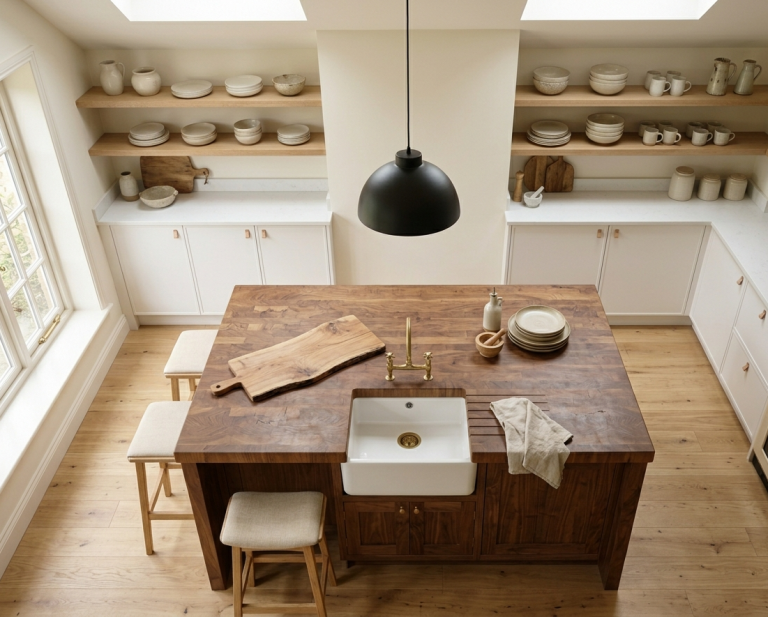
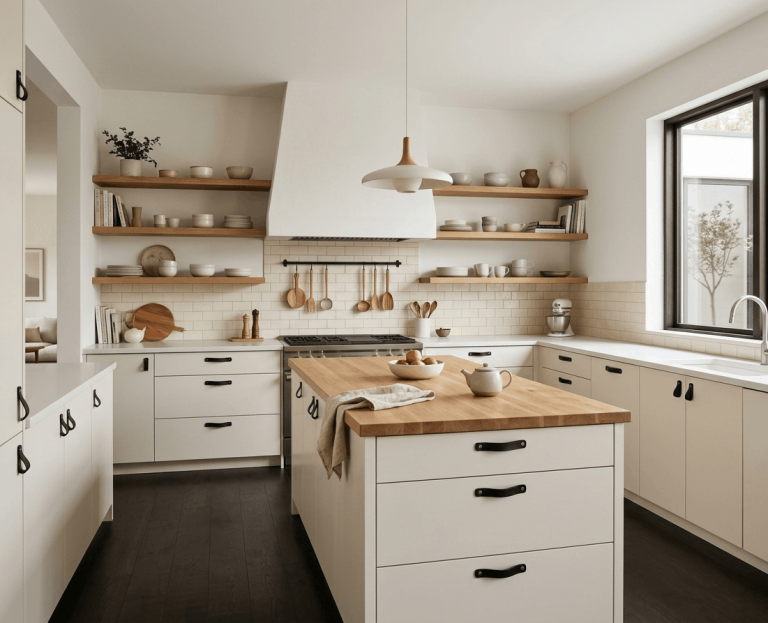
This timeless pairing combines creamy, warm white cabinets with natural oak or walnut accents. The white keeps the space feeling airy and open, while the wood adds organic texture and warmth. Use open shelving, butcher block countertops, or a wooden island to introduce the wood element. This scheme works especially well in small or north-facing kitchens that lack natural light. Add brushed brass or matte black hardware for a subtle contrast. The result is soft, inviting, and never sterile.
Tips
- Choose white with yellow or beige undertones (not stark white).
- Repeat the wood tone on bar stools or floating shelves.
- Use a light beige grout to keep the look cohesive.
2: Sage Green and Soft Cream
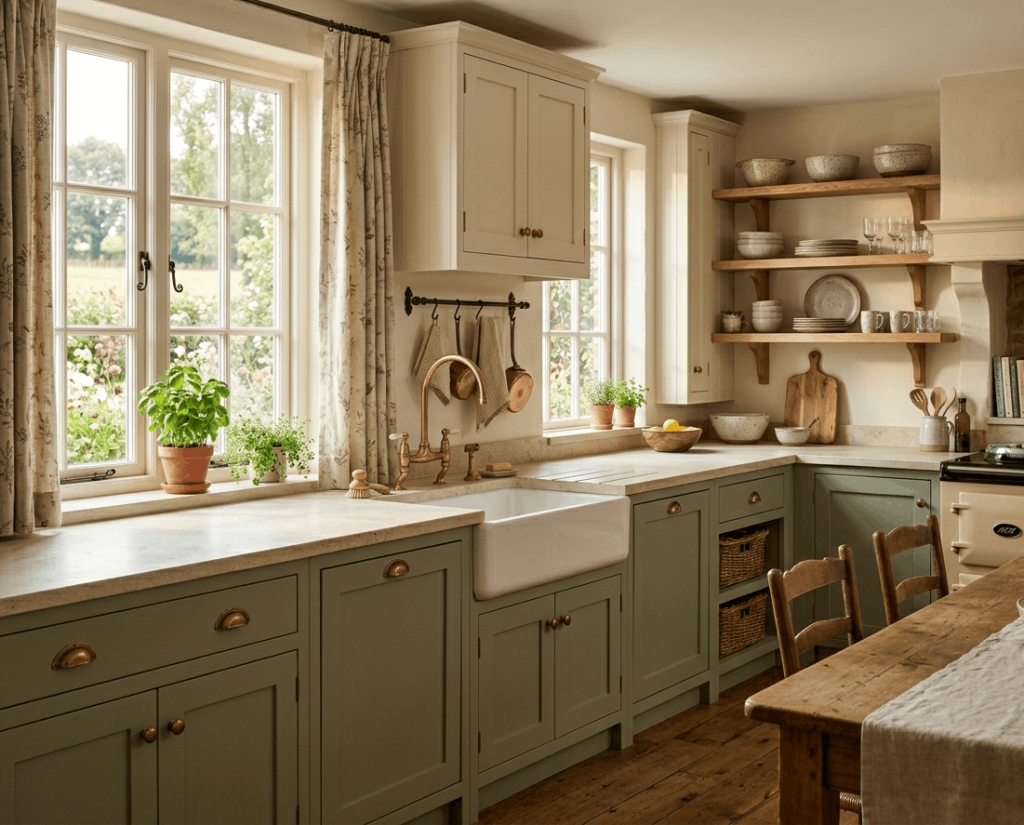
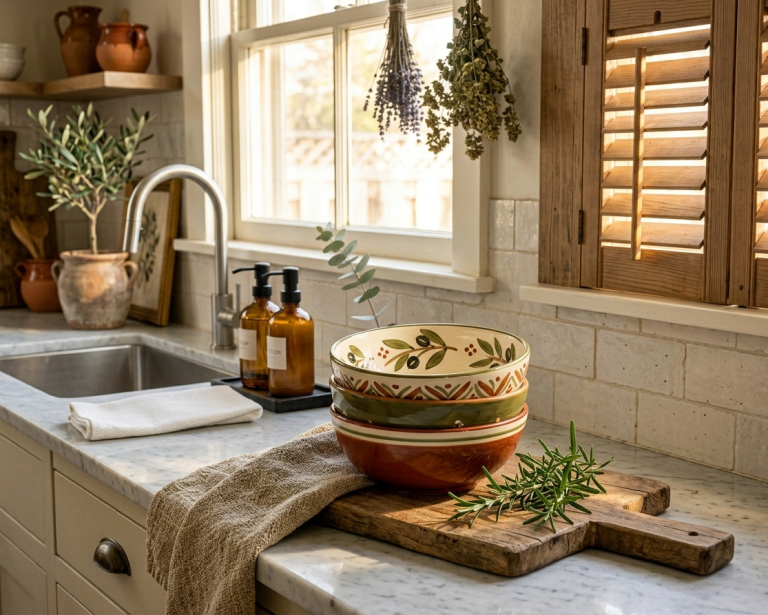
Sage green has become a favorite for good reason it’s calming, earthy, and pairs beautifully with soft cream. Paint lower cabinets in sage green and keep upper cabinets cream, or use sage on the walls with cream cabinetry. This scheme brings a gentle botanical feel to your kitchen without overpowering the senses. Add natural stone countertops in off-white or light gray, and introduce unlacquered brass or nickel hardware. It’s a perfect choice for vintage, cottage, or Scandinavian-inspired homes.
Tips
- Use matte finishes to enhance the organic vibe.
- Bring in live herbs or potted plants to echo the green.
- Choose a cream with a slight gray undertone for depth.
3: Navy Blue and Brushed Gold
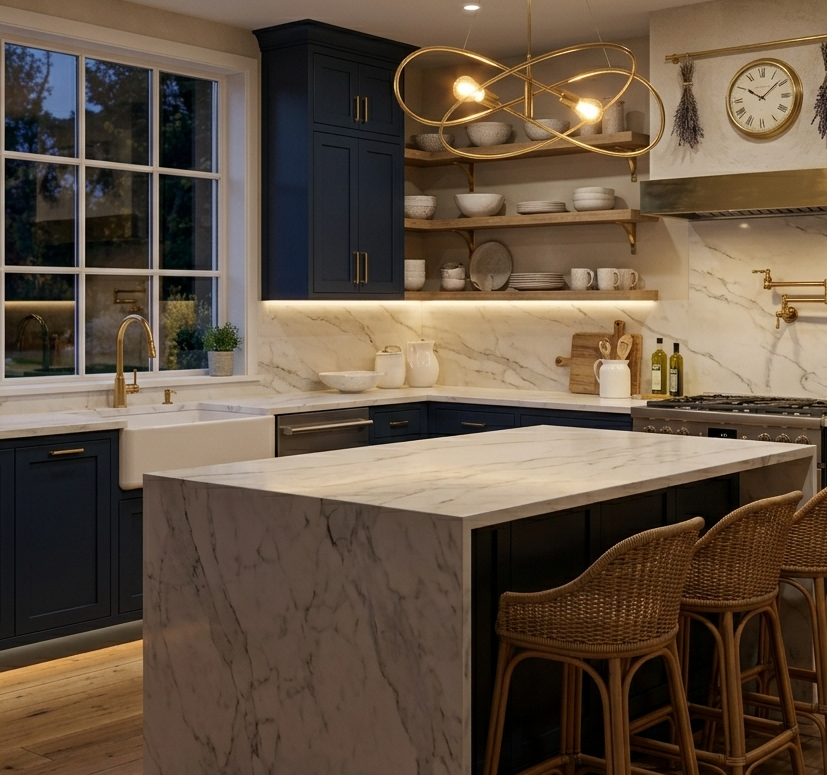
For drama and sophistication, navy blue cabinetry paired with brushed gold hardware is unbeatable. This scheme works best in larger kitchens or as an island accent. Navy is deep but not black, giving off a cozy, library-like feel. Balance the dark color with white or light marble countertops and plenty of task lighting. Brushed gold handles, faucets, and light fixtures add a touch of luxury. The contrast is striking yet refined perfect for transitional or modern glam styles.
Tips
- Use under-cabinet lighting to prevent shadows.
- Limit navy to one area (like an island) if space is tight.
- Add a clear glass backsplash to reflect light.
4: Charcoal Gray and Pale Pink

This unexpected duo is both edgy and soft. Use charcoal gray for lower cabinets or a feature wall, then introduce pale pink through upper cabinets, a range hood, or even a pink tile backsplash. The gray grounds the pink, preventing it from feeling too sweet, while the pink softens the gray’s intensity. Keep countertops light—white quartz or light oak wood works well. Add matte black fixtures for a modern touch. This scheme is ideal for bold minimalists and urban lofts.
Tips
- Choose a dusty or blush pink, not neon or bubblegum.
- Use open shelving to break up large gray surfaces.
- Incorporate natural linen textures to add warmth.
5: Butter Yellow and Crisp White
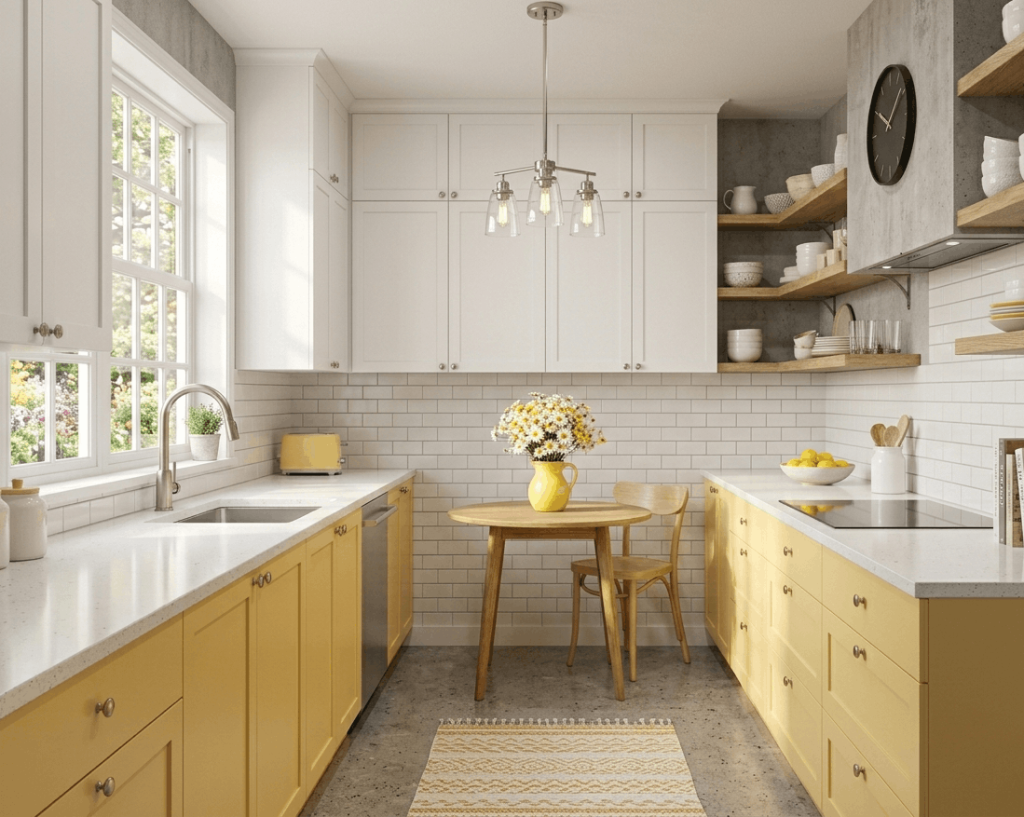
Butter yellow is cheerful without being overwhelming. Pair it with crisp white cabinetry or white walls to keep the look fresh. Use yellow on a single wall, a kitchen island, or even just on bar stools and small appliances. White countertops, subway tile, and open shelving prevent the yellow from taking over. This scheme works beautifully in breakfast nooks and small galley kitchens because it reflects light well. Add natural wood accents for balance.
Tips
- Stick to pale, creamy yellows avoid highlighter tones.
- Use white upper cabinets to keep the room feeling tall.
- Add a few yellow accessories like a kettle or canisters.
6: Terracotta and Olive Green

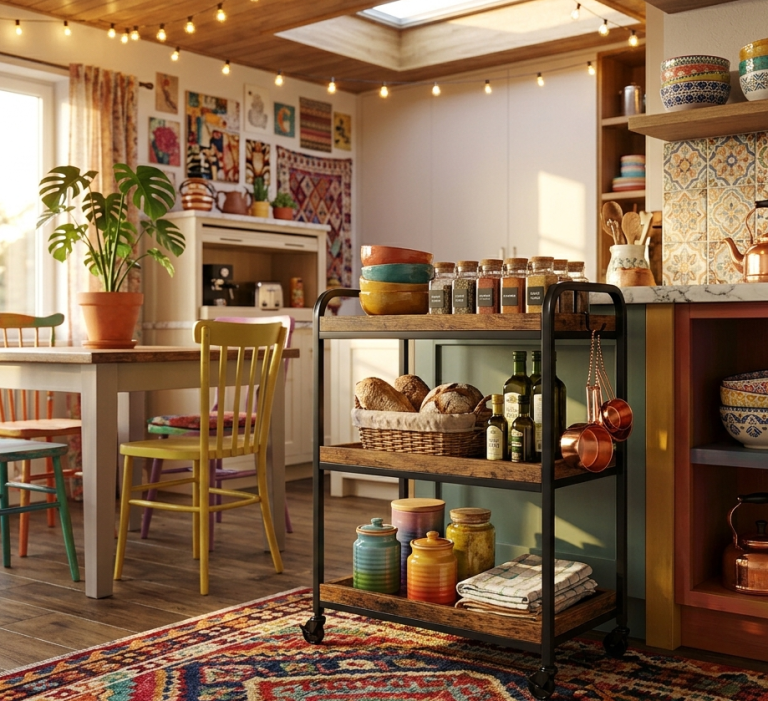
Inspired by Mediterranean landscapes, this warm, earthy combination brings instant coziness. Use terracotta on the walls or as a tile backsplash, and olive green on lower cabinets or open shelving. The two colors share similar undertones, creating a harmonious, grounded feel. Add natural wood countertops, rattan light fixtures, and cream or off-white upper cabinets. This scheme is perfect for bohemian, Spanish revival, or rustic farmhouse kitchens.
Tips
- Use matte, unglazed terracotta tiles for authenticity.
- Introduce copper pots or a copper faucet for warmth.
- Keep ceilings and trim in soft cream to avoid heaviness.
7: Black and White with a Pop of Red
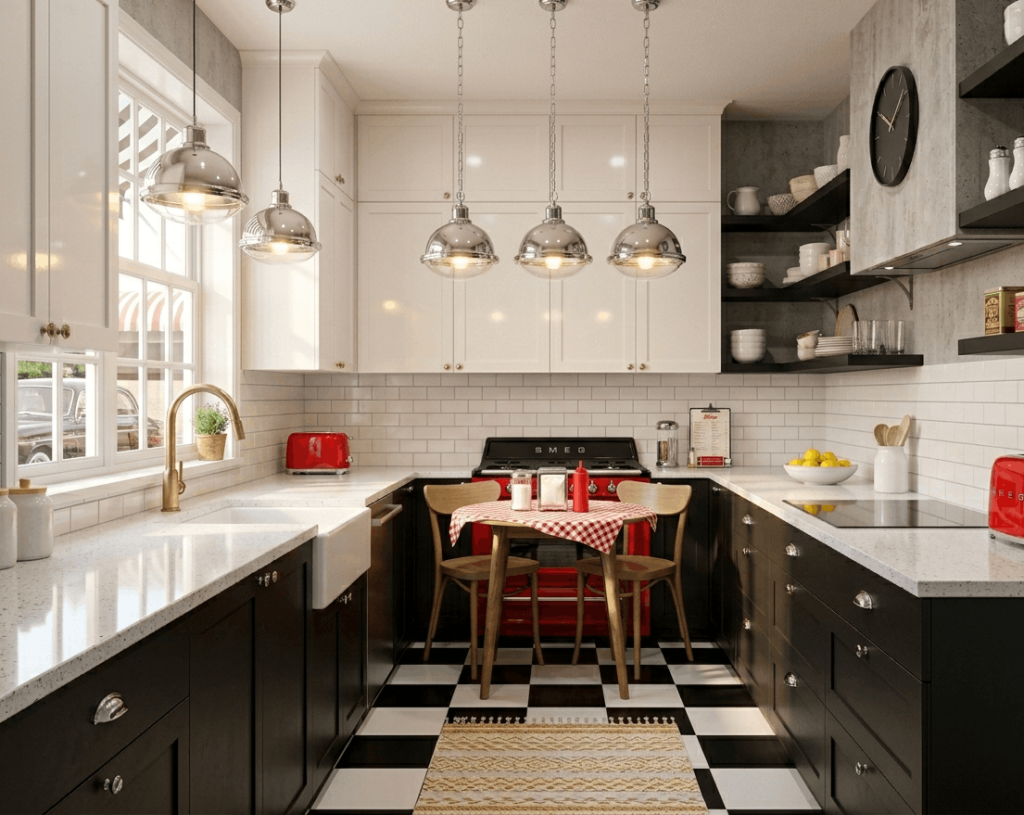
A classic black-and-white kitchen gets a jolt of energy with a single red accent. Paint most cabinets white, use black on the island or lower cabinets, then add a red range, red bar stools, or a red backsplash. The red should be limited to one or two items to keep the look intentional. Checkerboard floors in black and white enhance the retro vibe. This scheme works wonderfully in diner-style, art deco, or eclectic kitchens.
Tips
- Choose a true cherry or tomato red, not burgundy.
- Keep countertops simple white marble or butcher block.
- Use brass hardware to bridge the contrast.
8: Lavender and Soft Gray
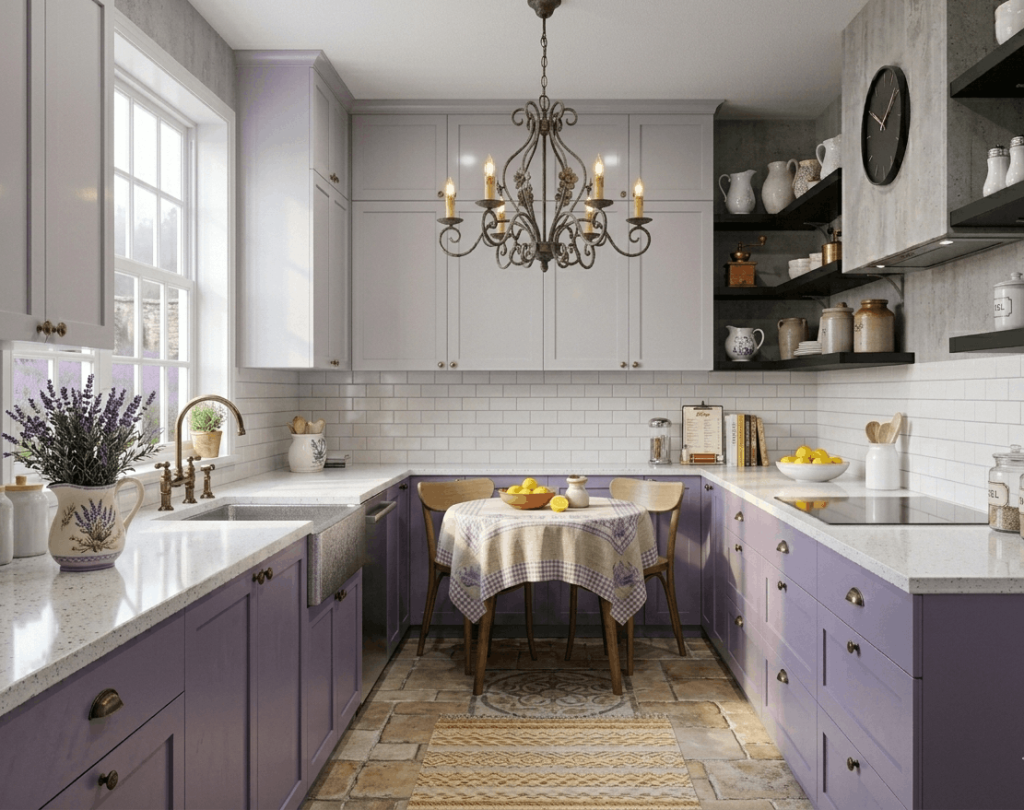
Lavender is an underrated kitchen color it’s soothing, light, and surprisingly versatile. Pair it with soft gray cabinets or gray walls to keep the look sophisticated. Use lavender on an accent wall, island, or lower cabinets, and keep countertops white or light gray. The gray prevents the lavender from feeling too feminine or childish. Add silver or brushed nickel hardware for a cool, calming finish. Ideal for shabby chic, French country, or transitional spaces.
Tips
- Choose a muted, dusty lavender instead of bright purple.
- Use white open shelving to break up large color blocks.
- Add fresh eucalyptus or silver-leafed plants to enhance the palette.
9: Teal and Warm Copper

Teal is rich, jewel-toned, and surprisingly livable in a kitchen. Pair it with warm copper accents for a luxurious, ocean-meets-desert vibe. Paint an island or lower cabinets in deep teal, then use copper pendant lights, copper pots, or a copper range hood. Keep the rest of the kitchen neutral cream walls, light wood floors, and white countertops. The contrast between cool teal and warm copper is visually stunning. Perfect for eclectic or Southwestern-inspired homes.
Tips
- Use satin or semi-gloss finish on teal to reflect light.
- Limit teal to one major element to avoid overwhelming.
- Add a jute rug to bring in natural texture.
10: Beige and Mushroom Taupe

For a quiet, monochromatic look that feels anything but boring, combine beige and mushroom taupe. These warm neutrals create depth without high contrast. Paint walls or upper cabinets in light beige, and use mushroom taupe on lower cabinets or a backsplash. Add natural stone countertops in cream or sand, and choose matte black or oil-rubbed bronze hardware. This scheme is incredibly calming and works well in minimalist, Japandi, or organic modern kitchens.
Tips
- Vary textures (matte, glossy, stone, wood) to add interest.
- Use a beige with pink or yellow undertones, taupe with gray.
- Add a live-edge wood shelf for organic contrast.
11: Forest Green and Creamy Beige

Forest green is deep, moody, and surprisingly versatile. Pair it with creamy beige to keep the space from feeling too dark. Use forest green on lower cabinets or a full wall of pantry cabinets, then use creamy beige on upper cabinets or the ceiling. Brass or gold hardware adds a vintage touch. This scheme works beautifully in large kitchens with good natural light. Add light wood floors and a simple white backsplash to keep things balanced.
Tips
- Use semi-gloss on forest green to prevent a cave-like feel.
- Keep window treatments minimal to maximize light.
- Add a few glossy white accessories for contrast.
12: Peach and Pale Aqua
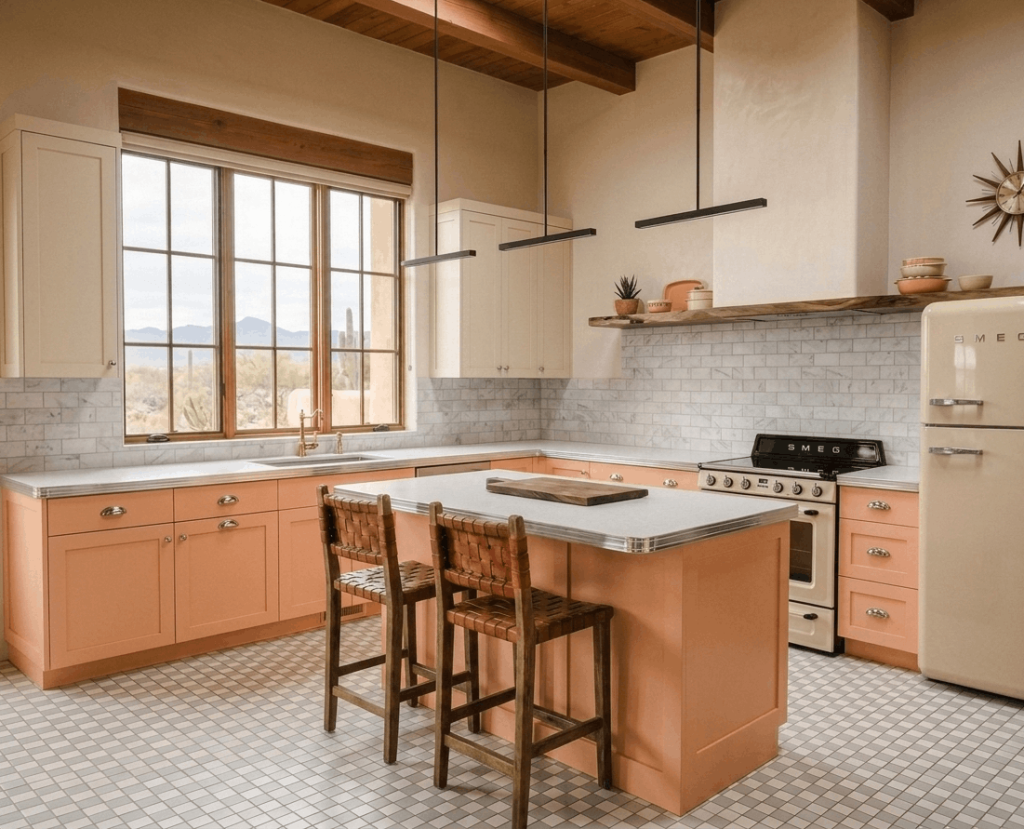
This retro-inspired combination is playful without being childish. Use pale aqua on walls or upper cabinets, and peach on an island, lower cabinets, or a tiled backsplash. The two colors are opposite on the color wheel, which creates a gentle vibration. Keep countertops white and hardware in chrome or nickel. Add a few vintage-inspired appliances or accessories. This scheme is perfect for beach cottages, mid-century modern, or eclectic homes.
Tips
- Choose soft, muted versions of both colors (not neon).
- Use open shelving to break up larger color blocks.
- Add natural linen or seagrass textures to ground the palette.
13: Espresso Brown and Cream

For a warm, masculine, and highly sophisticated look, try espresso brown cabinets with cream walls and trim. The dark brown adds weight and coziness, while cream keeps the space from feeling heavy. Use espresso on lower cabinets or an entire wall of pantry storage, and keep upper cabinets cream or off-white. Add brass or leather hardware. This scheme is ideal for libraries, studies, or kitchens with a traditional or craftsman feel.
Tips
- Use plenty of under-cabinet and pendant lighting.
- Choose a cream with yellow undertones to complement the brown.
- Add a marble or light granite countertop for contrast.
14: Mint Green and White

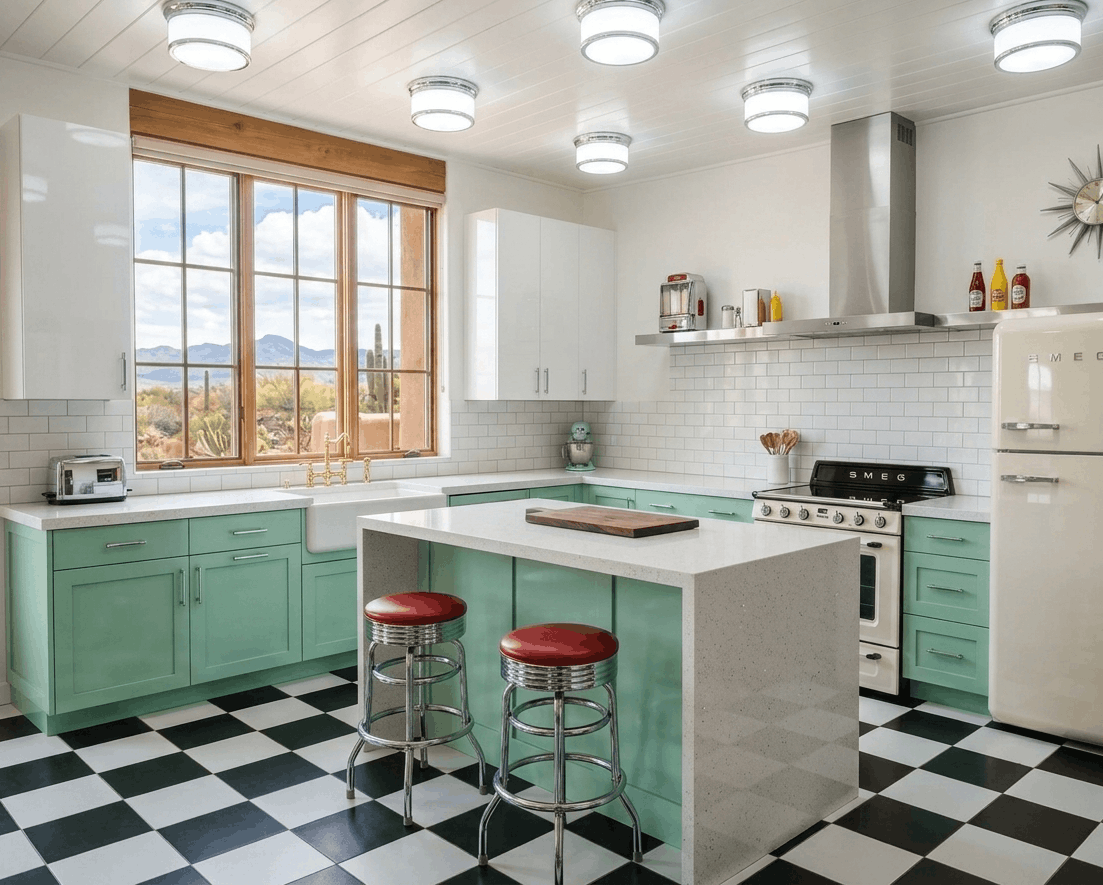
Mint green is fresh, cool, and instantly uplifting. Pair it with crisp white for a clean, retro-fresh look. Use mint on lower cabinets or a tile backsplash, and keep upper cabinets and walls white. This color works especially well in small kitchens because it reflects light while adding a subtle pop. Choose chrome or nickel hardware for a sleek finish, and add white quartz countertops. It’s a classic diner color scheme that never feels tired.
Tips
- Choose a cool, blue-based mint, not a yellow-based one.
- Use a glossy finish on cabinets for easy cleaning.
- Add a few black accents (like a pendant light or toaster) for edge.
15: Burgundy and Warm Grey

Burgundy adds richness and depth without the formality of black. Pair it with warm gray (gray with beige or brown undertones) to keep the look grounded. Use burgundy on an island or lower cabinets, and warm gray on upper cabinets and walls. Keep countertops in light quartz or cream marble. Brass or antique bronze hardware enhances the luxurious feel. This scheme is perfect for traditional, Victorian, or gothic revival kitchens.
Tips
- Limit burgundy to one area if your kitchen is small.
- Use warm white or cream ceilings to bounce light.
- Add a crystal or glass pendant light for sparkle.
16: Sky Blue and Sandy Beige
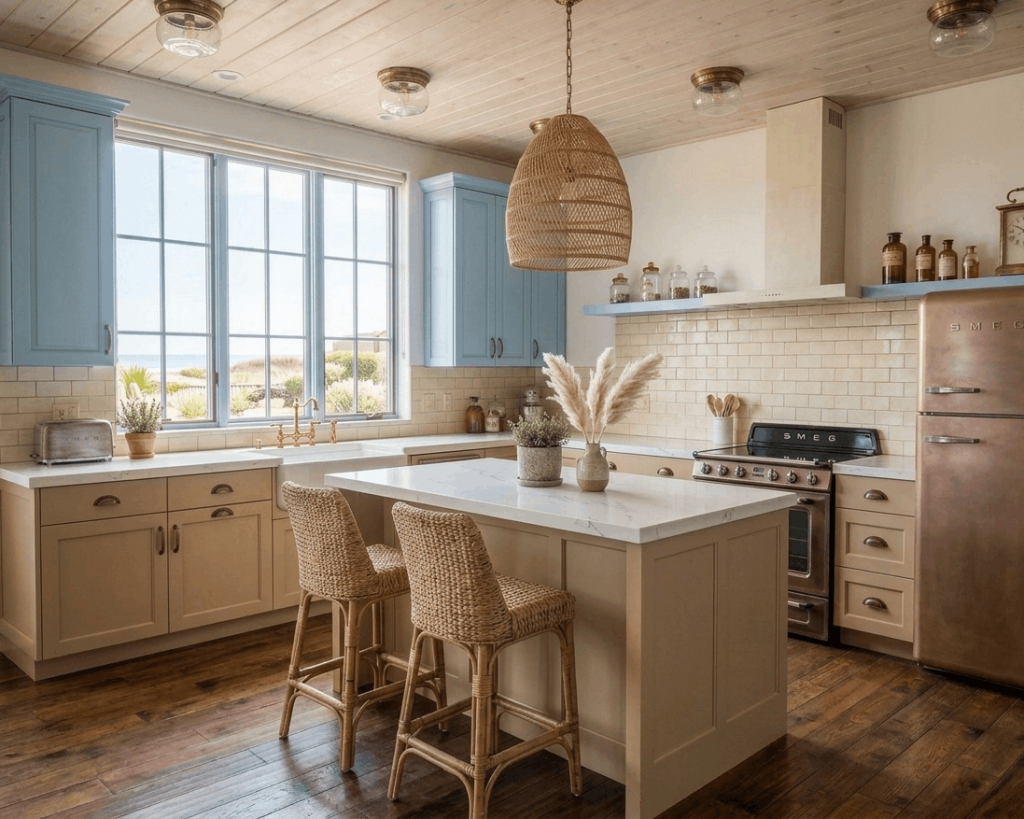
This coastal-inspired combination is airy, relaxing, and endlessly inviting. Use sky blue on upper cabinets or walls, and sandy beige on lower cabinets or the island. The light blue acts like the sky, while beige mimics sand or driftwood. Keep countertops in white or light gray quartz. Add woven pendants, rattan bar stools, and seagrass baskets. It’s the perfect palette for beach houses, coastal cottages, or any home craving a vacation vibe.
Tips
- Choose a sky blue with gray undertones (not too bright).
- Use matte finishes on cabinets for a natural look.
- Add navy or deep teal as a tiny accent (towels, vase).
17: Plum Purple and Light Oak

Plum purple is bold, artistic, and surprisingly warm. Pair it with light oak wood for balance the oak’s golden undertones complement the plum’s cool red-blue base. Use plum on a single accent wall or a kitchen island, and keep cabinetry in light oak or white. Add brass or copper hardware. This scheme works best in eclectic, bohemian, or artist’s loft kitchens. Keep countertops simple (white or light concrete) to avoid visual noise.
Tips
- Choose a plum with more red than blue for warmth.
- Use the plum color sparingly less is more.
- Add cream or off-white to break up the two main colors.
18: Slate Blue and Warm White

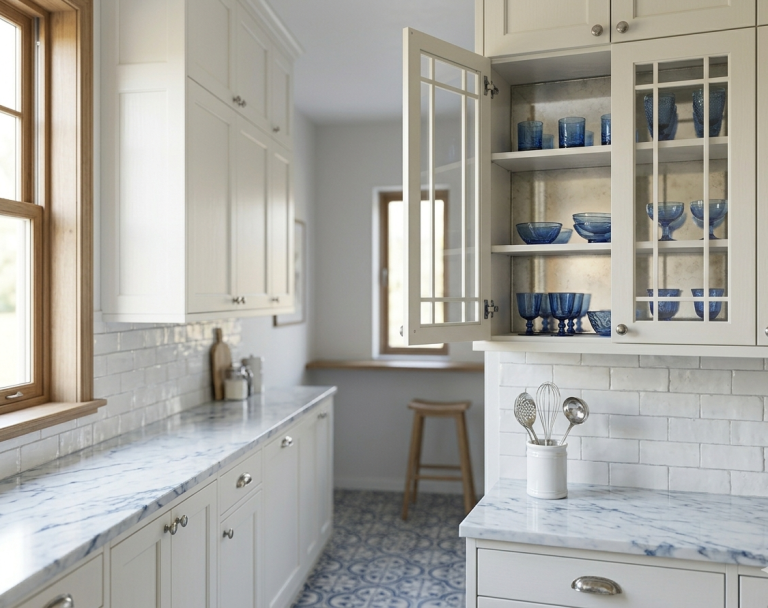
Slate blue is a gray-blue that feels沉稳, sophisticated, and serene. Pair it with warm white cabinetry or walls for a classic New England or coastal farmhouse look. Use slate blue on lower cabinets or a large pantry wall, and warm white on upper cabinets and trim. Add brushed nickel or chrome hardware. This scheme is incredibly livable it works in traditional, contemporary, and transitional kitchens alike. Add light wood floors and simple linen shades.
Tips
- Use semi-gloss on slate blue to keep it from feeling flat.
- Add a few navy or deep blue accessories for layering.
- Keep backsplash simple white subway or beadboard.
19: Coral and Soft Grey

Coral is energetic, happy, and surprisingly sophisticated when paired with soft gray. Use coral on the kitchen island, a range hood, or a tiled backsplash. Keep surrounding cabinets and walls in soft gray. The gray tones down the coral’s brightness, making the combination feel balanced and modern. Add white countertops and matte black hardware for a contemporary edge. This scheme is ideal for eclectic, modern, or Mediterranean-inspired kitchens.
Tips
- Choose a coral with orange-pink balance (not too pink).
- Limit coral to one focal point for the best effect.
- Add a few greenery plants to complement the warmth.
Conclusion
Updating your kitchen’s color scheme is one of the most affordable and impactful ways to refresh your home. Whether you’re drawn to calming neutrals like beige and taupe, bold jewel tones like navy and plum, or playful pastels like mint and coral, there’s a perfect palette waiting for you. Start small paint an island, add a colorful backsplash, or swap out hardware and accessories. Which of these 19 stunning kitchen color schemes will you try first? Let us know in the comments below, and don’t forget to pin your favorite image prompt for inspiration!
FAQs
What is the most timeless kitchen colour scheme?
White and natural wood is the most timeless combination. It works in any era, with any architectural style, and is easy to update with accessories. Warm white cabinets paired with oak or walnut accents never go out of style.
How do I choose a kitchen color scheme for a small space?
Stick to light, reflective colors like soft cream, pale gray, mint green, or sky blue. Use the same color on upper and lower cabinets to avoid visual breaks. Add a mirror or glossy backsplash to bounce light around the room.
Can I mix two bold colors in my kitchen?
Yes, but limit them to one major element each. For example, use navy on lower cabinets and coral on the island, keeping everything else neutral (white, cream, or light wood). This prevents the space from feeling chaotic.