17 Contemporary Living Room Ideas
Does your living room feel stuck in the past? You want a space that looks fresh, feels welcoming, and actually works for how you live today—but with so many trends out there, it’s hard to know where to start. The good news? You don’t need a full renovation or a designer budget. Contemporary style is all about clean lines, smart functionality, and personality that doesn’t scream for attention. In this guide, you’ll get 17 actionable contemporary living room ideas, each with practical tips. Let’s turn your living room into a modern haven.
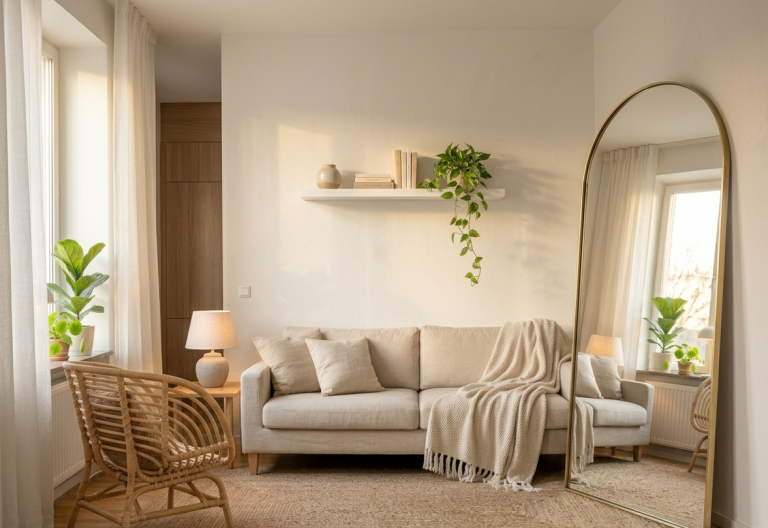
1: Neutral Base with Textural Layers

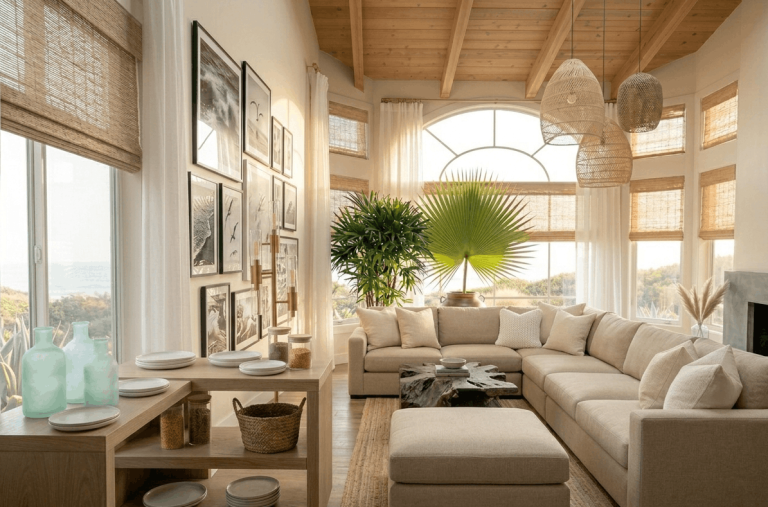
Start with a soft, neutral foundation think warm beige walls, a cream sofa, and a light jute rug. Then add depth through texture: a chunky knit throw, linen pillows, and a stone coffee table. This keeps the room from feeling flat or cold.
Tips
- Mix at least three different textures (wood, wool, ceramic).
- Use matte finishes to enhance the organic feel.
- Add a single leather armchair for subtle contrast.
2: Curved Silhouettes and Soft Edges

Swap boxy furniture for sofas with rounded arms, oval coffee tables, and arched mirrors. Curved shapes feel more inviting and break the rigidity of modern architecture. They also guide the eye smoothly across the room.
Tips
- Choose one hero curved piece (like a bouclé swivel chair).
- Pair with a circular rug to reinforce the soft geometry.
- Keep other lines clean to avoid clutter.
3: Monochromatic Earth Tones

Go beyond beige with a full palette of clay, terracotta, sand, and mushroom brown. Paint walls a muted clay, choose a sand colored sofa, and add terracotta planters. The result is warm, grounded, and surprisingly bold without being loud.
Tips
- Vary lightness from pale sand to deep umber.
- Use black accents sparingly (picture frames, lamp legs).
- Add greenery to break up warm tones naturally.
4: Statement Lighting as Art

Forget recessed lights. Choose one oversized pendant, a sculptural floor lamp, or a cluster of glass globes. Lighting becomes the focal point. It adds drama and function while keeping the rest of the room minimal.
Tips
- Hang pendants lower than usual (30–36 inches above tables).
- Use warm bulbs (2700K) for coziness.
- Choose metal finishes that match your hardware (brass, black, chrome).
5: Floating Media Console with Hidden Cords

Mount your TV on a sleek, low floating console in matte wood or high-gloss white. Hide all cords inside the wall or behind a panel. This instantly cleans up visual noise and makes the room feel larger and more intentional.
Tips
- Keep console length at least as wide as the TV.
- Leave 4–6 inches of wall space above the console.
- Add a soundbar on the console, not mounted separately.
6: Large-Scale Abstract Art

One big abstract painting (or a triptych) sets the entire room’s color mood. Pull accent hues from the art into pillows or a throw. This trick makes even a budget sofa look curated and intentional.
Tips
- Art should be 2/3 to 3/4 the width of your sofa.
- Hang at eye level (57–60 inches to center).
- Choose art with movement, not rigid patterns.
7: Mixed Metals for Edge

Combine brass, black steel, and brushed nickel in one room. A brass coffee table, black shelf brackets, and nickel sconces feel collected rather than matchy. The key is repeating each metal at least twice.
Tips
- Start with a dominant metal (60%), then two accents (20% each).
- Use metal in small doses: hardware, lamp bases, picture frames.
- Avoid polished finishes; stick to satin or brushed.
8: Built-In Bookshelf Wall

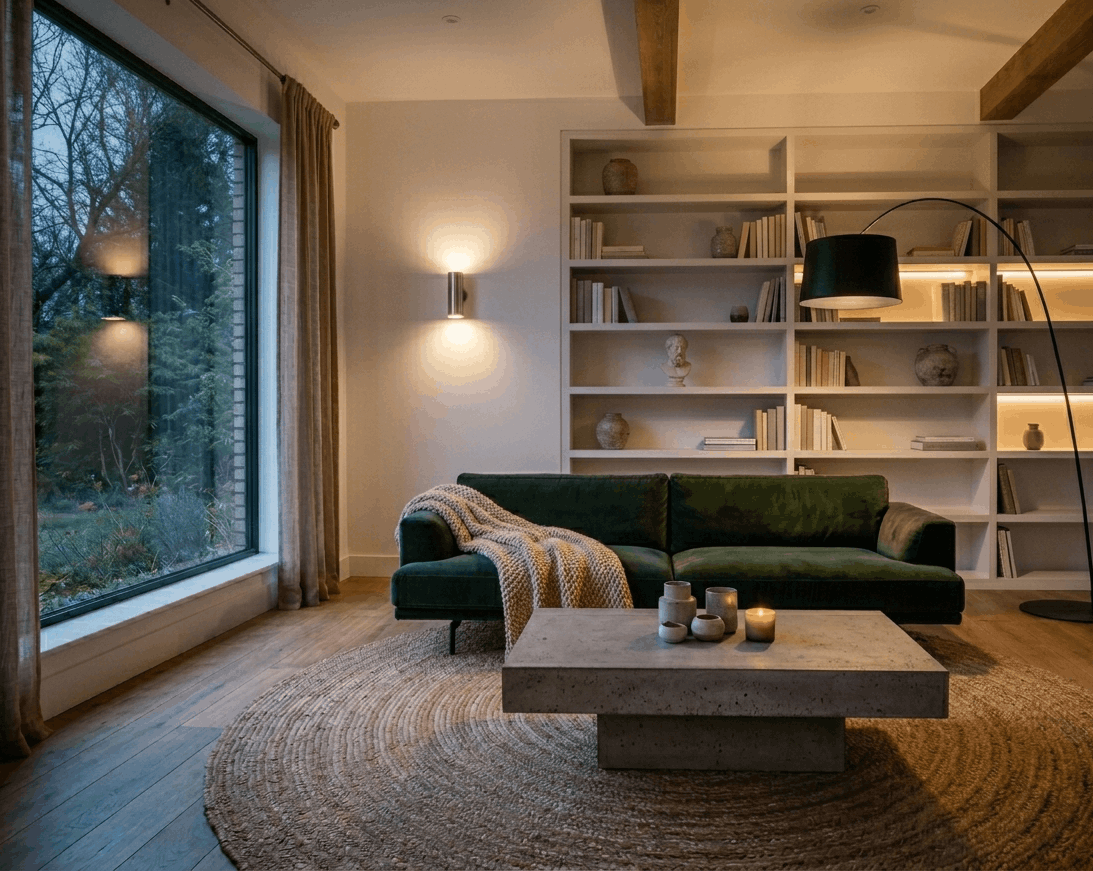
Floor to ceiling built ins (or IKEA hack versions) add storage and character. Style them with 50% books, 30% decor objects, and 20% empty space. Paint them the same color as your walls for a seamless look.
Tips
- Remove jackets from hardcover books for a neutral palette.
- Layer small objects in front of books.
- Add hidden LED strip lights on three shelves.
9: Low, Wide Sofa Profile

Choose a sofa with a low back (28–30 inches) and deep seats (40+ inches). This creates a loungier, more grounded feel. Pair with a low coffee table (16–18 inches) to keep sightlines open.
Tips
- Use 20–22 inch seat cushions for comfort.
- Add lumbar pillows for back support.
- Float the sofa away from walls if space allows.
10: Biophilic Design (Indoor Plants)

Make plants a design element, not an afterthought. Use large statement plants (fiddle leaf fig, bird of paradise) in woven baskets, plus hanging planters at different heights. This softens hard surfaces and improves air quality.
Tips
- Group three plants of varying heights for impact.
- Use self-watering pots for low maintenance.
- Choose low-light plants for darker corners (snake plant, ZZ).
11: Zoned Open-Plan Layout

In an open floor plan, use rugs, sofa placement, and lighting to define the living area without walls. Float the sofa facing away from the dining area, and use a large rug that fits all front legs of furniture.
Tips
- Leave at least 36 inches of walking space between zones.
- Use a pendant light over the living zone, another over dining.
- Align rugs with the direction of the room.
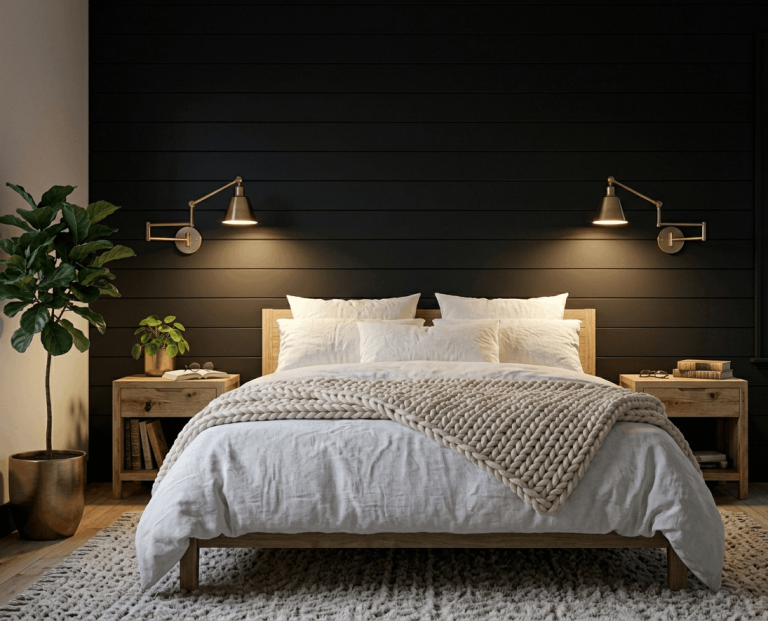
12: Dark Accent Wall (Navy or Charcoal)

One dark wall adds instant depth. Paint the wall behind your sofa or TV in navy, charcoal, or forest green. Keep other walls light. The contrast makes the room feel bigger, not smaller.
Tips
- Use matte finish on dark walls to reduce glare.
- Hang light-colored art or a large mirror on the dark wall.
- Balance with a light sofa and rug.
13: Modular Sectional for Flexibility

A modular sectional with movable pieces (chaise, ottoman, corner) adapts to movie nights, parties, or daily lounging. Choose a neutral color and deep seats. You can reconfigure it whenever you want a change.
Tips
- Buy extra covers if available (for cleaning or color swap).
- Use the ottoman as a coffee table with a tray.
- Keep the back low so it doesn’t block light.
14: Minimalist Fireplace (Linear or Hanging)

Replace bulky traditional fireplaces with a slim linear fireplace mounted on the wall or a hanging bioethanol model. Keep the surround simple just white plaster or black steel. It becomes a sleek focal point without eating floor space.
Tips
- Mount at seated eye level (20–24 inches from floor).
- Use a long, narrow format (48–60 inches wide, 12 inches tall).
- Skip the mantel for a cleaner look.
15: Glass and Lucite Accents

Lucite or glass furniture (side tables, coffee tables, chair frames) visually disappears, making small rooms feel larger. Use them sparingly one acrylic side table or a glass coffee table is enough.
Tips
- Pair Lucite with warm textures (velvet, wool) to avoid coldness.
- Clean glass tables daily with streak-free spray.
- Avoid placing Lucite directly in harsh sunlight (may yellow over time).
16: Grid or Paneled Wall Treatment

Add simple wood battens (vertical or horizontal) or wall panels to one wall. Paint them the same color as the wall for subtle texture, or a darker shade for contrast. It adds architectural interest instantly.
Tips
- Space battens 16–24 inches apart for a modern look.
- Use MDF strips for a budget-friendly DIY.
- Keep the rest of the walls smooth to avoid busyness.
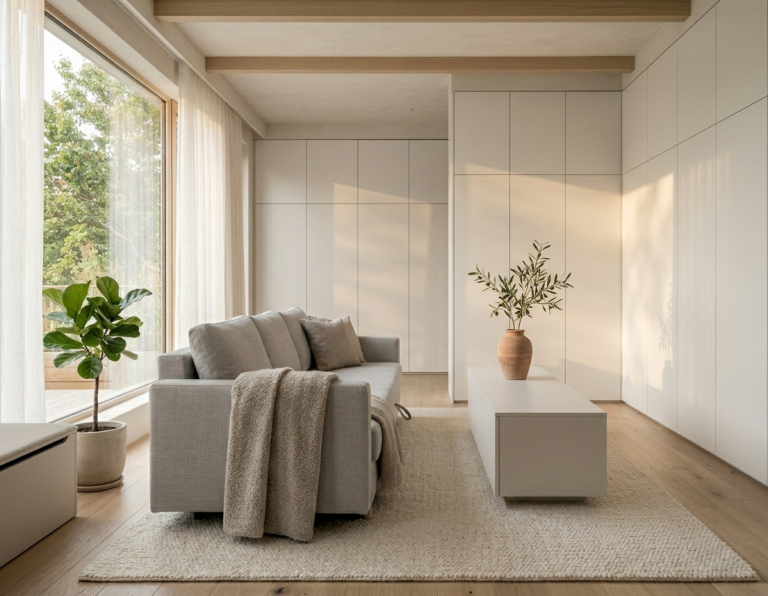
17: Tech-Integrated but Hidden

Hide speakers, charging stations, and streaming devices inside a media console or a dedicated tech cabinet. Use cord covers, in wall power kits, and a universal remote. The room looks serene, but everything works seamlessly.
Tips
- Install a charging drawer with built-in USB ports.
- Use a soundbar that matches your TV width.
- Keep router and modem in a ventilated cabinet.
Image Prompt
A sleek contemporary living room with no visible electronics except a slim TV. A white high-gloss media console with hidden compartments for speakers and a charging drawer. A universal remote on a tray. Soft evening lamp light. Wide-angle, ultra-realistic, 4K, clean and functional mood. Aspect ratio 4:3.
Conclusion
Updating your living room doesn’t mean chasing every trend. These 17 contemporary ideas focus on clean lines, smart textures, and personal comfort. Pick two or three that excite you most maybe curved furniture and a dark accent wall, or biophilic plants with mixed metals. Start small, and watch your space feel more like you. Which idea will you try first? Let me know in the comments.
FAQs
What’s the difference between modern and contemporary design?
Modern design refers to a specific early-to-mid-20th-century movement with strict forms and materials like steel and glass. Contemporary design is ever-changing and refers to what’s popular now it borrows from modern, minimalist, and organic styles but is more flexible.
How do I make a contemporary living room feel cozy?
Layer textures (wool, linen, wood), use warm lighting (2700K bulbs), and add soft furniture with rounded edges. A large rug and a few indoor plants also instantly add warmth without breaking contemporary rules.
Can contemporary living rooms work in small spaces?
Absolutely. Use low-profile furniture, floating shelves, Lucite accents, and a light neutral palette. Avoid bulky pieces. A modular sectional and a glass coffee table keep the room feeling open and uncluttered.