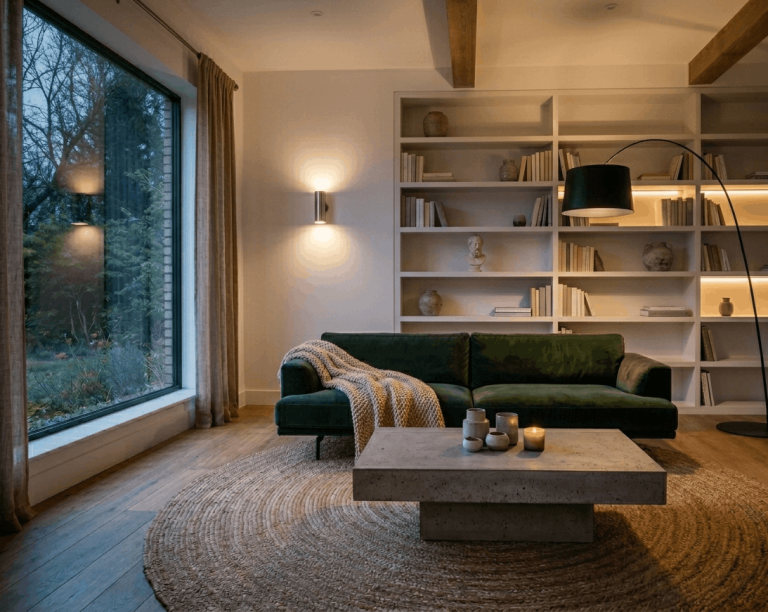
17 Minimalist Living Room Ideas
Does your living room feel more chaotic than calming? You’re not alone. Many of us crave a peaceful home but struggle with clutter, too much furniture, or busy patterns. The good news? Minimalist design isn’t about empty, cold rooms. It’s about keeping what you love and need and nothing more. The result is a space that feels lighter, easier to clean, and truly relaxing. In this guide, you’ll find 17 practical minimalist living room ideas you can start today. Whether you rent or own, have a small apartment or a large house, these tips will help you create a room that breathes. Let’s simplify.
1: Stick to a Neutral Base

Start with white, beige, gray, or off-white walls and a large rug. A neutral base makes the room feel open and airy. It also lets you add small accents later without breaking the calm mood. Choose a soft, matte paint finish to avoid harsh reflections. Then, pick a rug in a slightly darker neutral tone to anchor the seating area. This foundation works with any minimalist style, from warm organic to cool modern.
Tips
- Use three neutral shades maximum (e.g., cream, taupe, and charcoal)
- Avoid high-contrast patterns on walls or floors
- Keep ceiling white to visually raise the room height
2: Choose Multifunctional Furniture

In a minimalist living room, every piece should earn its spot. That’s why multifunctional furniture is a game changer. Think of a storage ottoman that works as a coffee table, footrest, and hidden toy bin. Or a sofa bed for guests. Or nesting tables you can tuck away. These pieces reduce clutter because they replace two or three single-use items. Your room stays clean, and you gain hidden storage. Look for simple shapes with no visible handles or busy details.
Tips
- Use a console table with drawers behind the sofa
- Pick a TV stand with closed cabinets, not open shelves
- Choose a lift-top coffee table for laptop work or dining
3: Hide Clutter with Closed Storage

Open shelves look nice in photos, but in real life, they collect dust and visual noise. For a truly minimalist living room, use closed storage. Think floor-to-ceiling cabinets, a media console with doors, or built-in wardrobes. When everything is behind a smooth front, your eye rests. You can still keep a few beautiful objects on one small tray. But the rest cables, remote controls, books, kids’ toys stays out of sight. This one change alone makes a room feel 50% calmer.
Tips
- Choose handleless cabinets with push-to-open mechanism
- Use matching baskets inside shelves for small items
- Leave one open shelf at eye level for a single plant or vase
4: Limit Your Color Palette to 3-4 Colors

Minimalist living rooms feel peaceful because they don’t scream for attention. Stick to three or four colors total. For example: off-white walls, a charcoal sofa, light oak floors, and one muted accent like sage green or dusty blue. Repeat these same colors in pillows, art, and decor. This creates harmony without effort. Avoid bright neon or multiple pastels. When you limit your palette, even a slightly messy room still looks intentional.
Tips
- Use the 60-30-10 rule: 60% dominant color, 30% secondary, 10% accent
- Keep accent colors low saturation (dusty pink, muted terracotta)
- Paint trim and walls the same color to reduce visual breaks
5: Let In Natural Light

Nothing makes a room feel more open than natural light. In a minimalist living room, avoid heavy drapes or dark blinds. Instead, use sheer white curtains, roller shades, or no window coverings at all. Position mirrors across from windows to bounce light deeper into the room. Keep window sills empty. Natural light highlights your few chosen pieces and makes the space feel larger. If privacy is an issue, use frosted film or top-down bottom-up shades.
Tips
- Clean windows regularly for maximum brightness
- Use light-filtering shades, not blackout, for daytime
- Place a large mirror on the wall opposite the main window
6: Add One Large Piece of Art, Not Many Small Ones

Gallery walls look busy. For a minimalist living room, choose one large-scale artwork. It becomes a focal point without visual chaos. The art should be simple: a textured neutral canvas, a black-and-white photograph, or a single bold shape. Hang it at eye level. Leave plenty of empty wall space around it. This “less is more” approach feels sophisticated and calm. If you love multiple pieces, rotate them seasonally instead of hanging all at once.
Tips
- Art should take up 60-75% of the sofa’s width
- Choose frames in the same color as your wall (floating effect)
- Avoid art with too many colors or detailed scenes
7: Use Negative Space Intentionally

Negative space is empty area and it’s your best friend in minimalist design. Don’t fill every corner with a plant, lamp, or basket. Leave some walls bare. Leave floor space empty between furniture. This breathing room makes your living room feel bigger and more luxurious. Think of it as visual rest. For example, pull your sofa away from the wall by 6 inches. Or leave a whole corner completely empty except for one tall floor lamp.
Tips
- Leave at least 18 inches of empty floor space in high-traffic areas
- Don’t place furniture against every wall
- Keep ⅓ of your shelves empty for visual balance
8: Choose Low-Profile, Leggy Furniture

Furniture that sits low to the ground and has visible legs makes a room feel larger. Why? You see more floor area underneath. Sofas, armchairs, and media consoles with exposed legs create a sense of lightness. Avoid heavy, skirted sofas or boxy pieces that touch the floor. Aim for sofas that are 16-18 inches high and have tapered wood or metal legs. This simple switch instantly modernizes your living room and makes cleaning easier too.
Tips
- Coffee table legs should be at least 6 inches high
- Choose a sofa with 4–6 inch tall legs in a contrasting wood tone
- Use floor lamps with thin stems, not bulky bases
9: Add Texture, Not Pattern

Minimalist doesn’t mean boring. Instead of busy patterns, bring in texture. A chunky knit throw, a linen sofa, a wool rug, a rattan basket, or a ceramic vase. These textures add warmth and depth without visual noise. Your eye moves around the room, but nothing fights for attention. Mix smooth surfaces (glass, leather) with rough ones (jute, wood grain). Keep colors within your neutral palette, and let the material do the work.
Tips
- Layer a sheepskin throw over a linen sofa
- Use a jute rug under a wool rug for extra depth
- Add one stone or concrete accessory for contrast
10: Hide All Cables
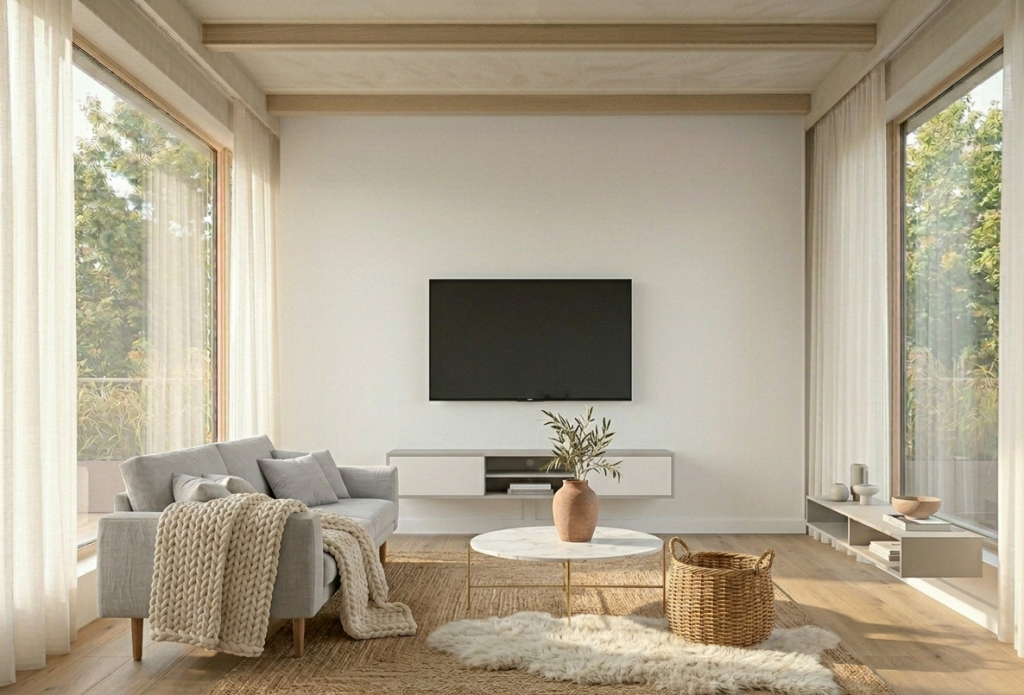
Nothing ruins a minimalist room faster than a tangle of black cables. TV cords, phone chargers, speaker wires they all create visual clutter. Solve this in one afternoon. Use cable raceways painted to match your wall. Run wires behind furniture legs. Use a cord cover along baseboards. For desk areas, use a cable management box. For TVs, hide wires inside the wall (hire an electrician if needed). Once cables disappear, your room instantly looks polished.
Tips
- Use adhesive clips to run cables along back edges of furniture
- Choose a TV mount with built-in cable management
- Keep phone charging in a drawer or on a small tray
11: Use One Statement Light Fixture
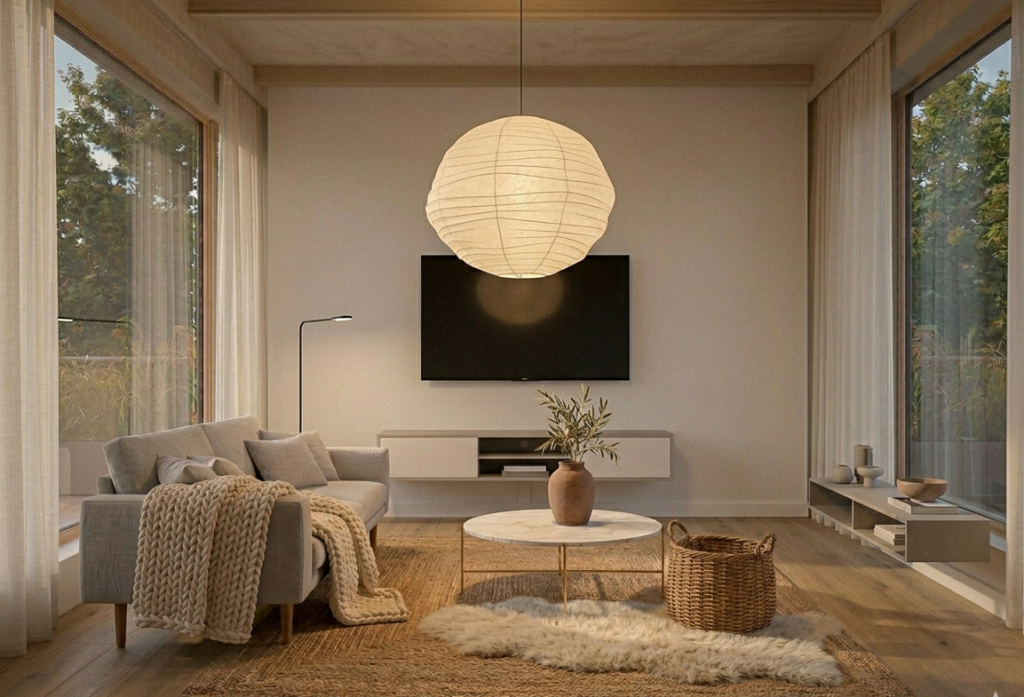
Lighting can be art. Instead of multiple small lamps scattered everywhere, choose one striking pendant light or chandelier. Hang it in the center of the room or above the coffee table. Keep the rest of the lighting simple maybe one floor lamp in a corner. The statement piece becomes a conversation starter without adding clutter. Choose a sculptural design in matte black, brass, or natural wood. Avoid crystal or overly ornate styles.
Tips
- Hang pendant lights 30-36 inches above a coffee table
- Use a dimmer switch to control brightness
- Choose a light that matches your neutral palette
12: Keep Surfaces 80% Empty

The minimalist rule of thumb: every horizontal surface should be 80% empty. That means your coffee table, side table, media console, and shelves. Leave most of them bare. Then place just one or two small items a candle, a single book, a small plant. Group items in odd numbers (1 or 3). This restraint creates a spa-like feeling. Before you set something down, ask: “Do I love this? Do I use it daily?” If not, put it away.
Tips
- Use a tray to corral remote controls and coasters
- Clear surfaces every night before bed
- Store decorative objects in a cabinet and rotate them monthly
13: Bring in One Large Plant

Plants add life, but too many small pots look messy. Instead, choose one large, sculptural plant. Think fiddle leaf fig, monstera, or snake plant. Place it in a simple neutral pot (terracotta, concrete, or white ceramic). Put it near a window or in an empty corner. The large scale draws the eye and fills negative space beautifully. One big plant makes a stronger minimalist statement than ten tiny succulents.
Tips
- Choose low-maintenance plants if you travel often
- Use a pot with drainage and a saucer to protect floors
- Dust leaves monthly to keep them glossy
14: Remove All Clutter from Floor

In a minimalist living room, the floor should be almost completely clear. No stacks of magazines, no pet beds in the walkway, no shoes, no exercise equipment. Everything should have a home inside a cabinet or closet. If you have kids or pets, use a large covered basket for toys. Vacuum or sweep often. When the floor is clear, your brain registers the room as calm and orderly. It’s one of the fastest ways to feel less stressed at home.
Tips
- Use wall-mounted shelves to lift items off the floor
- Train family to put shoes in an entry closet
- Choose a robot vacuum to maintain clear floors daily
15: Choose Simple Window Treatments

Heavy drapes with valances and tassels are the enemy of minimalism. Instead, use simple roller shades, Roman shades in a solid color, or flat linen curtains. Mount them high and wide to make windows look bigger. Keep them the same color as your wall for a seamless look. Avoid grommets, patterns, or multiple layers. When you open them, they should stack neatly without bulk. Your goal is to frame the window, not compete with it.
Tips
- Curtains should just kiss the floor (not puddle)
- Use one continuous rod, not two for sheers and drapes
- Choose cordless shades for a cleaner look
16: Edit Your Decor Seasonally

Minimalism isn’t about owning nothing it’s about owning only what you use and love right now. That’s why seasonal editing works. Every three months, go through your living room. Remove anything that doesn’t fit the season or your current needs. Store winter throws in summer. Swap dark ceramics for light ones. Put away holiday decor immediately after the holiday. This keeps your room feeling fresh without accumulating permanent clutter.
Tips
- Use one storage bin labeled “living room seasonal”
- Keep only 2–3 decorative items out at a time
- Donate anything you skip two seasons in a row
17: Add a Minimalist Focal Point

Every room needs one place for your eye to land. In a minimalist living room, choose one simple focal point. It could be a fireplace painted white, a large piece of art, a statement light fixture, or a beautiful window with a view. Then arrange your furniture to face that element. Keep the focal point clean no tchotchkes on the mantel, no clutter around the art. A single strong focal point eliminates the need for many small decorations.
Tips
- Paint an old brick fireplace white or off-white
- Use a long low console under art to anchor it
- Keep the area around your focal point empty of other items
Conclusion
Creating a minimalist living room doesn’t mean throwing away everything you own. It means being intentional. Start with a neutral base, choose furniture that works hard, hide clutter, and let negative space breathe. Pick one or two ideas from this list and try them this weekend. You’ll be surprised how much calmer your home feels. Which idea will you try first? Let me know in the comments below!
FAQs
Does minimalist living room mean all white and boring?
Not at all. Minimalist means removing the unnecessary, not removing personality. You can add warm wood tones, soft textures like wool and linen, one or two muted accent colors, and meaningful objects. The result is calm, not boring.
How do I make a small living room look minimalist?
Focus on light colors, multifunctional furniture, and closed storage. Use a sofa with legs to see more floor space. Keep only essential furniture. Add a large mirror to double natural light. Clear all surfaces and floor clutter daily.
What is the 80/20 rule in minimalist decor?
Keep 80% of surfaces empty and 20% filled with intentional decor. Also, 80% of your room should be neutral colors, with 20% as small accents. This balance creates visual rest without feeling sterile.