17 Sectional Living Room Ideas
A sectional sofa can feel like a blessing and a puzzle at the same time. You love the space, the lounging potential, and the way it invites everyone to gather. But arranging it without making the room feel cramped or awkward? That’s the tricky part. Whether you have a sprawling open floor plan or a compact apartment, the right sectional layout transforms your living room into a functional, beautiful hub. In this guide, you’ll find 17 creative sectional living room ideas from floating configurations to corner nooks and luxury statement pieces. Let’s dive in.
1: Floating Sectional for Open Floor Plans
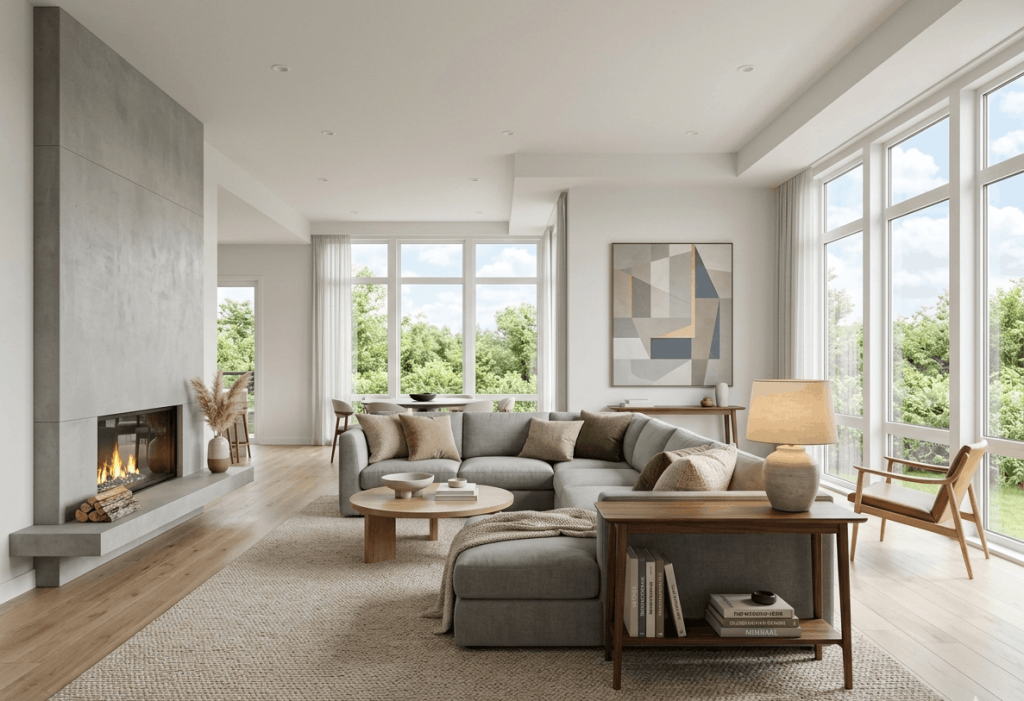
Place your sectional away from all walls to define the living zone within a larger open space. This works especially well in loft style homes or great rooms where you need subtle separation without building walls. Float the sofa facing a media console or fireplace, leaving a walkway behind it. Use a long console table behind the backrest to anchor the piece and display lamps, books, or trailing plants. The floating layout encourages conversation and makes the room feel airy and intentional.
Tips
- Leave at least 3–4 feet of walking space behind the sectional.
- Add a large area rug that extends beyond the sofa’s footprint.
- Use a slim sofa table to prevent the back from looking bare.
2: Corner Sectional with Built-In Shelves
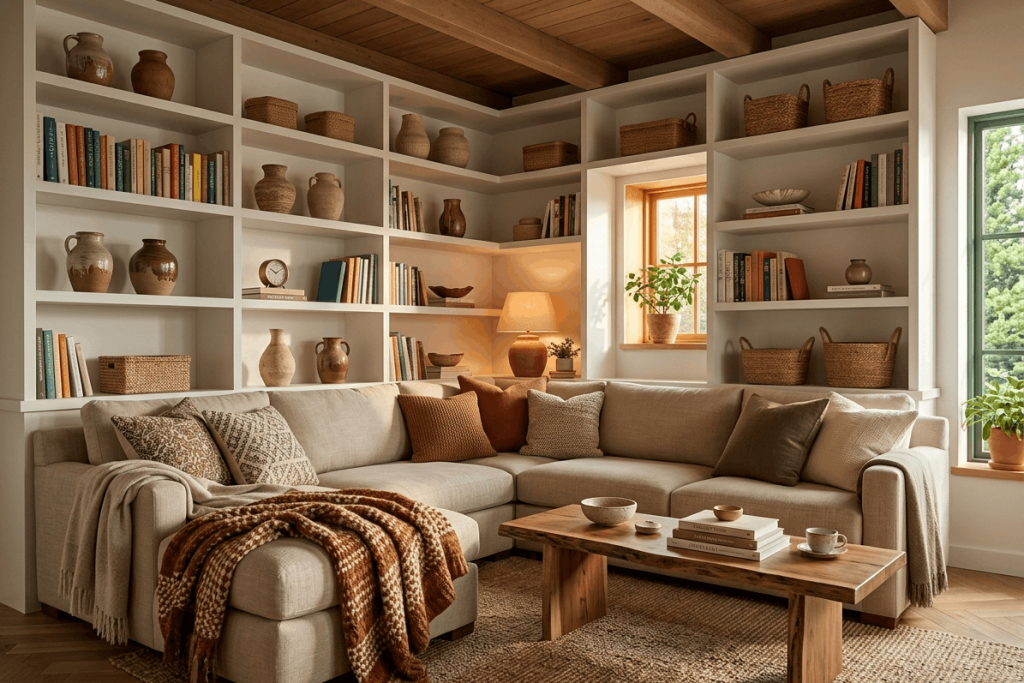
Turn an awkward corner into your living room’s most functional feature. A corner sectional snuggles right into the angle, freeing up the rest of the space for traffic flow. Maximize the vertical space by installing floor-to-ceiling built-in shelves on one or both sides of the corner. Style the shelves with a mix of books, woven baskets, and small sculptures. This idea is perfect for small to medium rooms where every inch counts. The sectional anchors the corner while the shelves draw the eye upward, making the ceiling feel higher.
Tips
- Keep the sectional’s color neutral so the shelves can pop.
- Use closed lower cabinets to hide remote controls and board games.
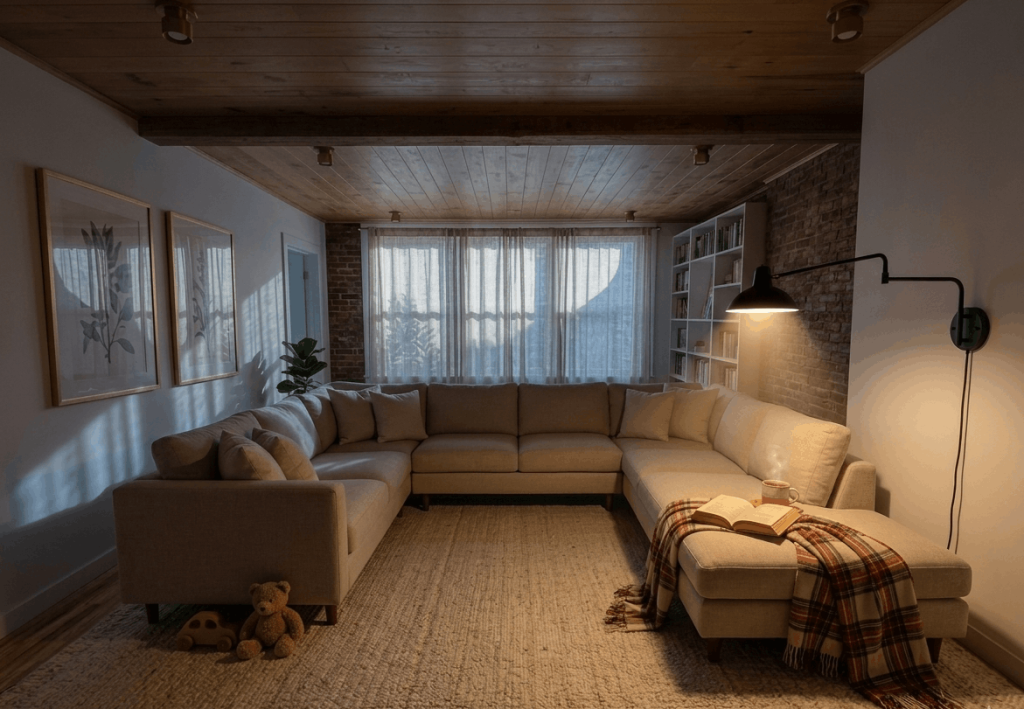
- Add a swing-arm wall lamp above the chaise for reading light.
3: U-Shaped Sectional for Movie Nights
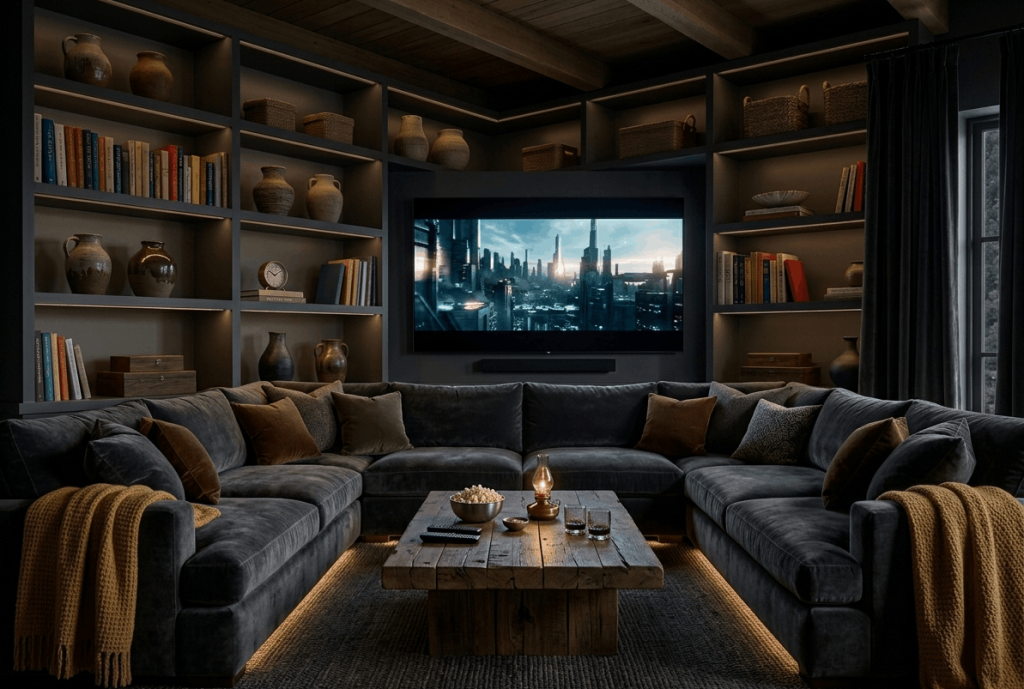
If your living room doubles as a home theater, a U-shaped sectional is your best friend. This configuration wraps around three sides of a large coffee table or ottoman, giving everyone a clear view of the TV or projector screen. No one fights over the “best seat” because every spot feels like prime real estate. Choose deep seats and plush back cushions for marathon comfort. To avoid a bulky look, pick a U-shaped sectional with exposed legs that lift the frame slightly off the floor.
Tips
- Pair with a large, low square coffee table for snacks and board games.
- Use blackout curtains to control glare on movie days.
- Add a few floor pillows inside the U for extra seating.
4: Minimalist Sectional with a Single Pop of Color
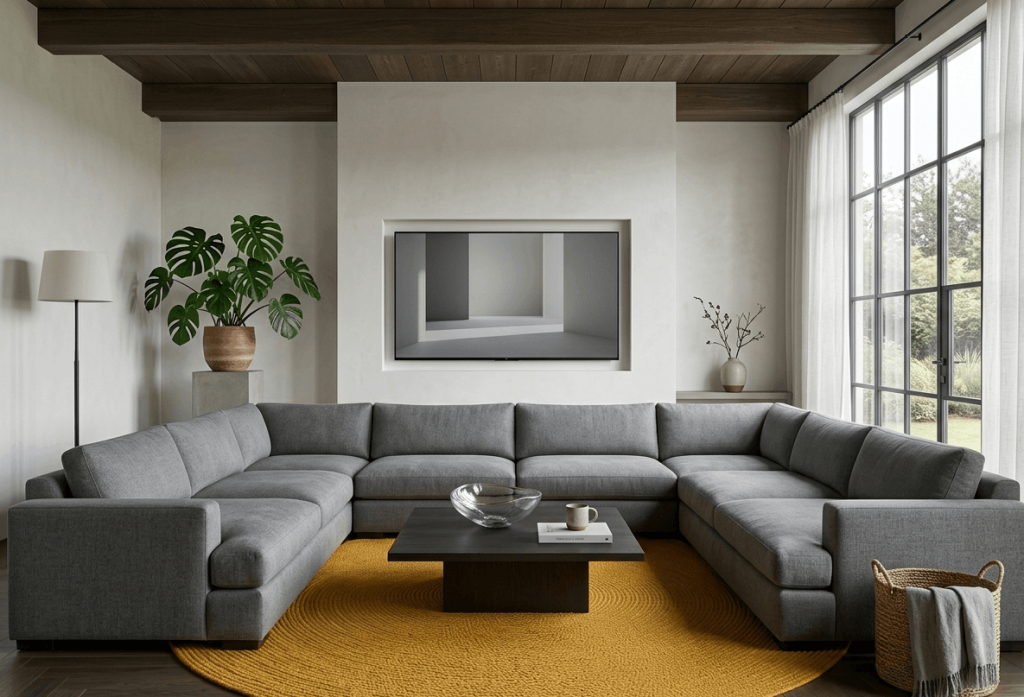
Keep your sectional neutral cream, gray, or taupe then inject energy with one bold accent. A bright yellow armchair, a crimson rug, or a large emerald green planter can transform the whole room without overwhelming it. The neutral sectional acts as a calm canvas, while the pop of color draws attention exactly where you want it. This approach is ideal for those who love minimalism but fear it might feel cold. The key is restraint: choose only one or two colorful elements.
Tips
- A bright ottoman or pouf works as both color and extra seating.
- Swap out accent pillows seasonally for an easy refresh.
- Keep walls and window treatments white or light gray.
5: Sectional with a Chaise by the Window

Position the chaise portion of your L-shaped or modular sectional directly under a window. This creates a perfect reading or napping nook where you can soak up sunlight during the day or watch rain tap on the glass. Keep the window treatment minimal perhaps light linen curtains so the view remains unobstructed. On the opposite side of the L, place a console table or a pair of nesting tables. This layout works beautifully in long, narrow living rooms where a traditional sofa would block the flow.
Tips
- Add a small side table next to the chaise for your coffee mug.
- Use a window seat cushion that matches the sectional if possible.
- Position a tall plant on the far side of the window for balance.
6: Leather Sectional for Industrial Loft Style
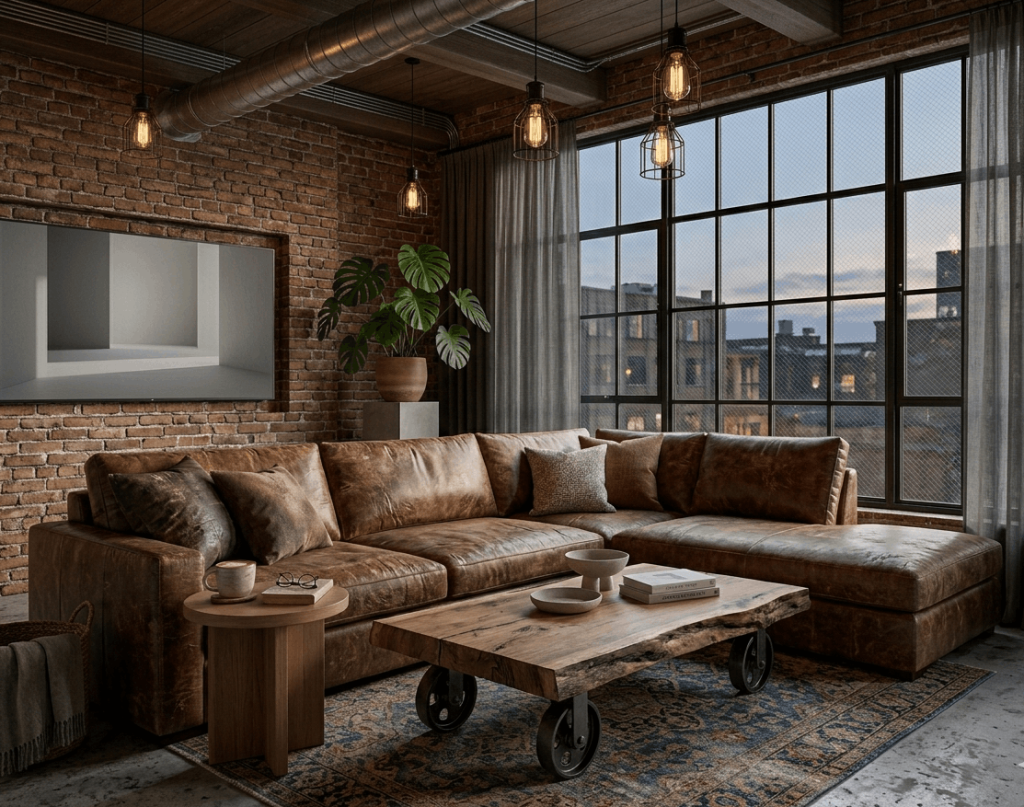
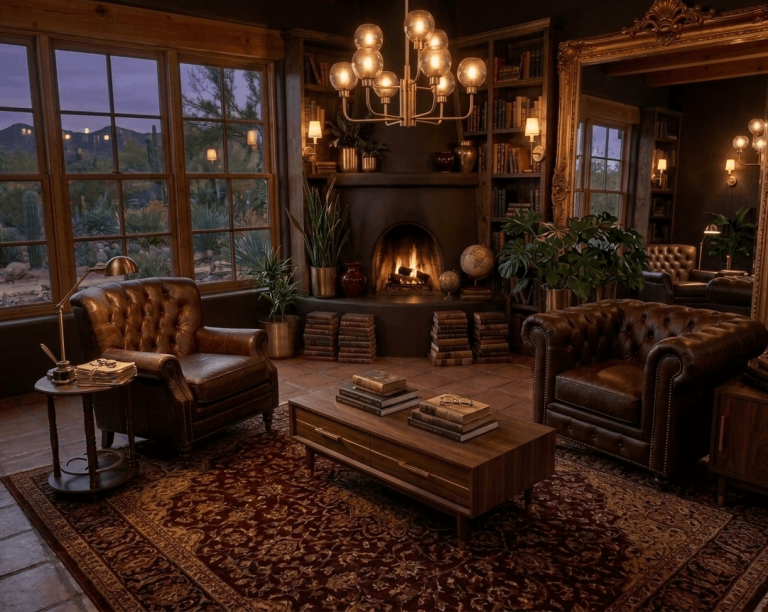
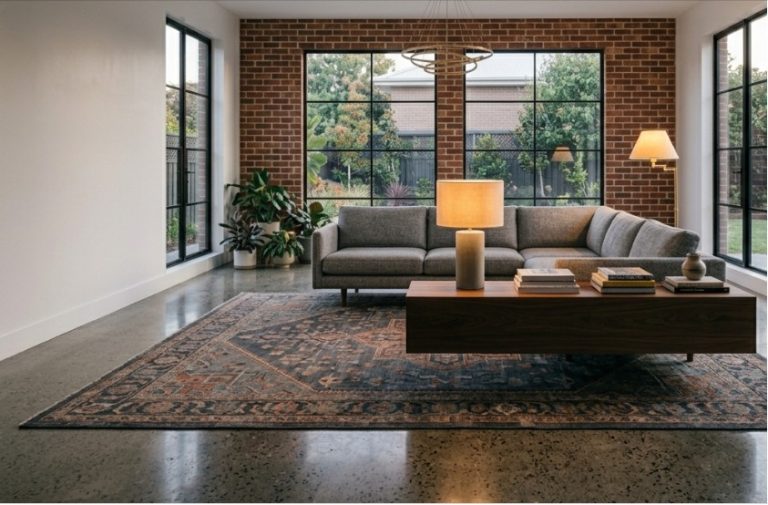
A deep brown or black leather sectional anchors an industrial-style living room like nothing else. Leather ages beautifully, developing a patina that adds character over time. Pair it with exposed brick walls, concrete floors, metal framed windows, and a reclaimed wood coffee table. For softness, layer in a vintage Persian rug or chunky knit throws. The leather sectional brings warmth to the raw, unfinished look of industrial design while providing a durable, easy-to-clean surface for high traffic homes.
Tips
- Choose a leather with visible grain and slight distressing for authenticity.
- Add a large metal arc floor lamp over one end.
- Use leather conditioner twice a year to prevent cracking.
7: Modular Sectional for Endless Rearrangement

Not all sectionals are fixed. Modular sectionals consist of individual pieces corners, armless chairs, ottomans, and chaises that you can reconfigure anytime. Love hosting game nights? Arrange them in a tight U-shape. Having a small dinner party? Separate them into two facing sofas. Move to a new apartment? Reshape the pieces to fit the new floor plan. This is the ultimate choice for renters, serial rearangers, or anyone who wants a sofa that adapts to life changes.
Tips
- Look for modular systems with connecting clips to keep pieces together.
- Buy extra ottomans to use as coffee tables or extra seats.
- Store unused modules in a closet if space is tight.
8: Sectional Paired with a Round Coffee Table
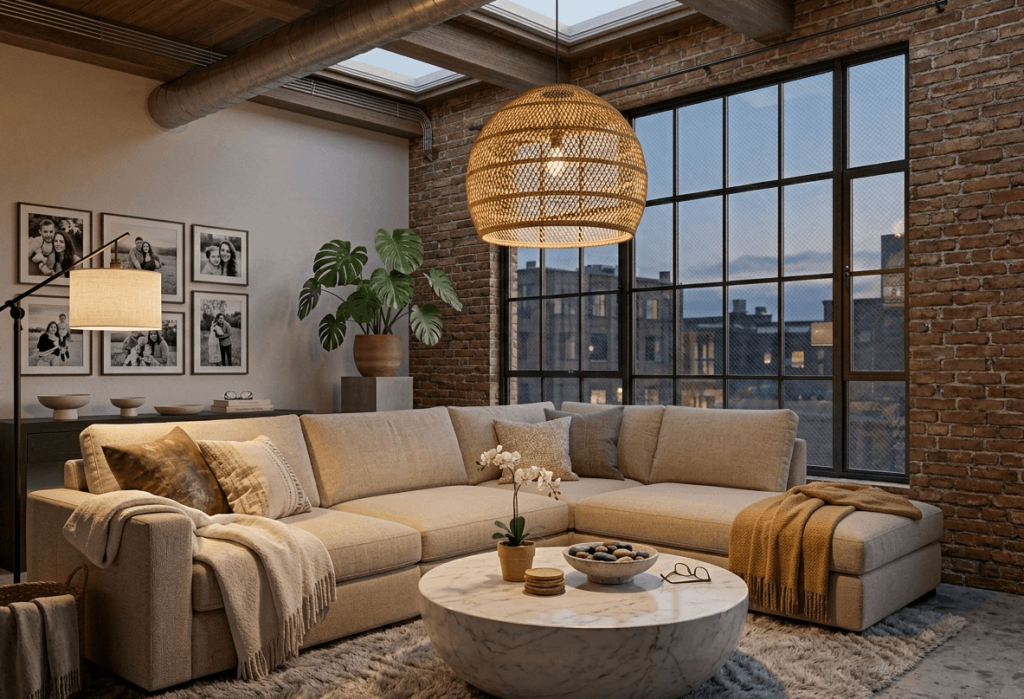
A large sectional can feel heavy, especially if it has sharp corners. Soften the entire arrangement by introducing a round coffee table. The circular shape breaks up all the right angles and makes moving around the sectional easier. A round table also feels more approachable in a family setting no sharp corners for little knees to bump into. Choose a table with a slight lip or tray top to prevent drinks from sliding off. Materials like light oak, marble, or even upholstered ottomans work beautifully.
Tips
- Center the round table in the sectional’s inner corner or middle gap.
- Use a lazy Susan on the table for shared snacks.
- A round table looks especially good with a curved or crescent sectional.
9: Sectional with a Gallery Wall Above
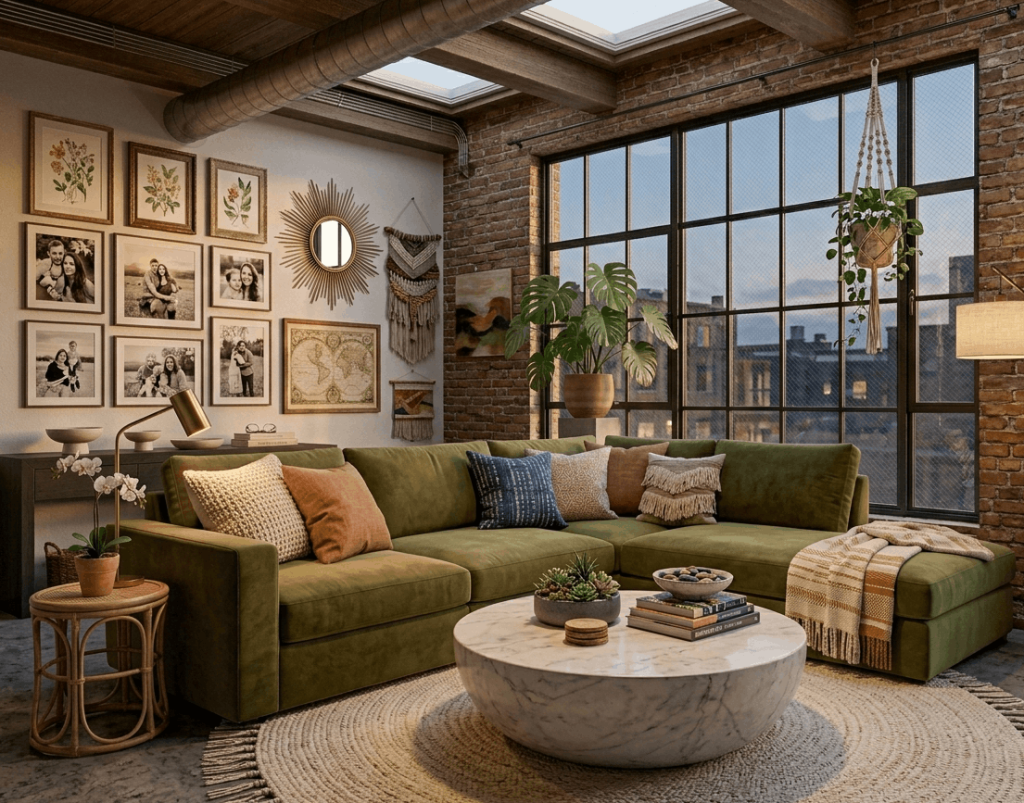
Treat the wall behind your sectional as an opportunity for personal expression. A well curated gallery wall mixing framed art, mirrors, textiles, and sculptural objects draws attention away from the sofa’s bulk and up toward the wall. The key is scale: your gallery should span at least two-thirds the width of the sectional. Keep the lowest frame 8–12 inches above the backrest so nothing feels crowded. This idea shines in bohemian, eclectic, or maximalist interiors.
Tips
- Lay out the entire gallery on the floor before hammering any nails.
- Include one large mirror to bounce light around the room.
- Use matching frame colors (all black or all gold) for cohesion.
10: Small-Space Sectional with Hidden Storage
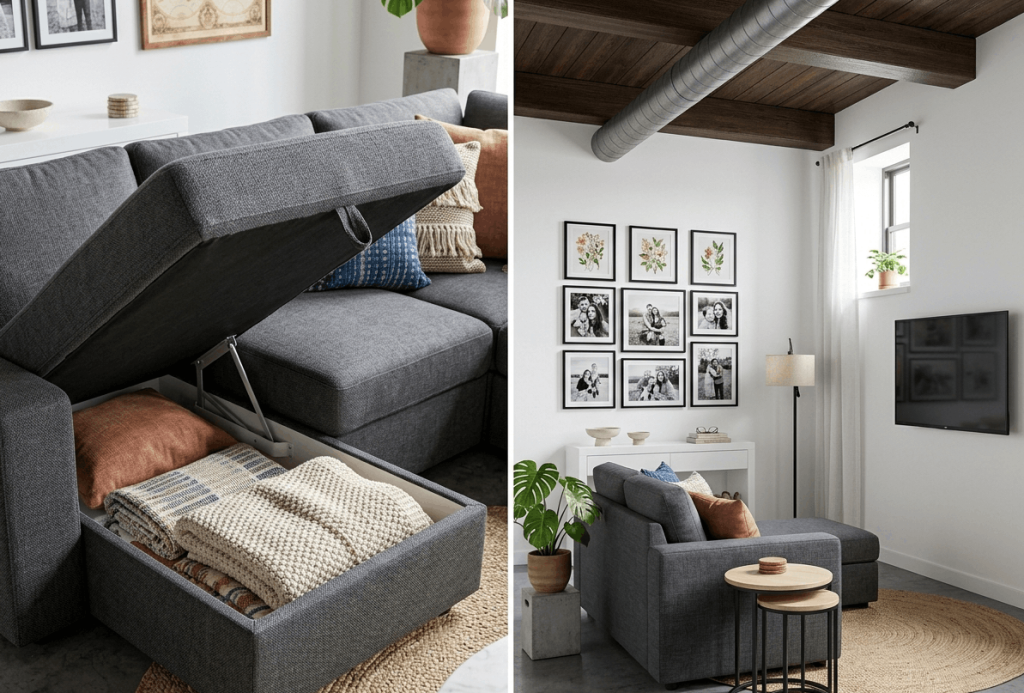
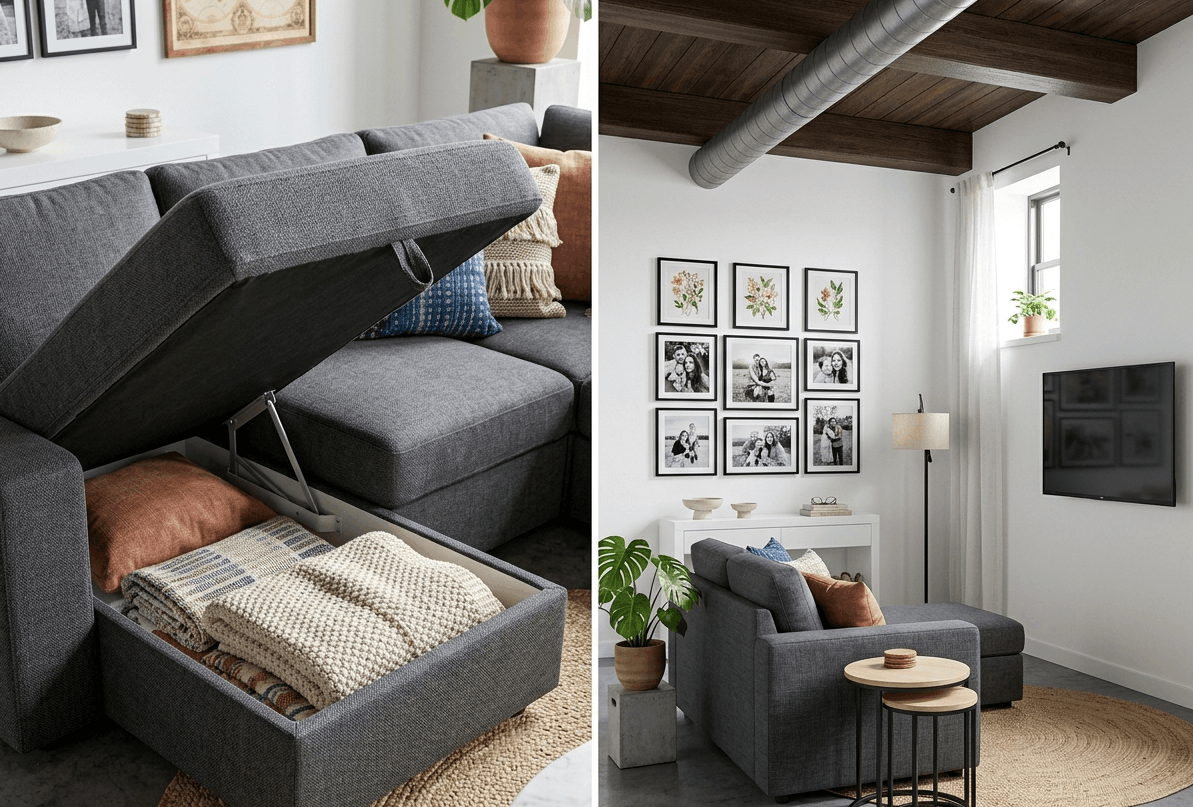
In a compact living room, every piece of furniture should work twice as hard. Choose a sectional with built-in storage under the chaise or inside the seats. Lift the cushion to reveal space for extra blankets, board games, seasonal decor, or even shoes. Some models also include storage in the armrests or side pockets. This keeps your living room looking clutter-free without sacrificing seating. Pair with wall-mounted shelves and nesting tables to preserve floor space.
Tips
- Measure your doorway before buying a storage sectional—they can be heavy.
- Use fabric bins inside the storage compartments to organize small items.
- Avoid storing anything you need daily; save storage for occasional items.
11: Sectional as a Room Divider
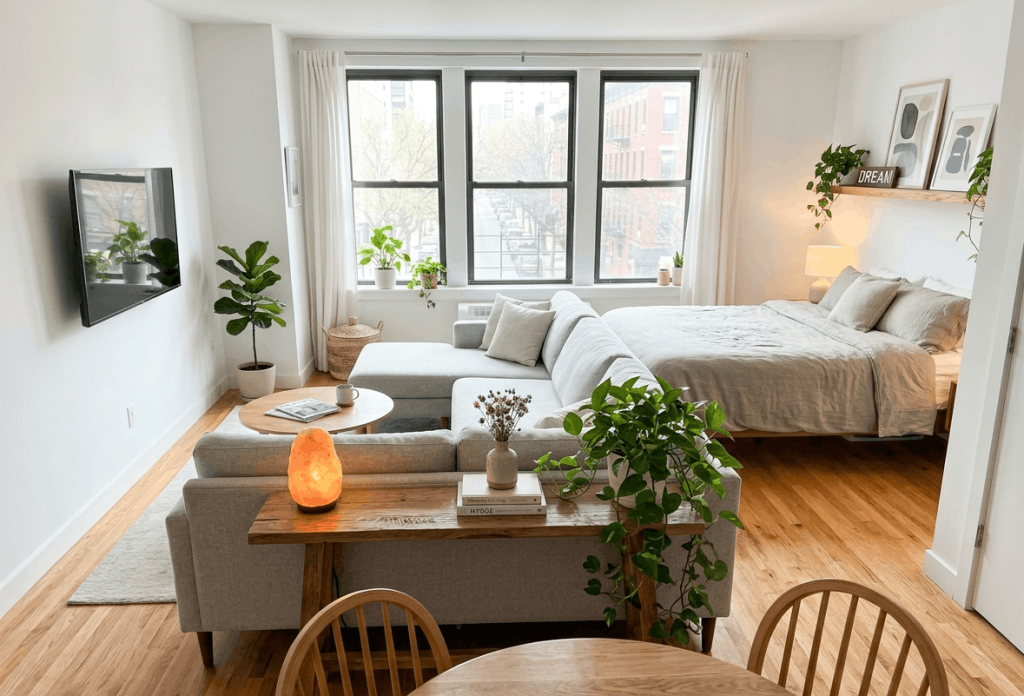
In a studio apartment or a combined living-dining area, use the back of a sectional to separate zones. Place the sofa perpendicular to a wall, with its back facing the dining table or workspace. This creates a distinct living “room” without erecting any physical walls. To make the back more attractive, push a narrow console table against it. Style the table with a lamp, a bowl of keys, or a row of trailing plants. The result is an open, breezy layout that still feels organized.
Tips
- Choose a sectional with a finished back (no exposed hardware or gaps).
- Run an extension cord under the sofa to power the console table lamp.
- Keep the walkway between the sectional and the next zone at least 36 inches wide.
12: Velvet Sectional for Luxury Glam
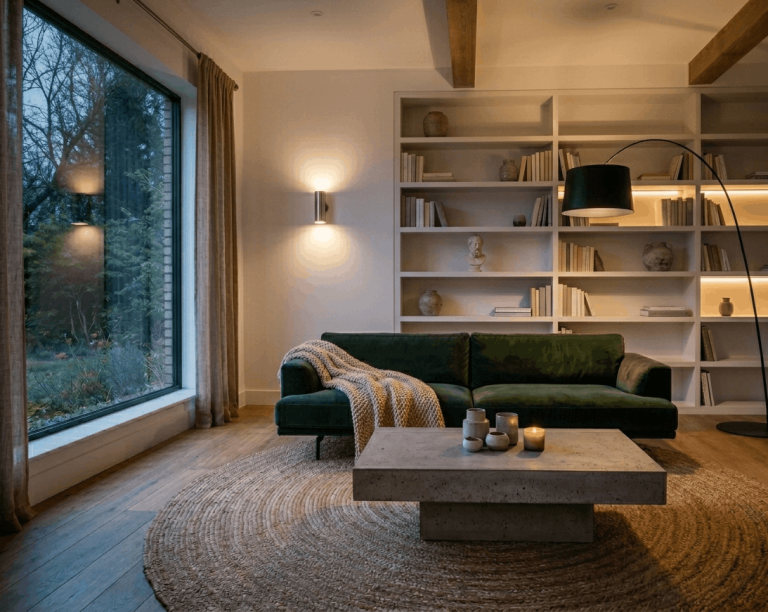
Nothing says luxury like a velvet sectional in a deep jewel tone emerald, sapphire, or ruby. Velvet catches light beautifully and adds texture that flat fabrics can’t match. Balance the richness with metallic accents: brass floor lamps, a gold-leaf mirror, or a chrome coffee table. Keep the rest of the room relatively neutral so the velvet remains the star. This style works best in formal living rooms, master suites, or any space where you want to impress.
Tips
- Use a velvet-specific fabric brush to keep the nap looking fresh.
- Rotate cushions weekly to prevent uneven wear.
- Pair with silk or faux fur throw pillows for extra opulence.
13: Sectional with a Low Bookshelf Back
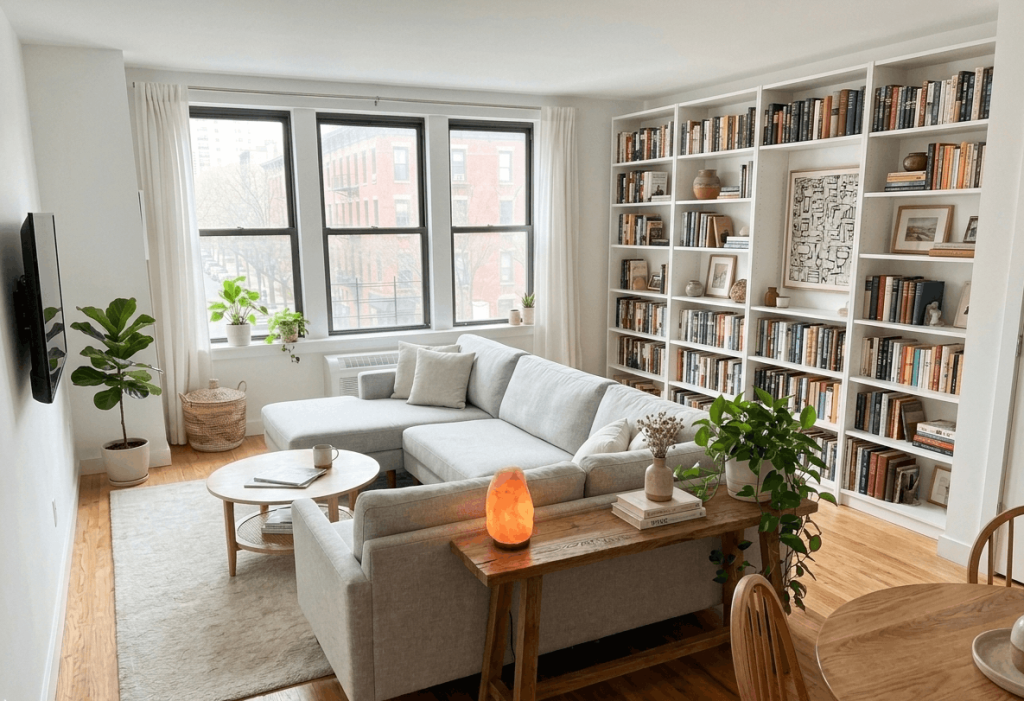
Instead of pushing your sectional against a wall, leave a gap and install a low, long bookshelf behind it. The bookshelf acts as a second “back” to the sofa, creating a shallow display area for books, small plants, and framed photos. This trick works brilliantly in large rooms where a floating sofa might otherwise feel unsupported. It also gives you extra storage without taking up additional floor space. Choose a bookshelf that’s slightly lower than the sectional’s backrest so you can still rest your head.
Tips
- Anchor the bookshelf to the floor or wall to prevent tipping.
- Use the top shelf as a drink ledge during parties.
- Face the bookshelf toward the back of the sectional, not the front.
14: Two Sectionals Facing Each Other
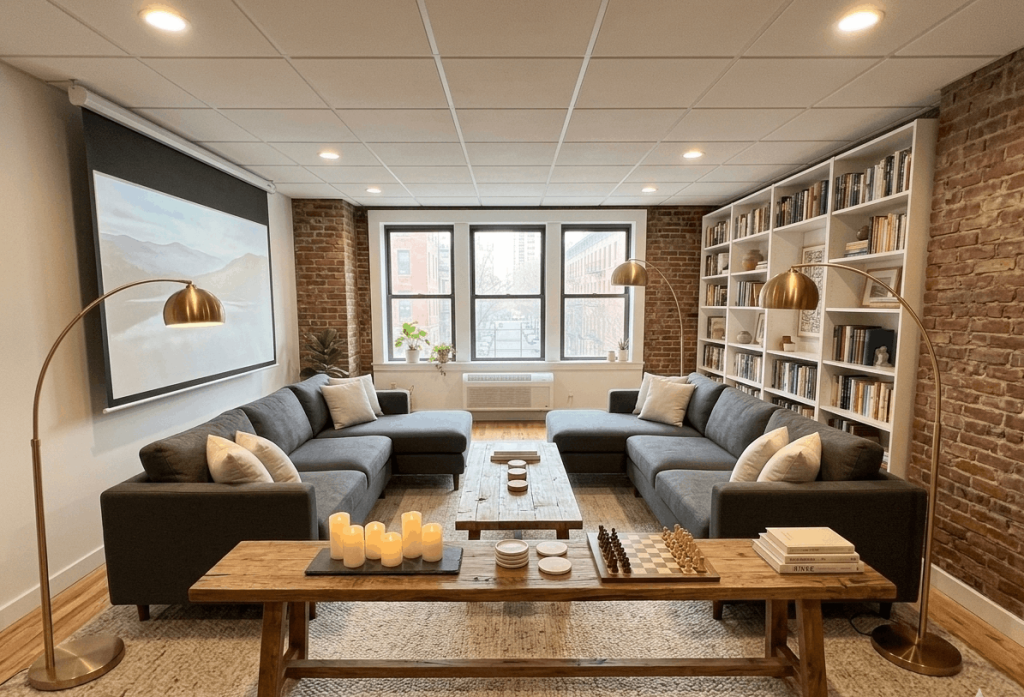
For a truly conversation friendly layout, place two smaller sectionals facing each other across a large coffee table or ottoman. This works wonderfully in massive living rooms, basements, or vacation homes where you often host groups. The layout mimics a hotel lobby or a luxury lounge, encouraging face-to-face interaction. Keep both sectionals in the same color family, or create contrast with one light and one dark. A long, narrow table in the middle works better than a square one.
Tips
- Leave at least 4 feet between the two sectionals for legroom.
- Use a runner-style table (long and narrow) to bridge the gap.
- Add a floor lamp at each end for balanced lighting.
15: Sectional with a Large Area Rug Underneath
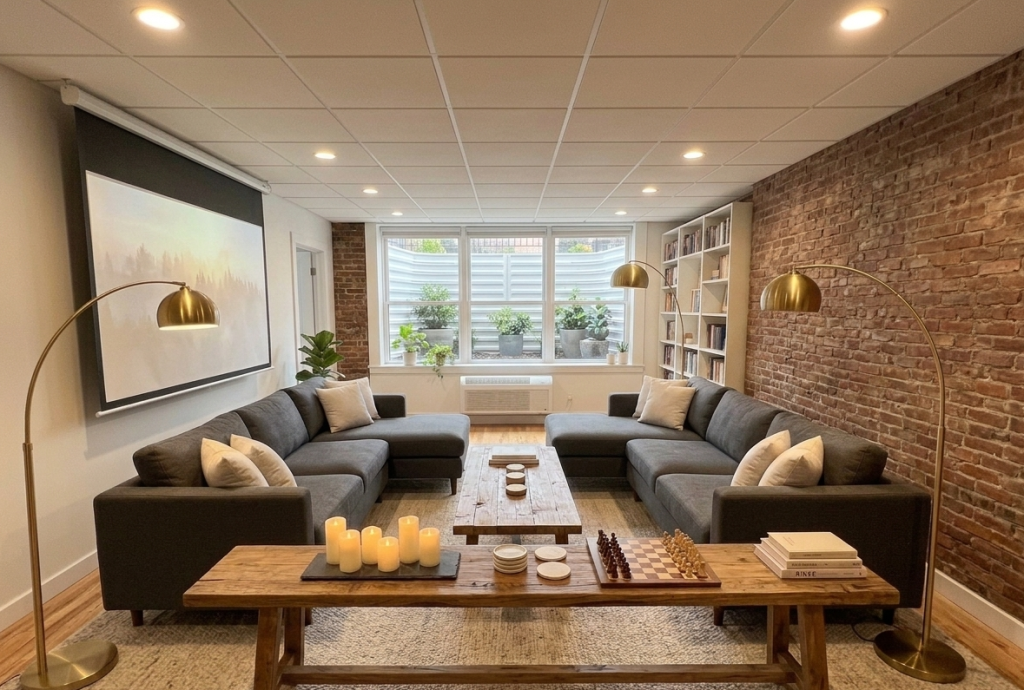
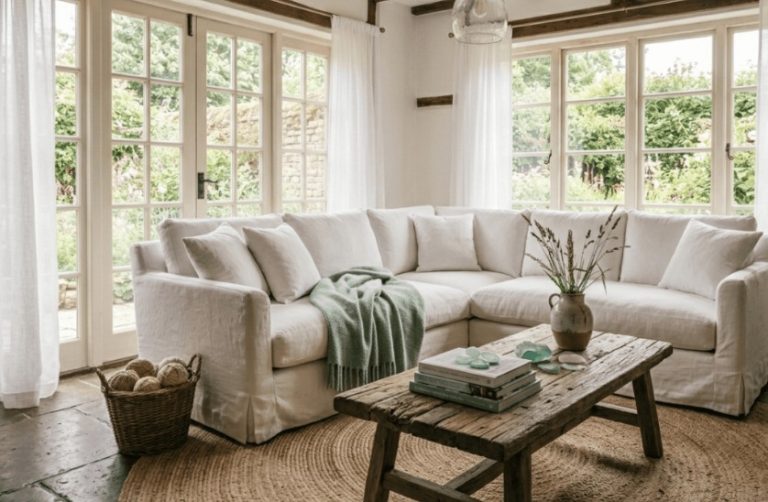
Many people buy rugs that are too small for their sectionals. The rule: the rug should extend at least 6–12 inches beyond all sides of the sectional, or at minimum, have all front legs on the rug. A properly sized rug unifies the seating area and makes the room feel larger. Go for a natural fiber rug (jute or sisal) for a casual look, or a high pile wool rug for softness underfoot. The rug’s pattern should be large-scale to match the sectional’s scale.
Tips
- Measure your sectional’s full footprint before rug shopping.
- Use rug tape to prevent corners from curling up.
- A patterned rug hides inevitable spills better than a solid color.
16: Sectional with a Swing-Arm Reading Lamp
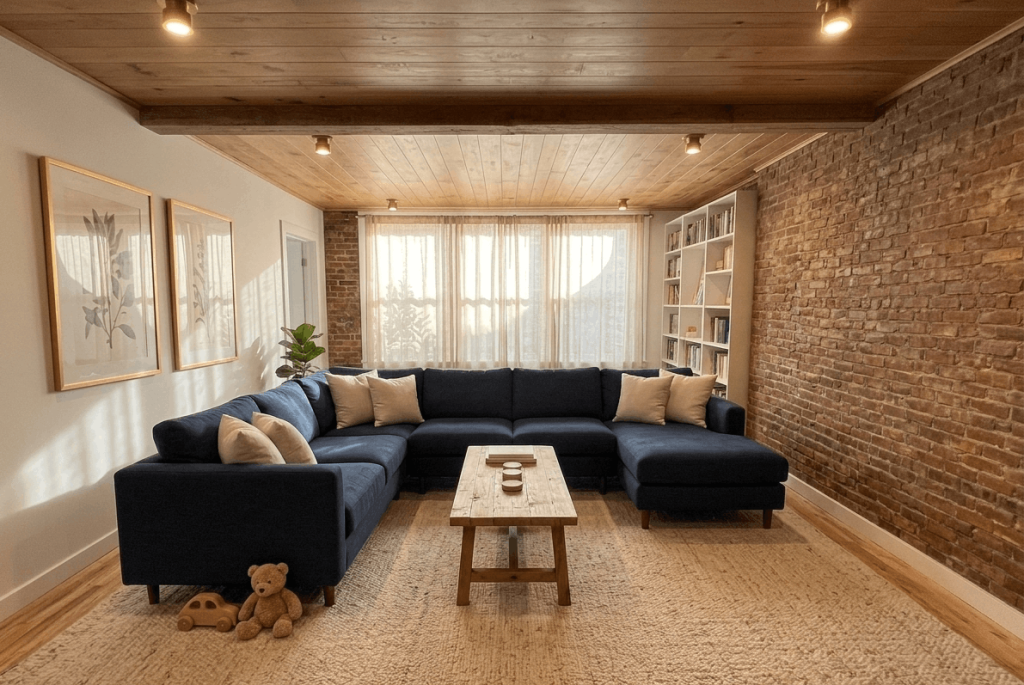
Not every sectional needs overhead lighting. Mount a swing-arm wall lamp at one end of the sectional, positioned to hover over the chaise or a corner seat. This creates a dedicated reading nook without taking up floor space. Choose a lamp with an adjustable arm and a shade that directs light downward. Brass or matte black finishes work with almost any decor style. The focused light also makes the sectional feel like a destination, not just a piece of furniture.
Tips
- Install the lamp so the bulb is at shoulder height when seated.
- Use a smart bulb to adjust brightness and color temperature.
- Pair with a small C-table that slides over the sectional’s arm.
17: Outdoor Sectional on a Covered Patio
Your living room ideas don’t have to stop indoors. A weather-resistant sectional (think rattan, teak, or powder-coated aluminum with Sunbrella cushions) turns a covered patio into an outdoor living room. Arrange it around a fire table or a low concrete coffee table. Add outdoor pillows, an all-weather rug, and string lights overhead. The same principles apply: define zones, maintain traffic flow, and create conversation areas. This is especially valuable in warm climates where you can use the space eight months a year.
Tips
- Buy a sectional with drainage holes in the frame.
- Store loose cushions in a deck box when not in use.
- Choose light-colored cushions to reflect heat.
Conclusion
Your sectional is more than a big sofa it’s the anchor of your living room’s layout, mood, and function. Whether you float it in an open loft, tuck it into a cozy corner, or use it to divide a studio, the right arrangement makes all the difference. Try one of these 17 sectional living room ideas, or mix a few together. Start with the layout that fits your room shape, then layer in lighting, rugs, and storage. And don’t forget: the image prompts are yours to use. Generate your dream space and make it real.
FAQs
What is the best way to arrange a sectional in a small living room?
Place the sectional in a corner to open up the center of the room. Choose a chaise that’s no longer than 60 inches, and avoid an oversized chaise that blocks windows or doors. Use wall mounted shelves and a round coffee table to keep the floor clear.
Should a sectional be against the wall or floating?
It depends on your room size. Against the wall saves space and works for small rooms. Floating works for large or open-plan rooms where you need to define a zone. A floating sectional also allows a console table behind it for extra storage.
How do I make a large sectional look less bulky?
Use a sectional with exposed legs to lift it off the floor. Add a large rug underneath to ground it. Keep the wall color light, and use a round coffee table to break up right angles. Also, choose a sectional with a lower back and shallow depth if possible.