15 Yard Landscaping Ideas
Does your yard feel more like a forgotten space than an outdoor retreat? You’re not alone. Many homeowners struggle with blank lawns, uneven corners, or boring layouts. The good news? You don’t need a massive budget or a professional designer to create a stunning yard. With the right landscaping ideas, any space small, large, sunny, or shaded can become beautiful and functional. In this guide, you’ll discover 15 practical, stylish yard landscaping ideas. Let’s turn your yard into the favorite room of your home.
1: Cozy Fire Pit Lounge
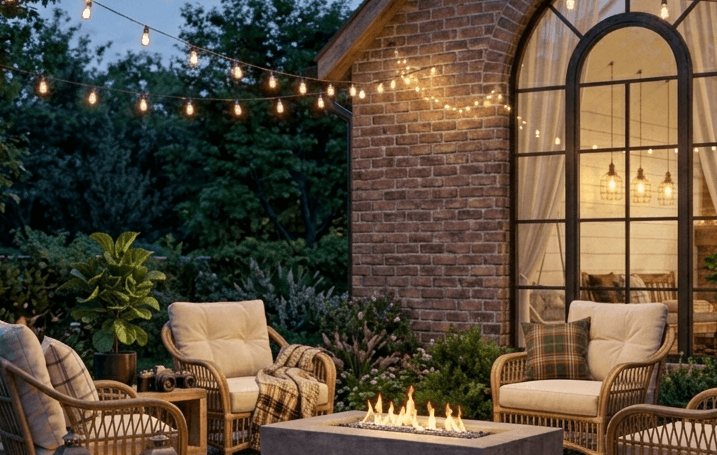
A fire pit turns any yard into a year-round gathering spot. Choose a stone or metal pit centered on a gravel or brick patio. Surround it with deep-seated outdoor chairs, weather-resistant cushions, and a small side table for drinks. Add string lights overhead for warmth. This setup works perfectly for cool evenings, marshmallow roasting, or quiet conversations. The key is creating intimate seating chairs should face each other, not just the fire. For safety, keep the pit at least 10 feet from structures and overhanging trees.
Tips
- Use lava rocks or glass beads inside the pit for a clean burn.
- Install a spark screen for family-friendly use.
- Add a log rack nearby for convenience.
2: Vertical Garden Wall
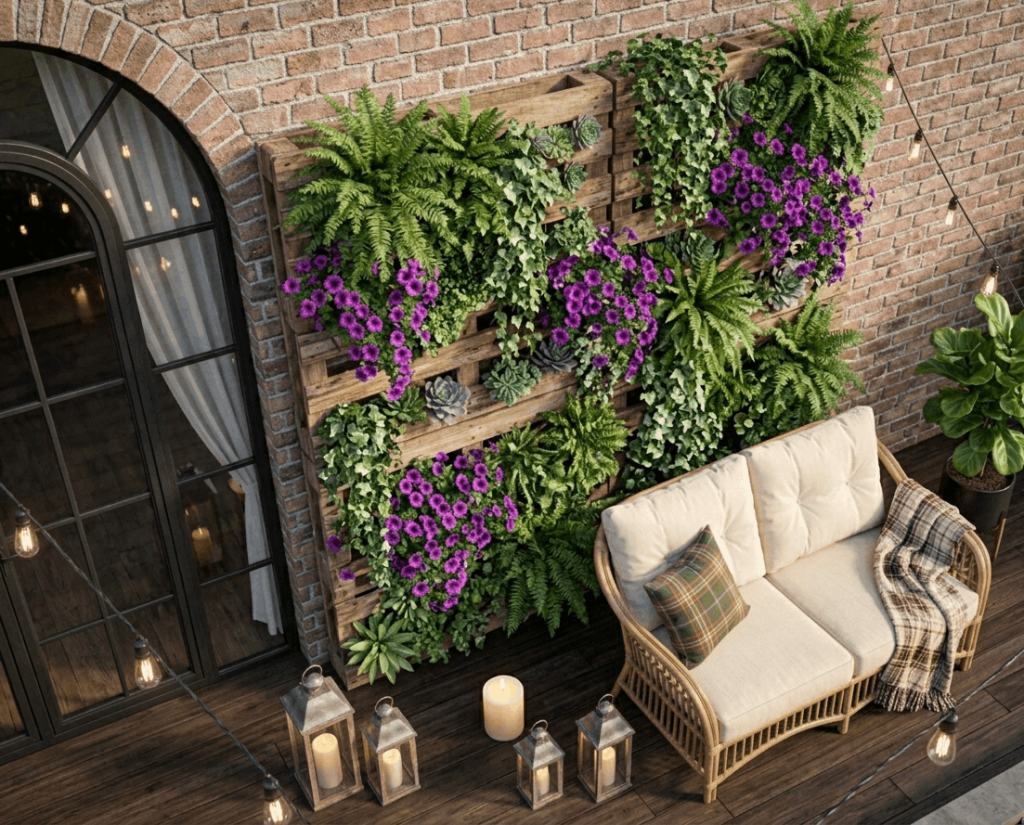
Perfect for small yards or blank fences, a vertical garden wall adds lush greenery without using floor space. Use modular pocket planters, pallets, or a trellis system. Plant a mix of trailing vines, ferns, succulents, and flowering herbs like thyme or oregano. This idea works especially well on sunny walls or shaded north-facing fences. You can install drip irrigation to simplify watering. Beyond beauty, a living wall cools your patio, reduces noise, and attracts pollinators. For a modern twist, choose plants in a single color palette all greens or whites.
Tips
- Choose self-watering planters to reduce maintenance.
- Mix textures: broad leaves, fine grasses, and small flowers.
- Install a backing board to protect your fence from moisture.
3: Gravel and Stepping Stone Path
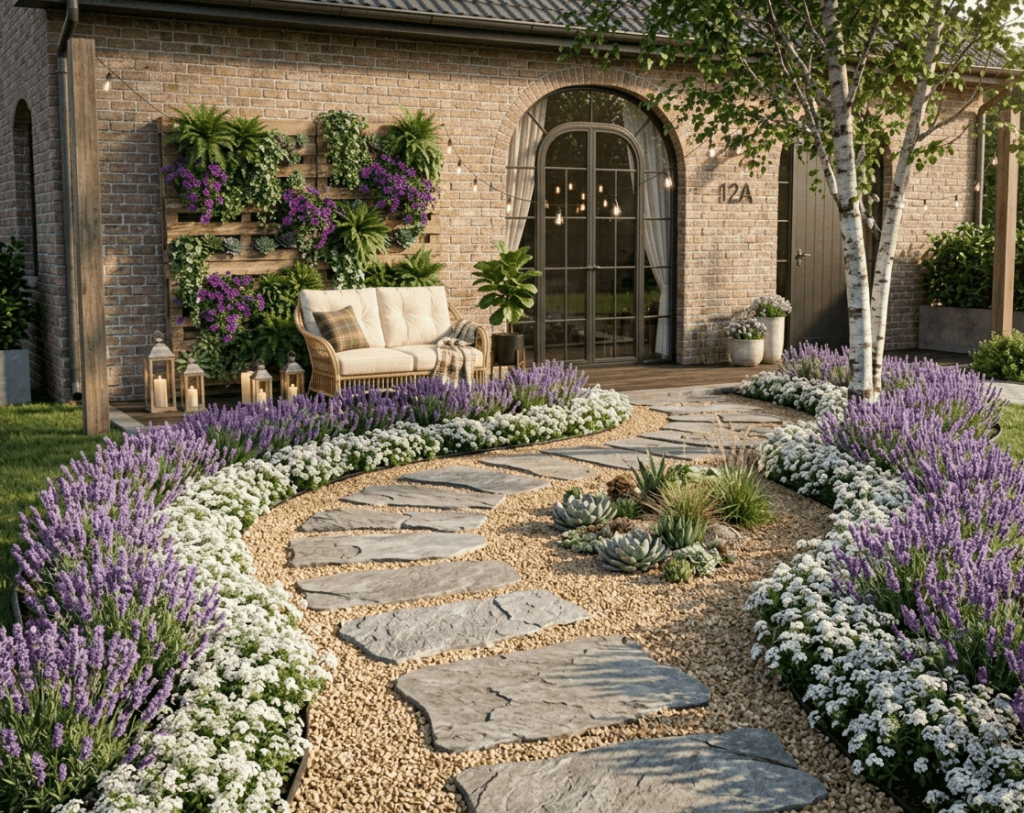
Guide guests through your yard with a simple, elegant gravel path. Use large flat stepping stones (flagstone or concrete pavers) spaced comfortably for walking. Fill the gaps with small pea gravel in a neutral tone like beige or gray. This combination looks natural, drains well, and suppresses weeds when paired with landscape fabric underneath. Curve the path slightly to create mystery and make your yard feel larger. Line the edges with low-growing plants like lavender, creeping thyme, or mondo grass for a polished finish.
Tips
- Use edging strips to keep gravel from scattering onto lawns.
- Choose angular gravel for better compaction and stability.
- Place stones 18–24 inches apart for a natural stride.
4: Raised Vegetable Garden Beds
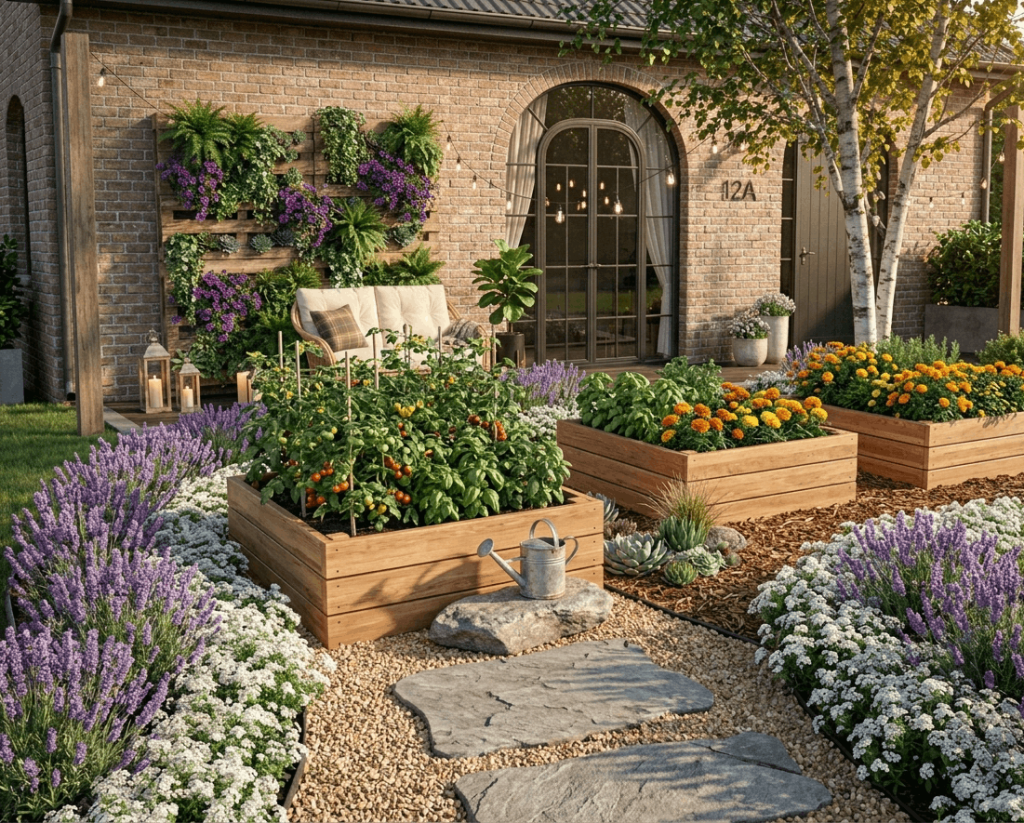
Raised beds combine function with beauty. Build them from cedar, stone, or galvanized metal. A height of 12–18 inches reduces back strain and keeps pests like rabbits out. Fill with rich compost and plant tomatoes, lettuce, peppers, and herbs. Position beds in full sun (6–8 hours). For a landscaped look, arrange beds in a neat grid or L-shape, then mulch paths between them with wood chips or straw. Add a small bench nearby you’ll want a place to sit and admire your harvest. Even beginners can grow food successfully with this method.
Tips
- Install drip irrigation on a timer for consistent watering.
- Use trellises for climbing plants like peas and cucumbers.
- Rotate crops each season to keep soil healthy.
5: Small Water Fountain Feature
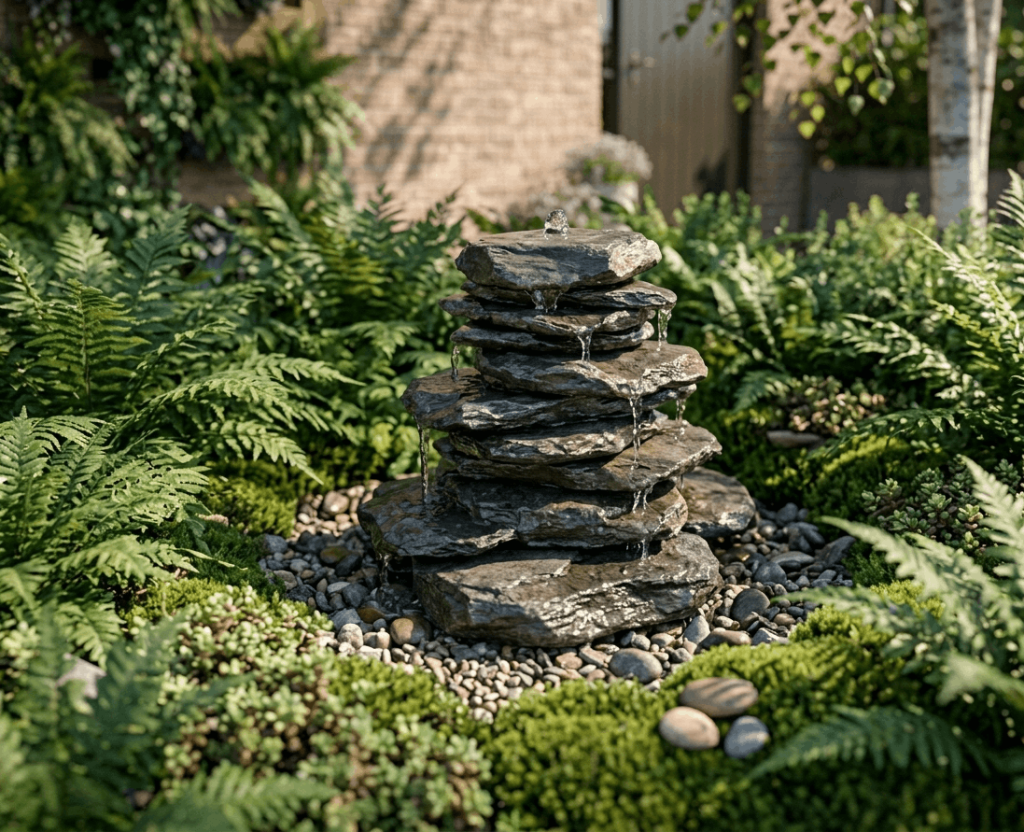
You don’t need a pond to enjoy the sound of water. A self-contained ceramic, stone, or copper fountain creates a calming focal point. Place it near a seating area or entryway. The gentle trickle masks street noise and attracts birds. For a modern look, choose a sleek black sphere or stacked slate design. For cottage charm, try a weathered urn fountain. Most models plug into a standard outlet and recirculate water, so maintenance is simple. Add a few water-loving plants like hostas or ferns around the base to blend it into the landscape.
Tips
- Clean the pump every few months to prevent clogging.
- Top off water weekly, especially in hot weather.
- Place on a level, stable surface like concrete pavers.
6: Drought-Tolerant Succulent Garden
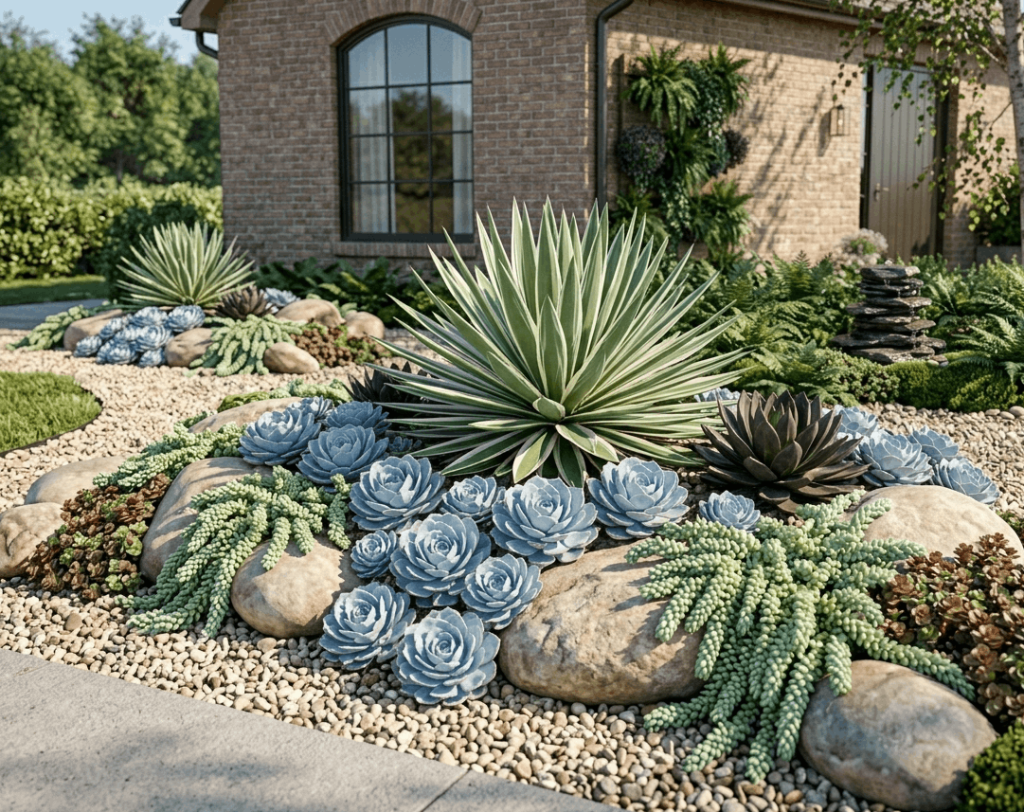
For hot, dry climates, a succulent garden is a lifesaver low water, high impact. Plant agave, aloe, echeveria, and sedum in well-draining soil. Group them by size: tall plants in back, rosette types in front. Use decorative gravel or crushed granite as mulch. This style shines in rock gardens, front yard strips, or sloped areas where grass struggles. Add large boulders or a piece of driftwood for sculpture. Color combinations range from dusty blue green to burgundy and lime. Once established, you’ll water only once every two weeks.
Tips
- Use cactus mix or add perlite to regular potting soil.
- Protect from frost with frost cloth in winter.
- Remove dead leaves at the base to prevent rot.
7: Pergola with Outdoor Curtains

A pergola defines an outdoor room. Build it from wood or metal over a patio or deck. Then add weather-resistant outdoor curtains in white, beige, or terracotta. Curtains provide shade, privacy, and a soft, airy feel. Inside, place a dining table or deep seating. Hang a lantern or string lights from the beams. On windy days, tie curtains back. On hot afternoons, close them for cool shade. This idea turns a basic patio into a resort-like escape. For extra comfort, install a ceiling fan or outdoor heater.
Tips
- Use stainless steel curtain rods and rust-proof grommets.
- Choose Sunbrella fabric for fade and water resistance.
- Leave a 2-inch gap at the bottom for airflow.
8: Bamboo Privacy Screen
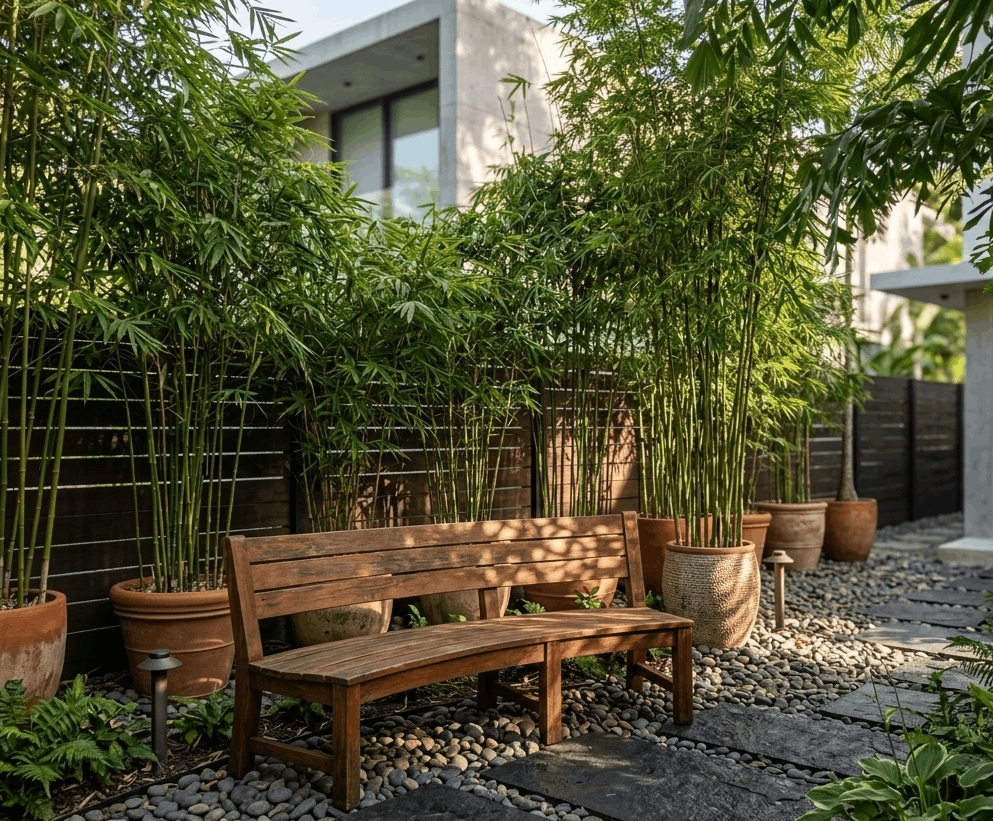
Need to block a neighbor’s view or hide a utility box? A bamboo privacy screen grows fast and looks lush. Use clumping (non invasive) bamboo varieties like Fargesia. Plant them in a long, narrow trench or large containers to control spread. Within two seasons, you’ll have a 6–10 foot living wall. The rustling leaves add soft sound and movement. For an instant solution, attach rolled bamboo fencing to existing posts or a wood frame. Combine with low shrubs in front for layers of texture.
Tips
- Install a root barrier if planting directly in ground.
- Water regularly during the first year to establish roots.
- Trim dead canes in early spring for fresh growth.
9: Cottage-Style Flower Border
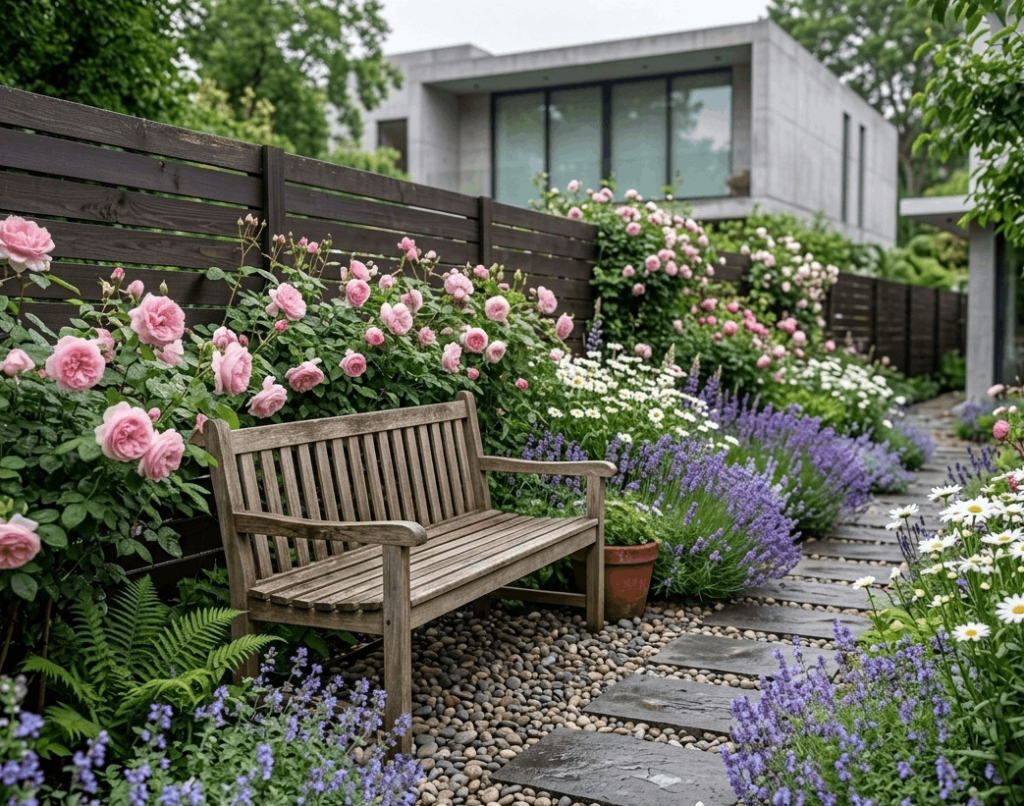
A cottage garden feels romantic and abundant. Plant flowers in drifts not straight rows mixing heights and colors. Use roses, lavender, foxglove, daisies, and catmint. Include edibles like chives or calendula for extra charm. Edge the border with a low stone or brick border to keep grass out. The secret to that lush look is density: plants should touch when mature. This style works along fences, paths, or house foundations. It attracts bees and butterflies all season. For year-round interest, add a few evergreen shrubs.
Tips
- Deadhead spent blooms to encourage more flowers.
- Mulch with compost to feed plants naturally.
- Leave some seed heads in fall for birds.
10: Minimalist Zen Gravel Garden
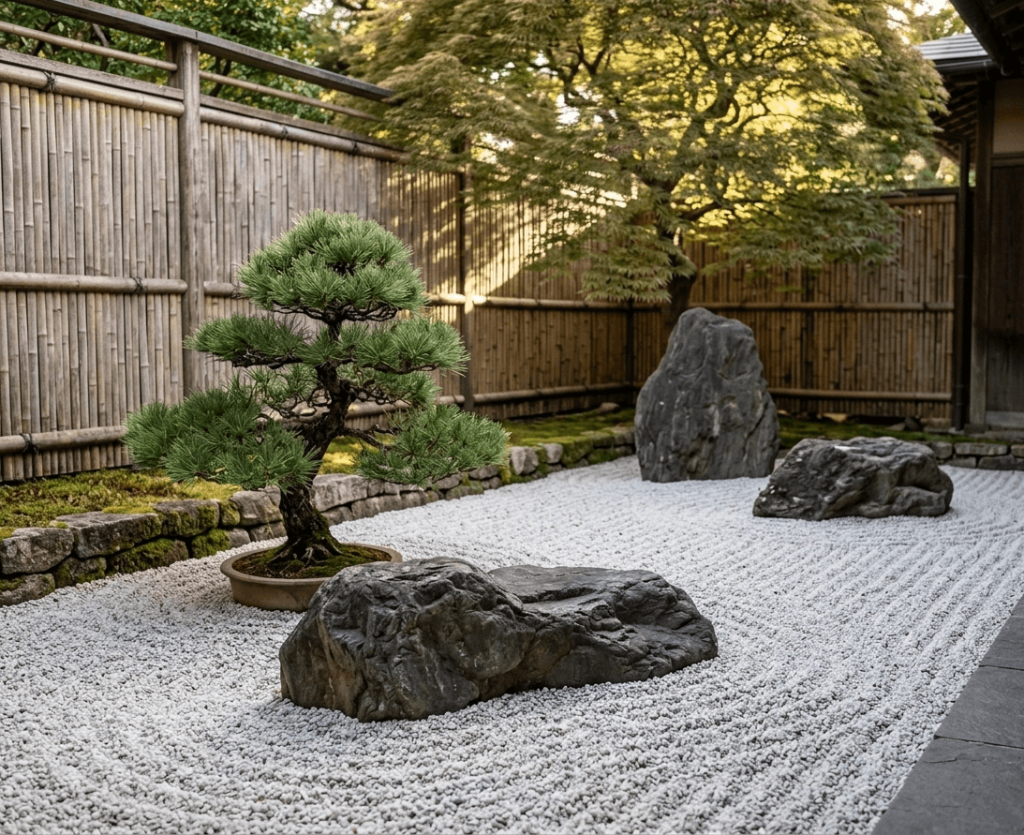
For a low-maintenance, meditative space, try a Zen gravel garden. Rake light-colored gravel into wave patterns. Add three or five carefully placed stones (odd numbers feel natural). Plant one or two evergreens like dwarf pine or Japanese maple. No flowers, no lawn mowing. The simplicity reduces visual clutter and stress. This idea works beautifully for a side yard or a quiet corner off a home office. Use a wooden or bamboo rake to refresh the gravel patterns weekly. Keep furniture minimal a single stone bench or nothing at all.
Tips
- Lay weed fabric under gravel to block growth.
- Rake in straight or concentric circle patterns.
- Avoid bright colors to maintain calm energy.
11: Multi-Level Deck with Planters

If your yard slopes, work with it. Build two or three connected deck levels using pressure-treated wood or composite. Each level gets a purpose: dining on top, lounge in the middle, fire pit below. Integrate built-in planters along the edges. Fill them with ornamental grasses, boxwoods, or trailing annuals. This design adds visual interest and separates activities without walls. Use warm outdoor lighting under railings and steps for safety and ambiance. Even small elevation changes (one or two steps) can transform a flat yard into a dynamic space.
Tips
- Use hidden fasteners for a clean deck surface.
- Plant cascading plants like ivy or sweet potato vine in upper planters.
- Add a seating-height railing for extra seating.
12: Pollinator Butterfly Garden

Design a garden that feeds butterflies, bees, and hummingbirds. Choose native, nectar-rich plants like milkweed, coneflower, black-eyed Susan, lantana, and buddleia (butterfly bush). Plant in sunny areas with shelter from wind. Add a shallow water source a birdbath with stones for landing. Avoid all pesticides. Group the same species in clumps (3–5 plants) so pollinators can easily find them. Leave some bare soil for ground-nesting bees. This garden not only helps the environment but also fills your yard with constant, beautiful movement from spring to fall.
Tips
- Include host plants like milkweed for caterpillars.
- Bloom times should overlap for continuous food.
- Add a small wooden bee house.
13: Outdoor Kitchen and Bar Area
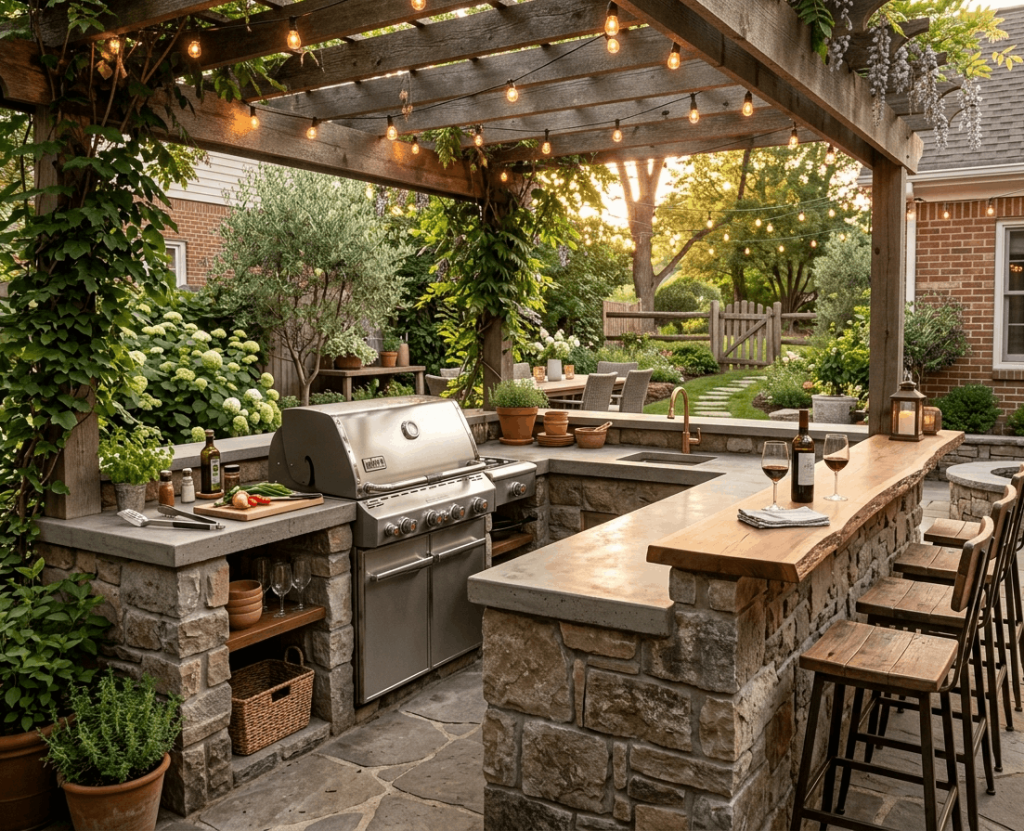
Take entertaining outside with a compact outdoor kitchen. Start with a built-in grill, then add a small fridge and a sink if budget allows. Use stone or brick for a permanent feel. Include a countertop for prep and a bar rail for stools. Overhead, install a pergola or umbrella for shade. This idea adds serious home value. Even a simple version a grill cart, a portable island, and a cocktail table works for smaller yards. Finish with outdoor bar stools and string lights. Suddenly, every evening feels like a weekend.
Tips
- Use outdoor-rated appliances and weatherproof cabinets.
- Locate kitchen close to house for easy access to utilities.
- Add a magnetic knife strip for convenience.
14: Ornamental Grass Border

Ornamental grasses add movement, texture, and year-round structure. Plant them along fence lines, driveways, or as a natural screen. Use tall varieties like switchgrass or miscanthus for the back row. Add medium grasses like feather reed grass, then low mounding types like blue fescue in front. In summer, they sway in the breeze. In winter, dried plumes catch frost and snow beautifully. Grasses need almost no fertilizer and resist deer. Combine with flowering perennials for contrast. For a modern look, plant a single grass variety in a sweeping drift.
Tips
- Cut back grasses to 4–6 inches in late winter.
- Leave seed heads standing for winter interest.
- Choose native grasses for better drought tolerance.
15: Fairy Garden Under a Tree
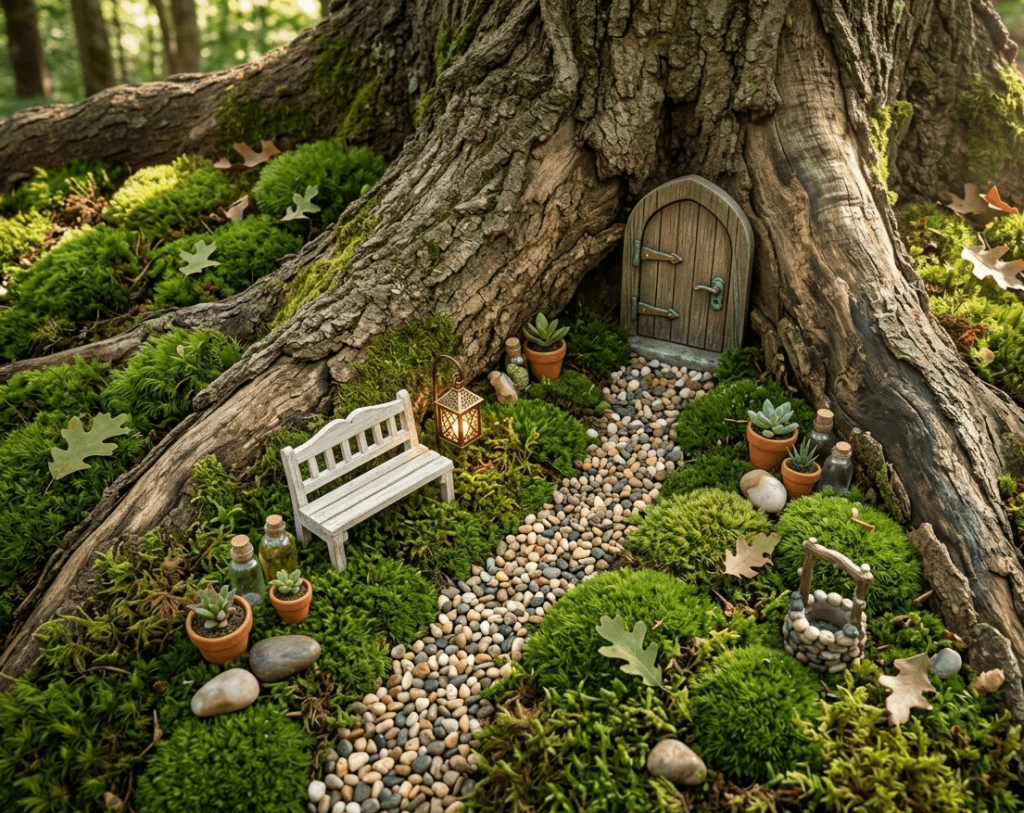
Turn a shady spot under a large tree into a whimsical fairy garden. Use miniature furniture (tiny benches, tables, arbors), pebble paths, and small leaved plants like baby tears or moss. Add a fairy door to the tree trunk. Include a tiny birdbath or teacup planter. This idea delights children and adults alike. Keep everything to scale thimble-sized pots, dollhouse accessories. Use a shallow container or plant directly into the soil around the tree roots (avoid damaging them). Refresh with seasonal mini decorations: tiny pumpkins in fall, flowers in spring.
Tips
- Use a magnifying glass for a fun “fairy hunt” activity.
- Protect from pets with a low decorative fence.
- Choose slow-growing plants to avoid overgrowth.
Conclusion
You now have 15 yard landscaping ideas from cozy fire pits to pollinator gardens, vertical walls to Zen gravel. Pick one or combine a few. Start small: a path, a fountain, or a single flower border. Then expand as time and budget allow. The best yard is the one you actually use. So step outside, choose your favorite idea, and begin. Your perfect outdoor space is closer than you think.
Which idea will you try first? Let me know in the comments!
FAQs
What is the cheapest way to landscape a yard?
Gravel paths, mulch beds, and perennial flower divisions from friends are very affordable. Paint existing pots and furniture instead of buying new. Start with one small section a corner or a border and expand over time.
How do I landscape a small yard with no grass?
Use a mix of pavers, gravel, and raised planters. Add a vertical garden, a small bistro set, and a water fountain. This creates zones without needing lawn. Artificial turf is another low-maintenance option.
What landscaping adds the most home value?
Fire pits, outdoor kitchens, irrigation systems, and mature trees offer high returns. Curb appeal projects like a clean front path, fresh mulch, and flowering shrubs also boost value significantly.