20 Small Kitchen Storage Ideas
Does your small kitchen feel more like a cluttered closet than a functional cooking space? You’re not alone. Tiny kitchens present a unique challenge: how do you fit all the essentials pots, pans, gadgets, and groceries—into a space that seems to shrink every time you open a cabinet? The answer isn’t a bigger kitchen; it’s smarter storage. With the right strategies, you can transform even the smallest galley kitchen into an organized, efficient, and beautiful space where cooking is a joy rather than a juggling act. From overlooked vertical space to clever door organizers, these 20 small kitchen storage ideas will help you maximize every inch, reduce clutter, and actually find what you need when you need it. Let’s unlock your kitchen’s hidden potential.
1: Install a Magnetic Knife Strip

Counter space is precious in a small kitchen, and a bulky knife block takes up way too much of it. A magnetic knife strip mounted on the wall or backsplash frees up that valuable real estate while keeping your knives accessible and on display . Plus, it adds a professional, chef-like aesthetic to your kitchen. Just make sure the strip is securely mounted and your knives are properly cleaned before hanging.
Tips
- Choose a strip with strong magnets to hold heavy knives
- Mount it away from children’s reach
- Use it to also hold metal measuring spoons and small tools
2: Use Tension Rods Inside Cabinets
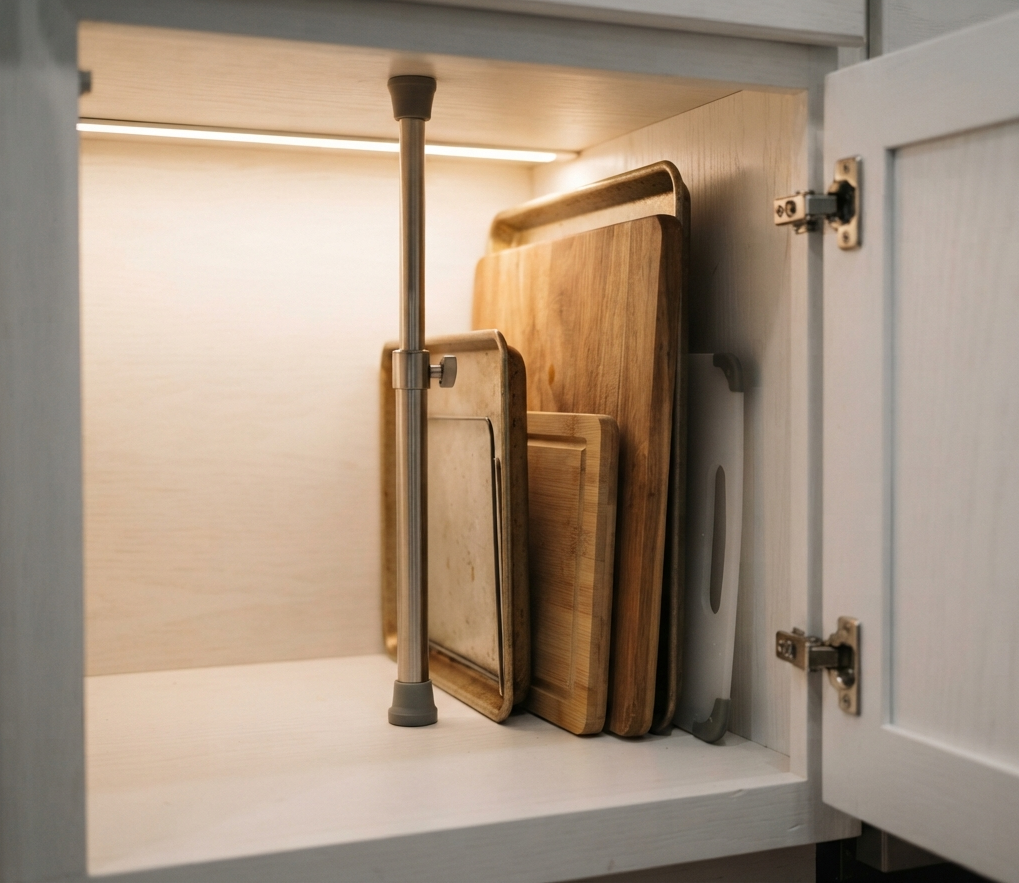
Tension rods aren’t just for curtains they’re a game-changer for cabinet organization. Install a tension rod vertically inside a cabinet to create dividers for baking sheets, cutting boards, and cooling racks . You can also place them horizontally to hang spray bottles of cleaning supplies or to create a second tier for small items. It’s an inexpensive, no-drill solution that maximizes otherwise wasted vertical space.
Tips
- Choose spring-loaded rods that fit snugly
- Use multiple rods to create custom compartments
- Place rods at different heights for versatile storage
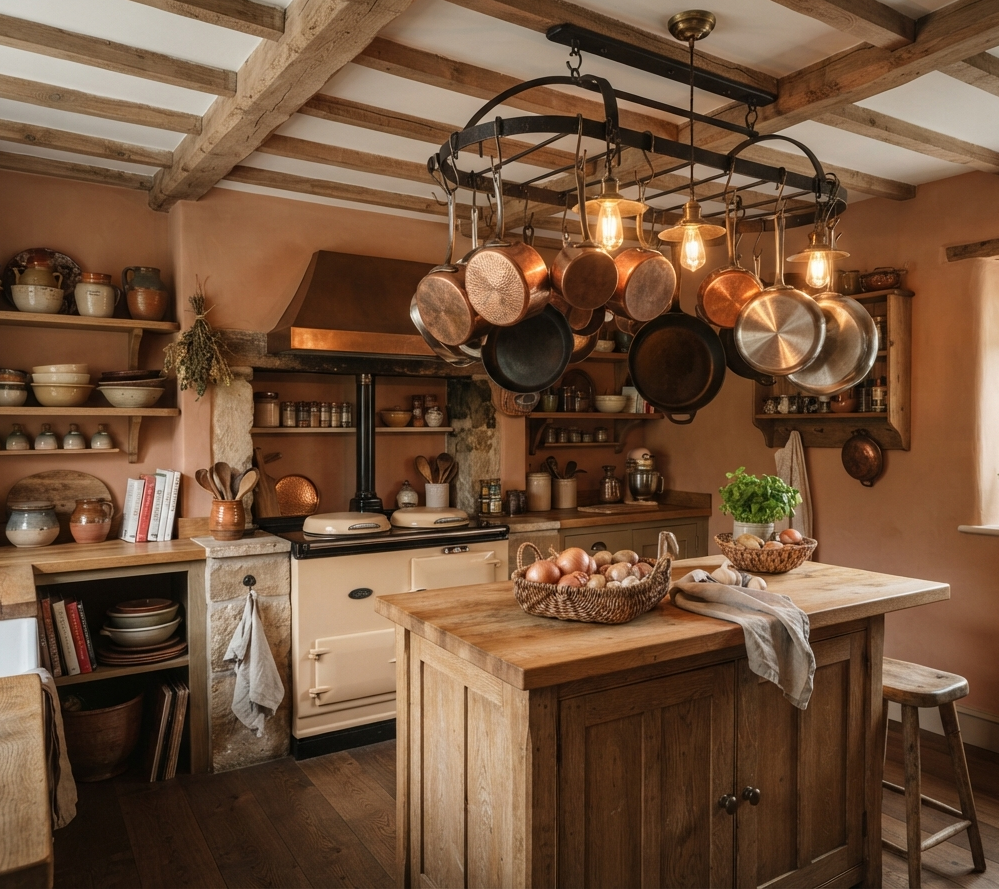
3: Hang Pots and Pans from a Ceiling Rack

Pots and pans are bulky and take up massive amounts of cabinet space. A ceiling-mounted pot rack frees up those cabinets while turning your cookware into a stylish design feature . Hang it above your island, stove, or any open area. Use S-hooks to hang pots, pans, and even colanders. It’s practical, beautiful, and a total space-saver.
Tips
- Ensure the rack is securely anchored into ceiling joists
- Position it away from areas where you might bump your head
- Group pots by size for a more organized look
4: Add Pull-Out Drawers to Base Cabinets

Those deep, dark base cabinets are the black holes of the kitchen. Installing pull-out drawers or sliding shelves transforms them into accessible, organized storage . You can buy ready-made pull-out units or install DIY slides. Suddenly, you can easily reach that pot in the very back without pulling everything else out first.
Tips
- Measure your cabinet depth carefully before purchasing
- Use full-extension slides for maximum access
- Install dividers within drawers for lids and small items
5: Use the Inside of Cabinet Doors
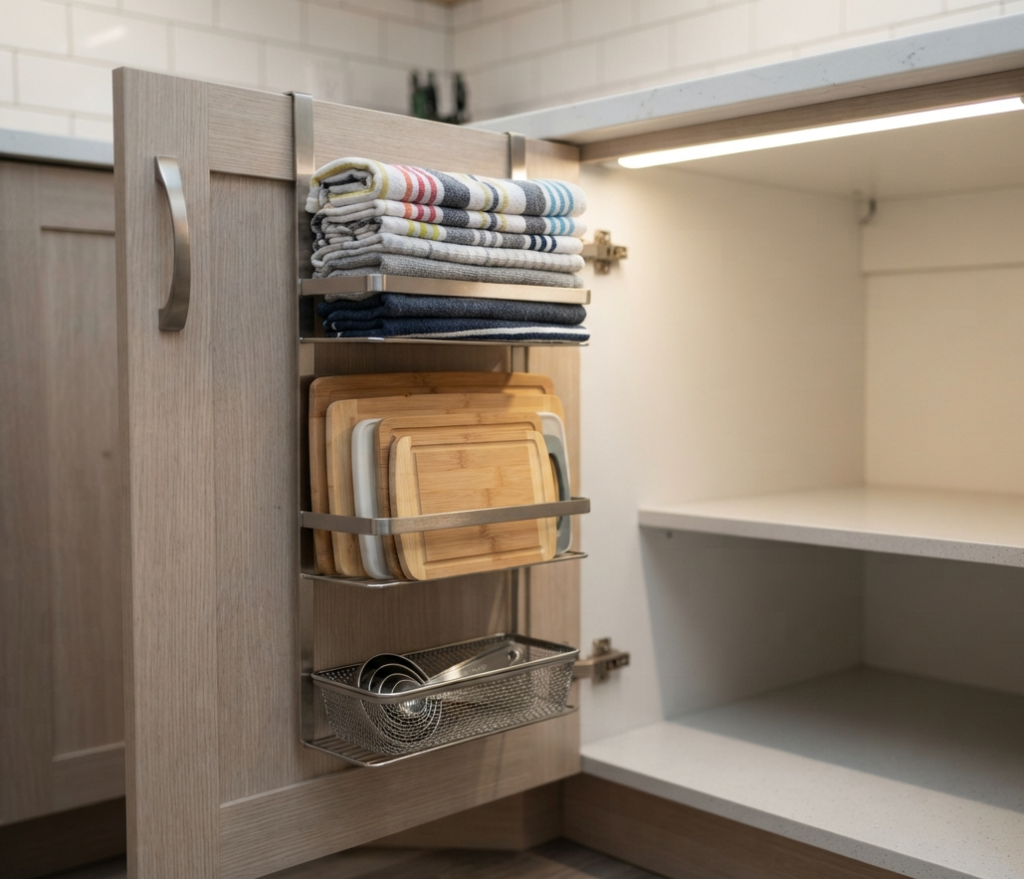
The inside of cabinet doors is prime, often overlooked real estate. Install small racks, hooks, or adhesive baskets to the inside of doors for storing lids, measuring spoons, spices, or even cutting boards . This keeps frequently used items within easy reach without cluttering your countertops or shelves. It’s one of the simplest and most effective small kitchen storage tricks.
Tips
- Use over-the-door racks that don’t require drilling
- Store lightweight items to avoid door sagging
- Keep frequently used items on the door of the most convenient cabinet
6: Create a Pantry Wall with Open Shelving

If you don’t have a pantry, create one. An open shelving system on an empty wall can provide massive storage for dry goods, spices, and frequently used items . Use glass jars or matching containers for a cohesive look. This not only adds storage but also serves as a decorative feature. Keep the most used items at eye level and bulkier items on lower shelves.
Tips
- Use sturdy brackets anchored into the wall studs
- Store items you use daily on the most accessible shelves
- Group similar items together pasta, canned goods, baking supplies
7: Use a Rolling Kitchen Cart

A rolling kitchen cart adds counter space, storage, and portability to a small kitchen . Use it as an extra prep station, a coffee bar, or a place to store bulky appliances like stand mixers or air fryers. When you need more floor space, simply roll it out of the way. Many carts come with hooks for towels and spice racks built-in.
Tips
- Choose a cart with locking wheels for stability
- Look for one with a butcher block top for a stylish prep surface
- Use the lower shelves for cookbooks or heavy pots
8: Store Lids on a Rack
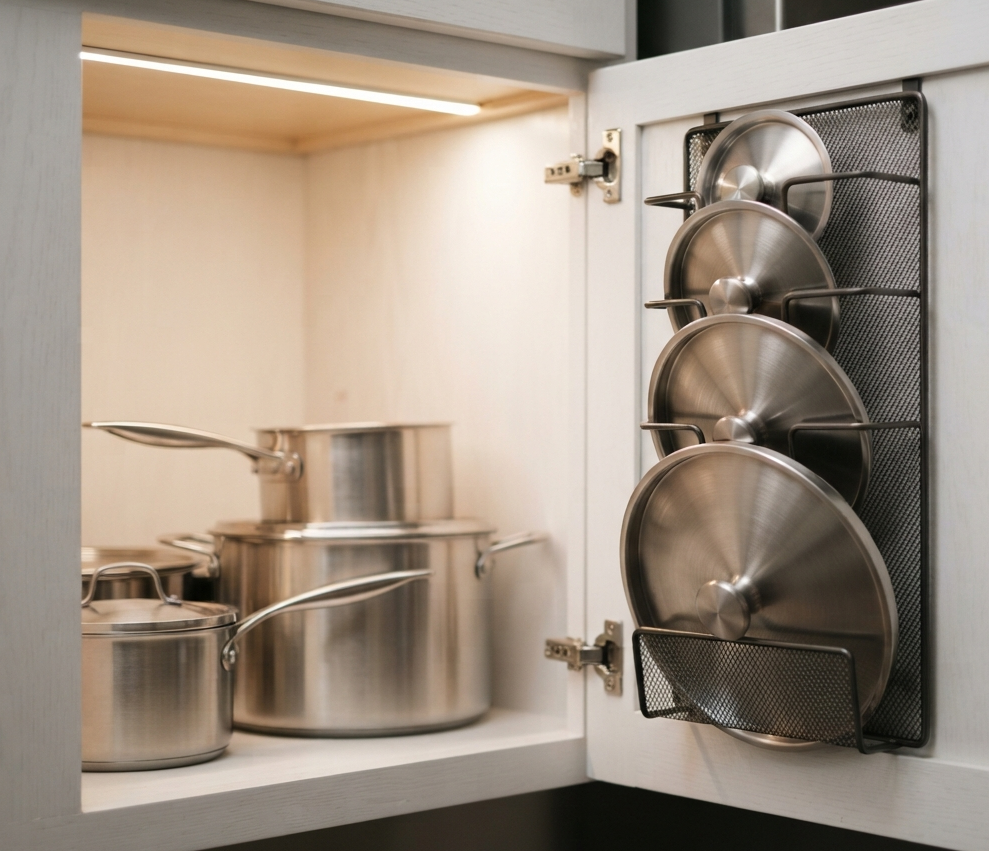
Lids are notoriously difficult to store they slide around and take up valuable space. A dedicated lid rack, either inside a cabinet or mounted on a door, keeps them organized and accessible . You can find racks that hold lids upright or horizontally. Once you have a lid system, you’ll stop searching for that perfect fit.
Tips
- Choose a rack with adjustable dividers for different sizes
- Mount it inside a cabinet door for quick access
- Store lids near the pots they match for convenience
9: Maximize Corner Cabinets with a Lazy Susan

Corner cabinets are notoriously awkward and frustrating. A lazy Susan (turntable) makes them incredibly functional by bringing items to you with a simple spin . You can install a two-tier lazy Susan for even more storage. Suddenly, that deep, dark corner becomes a convenient, accessible space for spices, oils, or canned goods.
Tips
- Measure the cabinet diameter carefully before buying
- Choose a non-slip surface to prevent items from sliding
- Use it for frequently used items so you can spin and grab quickly
10: Add Hooks Under Shelves
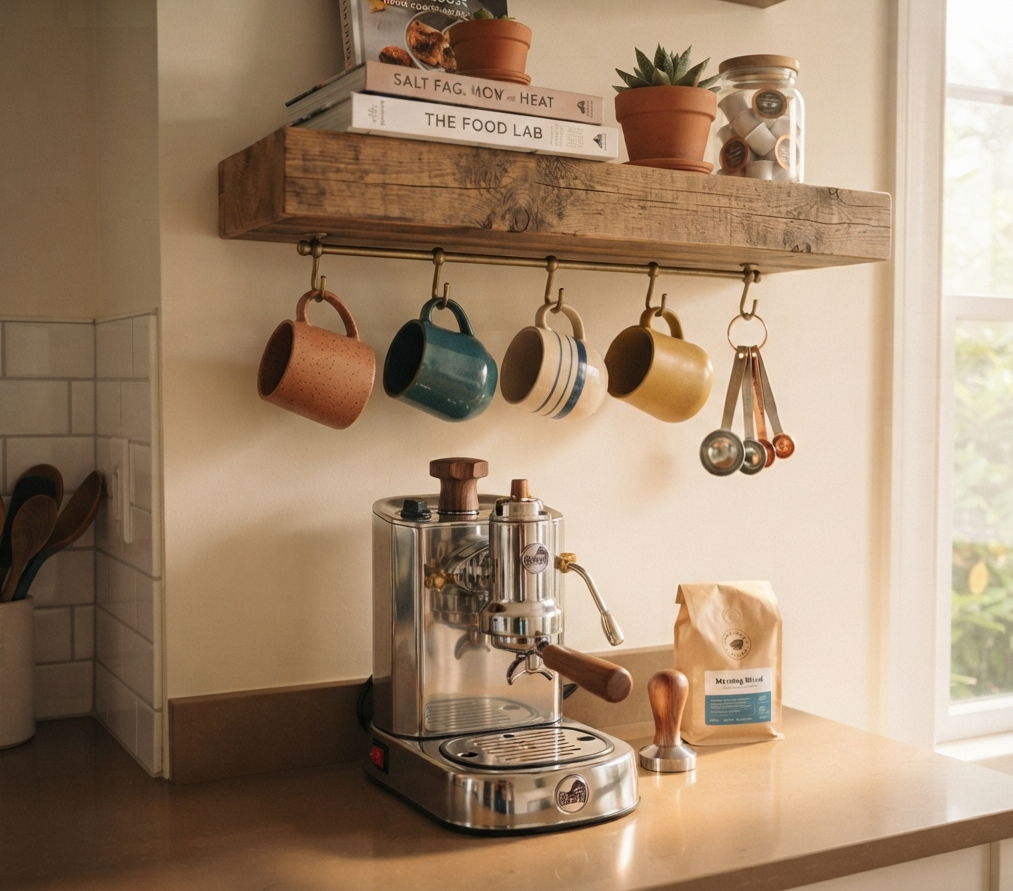
The underside of shelves is often wasted space. Install small hooks underneath your upper cabinets or open shelves to hang mugs, measuring cups, or small utensils . This creates storage where there was none while adding a charming, café-style aesthetic. It’s especially useful near your coffee station.
Tips
- Use adhesive hooks for easy installation
- Hang lightweight items to avoid damage
- Place hooks near the coffee maker for mug convenience
11: Use a Dish Drying Rack That Sits Over the Sink

A dish drying rack that sits over the sink frees up precious counter space . The water drains directly into the sink, so you don’t need a drip tray. Some racks even have tiers for dishes, cutlery, and glasses, making them incredibly efficient. When you’re not using it, some models collapse for easy storage.
Tips
- Ensure it fits securely over your sink’s width
- Choose one with a utensil holder
- Use it to also dry fruit or clean vegetables
12: Install a Spice Rack on the Wall

Spice racks are classic small kitchen storage for a reason they work. A wall-mounted spice rack keeps your spices visible and accessible while freeing up cabinet space . You can use a tiered rack for small jars or a rail system with small baskets. Position it near your cooking area for easy access while you’re at the stove.
Tips
- Place near the stove but not directly over it (heat can degrade spices)
- Use uniform jars for a clean, cohesive look
- Label each jar clearly for easy identification
13: Store Cutting Boards Vertically
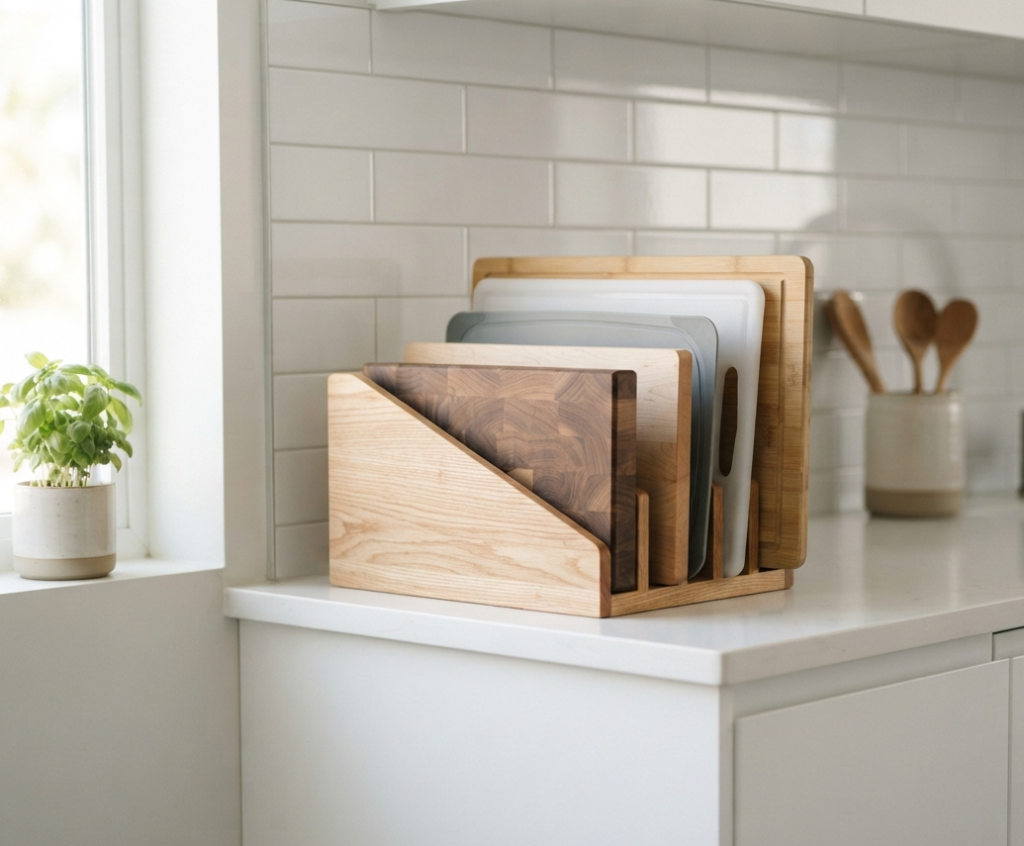
Stacking cutting boards horizontally takes up shelf space and makes them hard to grab. A vertical file holder like a letter holder or a small wooden rack keeps cutting boards organized and accessible . Slide them in and out like files. This works for baking sheets and cooling racks too.
Tips
- Measure the height of your tallest cutting board first
- Place the rack near your prep area for easy access
- Clean cutting boards thoroughly before storing
14: Use Stackable Storage Containers
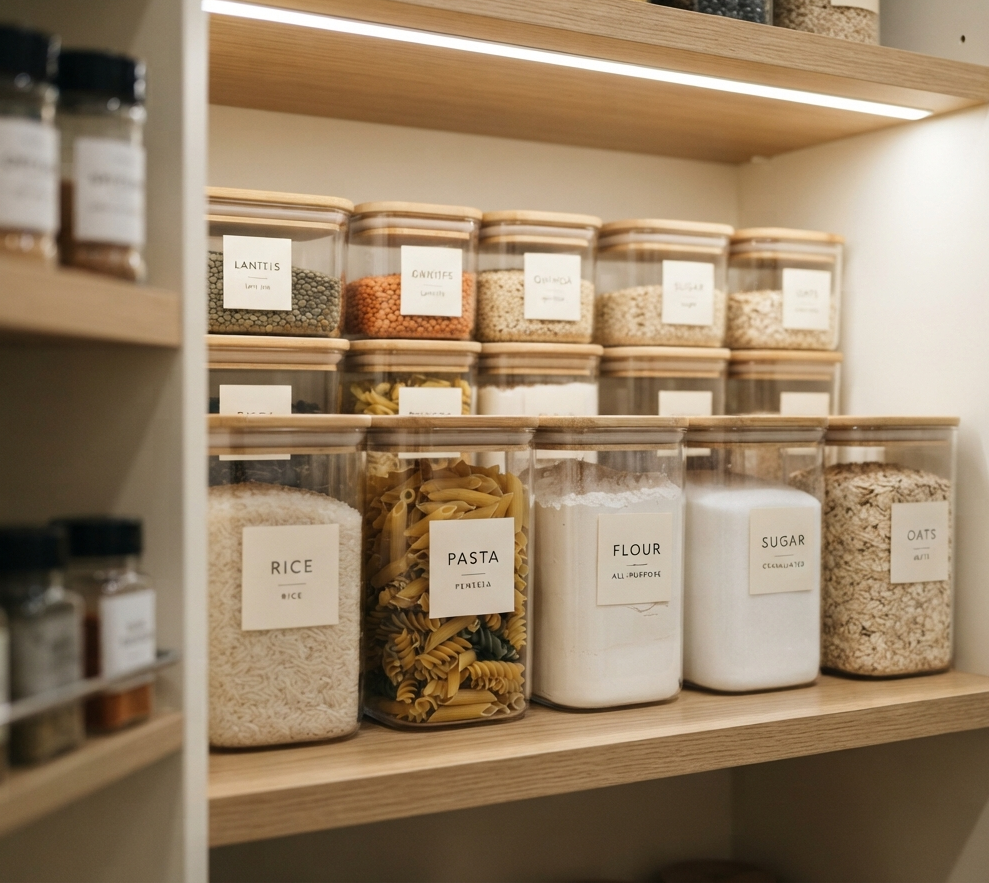
Stackable containers are essential for small kitchens. They use vertical space and keep your pantry tidy . Look for containers that are the same shape and size so they nest perfectly. Use them for flour, sugar, pasta, snacks, and grains. Not only do they save space, but they also keep food fresher longer.
Tips
- Choose BPA-free, airtight containers
- Label each container with the contents and expiry date
- Match container sizes to your shelf depth for a neat look
15: Add a Pegboard to the Wall

Pegboards are a DIY enthusiast’s dream and they’re perfect for small kitchens too. A pegboard on an empty wall provides customizable, flexible storage for pots, pans, utensils, and even herbs . Arrange the hooks to fit your specific items, and rearrange whenever you need to. Paint it a fun color to match your kitchen’s aesthetic.
Tips
- Use a variety of hook sizes for different items
- Add small shelves for jars or spices
- Place it near your prep area for ultimate convenience
16: Use a Toaster Cover with Storage
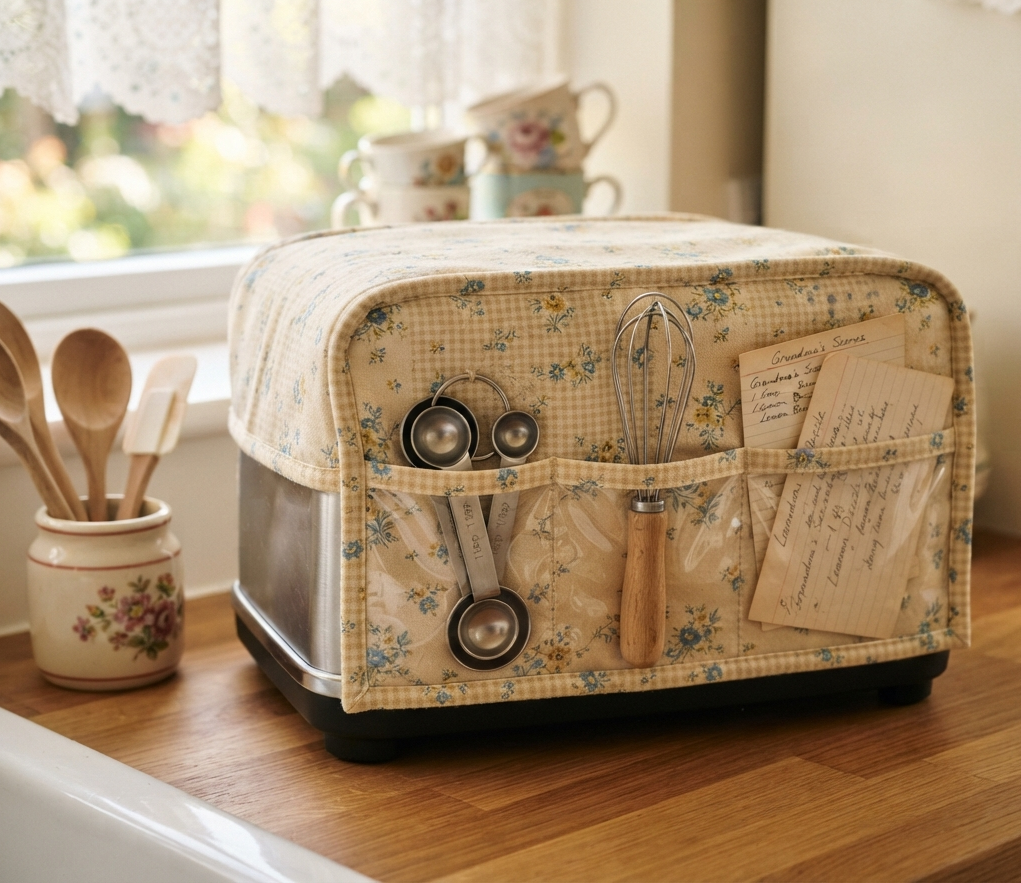
A toaster or appliance cover with built-in storage pockets is a clever way to get extra organization. These covers slip over your toaster or stand mixer and include pockets for measuring spoons, recipe cards, or small utensils . It keeps items tidy and protects your appliance from dust.
Tips
- Ensure the cover allows for air circulation
- Use it for appliances you use daily
- Choose a washable fabric for easy cleaning
17: Store Bulk Items in a Pull-Out Bin
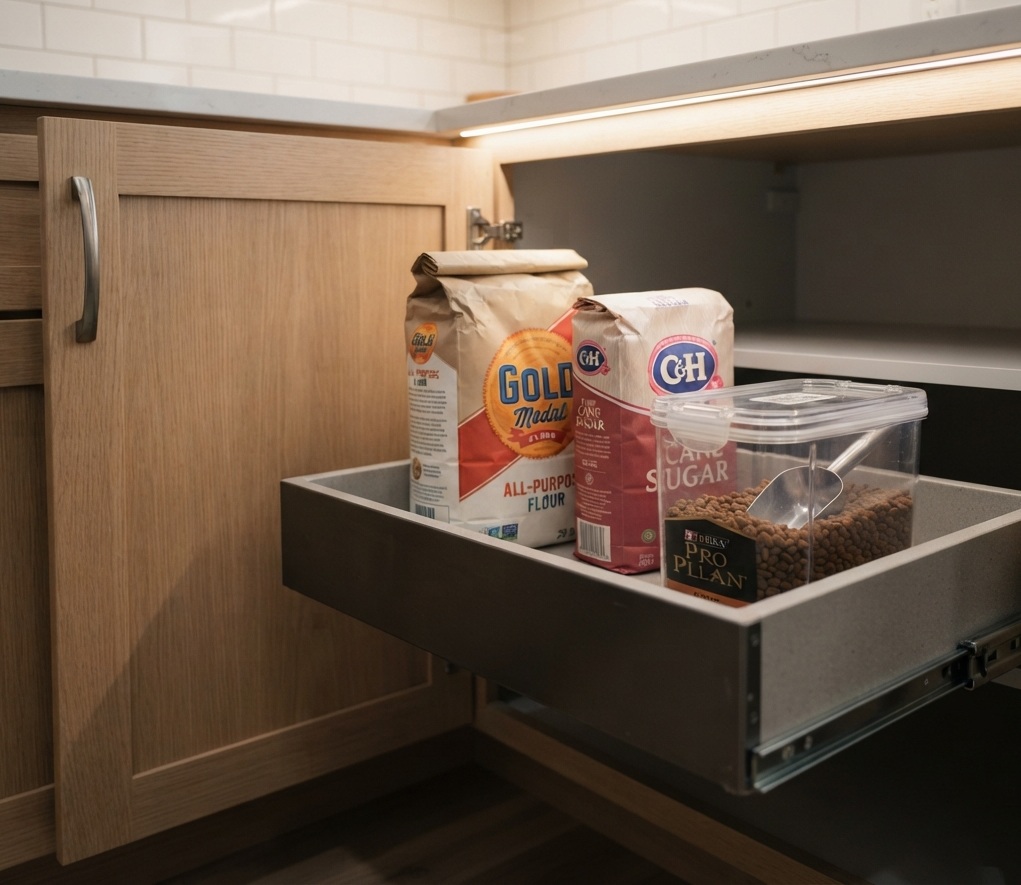
Bulk items like flour, sugar, and pet food can be bulky and hard to store. A pull-out bin at the bottom of your cabinet or pantry makes accessing these heavy items a breeze . Simply pull it out, scoop what you need, and slide it back. It keeps the floor clutter-free and hides the mess.
Tips
- Use a heavy-duty bin with smooth-gliding wheels
- Label the bin clearly for easy identification
- Place it in a convenient, low-traffic spot
18: Install a Fold-Down Table
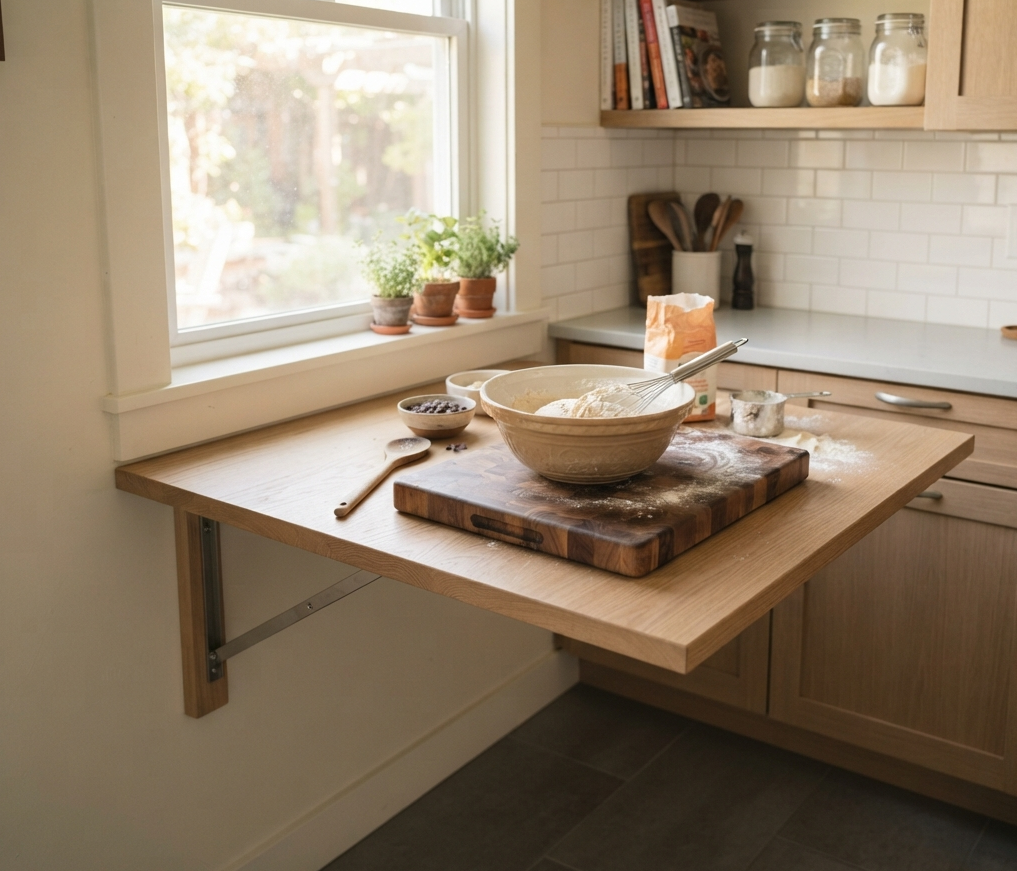
Counter space is at a premium in small kitchens, but a fold-down table attached to the wall provides extra prep space when you need it and folds away when you don’t . This is perfect for a breakfast bar, extra counter space for baking, or even a laptop station. Install it in an empty corner or near a window.
Tips
- Use sturdy hinges and brackets for stability
- Match the tabletop to your existing countertops
- Add folding legs for extra support
19: Use the Space Above Your Refrigerator
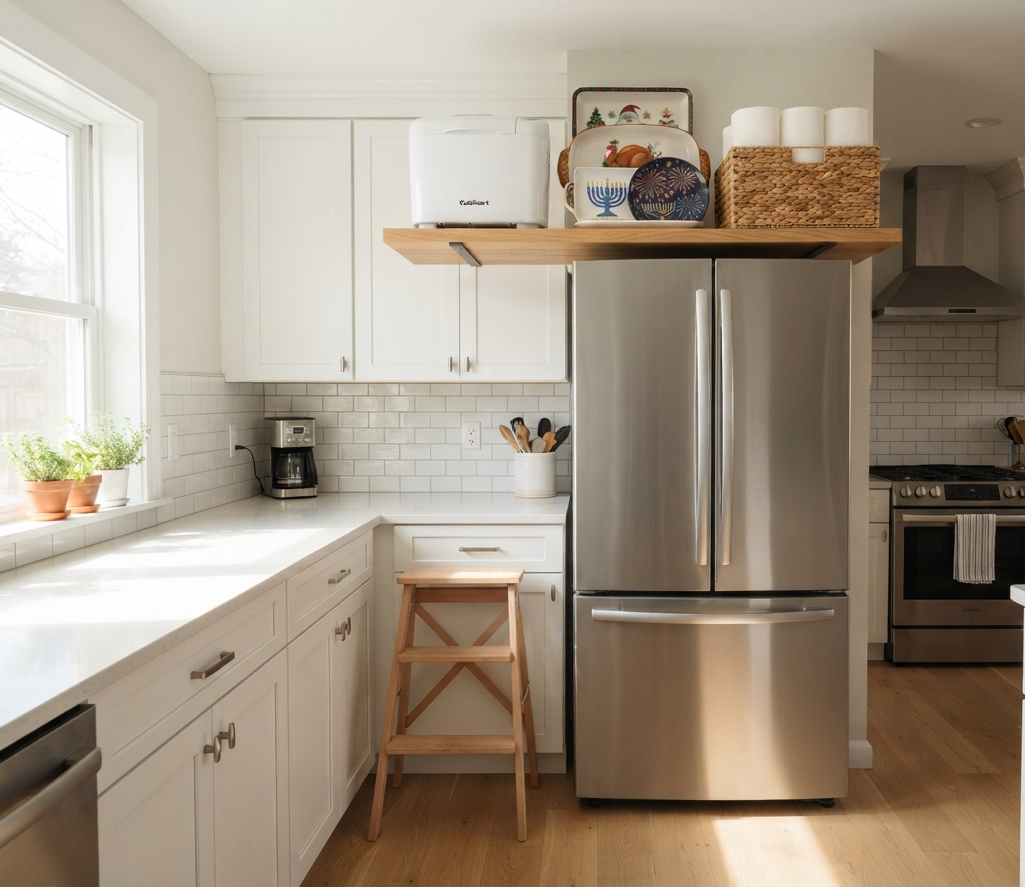
The space above the fridge is often a dead zone. Don’t waste it! Place a shelf or basket there to store items you rarely use appliances, holiday platters, or bulk paper towels . Just make sure items are secure so they don’t fall when you’re retrieving them.
Tips
- Use a sturdy shelf secured into the wall
- Store lightweight items to make lifting easier
- Keep a step stool nearby for access
20: Label Everything
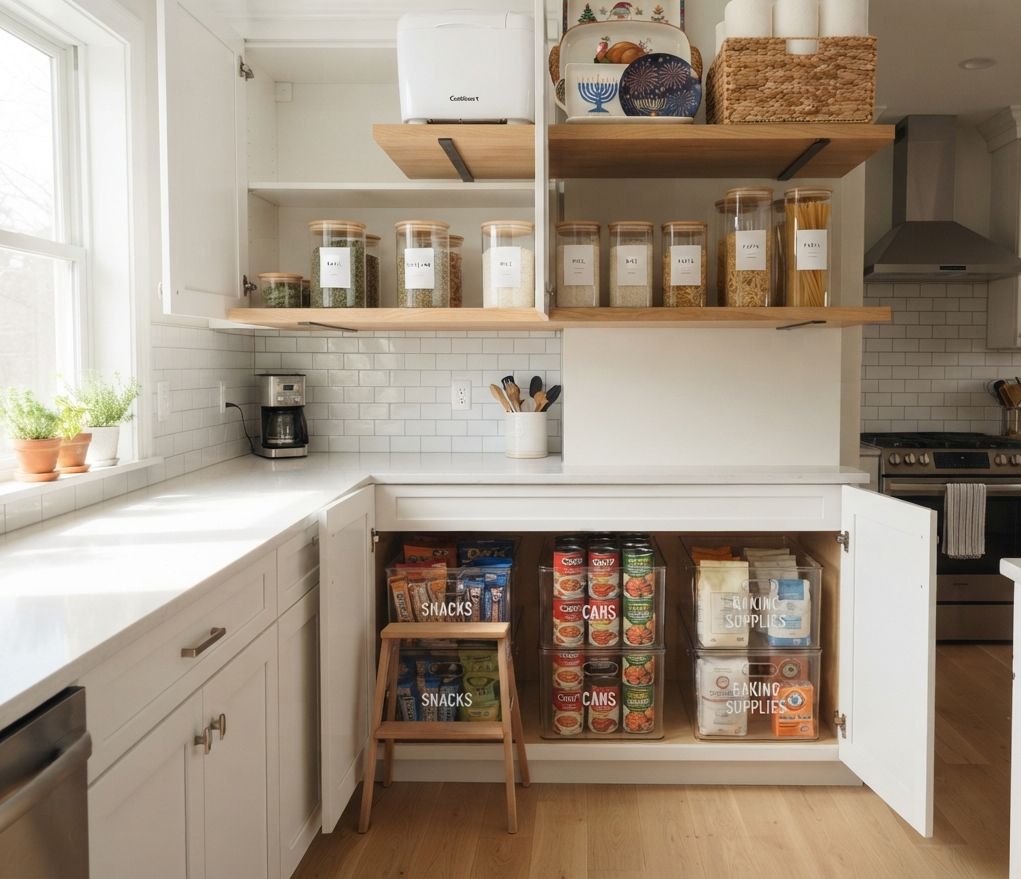
The final, most important tip: label everything. When every jar, bin, and basket is labeled, you’ll never waste time searching for the right spice or container . It also helps other family members know where things belong, making cleanup and organization a shared responsibility. Labels are cheap, easy, and transformative.
Tips
- Use a label maker for a clean, professional look
- Add labels to the inside of cabinet doors for spices
- Create a system alphabetical by category or color-coded
Conclusion
A small kitchen doesn’t have to feel cramped and cluttered. With these 20 storage ideas, you can unlock hidden space, reduce countertop chaos, and create a kitchen that’s both beautiful and functional. The key is thinking vertically, using every surface walls, cabinet doors, and even ceilings and choosing systems that work for your specific cooking habits. Start with one or two ideas this week: maybe a magnetic knife strip or a tension rod in your cabinet. Watch how that one change makes your kitchen feel bigger and more efficient. Then build from there. Your dream small kitchen is closer than you think.
FAQs
How can I maximize storage in a tiny kitchen without renovating?
Focus on vertical storage: wall-mounted racks, pegboards, and ceiling pot racks. Use cabinet door organizers, tension rods, and over-the-sink drying racks. A rolling cart adds portable counter space and storage.
What are the best containers for pantry storage in a small kitchen?
Clear, stackable, airtight containers are ideal. They save space, keep food fresh, and make contents visible. Choose square or rectangular containers to maximize shelf space.
How do I organize a small kitchen on a budget?
Repurpose items you already own: use mason jars for spices, tension rods for dividers, and over-the-door shoe organizers for pantry items. Dollar stores are great sources for bins and hooks.
Where should I store appliances in a small kitchen?
Keep daily-use appliances on the counter. Store occasional-use appliances in hard-to-reach places like the top of the fridge or high shelves. A rolling cart can hold multiple appliances and move them out of the way.
How do I keep my small kitchen organized long-term?
Adopt a “one in, one out” rule for new items. Do a quick purge every season. Label everything so everyone knows where items belong. Return items to their designated spots after each use.