23 Smart Toy Storage Ideas
If you’re a parent, you know the struggle all too well: you spend an hour cleaning up the playroom, and within ten minutes, it looks like a toy tornado swept through again. The endless cycle of tidying can feel overwhelming, especially when you’re not sure where to even begin. The problem isn’t your kids it’s the system. Without a smart, accessible storage plan, toys will inevitably end up scattered across every surface of your home . The good news? You don’t need a massive budget or a dedicated playroom to get organized. With a little creativity and these 23 smart toy storage ideas, you can create a system that actually works for your family. From budget-friendly hacks to stylish furniture solutions, these strategies will help your kids learn to tidy up independently while keeping your home looking beautiful. Let’s dive in
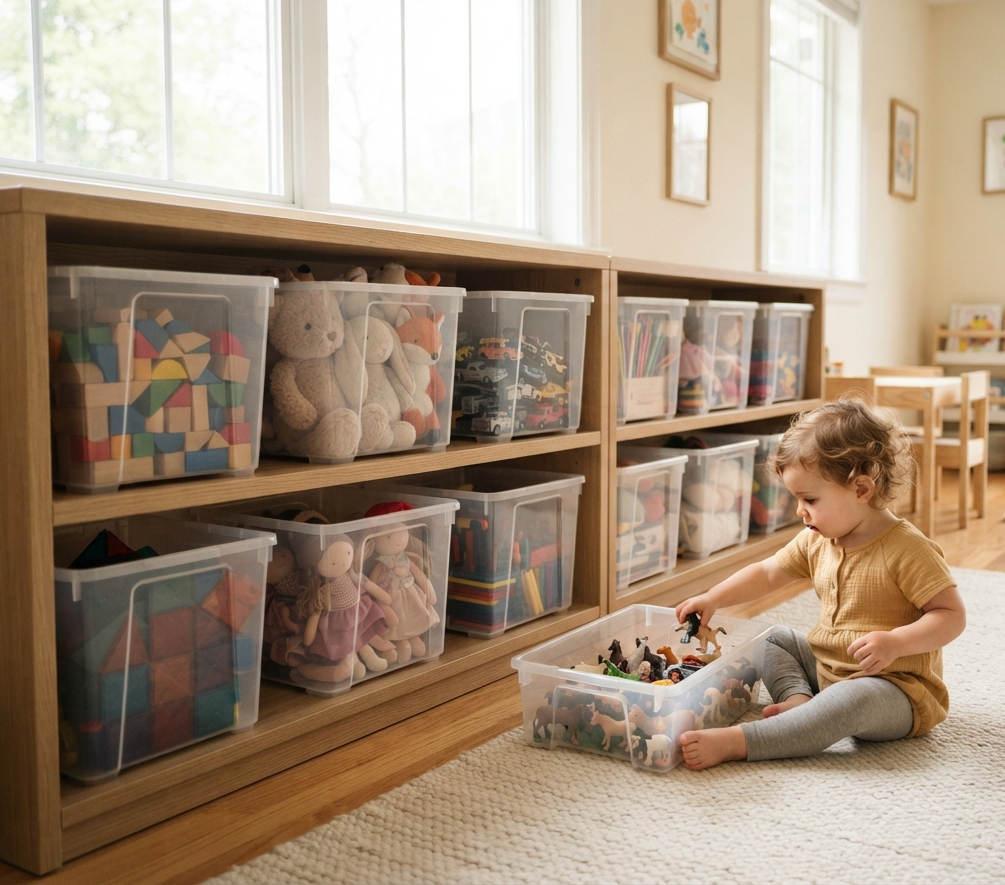
1: Use Clear Bins for Easy Visibility

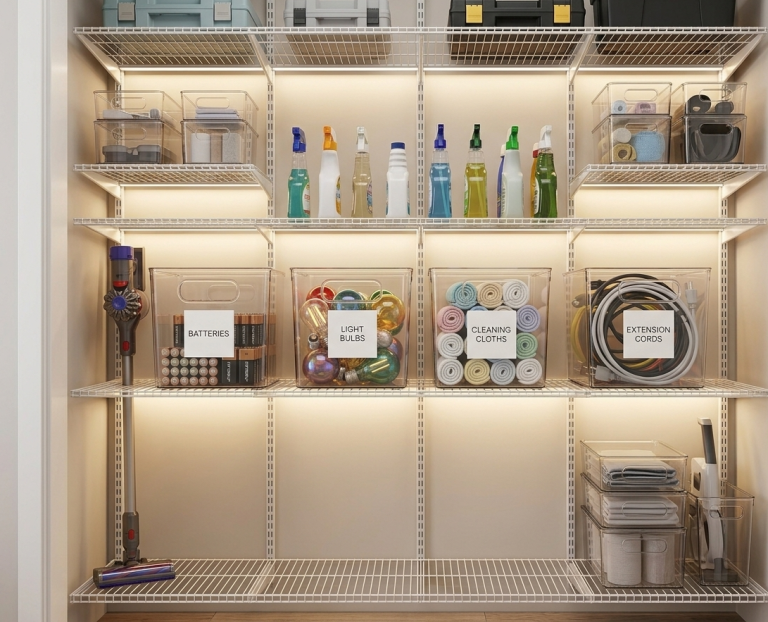
When kids can’t see their toys, they often forget they exist or dump out every bin searching for one specific item. Clear plastic bins or acrylic containers solve this problem by making contents instantly visible . Your child can spot exactly what they want without creating a massive mess. Plus, you’ll stop buying duplicates of toys you already own but couldn’t find.
Tips
- Choose lightweight bins that kids can easily carry
- Use bins with lids to keep dust off toys you rotate
- Stack bins vertically to maximize shelf space
2: Label Everything with Pictures
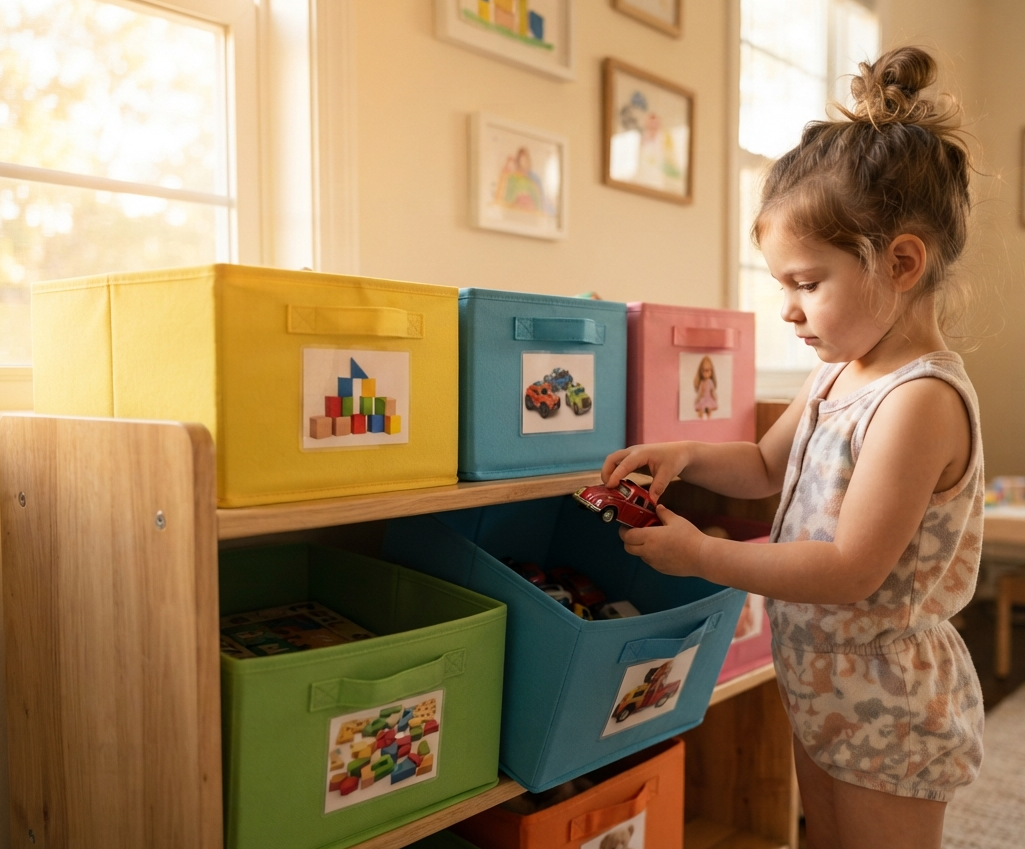
Labels are the secret weapon of organized parents. For pre-readers, picture labels are essential they show exactly what goes where without needing to read . You can take photos of the actual toys, print them out, and tape them to bins or baskets. This empowers kids to clean up independently and actually know where to find their favorite things.
Tips
- Laminate labels for durability against little hands
- Use adhesive pockets so you can swap labels as toys change
- Match the label color to the toy category for visual grouping
3: Repurpose a Bookshelf as a Toy Display

Forget boring toy boxes a bookshelf turned toy display makes the playroom feel intentional and stylish . Open shelving at child height lets kids see their options, choose toys, and return them easily. Display a curated selection of toys like you would books: front-facing for picture books and grouped by color or theme for aesthetic appeal.
Tips
- Place frequently used toys on lower shelves
- Use the top shelves for grown-up items or decor
- Rotate toys on display to keep things fresh and exciting
4: Install Wall-Mounted Toy Baskets
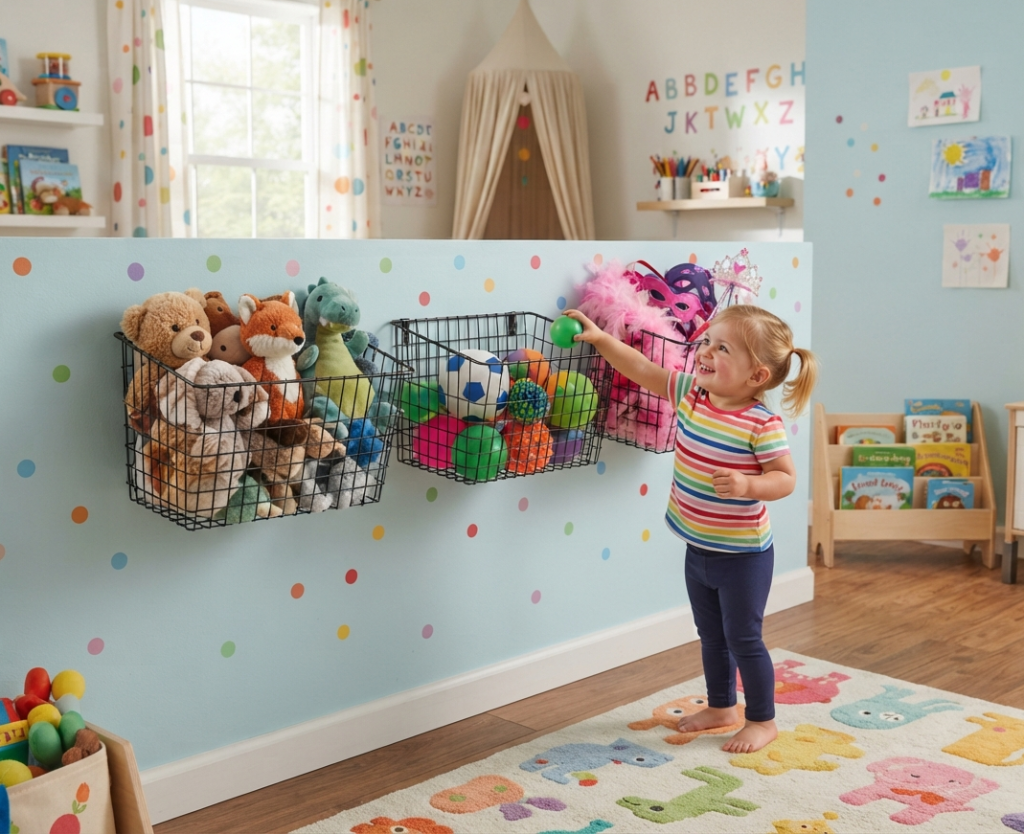
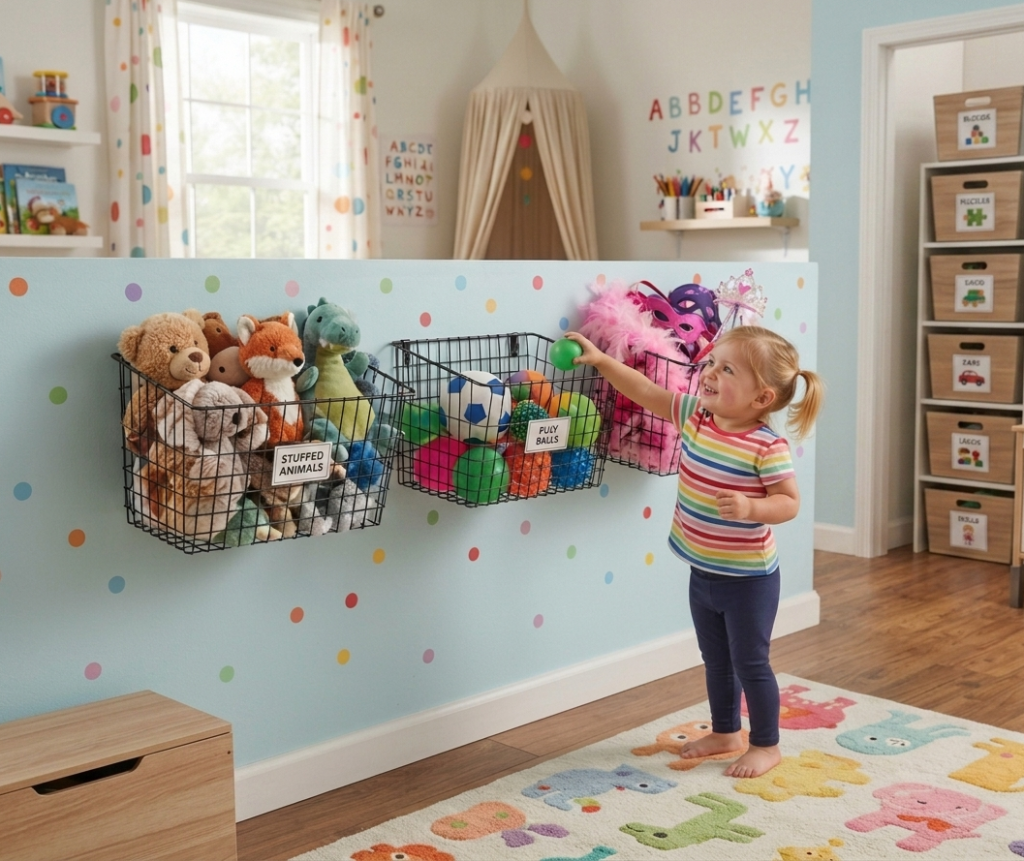
Floor space is precious, so go vertical! Wall-mounted baskets or wire bins attached to the wall keep toys off the floor and within easy reach . These work great for items that might otherwise be scattered stuffed animals, dress-up accessories, or balls. Plus, they add a playful, decorative element to the room.
Tips
- Use sturdy anchors rated for the weight of toys
- Place baskets at your child’s eye level
- Choose colorful baskets that match the room’s decor
5: Use a Toy Rotation System
Too many toys at once can be overwhelming for kids and chaotic for parents. A toy rotation system limits the number of toys available at any time, keeping playtime focused and cleanup manageable . Store the rest in labeled bins in a closet or garage. Swap them out every few weeks to keep things feeling fresh and exciting.
Tips
- Keep 10–15 toys out at a time for younger children
- Store rotated toys in clear bins so you can see what’s inside
- Involve your child in choosing what to rotate next
6: Use an Over-the-Door Shoe Organizer for Small Toys

This classic hack is a game-changer for small toys like action figures, cars, art supplies, or dolls. A clear over-the-door shoe organizer with pockets keeps tiny items visible, accessible, and contained . Hang it on the back of a closet door or playroom door. Each pocket becomes a designated home for a specific category of small toy.
Tips
- Use the clear pocket style for better visibility
- Assign each pocket a specific category (matchbox cars, superhero figures)
- Keep this out of reach of very young children who might empty it
7: Create a LEGO and Building Block Station
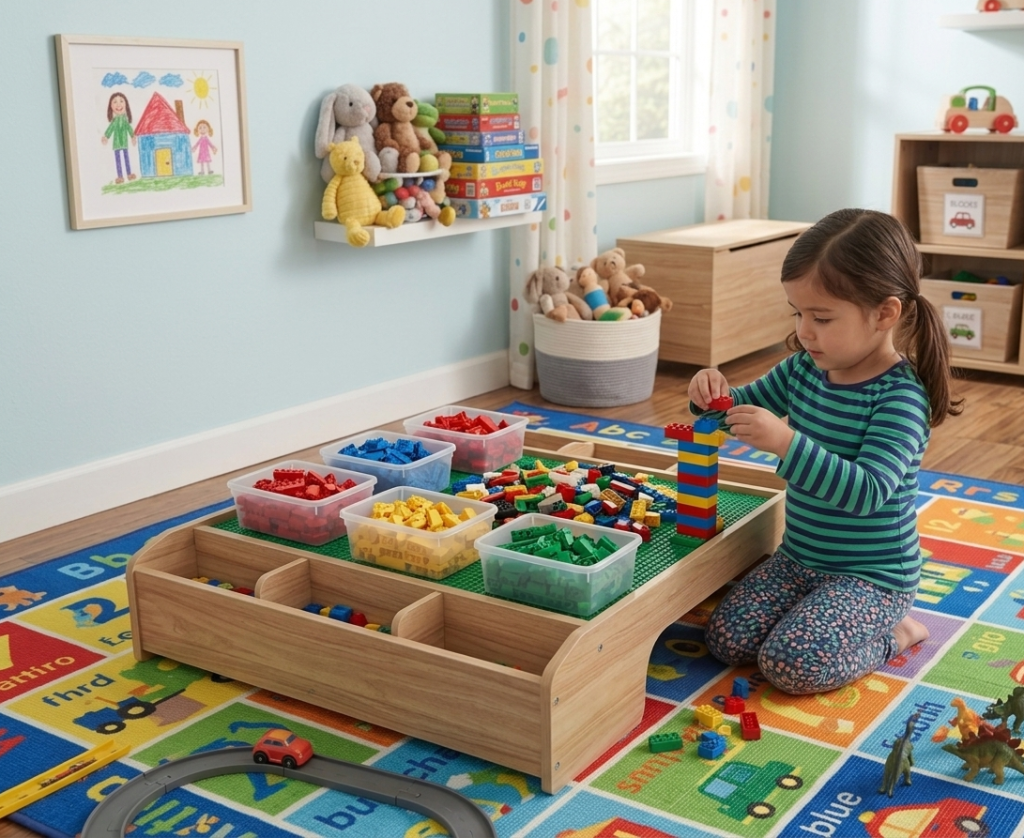
LEGOs and building blocks can be a parent’s worst nightmare tiny pieces everywhere. A dedicated station with a large, flat tray or mat gives them a specific zone to build on . When playtime is over, simply gather the mat’s edges and pour the pieces back into a container. Add small bins or drawer organizers to sort by color or size.
Tips
- Use a play mat with drawstring edges for easy cleanup
- Sort pieces by color or type in small containers
- Keep the station in a corner to contain the mess
8: Use Rolling Carts for Portable Storage
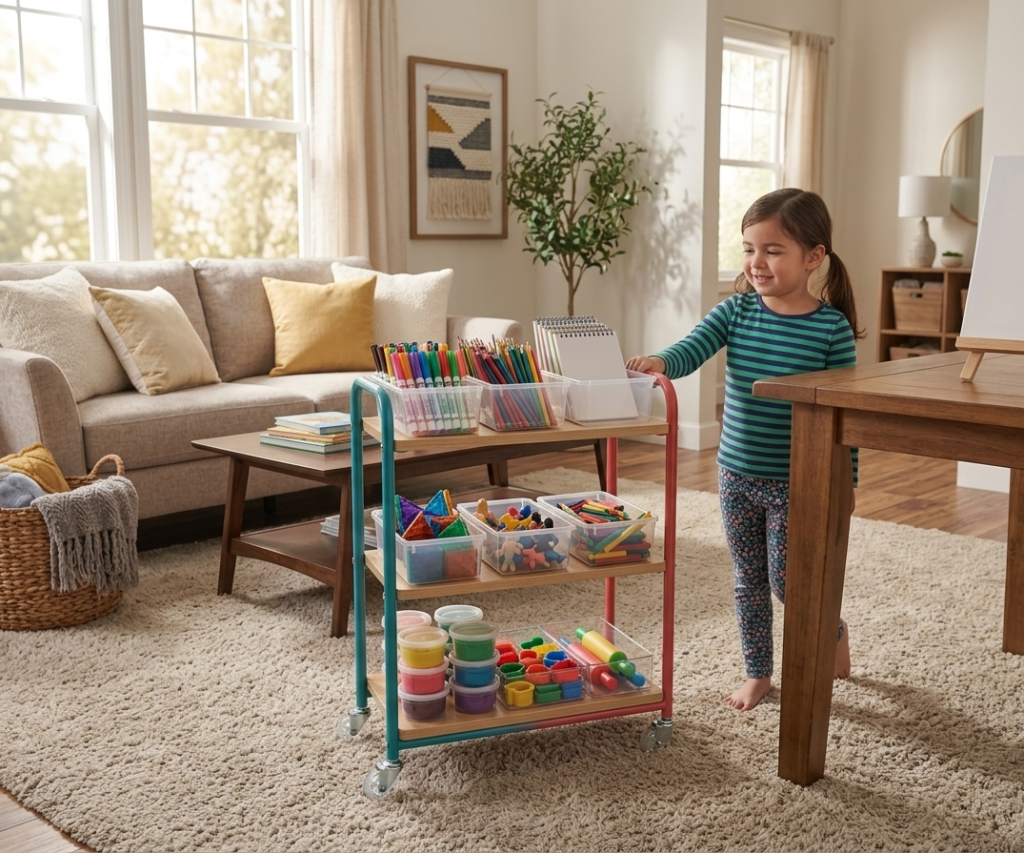
Rolling carts are versatile, mobile, and perfect for kids who like to move from room to room . A three-tier cart can hold art supplies, small toys, and playdough tools. Your child can roll their activities anywhere from the playroom to the kitchen table and roll it back when they’re done. It’s organization on wheels.
Tips
- Choose a colorful cart to make it fun for kids
- Use containers on each tier to keep items organized
- Keep it near the play area for easy access
9: Install a Low, Kid-Friendly Toy Shelf

Adult-sized shelves can feel inaccessible to little ones. A low, sturdy shelf at child height puts toys within easy reach and encourages independent play and cleanup . Choose a shelf with deep cubbies or open-front bins. This gives each type of toy a designated “home” that’s easy to see, reach, and return to.
Tips
- Anchor the shelf to the wall for safety
- Use bins that slide in and out easily
- Group toys by type on different cubbies
10: Use Decorative Baskets and Bins
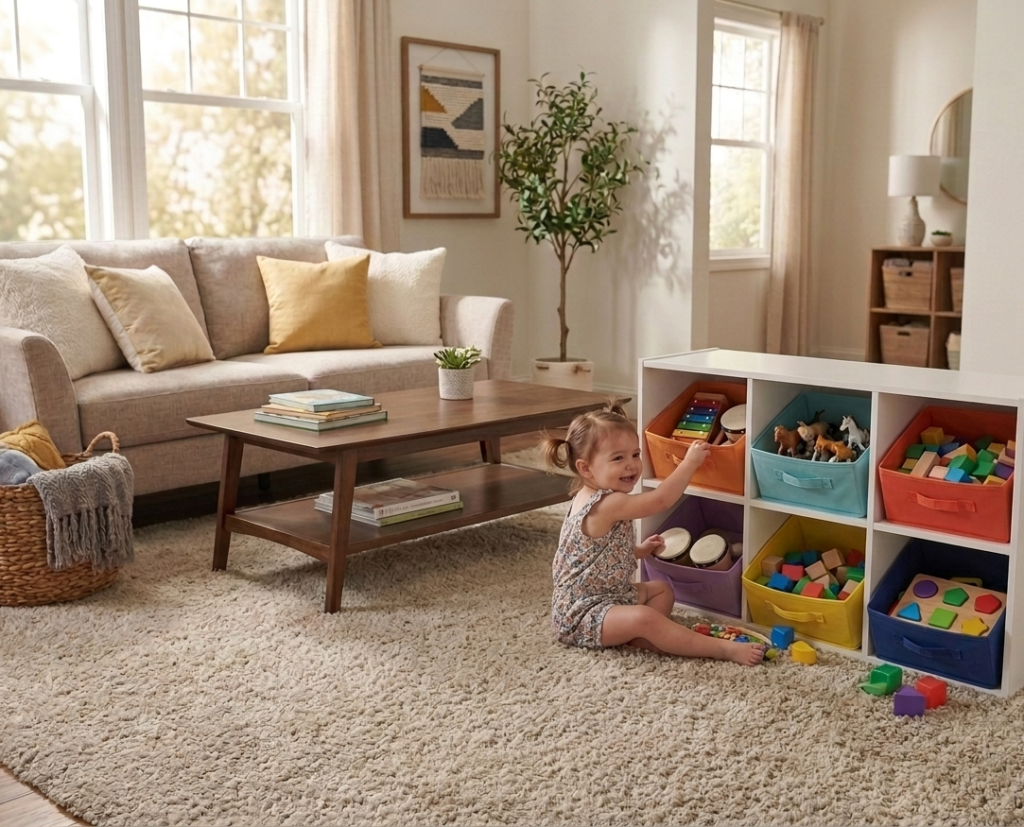
Organization doesn’t have to be ugly! Wicker baskets, fabric bins, and colorful containers can double as decor while hiding toy clutter . Place them on open shelves, inside cubbies, or on the floor. The beauty of baskets is that cleanup is as simple as tossing toys inside no folding, sorting, or stress required.
Tips
- Choose sturdy, washable materials for durability
- Match baskets to your room’s color scheme
- Use different sizes for different types of toys
11: Designate a Reading Nook with Book Storage
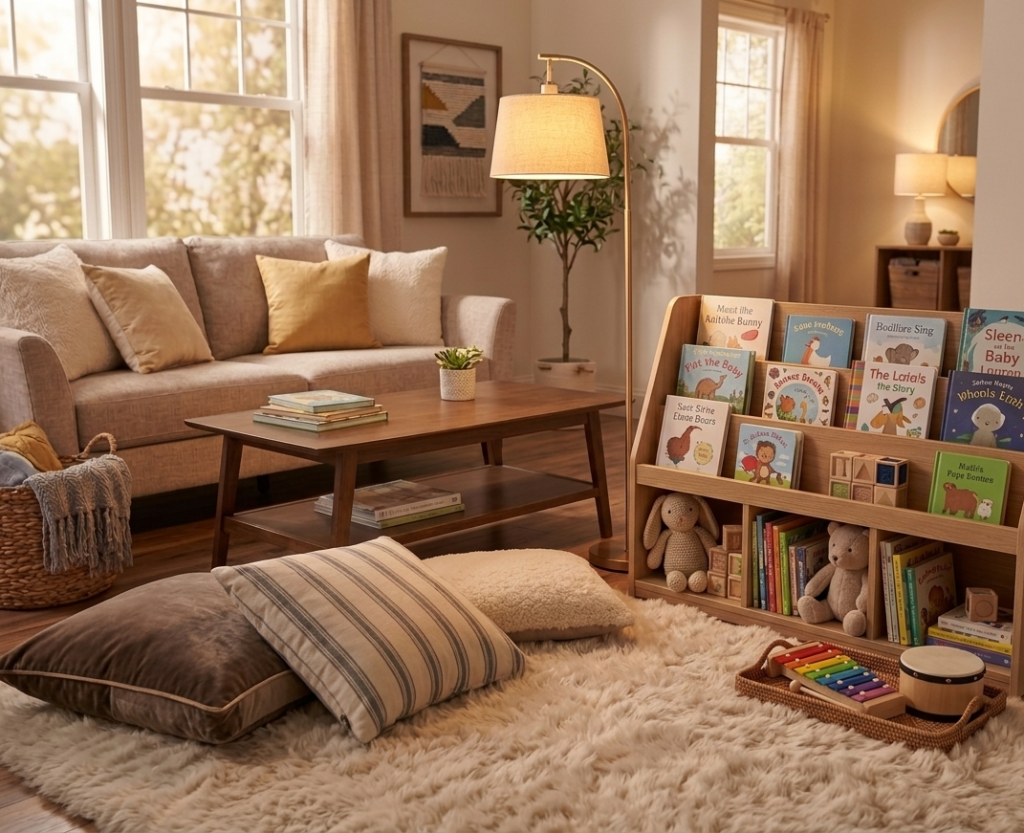
A cozy reading nook with accessible book storage encourages a love of reading while keeping books off the floor . Use front-facing bookshelves that display covers, or a simple low bookshelf with bins. Add a soft rug, cushions, and good lighting to make it an inviting space your child will love.
Tips
- Rotate book selections monthly to keep it fresh
- Use a book sling or wall-mounted rack for easy access
- Place a small basket for library books to keep them separate
12: Use Pegboards for Toy Display
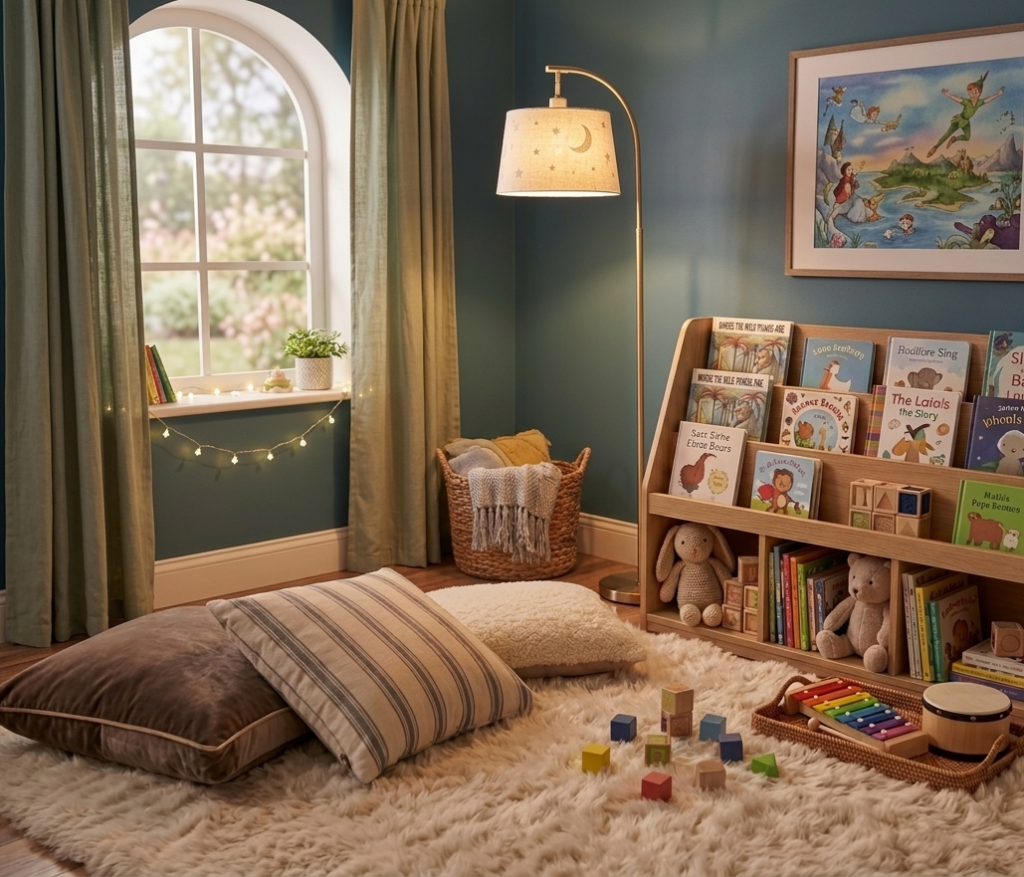
Pegboards aren’t just for tools! A colorful pegboard with hooks and small baskets can display and store dress-up clothes, art supplies, musical instruments, or even cars . The customizable nature of pegboards means you can rearrange as your child’s interests change. It’s functional, fun, and incredibly versatile.
Tips
- Paint the pegboard a bright, child-friendly color
- Use S-hooks for hanging items like purses or capes
- Add small baskets for loose pieces
13: Use Under-Bed Storage Boxes

The space under the bed is prime real estate for toy storage. Low-profile, rolling bins slide easily underneath and are perfect for storing larger toys, out-of-season items, or rotated toys . This is especially useful in smaller homes where floor space is limited. Your child can even help slide the bins in and out.
Tips
- Choose clear bins for visibility
- Use bins with lids to keep dust off stored toys
- Label each bin for easy identification
14: Create an Art Supply Station

Art supplies can quickly become an overwhelming mess. A dedicated art station with organized containers keeps crayons, markers, paper, and glue in one spot . Use mason jars for pencils and markers, small bins for craft supplies, and a vertical file holder for paper. Your child can access everything they need for creative projects and clean up just as easily.
Tips
- Label each container clearly
- Store washable supplies for peace of mind
- Keep a small trash can nearby for scraps
15:
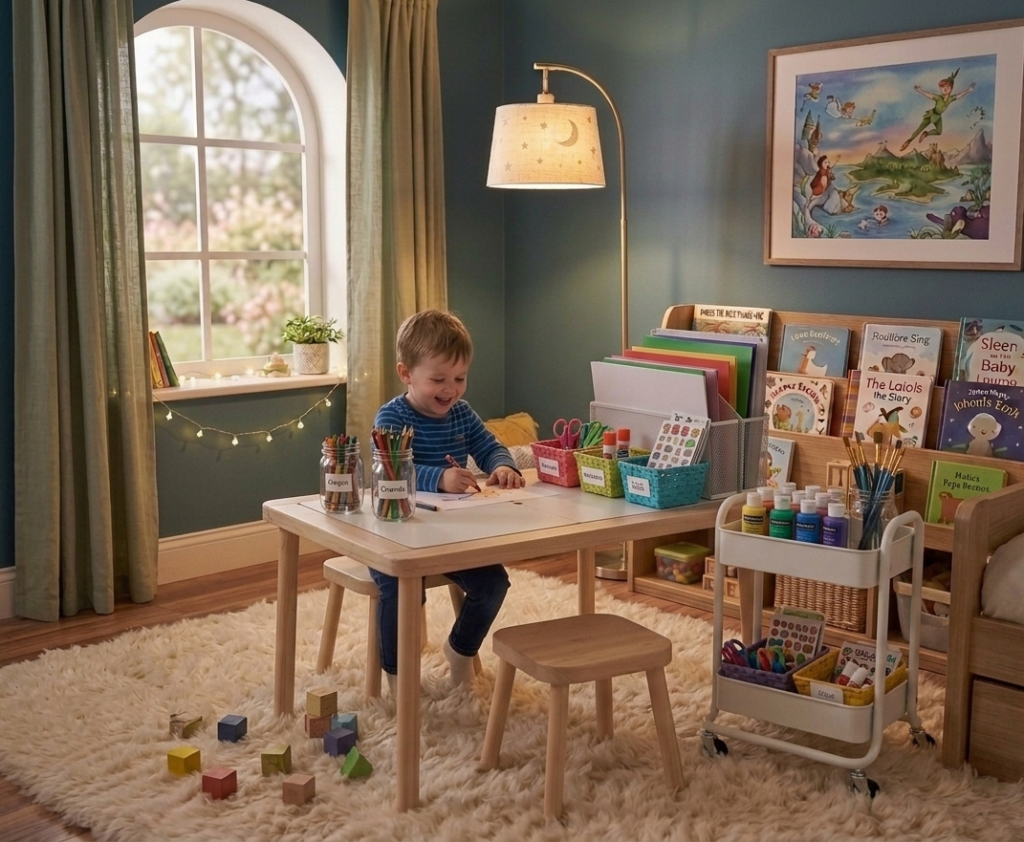
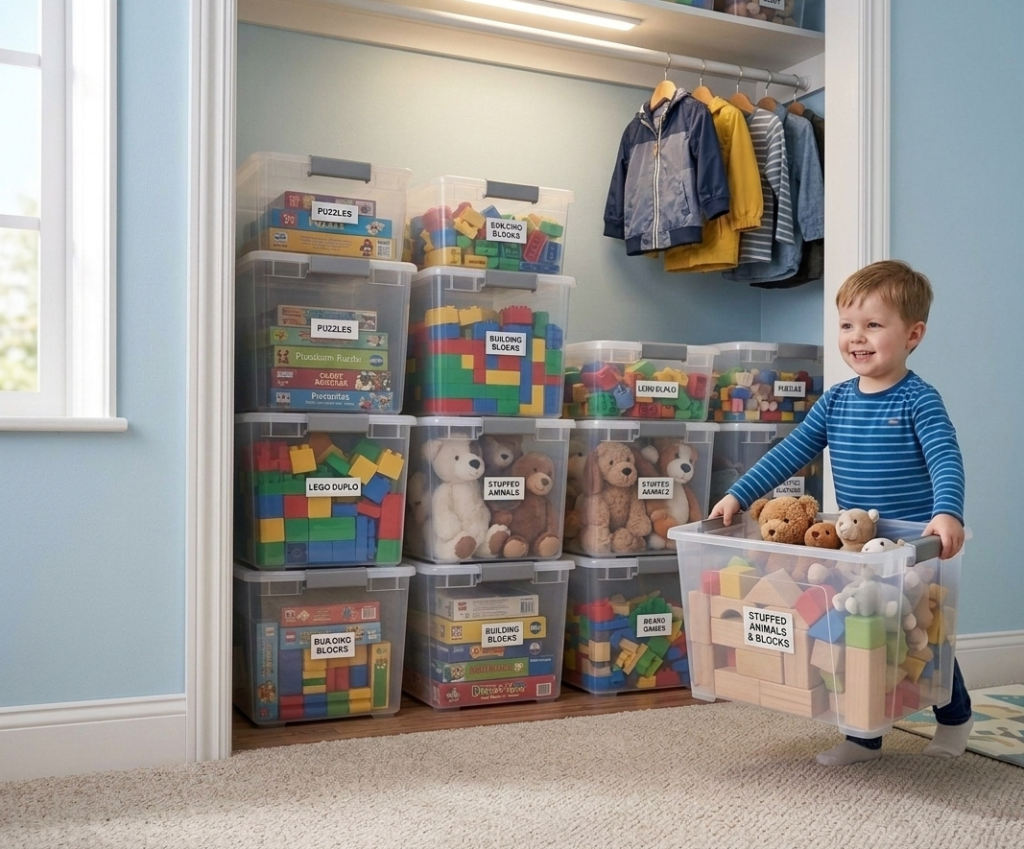
Space-saving stackable bins are brilliant for maximizing vertical storage in closets or corners. These nesting bins can be stacked when not in use or filled and stacked to save floor space . They’re especially useful for rotating toys, seasonal items, or bulkier pieces. Kids can easily carry them to their play area and stack them back when done.
Tips
- Choose bins with handles for easy carrying
- Use clear bins for visibility
- Stack with the heaviest bins at the bottom
16: Install Corner Shelving Units
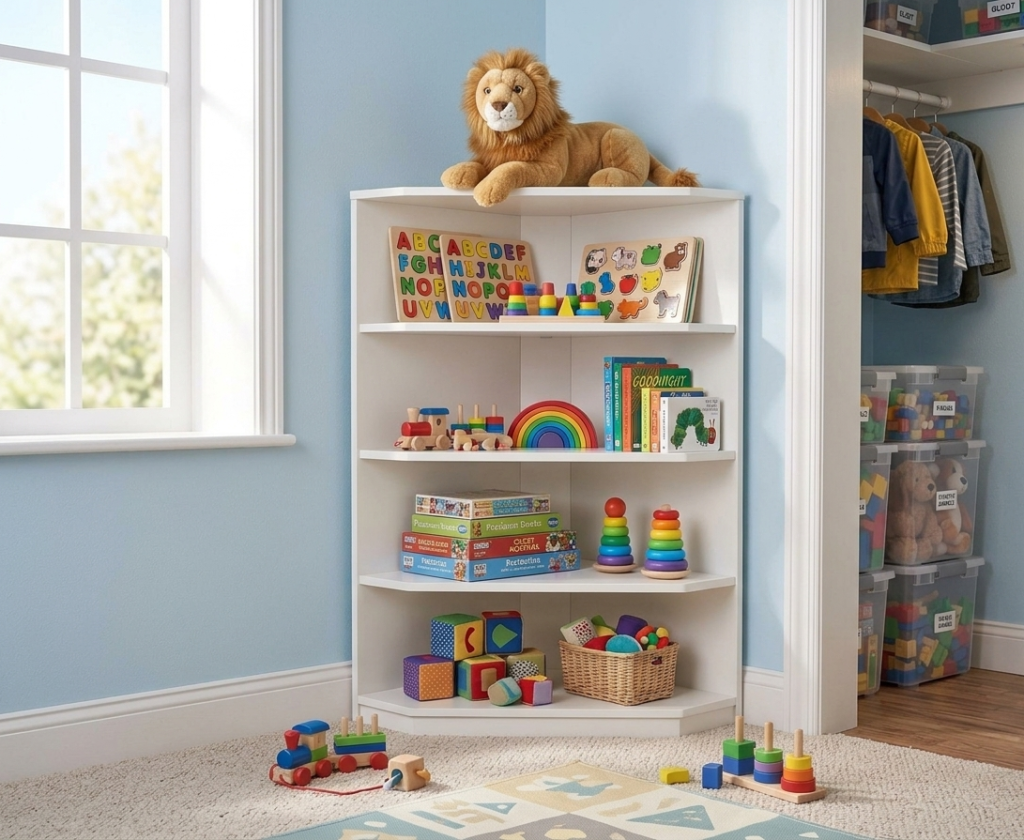
Corners are often wasted space, but corner shelves can transform them into prime toy storage . A corner shelf unit with multiple tiers provides a beautiful display area for books, toys, and treasures. It keeps toys organized while adding visual interest to an otherwise empty corner. Plus, kids love having a dedicated “display” spot for their special items.
Tips
- Use turntables on corner shelves for easier access
- Place frequently used items on lower tiers
- Display rotating toys on the top tier
17: Use a Toy Hammock for Stuffed Animals
Stuffed animals can take over a room quickly. A toy hammock hung in a corner is a cute, effective way to keep them corralled . The hammock holds a surprising number of plush toys while keeping them visible and accessible. Plus, it adds a playful, whimsical touch to the room.
Tips
- Install the hammock at a height where kids can reach
- Use a net-style hammock that allows air circulation
- Make it a game who can stuff the most animals in?
18: Use Magnetic Boards for Cars and Figures

Magnetic boards aren’t just for photos and art projects. Glue a small magnet to the bottom of toy cars, action figures, or dolls, and they can “park” or “stand” on a magnetic board attached to the wall . This creates a playful, interactive display that keeps toys off the floor and accessible for play.
Tips
- Use strong magnets for heavier toys
- Paint the board a fun color to match the room
- Place the board at child height for accessibility
19: Create a Dress-Up Station
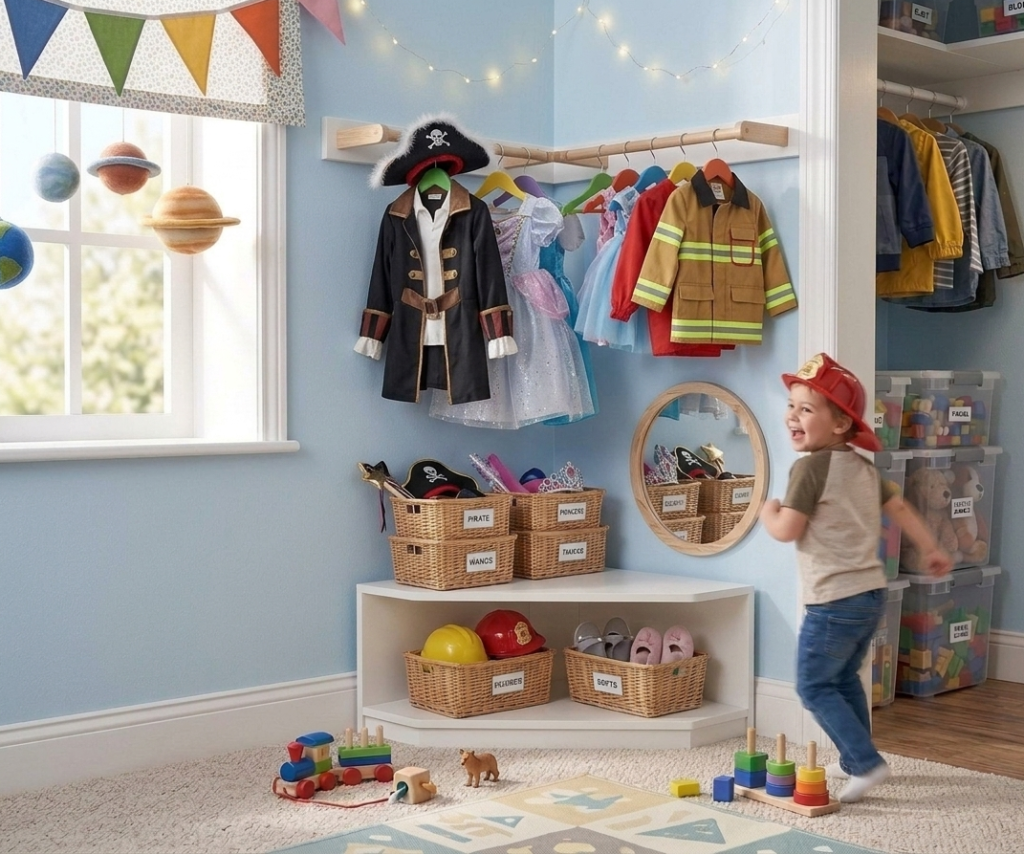
Dress-up clothes and accessories can be a beautiful, organized part of your playroom with the right system . Install a low clothing rod for hanging costumes, a small mirror at child height, and a basket for accessories like hats, shoes, and jewelry. This transforms dress-up from a messy clothes pile into a fun, inviting activity.
Tips
- Group costumes by type superheroes, princesses, animals
- Add a small bench or stool for trying on shoes
- Hang a bag or basket for accessories
20: Use Multi-Functional Furniture

Furniture that does double duty is a parent’s best friend. Ottomans with storage, benches with lift-up seats, and coffee tables with hidden compartments all provide stylish toy storage . They look like regular furniture but hide a world of toys inside. This is perfect for living rooms or shared spaces where you don’t want toys on display.
Tips
- Choose durable, easy-to-clean fabrics
- Ensure lids are safe for small fingers (soft-close hinges)
- Use different pieces for different toy categories
21: Use Tension Rods for Creative Storage

Tension rods aren’t just for curtains! Place a tension rod low in a closet or between two walls to hang toy baskets or create a simple curtain that hides toy clutter . You can also use them to create compartments on open shelves or hang lightweight toys. It’s a no-drill solution that’s both creative and functional.
Tips
- Use S-hooks with tension rods for hanging baskets
- Choose rods that fit snugly without damaging walls
- Place at child height for easy access
22: Design a Puzzle and Game Station

Puzzles and board games can be tricky to store because of all the small pieces. A dedicated station with a wall-mounted rack or a basket system keeps them together . Use stackable boxes for board games and zip-lock bags inside puzzle boxes to prevent lost pieces. A small table nearby invites play.
Tips
- Store games upright like books for easy browsing
- Use a small binder with clear sleeves for game instructions
- Keep a “missing piece” jar for those inevitable losses
23: Involve Your Kids in the Organization
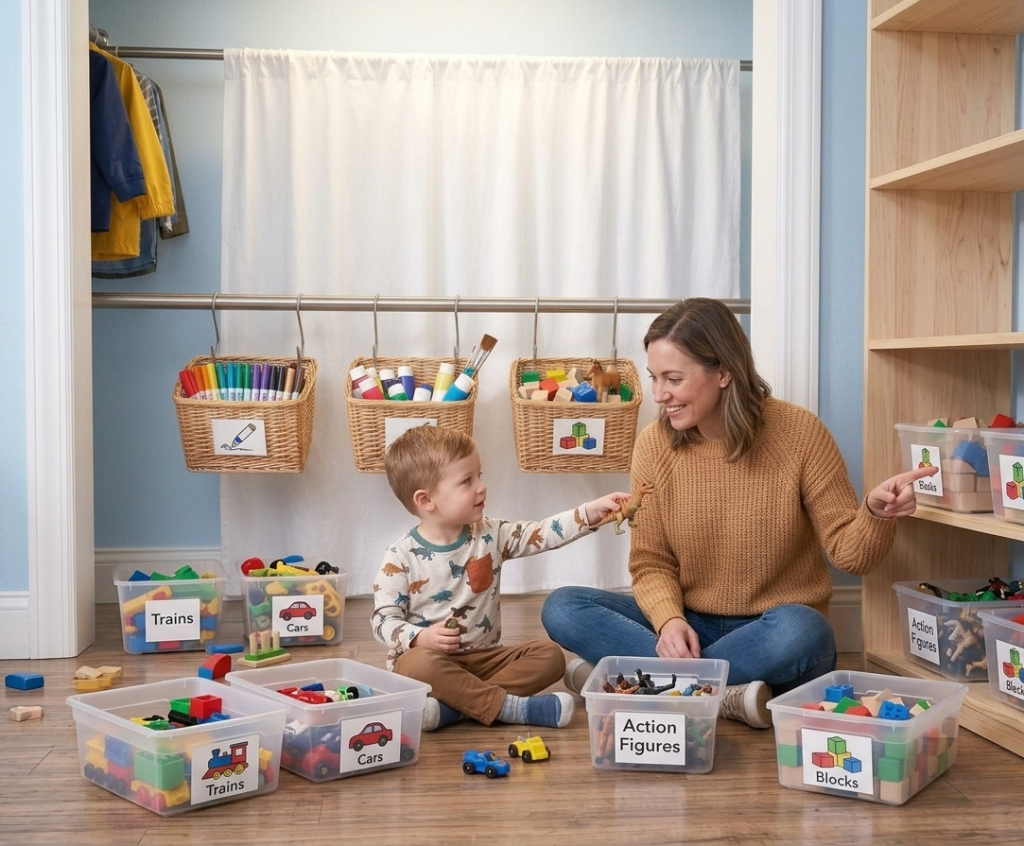
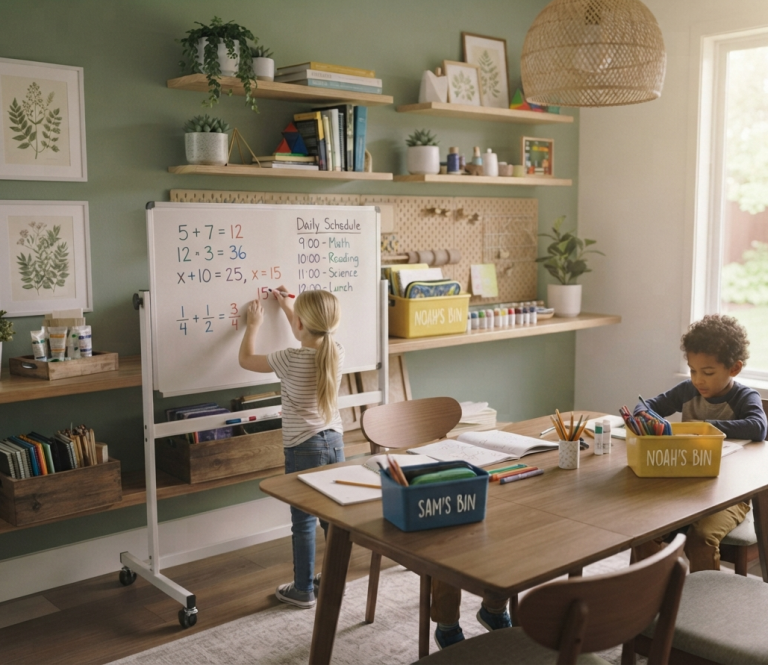
The most important tip? Involve your children in the organizing process. When kids help design the system, they’re far more likely to use it . Let them choose labels, decide where their favorite toys should go, and pick out storage bins. This gives them ownership of the space and builds lifelong organizing habits.
Tips
- Ask your child for input on bin colors or labels
- Make cleanup a game with a timer or fun music
- Celebrate their efforts with specific praise
Conclusion
Toy clutter doesn’t have to be a fact of life when you have kids. With these 23 smart storage ideas, you can create a system that keeps toys organized, accessible, and even beautiful. The key is choosing solutions that work for your family whether that’s clear bins, a toy rotation system, or stylish furniture that hides the chaos. Remember to involve your kids in the process; when they feel ownership, they’re more likely to maintain the system. Start with just one or two ideas this week and watch how a little organization transforms your home and your sanity. Which storage solution will you try first?
FAQs
What’s the best way to organize a small playroom?
Prioritize vertical storage with shelves and pegboards. Use under-bed storage and multi-functional furniture like storage ottomans. Implement a toy rotation system to keep the number of accessible toys manageable.
How do I get my child to actually clean up?
Make it a game! Set a timer and see how fast they can clean up, play music, or turn it into a race. Ensure the storage system is accessible and labeled so they know exactly where everything goes without asking.
Should I let my child choose their own storage system?
Yes! Involving them in the process gives them ownership and makes them more likely to maintain it. Let them pick bin colors, labels, and where they want specific toys to live.
How many toys should be accessible at once?
For younger children, 10–15 toys at a time is a good guideline. Rotate them every few weeks to keep things fresh and exciting without overwhelming them.
What’s the most budget-friendly toy storage idea?
Over-the-door shoe organizers, repurposed cardboard boxes decorated with your child, and basic clear bins from dollar stores are extremely affordable and highly effective.