17 Ways to Eliminate Clutter From Your Utility Closet
Does opening your utility closet feel like playing a dangerous game of Jenga? You’re not alone. This small space often becomes the dumping ground for everything from cleaning supplies to random tools, creating a chaotic mess that makes even simple tasks frustrating . You waste time hunting for that spray bottle or buying duplicates because you couldn’t find what you already owned . But here’s the good news: transforming this disaster zone doesn’t require a huge budget or professional help. With a few strategic changes, you can turn that cluttered closet into a highly functional space that actually saves you time and stress . These 17 practical ideas will help you eliminate clutter for good and create an organizing system you can maintain with minimal effort.
1: Start With a Complete Empty-Out

The first step to any successful organization project is pulling everything out . You can’t organize what you can’t see. Emptying the closet gives you a blank slate and a clear picture of exactly what you’re working with . Spread everything out on the floor or a table so you can assess the full scope of your collection.
Tips
- Take this opportunity to thoroughly clean shelves and the floor before putting anything back
- Measure your closet dimensions to plan storage solutions that actually fit
- Throw away expired products, broken tools, and anything you haven’t used in years
2: Sort Everything Into Categories

Once everything is out, group similar items together . This step reveals what you actually have and helps you see duplicates you forgot about. Common categories include cleaning supplies, tools, light bulbs, batteries, pet supplies, and seasonal items . The sorting process also makes it easier to decide what to keep and what to let go.
Tips
- Create piles for “keep,” “donate,” “trash,” and “relocate to another room”
- Be ruthless about duplicates do you really need 15 extension cords?
- If an item doesn’t belong in a category, it likely belongs somewhere else in your home
3: Use Clear Storage Bins for Visibility

Clear bins are a game-changer for utility closet organization . When you can see what’s inside at a glance, you’ll stop buying duplicates and wasting time searching . These transparent containers work perfectly for grouping similar items—one bin for light bulbs, another for batteries, and a third for cleaning rags .
Tips
- Choose stackable bins to maximize vertical space
- Match bin sizes to your shelf depth for a clean look
- Dollar stores often have affordable clear bin options
4: Label Everything Like a Pro

Labels aren’t just for aesthetics they’re essential for maintaining organization . When every bin, basket, and box has a clear label, everyone in your household knows exactly where items belong and where to find them . This simple step prevents items from ending up in random places and makes restocking effortless.
Tips
- Use a label maker for a clean, professional look
- Laminated labels hold up better in humid environments
- Color-code labels for different categories blue for cleaning, green for tools
5: Install Adjustable Shelving

Fixed shelves often waste vertical space because they can’t accommodate items of different heights. Adjustable shelving solves this problem by letting you customize shelf positions to fit your specific items . Tall cleaning spray bottles can stand upright on one shelf, while shorter bins stack neatly on another. This flexibility makes your closet work harder for you .
Tips
- Measure your closet carefully before buying shelving units
- Consider freestanding options like the ClosetMaid Suite Symphony Tower Kit if you’re a renter
- Wire shelving allows better air circulation and visibility
6: Use Over-the-Door Storage

The back of your closet door is prime real estate that most people ignore . An over-the-door organizer with pockets can hold spray bottles, dusters, gloves, and other small items . This instantly frees up shelf and floor space while keeping frequently used items visible and easy to grab .
Tips
- Choose organizers with clear pockets for easy visibility
- Look for sturdy metal or heavy-duty fabric options that won’t sag
- Avoid putting heavy items in fabric pocket organizers
7: Hang Brooms and Mops on the Wall
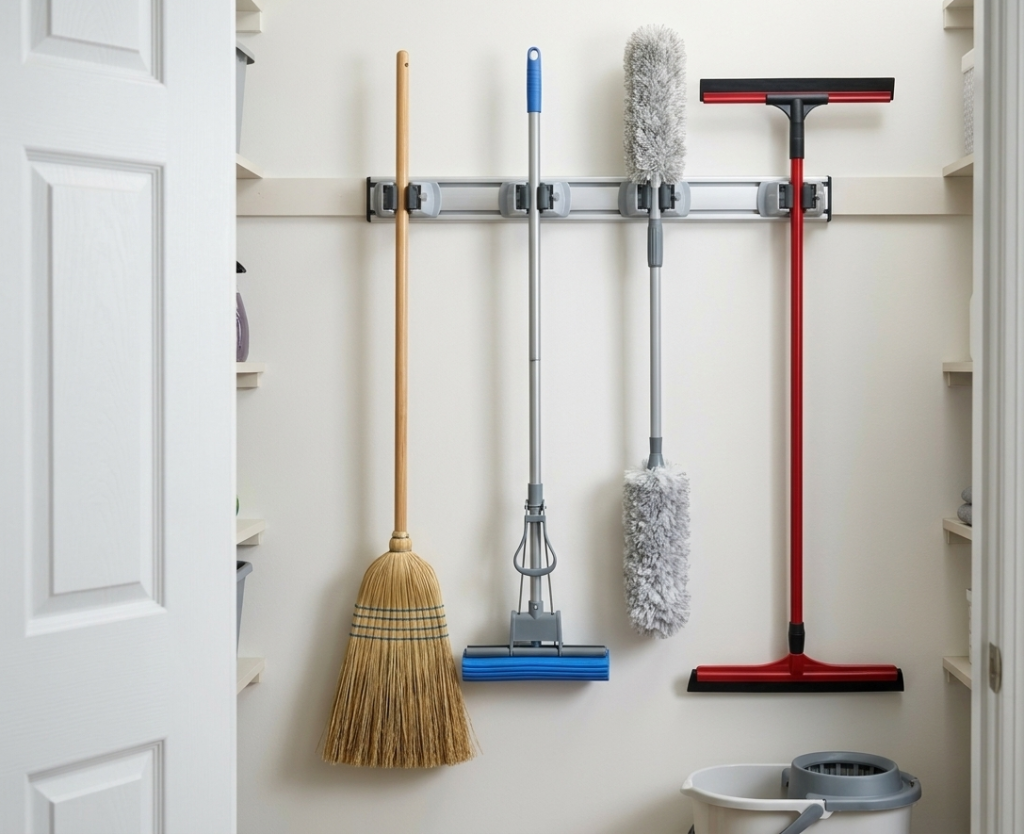
Long-handled tools leaning in corners are a recipe for clutter and frustration . A simple wall-mounted broom holder with spring-loaded grips keeps brooms, mops, and dusters upright and easily accessible . This not only saves floor space but also protects your tools from damage broom bristles get crushed when left sitting on the floor .
Tips
- Mount at eye level for easy access
- Use Command Broom and Mop Grippers to avoid drilling holes
- Leave space between hooks for bulky handles
8: Add a Pegboard for Tools
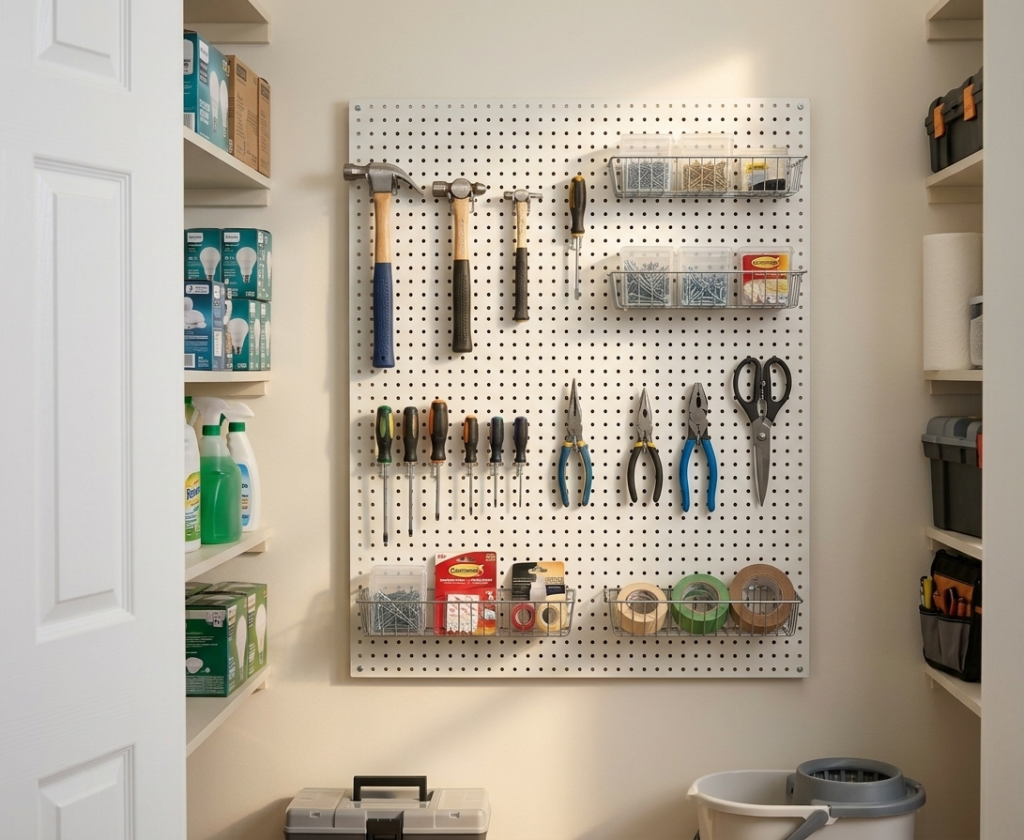
Pegboards aren’t just for garages they’re perfect for utility closets too . A small pegboard section turns an entire wall into customizable storage for hammers, screwdrivers, pliers, and other tools . The beauty of pegboards is their flexibility: you can rearrange hooks and baskets whenever your needs change .
Tips
- Paint your pegboard to match your closet for a cohesive look
- Use small baskets on the pegboard for loose items
- Install at a comfortable height for easy tool access
9: Create a Grab-and-Go Cleaning Caddy

A cleaning caddy stocked with essentials makes daily cleaning so much easier . Instead of searching for supplies every time you need to wipe down a surface, you just grab the caddy and go. Keep it in the most convenient spot in your closet with your most-used supplies multi-purpose cleaner, glass cleaner, microfiber cloths, and a scrub brush .
Tips
- Create separate caddies for different tasks: bathroom, dusting, floors
- Don’t weigh it down with specialty cleaners you rarely use
- Choose a washable caddy that’s easy to clean
10: Use Tension Rods for Creative Storage

Tension rods are surprisingly versatile in a utility closet . You can install them to create compartments for hanging cleaning cloths, segment areas within the closet, or even hold rolls of paper towels . They require no drilling and are easy to reposition when your needs change .
Tips
- Use a spring-loaded tension curtain rod to hold paper towel rolls or trash bags
- Create dividers between different categories of supplies
- Hang lightweight items like cleaning cloths or sponges
11: Store Items by Frequency of Use

One of the simplest but most effective organizing principles is storing items based on how often you use them . Everyday essentials should be at eye level, where they’re easiest to grab. Less frequently used items—like seasonal decorations or bulk supplies go on higher or lower shelves . This creates an efficient workflow and saves time .
Tips
- Keep daily cleaning supplies within easy reach on front shelves
- Store heavy items on lower shelves for safety
- Rotate seasonal items to the front during their season
12: Install Hooks for Odd Items

Sometimes the simplest solutions are the most effective. Adding hooks to walls or shelf edges creates instant storage for awkward items . Use sturdy hooks for heavy items like mops and brooms, and smaller adhesive hooks for dusters, cleaning gloves, or a small bag for plastic bag recycling .
Tips
- Place hooks strategically to use every inch of wall space
- Consider clip-on hooks like IKEA’s PÅLYCKE that slide onto existing shelves
- Use binder clips as instant hooks on pegboards
13: Use a Battery Organizer

Searching for batteries when you need them is frustrating—especially when you can’t remember what size you have . A dedicated battery organizer solves this problem by keeping all sizes visible and accessible . Many organizers even include a built-in battery tester so you never second-guess whether a battery is fresh .
Tips
- Store batteries in a clear bin with compartments for different sizes
- Avoid storing batteries touching each other, as this can drain their power
- Label compartments clearly AAA, AA, C, D, 9-volt
14: Corral Cords and Cables

Cords and cables can quickly become a tangled mess in a utility closet . The solution is simple: wrap each cord with hook-and-loop tape (like Velcro) and label it . Store them in a small basket or hanging organizer so they stay contained and tangle-free .
Tips
- Toss cords you can’t pair with an appliance
- Label each cord so you know what it’s for
- Use a small wall-mounted basket to store coiled cords
15: Protect Your Floors With a Tray
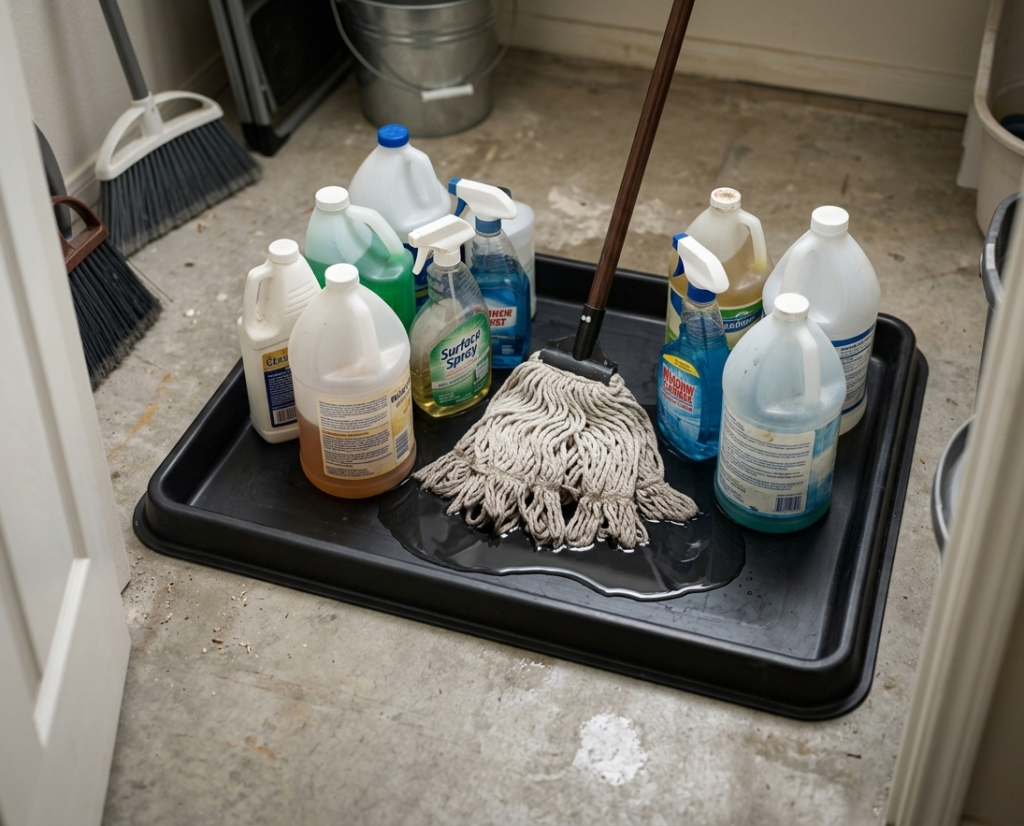
Cleaning products spill, mops drip, and wet shoes leave marks all of which can damage your closet floor . A flexible rubber tray or repurposed boot mat underneath your cleaning supplies catches spills and protects the floor . It’s a small investment that keeps your closet looking clean and prevents damage.
Tips
- Place the tray under jugs of bulk cleaning solutions
- Set wet mops or buckets on the tray while they dry
- Choose a tray with raised lips to contain spills
16: File Appliance Manuals

Those instruction manuals and warranty papers don’t have to live in a messy pile on your shelf . Install a cascading wall file in your utility closet to keep them organized and accessible . Color-code categories appliances, electronics, kitchen, cameras so you can find what you need instantly .
Tips
- Staple sales receipts to manuals for items with extended warranties
- Use a six-pocket file for different categories
- Label each pocket clearly
17: Schedule Regular Maintenance
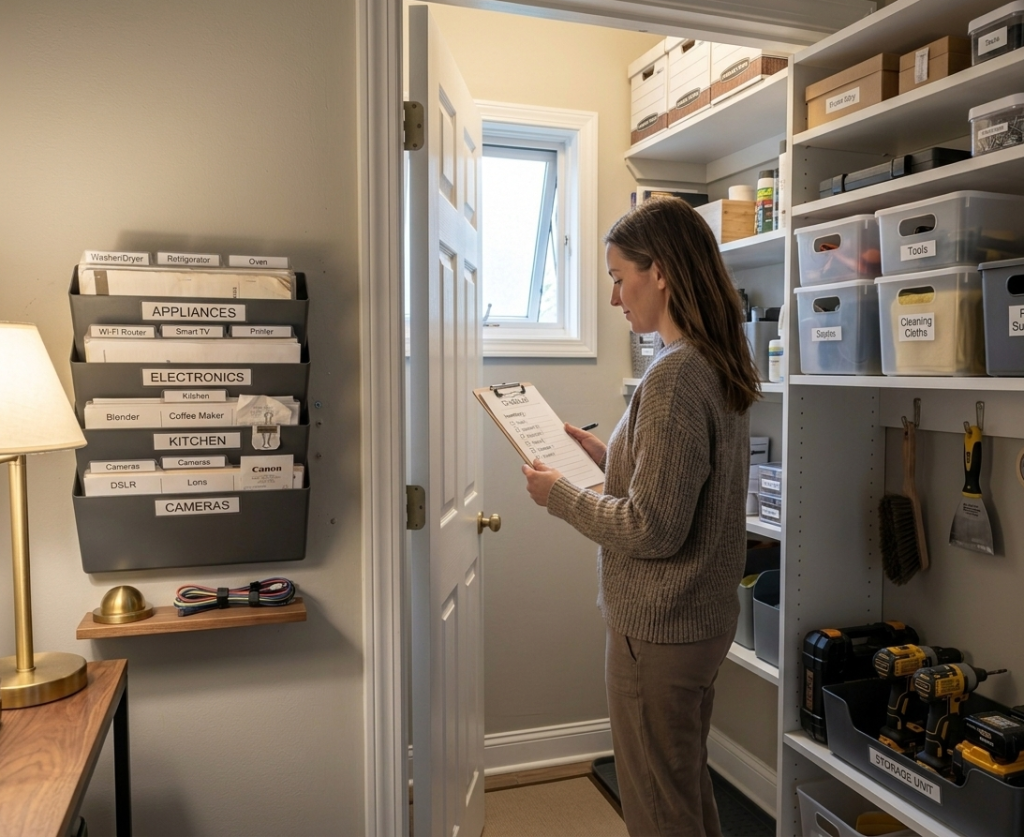
Organization isn’t a one-time project it requires upkeep . Set a reminder every six months to review your utility closet contents . Toss expired products, donate items you no longer use, and reorganize as needed . This routine keeps clutter from building up again and ensures your system continues to work for you .
Tips
- Keep a checklist of items to stock (light bulbs, batteries, etc.)
- Encourage everyone in your household to return items to designated spots
- Stay flexible adjust your system as your storage needs change
Conclusion
A cluttered utility closet doesn’t have to be your reality. With these 17 strategies, you can transform that chaotic space into a functional, organized hub that actually makes your life easier. Start with a complete empty-out and sorting session that’s the foundation of any successful organization project. Then choose the storage solutions that work best for your space and budget. Whether it’s clear labeled bins, a pegboard for tools, or over-the-door storage, each small change adds up to a big difference. The key is regular maintenance schedule a review every six months to keep clutter from creeping back . Your future self will thank you every time you grab exactly what you need without digging through chaos.
FAQs
How often should I organize my utility closet?
It’s a good idea to declutter and organize your utility closet every six months to keep it functional and prevent clutter from building up again .
What are the best storage solutions for a utility closet?
Clear bins, adjustable shelves, hooks, pegboards, and over-the-door organizers are excellent options for maximizing space .
How can I make the most of a small utility closet?
Utilize vertical space with shelves, hooks, and tiered organizers. Use the back of the door for storage, and store frequently used items at eye level while placing less-used items higher up or lower down .
Should I buy storage containers before or after decluttering?
Always declutter first before purchasing any storage containers. Knowing exactly what you’re keeping will help you choose the right sizes and types of organizers .
What shouldn’t I store in a utility closet?
Never store food and cleaning products side by side . Also avoid storing holiday decorations that belong in the basement or attic, and don’t keep items that don’t fit the space, like large quantities of paper goods better suited for a pantry .